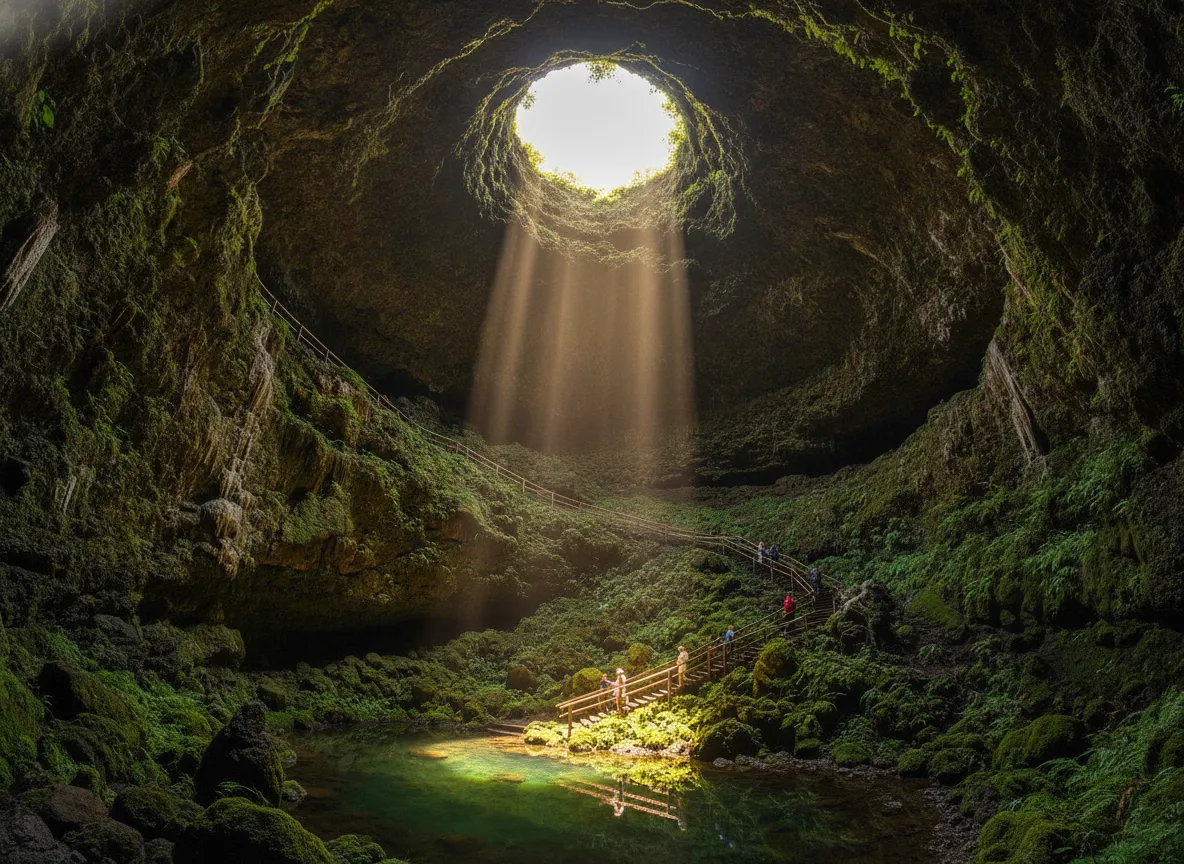
Imagine descending into the breathtaking throat of a dormant volcano, where shimmering silica stalactites meet a serene subterranean lake. It sounds like a scene from a fantastical adventure novel, doesn't it? Yet, this isn't fiction. This is Algar do Carvão, a truly extraordinary geological wonder nestled on Terceira Island in the heart of Portugal's enchanting Azores archipelago. If you've ever dreamt of stepping inside the very core of our planet, sensing its ancient power, and witnessing a spectacle found almost nowhere else on Earth, then pack your bags – because Algar do Carvão is calling your name.
Algar do Carvão: A Journey into Earth's Fiery Heart
What makes Algar do Carvão so profoundly special? Simply put, it's one of the only volcanoes in the world where you can quite literally walk directly into its ancient lava chimney. Unlike typical volcanic craters that you peer down into, Algar do Carvão invites you to step *inside* its vast, cathedral-like interior. This isn't just a cave; it's the actual conduit through which molten rock once surged, now transformed into a mesmerizing subterranean landscape.
As you begin your descent, you'll feel an immediate shift in atmosphere. The air cools, the sounds of the outside world fade, and a sense of profound awe takes over. This isn't just a tourist attraction; it's a pilgrimage into geological time, a chance to witness the raw, creative power of the Earth frozen in stone. The sheer scale of the cavern, the way natural light filters in from above, and the unique formations that have developed over millennia create an otherworldly experience that stays with you long after you've re-emerged into the Azorean sunshine. It’s a testament to the fact that some of the most beautiful things on our planet are hidden beneath its surface, waiting to be discovered by the curious and the adventurous.
Unearthing Ancient Secrets: The History of Algar do Carvão
The story of Algar do Carvão began thousands of years ago, a dramatic chapter in Terceira Island's volcanic past. Unlike many caves formed by water erosion, Algar do Carvão is a true volcanic edifice, specifically a lava chimney or "volcanic vent." It formed during a period of intense volcanic activity, where superheated magma surged upwards. As the eruption subsided, the molten rock drained away, leaving behind a hollow conduit. Over countless millennia, the roof of this conduit collapsed in places, creating the vast open-air cavern you see today, allowing light and life to penetrate its depths.
While the volcano itself is ancient, its "discovery" and accessibility to the public are relatively recent. The first recorded descent into Algar do Carvão was in 1893, but it wasn't until the 1960s that serious efforts were made to make it safe and accessible for visitors. Today, thanks to well-maintained stairs and pathways, this once-hidden marvel is open to anyone eager to explore its depths. It serves not only as a breathtaking natural attraction but also as a vital scientific site, offering geologists and researchers invaluable insights into volcanic processes and subterranean ecosystems. Walking through it, you're not just a tourist; you're an explorer tracing the footsteps of our planet's fiery origins.

What Awaits You Inside: A Geological Masterpiece
Your journey into Algar do Carvão begins with a series of well-constructed steps leading you downwards. Each step takes you deeper into the Earth, and the transformation is palpable. You'll first enter the enormous main cavern, a truly majestic space where the ceiling soars upwards, open to the sky. This section is often bathed in a soft, ethereal light, illuminating the ancient rock walls and the vibrant, moss-covered vegetation that thrives in the unique microclimate.
As you continue your descent, the cavern narrows, leading you into the more enclosed sections of the lava chimney. Here, the true wonders of Algar do Carvão begin to reveal themselves. You'll be surrounded by a geological forest of rare silica stalactites and stalagmites. Unlike the more common calcite formations found in limestone caves, these shimmering, translucent structures are formed from silica-rich water seeping through the volcanic rock. They glisten under the carefully placed lights, creating an almost magical, jewel-like display that is incredibly distinct and beautiful. It's a testament to the slow, patient artistry of nature, creating intricate designs drop by painstaking drop.
Further down, at the deepest accessible point of the volcano, you'll encounter the serene, crystal-clear subterranean lake. This tranquil body of water, fed by rainwater, reflects the cavern's ceiling and walls, creating a mirror image that doubles the sense of depth and mystery. The lake's surface is often perfectly still, offering a moment of quiet contemplation amidst the grandeur of the volcanic chamber. Depending on the season, the water level can vary, but its presence always adds an element of profound beauty and a sense of life thriving in the depths. It’s a truly awe-inspiring sight, a hidden oasis within the Earth's belly.

The entire experience is a sensory feast. The cool, damp air, the subtle scent of earth and minerals, the echoing drips of water, and the dramatic interplay of light and shadow all contribute to an unforgettable adventure. You'll find yourself pausing frequently, just to absorb the sheer scale and intricate details of this natural masterpiece. From the rough textures of the ancient lava flows to the delicate formations of the silica, every corner of Algar do Carvão tells a story of creation and time.

Planning Your Descent: Practical Tips for Visiting Algar do Carvão
Ready to embark on this incredible journey? Here are a few practical tips to ensure your visit to Algar do Carvão is as smooth and enjoyable as possible:
- Best Time to Visit: The Azores are lovely year-round, but for the best weather and visibility, aim for the spring and summer months (May to September). However, Algar do Carvão is an indoor/underground attraction, so it's a fantastic option even on a rainy Azorean day.
- Getting There: Algar do Carvão is located on Terceira Island. The easiest way to reach it (and explore the rest of the island) is by renting a car. The roads are well-maintained, and signage to major attractions like Algar do Carvão is clear. There's ample parking available on site.
- What to Wear: Even on a warm day, the temperature inside the volcano can be significantly cooler and the air quite damp. Bring a light jacket or sweater. More importantly, wear comfortable, sturdy shoes with good grip. You'll be descending and ascending many stairs (around 300 steps total), and the surfaces can be wet.
- Accessibility: Due to the numerous stairs and sometimes uneven surfaces, Algar do Carvão is unfortunately not suitable for wheelchairs or visitors with significant mobility issues.
- Opening Hours & Tickets: Opening hours can vary by season, so it's always best to check the official "Montanheiros" website (the organization that manages the site) before your visit. You can purchase tickets on-site. Often, a combined ticket for Algar do Carvão and nearby Gruta do Natal (another fascinating lava tube) is available and offers good value.
- Photography: Photography is generally allowed and encouraged, but be mindful of other visitors and avoid using flash where possible, as it can be distracting and diminish the natural ambiance. A tripod might be useful for capturing the low-light beauty.
- Combine Your Visit: Terceira Island is packed with volcanic wonders. Consider pairing your visit to Algar do Carvão with stops at Gruta do Natal (another lava tube experience) and Furnas do Enxofre (fumaroles and volcanic vents) for a full immersion into the island's geological heart.
A visit to Algar do Carvão isn't just seeing a sight; it's experiencing a profound connection to the Earth's ancient past and its ongoing geological dance. It's a reminder of the raw power and exquisite beauty hidden beneath our feet, waiting to inspire wonder and ignite the explorer within us all. Don't miss this truly unique adventure on your Azorean journey!
Essential Travel Information
- Location Algar do Carvão, Portugal
- Best Time May to September (Spring/Summer) for best weather, but accessible year-round.
- Getting There Rent a car on Terceira Island; well-signed roads lead to the site with ample parking.
- Airport Lajes Field (TER)
- Budget Mid-range (approx. €10-15 entry fee, car rental adds to daily cost)
- Language Portuguese
Find Places to Stay Near Algar do Carvão
Compare hotels, hostels, and unique stays in Portugal.
Search AccommodationTours & Experiences Near Algar do Carvão
Book guided tours, day trips, and unique experiences.
Browse Tours