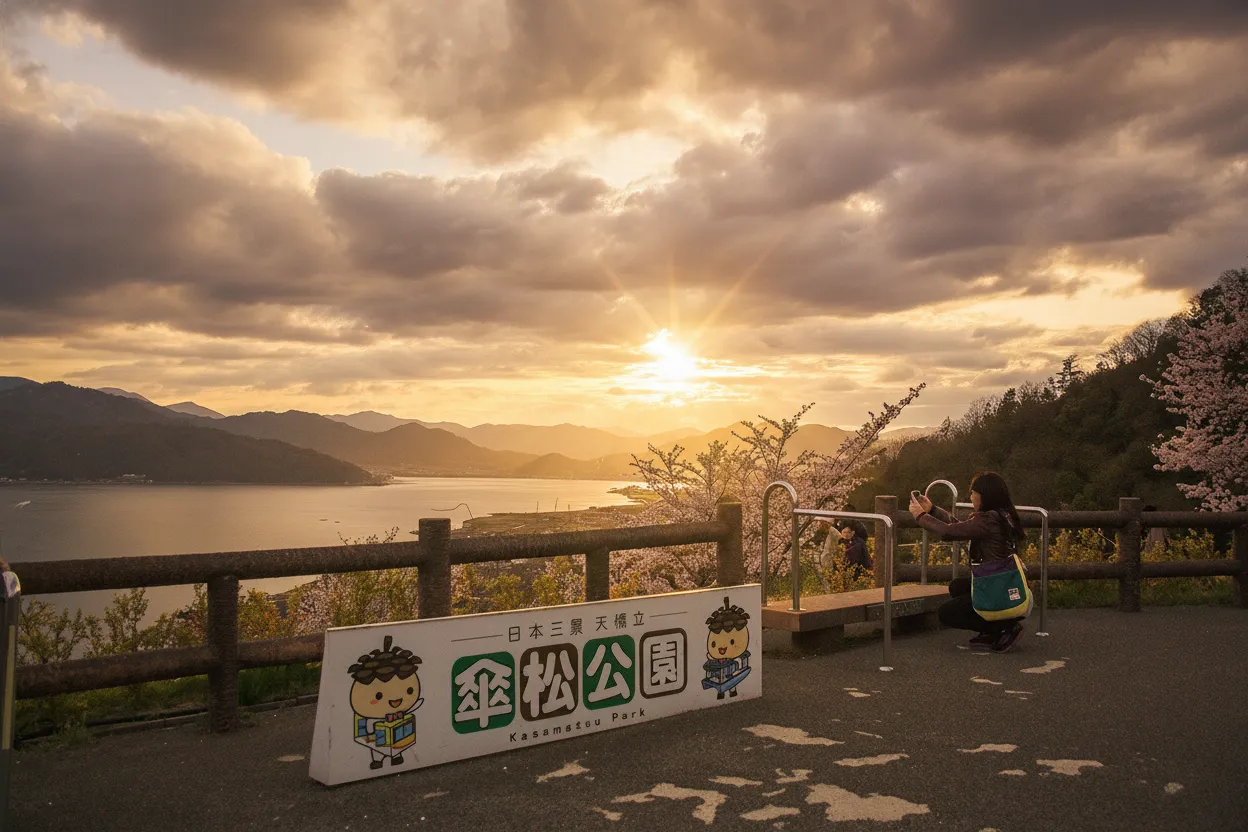
Often overshadowed by Kyoto's temples and Tokyo's neon glow, Amanohashidate remains one of Japan's best-kept secrets, yet it holds the esteemed title of one of Japan's Three Most Scenic Views (Nihon Sankei). It's a place where the serene beauty of pine-clad shores meets the shimmering expanse of Miyazu Bay, creating a scene plucked straight from a classical painting. But it's the peculiar local tradition of "matanozoki" that truly elevates this destination from merely beautiful to utterly unforgettable, inviting you to engage with the landscape in a way you've never experienced before.
Where the Sky Meets the Sea: Unveiling Amanohashidate's Special Charm
Amanohashidate, meaning "Bridge in Heaven," is more than just a name; it's a poetic description of this extraordinary natural formation. Picture a slender, three-kilometer-long strip of land, densely carpeted with thousands of ancient pine trees, gracefully arching across the tranquil waters of Miyazu Bay. From above, it appears like a delicate brushstroke connecting two shores, a natural bridge suspended between the earthly realm and the celestial.
What makes Amanohashidate truly special, however, is not just its inherent beauty but the interactive enchantment it offers. The "matanozoki" ritual is central to the experience. From designated observation points high above the bay, visitors are encouraged to bend over, look through their legs, and observe the sandbar upside down. This ancient practice, passed down through generations, isn't just a quirky photo opportunity; it's a gateway to a different dimension. When viewed inverted, the sandbar and its surrounding hills appear to float, shimmering against the sky, creating the breathtaking illusion of a majestic "dragon ascending to heaven." The sea becomes the sky, and the bridge appears to soar, imbued with mythological grandeur.

This whimsical transformation is more than just an optical trick; it’s a profound shift in perspective that connects you to centuries of Japanese tradition and folklore. It’s a moment of pure wonder, a playful challenge to conventional perception, leaving you with a sense of awe and a story unlike any other to tell. It's this blend of stunning natural beauty, cultural heritage, and interactive magic that truly sets Amanohashidate apart as a must-visit destination for the curious traveler.
Whispers of the Past: History and Legends of the Heavenly Bridge
Amanohashidate's allure isn't just visual; it's deeply rooted in Japan's rich history and mythology. Its designation as one of the "Nihon Sankei" (Three Great Views of Japan) dates back centuries, solidifying its place in the nation's cultural consciousness alongside Matsushima Bay and Miyajima Island. This recognition speaks volumes about its enduring beauty and significance to the Japanese people.
The very name "Amanohashidate" hints at its legendary origins. According to ancient myths, this sandbar was once a ladder that connected heaven and earth. The Shinto deity Izanagi-no-Mikoto, standing upon this celestial bridge, created the islands of Japan. One day, while he was resting, the ladder collapsed and fell to earth, forming the beautiful sandbar we see today. This divine connection imbues the landscape with a spiritual aura, making a visit here feel like stepping into a living legend.
The practice of "matanozoki" itself is believed to have ancient roots, possibly linked to Shinto beliefs about reversing perspectives to gain new insights or connect with the divine. It's not merely a tourist gimmick but a time-honored tradition that invites visitors to participate in a cultural ritual, experiencing the landscape through the eyes of those who came before them. Over the centuries, poets, artists, and emperors have been captivated by Amanohashidate, immortalizing its beauty in countless works and cementing its status as a timeless natural wonder. To walk its pines or gaze upon its "dragon" is to connect with a continuous thread of appreciation that spans generations.
Beyond the Dragon: What You'll See and Do
While the "matanozoki" experience is undoubtedly the highlight, Amanohashidate offers a wealth of activities and sights that make a full day (or even an overnight stay) incredibly rewarding. The sandbar itself is a fantastic place to explore.
Strolling or Cycling Across the Sandbar
The three-kilometer stretch of Amanohashidate is perfect for a leisurely walk or a refreshing bicycle ride. Rent a bike near Amanohashidate Station and pedal your way through the cool shade of the thousands of ancient pine trees. Along the path, you'll discover small shrines, pristine beaches perfect for a summer dip, and tranquil spots to simply sit and absorb the serene atmosphere. The gentle sound of waves lapping the shore and the rustle of pine needles in the breeze create a truly peaceful escape.

The Views from Above: Observation Decks
To fully appreciate the "Bridge in Heaven" and perform the matanozoki, you'll want to head to one of the two main observation parks:
- Kasamatsu Park: Located on the north side of the bay, this is considered the traditional spot for matanozoki. Accessible by a scenic cable car or chair lift, it offers a classic, breathtaking panorama of the sandbar. This is where the "dragon ascending" view is most iconic.
- Amanohashidate View Land: On the south side, this park offers a slightly different perspective, sometimes referred to as the "dragon flying" view. Also reached by chair lift or monorail, it has a more amusement-park-like feel with a small Ferris wheel and other attractions, making it particularly popular with families. Both offer superb views and unique photo opportunities.
Temples and Shrines
At either end of the sandbar, you'll find significant religious sites:
- Chion-ji Temple: Located at the southern tip, near Amanohashidate Station, this temple is famous for its multi-storied pagoda and unique fan-shaped omikuji (fortune slips) that you can tie to pine branches or even the temple gate. It's a vibrant and active temple, adding a spiritual dimension to your visit.
- Kono Shrine: Situated at the northern end, close to Kasamatsu Park, Kono Shrine is one of the oldest and most revered shrines in the Tango region. It's believed to be the original site of the Ise Grand Shrine, making it a place of deep historical and spiritual importance.
Cruising Miyazu Bay
For a different perspective, take a pleasure cruise across Miyazu Bay. These ferries not only offer stunning views of the sandbar from the water but also serve as convenient transport between the northern and southern ends, allowing you to easily visit both observation parks and the respective temples. Keep an eye out for the friendly seagulls that often accompany the boats, hoping for a snack!

Local Delicacies
The Miyazu Bay area is renowned for its fresh seafood. Don't leave without sampling some of the local catches, especially the succulent crab during winter months. There are numerous restaurants and eateries offering delicious regional specialties, providing a true taste of coastal Japan.
Practical Tips for Your Amanohashidate Adventure
Ready to embark on your journey to the "Bridge in Heaven"? Here’s what you need to know to make your visit smooth and memorable:
Getting There
Amanohashidate is accessible by train, making it a fantastic day trip or overnight stay from Kyoto or Osaka. From Kyoto Station, take the Limited Express Hashidate directly to Amanohashidate Station (approx. 2 hours). From Osaka, you can take a Limited Express Kounotori to Fukuchiyama, then transfer to a local train for Amanohashidate.
Best Time to Visit
Amanohashidate is beautiful year-round.
- Spring (March-May): Pleasant weather, with cherry blossoms adding a delicate charm.
- Summer (June-August): Lush green pines, perfect for swimming at the sandbar's beaches, but can be hot and humid.
- Autumn (September-November): Crisp air and stunning fall foliage in the surrounding hills.
- Winter (December-February): A truly magical, serene experience if you catch it with a dusting of snow, transforming the landscape into an ethereal wonderland (though it can be cold).
The shoulder seasons (spring and autumn) generally offer the most comfortable weather and fewer crowds.
How Long to Stay
While Amanohashidate can be done as a long day trip from Kyoto or Osaka, an overnight stay allows you to explore at a more relaxed pace, enjoy the evening atmosphere, and perhaps visit the charming fishing village of Ine Funaya nearby, known for its unique boathouses.
Navigating the Area
Once you arrive, the area is very walkable. Bicycle rentals are popular for traversing the sandbar. To reach the observation decks, you'll use cable cars or chair lifts, which offer scenic rides in themselves. Ferries connect the two ends of the bay, providing a convenient way to get around and enjoy the views from the water.
Don't Forget Your Camera!
While the "matanozoki" view is best experienced firsthand, you'll want to capture the stunning panoramas. Make sure to take photos before and after your upside-down viewing for a fun comparison!
Amanohashidate isn't just a place to visit; it's an experience to be savored, a perspective to be gained. It challenges you to look at the world differently, to embrace a whimsical tradition, and to discover a hidden dimension of beauty. So, pack your sense of adventure, prepare to bend over, and get ready to witness a dragon ascending to heaven – a memory that will undoubtedly last a lifetime.
Essential Travel Information
- Location Amanohashidate Sandbar (天橋立), Japan
- Best Time Spring (March-May) for cherry blossoms and mild weather, Autumn (September-November) for fall foliage and comfortable temperatures.
- Getting There Take the Limited Express Hashidate train directly from Kyoto Station to Amanohashidate Station (approx. 2 hours).
- Airport Kansai International Airport (KIX)
- Budget Mid-range (approx. ¥10,000 - ¥20,000 per person per day, excluding long-distance train fares)
- Language Japanese
Find Places to Stay Near Amanohashidate Sandbar (天橋立)
Compare hotels, hostels, and unique stays in Japan.
Search AccommodationTours & Experiences Near Amanohashidate Sandbar (天橋立)
Book guided tours, day trips, and unique experiences.
Browse Tours