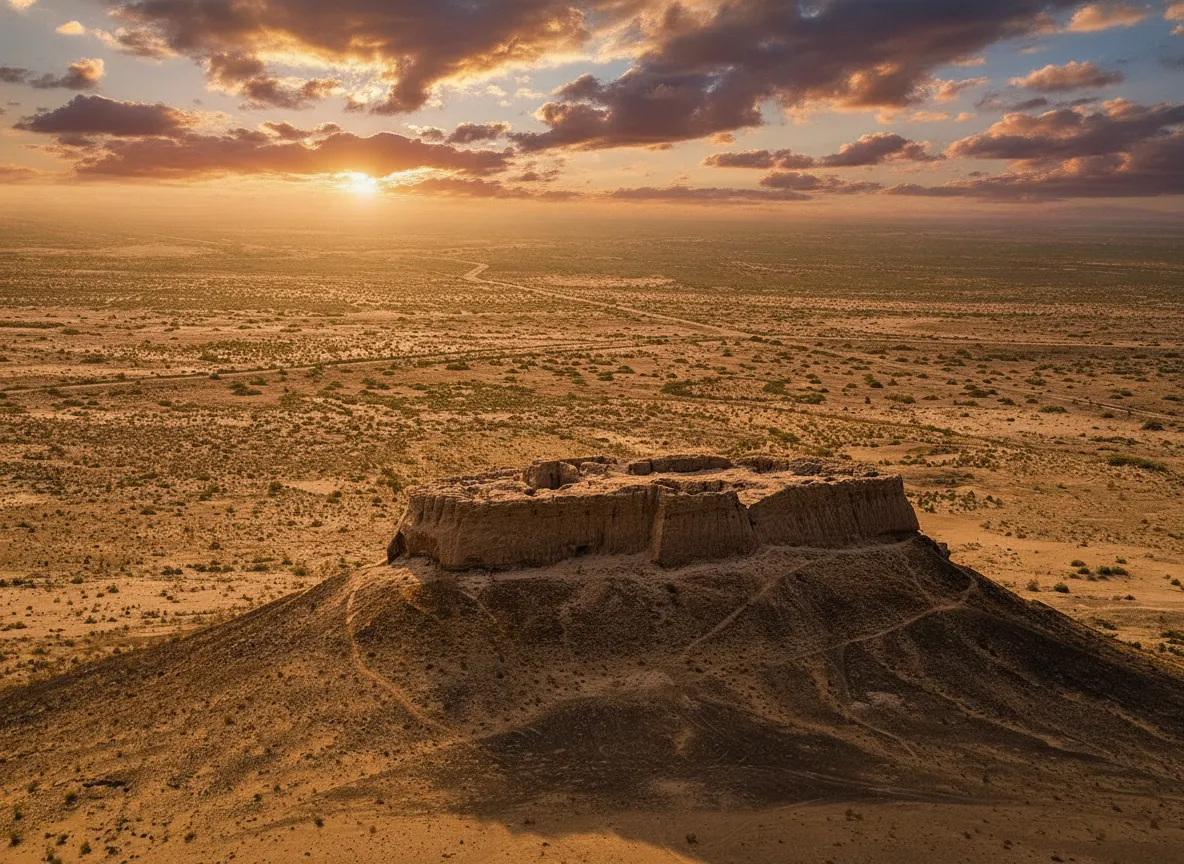
Perched atop windswept desert hills, the ancient mud-brick fortresses of Ayaz-Kala stand like forgotten sentinels, whispering tales of a civilization that thrived in the heart of the Kyzylkum Desert millennia ago. Imagine a place where time itself seems to slow, where the only sounds are the rustle of the wind and the distant call of a desert bird. This isn't a meticulously restored museum piece; this is Ayaz-Kala, a truly hidden gem in Uzbekistan's vast Karakalpakstan region, offering an unparalleled journey back to a pre-Islamic world. If you've ever dreamt of being an intrepid explorer, discovering ruins that few others have seen, then prepare to be captivated by this magnificent, dissolving testament to human ingenuity.
Ayaz-Kala: Where Time Stands Still in the Kyzylkum Desert
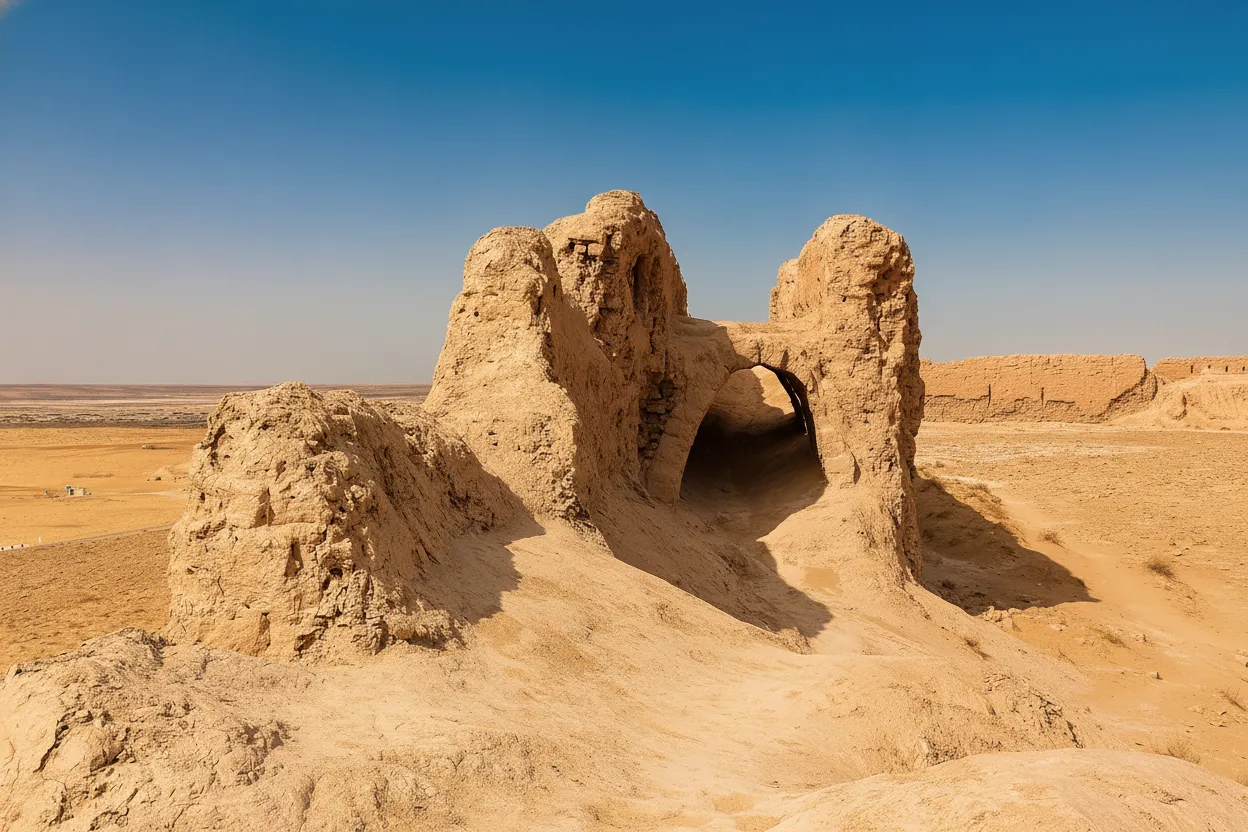
What makes Ayaz-Kala so profoundly special isn't just its age or its dramatic location, but its raw, untouched authenticity. Unlike many well-known archaeological sites that have undergone extensive reconstruction, the Ayaz-Kala Fortresses remain largely unexcavated and unrestored. This means you're walking through ruins that are slowly, majestically dissolving back into the desert from which they rose. It’s a humbling, almost melancholic experience, witnessing history in its purest, most vulnerable form. You’re not just observing; you’re bearing witness to the slow dance between ancient structures and the relentless forces of nature.
These three distinct fortresses, dating from the 4th century BCE to the 7th century CE, offer a breathtaking glimpse into the ancient Khorezmian culture, a civilization that once flourished along the Amu Darya river. To stand atop their crumbling walls is to gain not only a profound historical perspective but also a spectacular panoramic view of the vast, undulating Kyzylkum Desert. The sheer scale of the landscape, stretching to the horizon in every direction, underscores the incredible resilience and strategic brilliance of the people who built and inhabited these desert strongholds. It’s a powerful reminder that even in the harshest environments, human spirit and ingenuity can carve out a thriving existence.
Echoes of Ancient Khorezm: A Journey Through Ayaz-Kala's Past
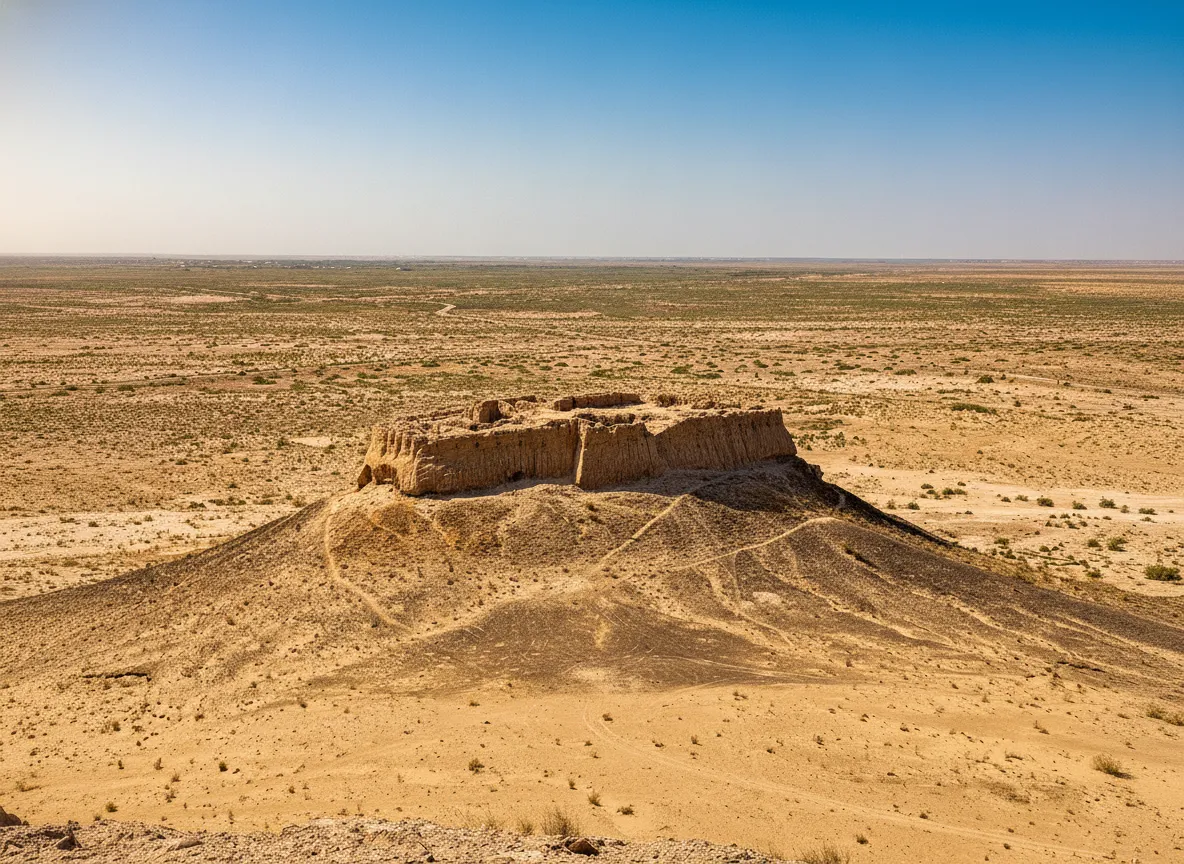
The history of Ayaz-Kala is intertwined with the story of Khorezm, an ancient civilization that controlled vital trade routes and developed sophisticated irrigation systems, transforming parts of the desert into fertile lands. These fortresses were not isolated outposts but integral parts of a larger defense system, protecting the agricultural oases and trade routes that crisscrossed Central Asia. Ayaz-Kala 1, the oldest and most prominent, was likely a military outpost or a watchtower, strategically positioned on the highest hill to command sweeping views of the surrounding plains. Its thick mud-brick walls and numerous towers speak of a need for formidable defense against nomadic incursions.
Ayaz-Kala 2, situated on a lower, flatter plateau, appears to have been a fortified city, a residential and administrative center where people lived, worked, and traded. Its more complex layout suggests a community with homes, courtyards, and possibly public buildings, all protected by sturdy walls. Ayaz-Kala 3, the "garrison fortress," lies a short distance away, presenting a more irregular, perhaps unfinished, construction. Historians believe it might have been a military encampment or a storage facility, designed for quick expansion or strategic deployment.
Life within these walls would have been dictated by the rhythms of the desert and the demands of defense. Despite the arid environment, the Khorezmians were masters of water management, diverting water from the Amu Darya to sustain their settlements and agriculture. The fortresses provided not just protection but also a sense of community and stability in a volatile world. Their eventual abandonment, likely around the 7th century CE, was probably due to a combination of factors: shifting trade routes, changing political landscapes, and possibly environmental pressures, leaving them to the slow embrace of the desert winds and sands.
Unveiling the Secrets: What You'll See and Experience at Ayaz-Kala
Visiting Ayaz-Kala is an immersive experience, a true adventure. Your journey will likely begin by ascending the path to Ayaz-Kala 1, the most iconic of the three. As you climb, the scale of the fortress becomes apparent, its massive mud-brick walls rising dramatically from the hilltop. Once inside, you can wander through what remains of its internal structures, imagining sentinels peering out from the watchtowers, scanning the horizon for signs of approaching caravans or threats. The views from here are nothing short of spectacular: a vast, undulating canvas of golden sand, distant mountains, and the occasional green ribbon of an oasis. It’s a landscape that truly makes you feel at the edge of the world.
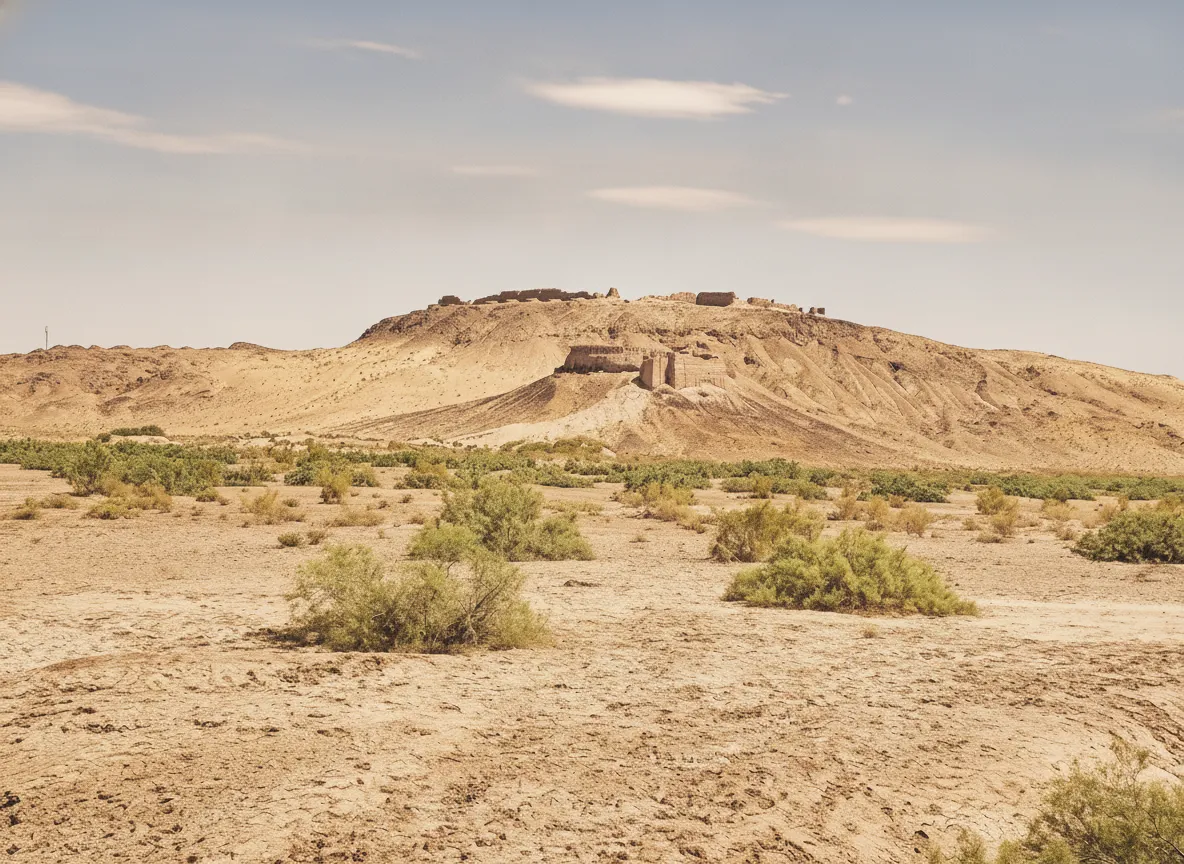
From Ayaz-Kala 1, you can look down upon the ruins of Ayaz-Kala 2, spread out on the plateau below. Descending to explore it, you’ll find remnants of what once were homes and public spaces, the outlines of streets and courtyards still discernible in the earth. It requires a bit of imagination, but that’s part of the magic here – piecing together the lives of the people who once walked these very paths. Ayaz-Kala 3, though less visually dramatic, completes the historical picture, adding another layer to the understanding of this ancient defensive network. Each fortress tells a slightly different part of the story, but together, they paint a vivid picture of a thriving desert civilization.
The beauty of Ayaz-Kala lies in its unpolished nature. There are no gift shops, no interpretive centers, just the raw majesty of history. You'll feel like a true archaeologist, discovering details for yourself. The earthy tones of the mud-brick blend seamlessly with the desert landscape, creating a harmonious and awe-inspiring scene, especially at sunrise or sunset when the low light casts long shadows and bathes the ruins in a golden glow. Keep an eye out for desert wildlife – lizards, various birds, and perhaps even a distant gazelle or camel. This is not just a historical site; it’s an encounter with nature and deep time.
Your Expedition to Ayaz-Kala: Practical Tips for an Unforgettable Visit
Embarking on a journey to Ayaz-Kala requires a bit of planning, but the rewards are immeasurable. The easiest way to access the fortresses is from Nukus, the capital of Karakalpakstan. You can fly into Nukus International Airport (NCU) and then arrange for a private car with a driver or join an organized tour. The drive from Nukus takes approximately 2-3 hours, often on rough, unpaved roads, adding to the adventurous feel of the expedition. A local guide is highly recommended not only for navigation but also for invaluable historical context, bringing the silent stones to life with stories and facts.
For accommodation, consider staying at one of the traditional yurt camps near Ayaz-Kala, such as the Ayaz-Kala Yurt Camp. This offers an authentic desert experience, complete with traditional Karakalpak hospitality, delicious local food, and incredible stargazing opportunities under the vast desert sky. Waking up to the sunrise over the fortresses from a yurt is an unforgettable memory. Alternatively, you can base yourself in Nukus and do a day trip, though this means missing out on the magical desert nights.
The best time to visit Ayaz-Kala is during the spring (April-May) or autumn (September-October). During these months, the weather is pleasant, avoiding the scorching heat of summer and the biting cold of winter. Essential items to bring include plenty of water, strong sun protection (hat, sunglasses, high-SPF sunscreen), sturdy walking shoes, and layers of clothing as desert temperatures can fluctuate. Don't forget your camera – you'll want to capture every breathtaking vista and ancient detail. Most importantly, remember to respect the site: leave no trace, do not climb on fragile walls, and help preserve this incredible heritage for future generations.
Ayaz-Kala is more than just a collection of ancient ruins; it's an experience that connects you to the deep past, to the enduring spirit of humanity, and to the raw beauty of one of the world's most captivating deserts. It’s a place that stays with you long after you've left, a whispered secret you’ll be eager to share with fellow adventurers. Add this extraordinary hidden gem to your travel list, and prepare for an expedition into the heart of history.
Essential Travel Information
- Location Ayaz-Kala Fortresses, Uzbekistan
- Best Time Spring (April-May) and Autumn (September-October)
- Getting There Fly to Nukus (NCU), then arrange a private car or tour. Approximately 2-3 hours drive from Nukus on rough roads.
- Airport Nukus International Airport (NCU)
- Budget Mid-range (approx. $70-120 USD/day including transport and basic accommodation)
- Language Karakalpak, Uzbek, Russian
Find Places to Stay Near Ayaz-Kala Fortresses
Compare hotels, hostels, and unique stays in Uzbekistan.
Search AccommodationTours & Experiences Near Ayaz-Kala Fortresses
Book guided tours, day trips, and unique experiences.
Browse Tours