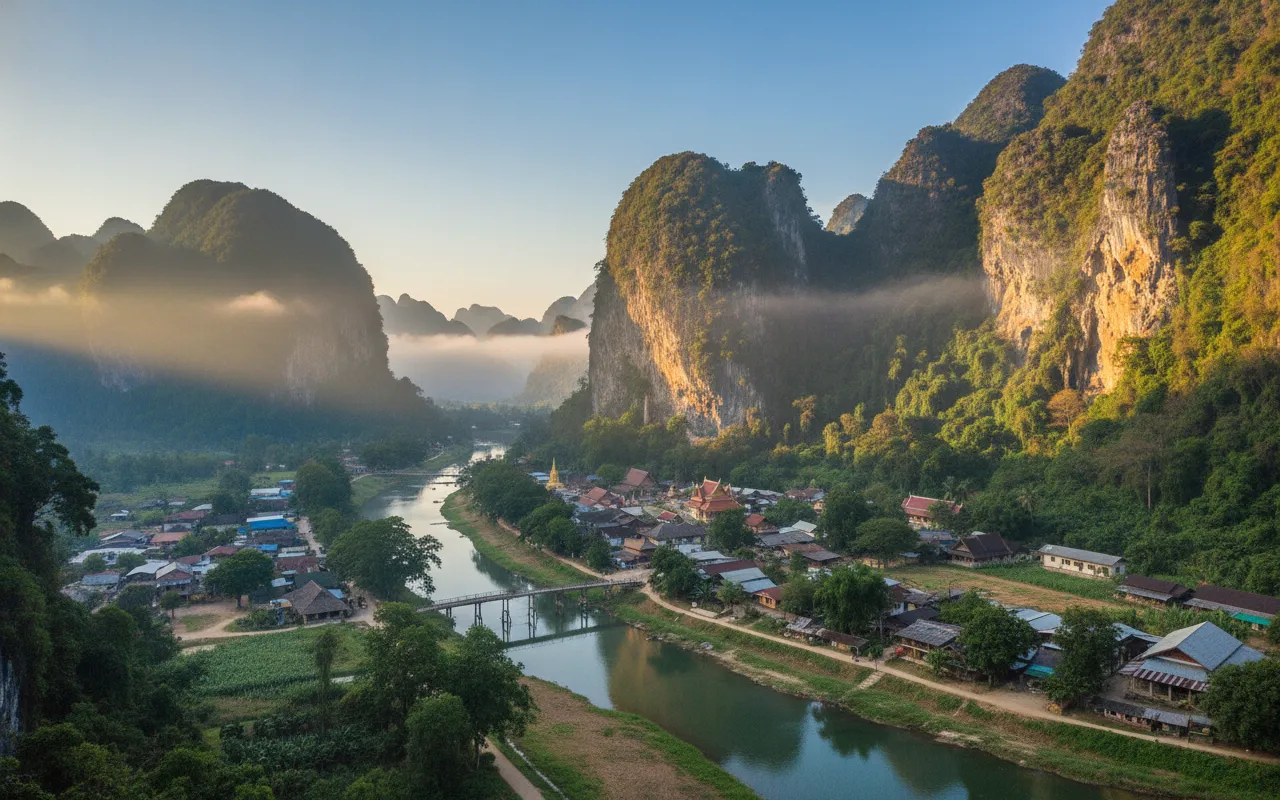
This isn't your typical Thai village with stilt houses amidst rice paddies. Ban Tham is an extraordinary testament to human adaptability, a place where generations have learned to live in harmony with a landscape that seems both daunting and divinely protective. Tucked away in the shadow of the majestic Doi Luang Chiang Dao mountain range in Chiang Mai Province, it’s a destination that promises genuine awe and a profound connection to a way of life that feels ancient yet remarkably present.
The Phenomenon of Ban Tham: Where Homes Are Carved from Nature
What makes Ban Tham truly special is its unique architectural philosophy, born not of design trends, but necessity and ingenuity. Here, the monumental limestone cliffs aren't just a backdrop; they are an integral part of the village's very fabric. Instead of clearing land and constructing entirely new buildings, residents have masterfully utilized the natural features of the karsts – the colossal overhangs, shallow caves, and rock shelters – as foundational elements for their homes and community spaces.
Picture this: a house where the entire back wall and roof are a natural rock face, seamlessly transitioning into a built structure of wood, bamboo, and corrugated iron at the front. Or a small shrine, its sacred effigies nestled within a cool, natural grotto, adorned with fresh flowers and incense. This isn't just about shelter; it's about a deep, respectful integration with the environment. The residents of Ban Tham don't just live *in* nature; they live *with* it, adapting their lives to the contours and whims of these ancient geological giants.
The ingenuity extends beyond mere shelter. The natural formations provide insulation, keeping homes cool in the intense Thai heat and relatively warmer during the cooler dry season. They offer natural protection from the elements, and perhaps, a sense of security and permanence that few modern structures can replicate. This isn't a tourist attraction built for show; it's a genuine, thriving community where children play, meals are cooked, and daily life unfolds in the most extraordinary setting imaginable.

For the intrepid traveler, Ban Tham offers a rare glimpse into a living cultural landscape that defies conventional understanding. It’s a place that challenges our notions of what a home can be, and how humans can not only survive but thrive in environments that seem overwhelmingly powerful. It’s a quiet revolution in living, a testament to the enduring human spirit of adaptation and respect for the natural world.
Whispers of Time: History and Background of a Cave Village
The story of Ban Tham is etched into the very rocks that shelter its inhabitants. While definitive historical records are scarce for such a remote village, the origins of communities living within or alongside caves often trace back centuries, even millennia. The Chiang Dao region, with its dramatic karst topography, has long been a haven for various ethnic groups and a site of spiritual significance. Doi Luang Chiang Dao, the third-highest mountain in Thailand, is revered as a sacred place, home to spirits and legends.
It's plausible that early settlers, perhaps migrants or indigenous groups seeking shelter and fertile land, discovered the protective embrace of these colossal rock formations. The natural caves and overhangs would have provided immediate refuge from predators, harsh weather, and even rival groups. Over generations, what began as temporary shelters likely evolved into more permanent dwellings, as families learned to skillfully extend and integrate man-made structures with the natural rock.
The name "Ban Tham" itself is telling: "Ban" means village, and "Tham" means cave. It literally translates to "Cave Village." This nomenclature suggests a long-standing identity intrinsically linked to its unique geological features. The community has likely maintained a relatively isolated existence due to its remote location, preserving its unique architectural and cultural practices.
The geology of the Chiang Dao area, characterized by its stunning limestone karsts, is a result of millions of years of geological processes – the uplift of ancient seabeds and subsequent erosion by water. These formations create a landscape of dramatic cliffs, deep caves, and fertile valleys, which have historically attracted human settlement. The residents of Ban Tham are, in a sense, living museum pieces, embodying a tradition of human-environment interaction that echoes through the ages.
Journey into Wonder: What You'll See and Experience
Visiting Ban Tham is less about checking off attractions and more about immersing yourself in an authentic, living experience. As you approach the village, the sheer scale of the limestone cliffs will immediately command your attention. They rise dramatically from the valley floor, often shrouded in mist in the mornings, creating an otherworldly atmosphere.
Upon entering the village, you'll be struck by the organic flow of the homes. You'll see houses where massive boulders serve as cornerstones, and where the cool, damp rock forms an entire wall. Some homes appear to be swallowed by the earth, their entrances barely visible beneath towering overhangs. Others are built into crevices, their wooden fronts contrasting beautifully with the grey, textured rock. It's a photographer's dream, offering endless compositions of natural grandeur and human ingenuity.

Beyond the architecture, it's the daily life that truly captivates. You might see villagers tending small gardens, children playing amidst the rocks, or women weaving traditional textiles. The pace of life here is slow, deliberate, and deeply connected to the rhythms of nature. You'll hear the sounds of roosters crowing, the gentle hum of insects, and the distant calls of birds echoing off the cliffs. There are usually small, humble temples or shrines carved directly into the rock faces, adorned with offerings, reflecting the spiritual connection the community has with its environment.
Take your time to wander respectfully through the narrow paths. Observe the intricate details of how each dwelling has been adapted. Notice the natural light filtering into these rock-integrated homes. You might even catch glimpses of the villagers' daily routines – preparing food, chatting with neighbors, or simply enjoying the shade of a colossal rock. It’s a place that encourages quiet contemplation and a deep appreciation for human resilience and creativity.
While Ban Tham itself is the main draw, the surrounding area offers further natural beauty. The Chiang Dao region is renowned for its caves (like Tham Chiang Dao, a more accessible and famous cave temple), lush forests, and opportunities for trekking. The imposing presence of Doi Luang Chiang Dao, often visible from the village, serves as a constant reminder of the majestic landscape that cradles this unique community.

Your Journey to Ban Tham: Practical Visit Tips
Venturing to Ban Tham requires a little planning and an adventurous spirit, but the rewards are immeasurable. As it’s an active, living village and not a designated tourist park, respectful behavior is paramount.
Getting There:
Ban Tham is located in Chiang Dao District, approximately 1.5 to 2 hours drive north of Chiang Mai city. The most common way to reach the area is by renting a scooter or car from Chiang Mai, or hiring a private driver. Once you reach Chiang Dao town, Ban Tham is a short drive further into the more rural, mountainous areas. Google Maps usually has it marked, but local signage can be sparse. A scooter offers the most flexibility to explore the surrounding areas.
Best Time to Visit:
The cool, dry season from **November to February** is ideal. The weather is pleasant, with clear skies and less humidity, making exploration comfortable. The hot season (March-May) can be intense, and the rainy season (June-October) can make unpaved roads challenging and increase mosquito activity.
Accommodation:
There are no guesthouses or hotels directly within Ban Tham itself, as it is a residential village. However, the nearby town of Chiang Dao offers a charming array of guesthouses, bungalows, and boutique resorts catering to various budgets. Staying in Chiang Dao town allows you to easily visit Ban Tham and explore other attractions in the area, such as Tham Chiang Dao cave and the local hot springs.
What to Bring:
- **Comfortable Walking Shoes:** You'll be walking on uneven terrain and village paths.
- **Camera:** The photo opportunities are incredible.
- **Water and Snacks:** Limited options in the village.
- **Sun Protection:** Hat, sunglasses, sunscreen.
- **Light Rain Jacket (seasonal):** For unexpected showers.
- **Basic Thai Phrases:** A few simple greetings and thank yous go a long way.
Respectful Tourism:
Remember, Ban Tham is a home to people. Be mindful of their privacy and daily life. Ask permission before taking close-up photos of individuals, especially children. Dress modestly, particularly if visiting any shrines or temples. Maintain a quiet demeanor and avoid disturbing the peace of the village. Leave no trace – carry out everything you carry in.
Ban Tham is more than just a destination; it's an experience that will stay with you long after you've left. It's a reminder of the incredible ways humans can adapt, innovate, and live in profound harmony with the most spectacular landscapes. If you're seeking a genuinely unique adventure off the well-trodden tourist path in Thailand, Ban Tham awaits, ready to reveal its ancient secrets and living wonders.
Essential Travel Information
- Location Ban Tham (บ้านถ้ำ), Thailand
- Best Time November - February (cool, dry season)
- Getting There Approx. 1.5-2 hrs drive north of Chiang Mai city. Best by rented scooter/car or private driver to Chiang Dao town, then local transport/scooter to Ban Tham.
- Airport Chiang Mai International Airport (CNX)
- Budget Budget to Mid-range (approx. $30-70 USD daily for basic accommodation, food, and transport outside of Chiang Mai city)
- Language Thai, local dialects (e.g., Lanna)
Find Places to Stay Near Ban Tham (บ้านถ้ำ)
Compare hotels, hostels, and unique stays in Thailand.
Search AccommodationTours & Experiences Near Ban Tham (บ้านถ้ำ)
Book guided tours, day trips, and unique experiences.
Browse Tours