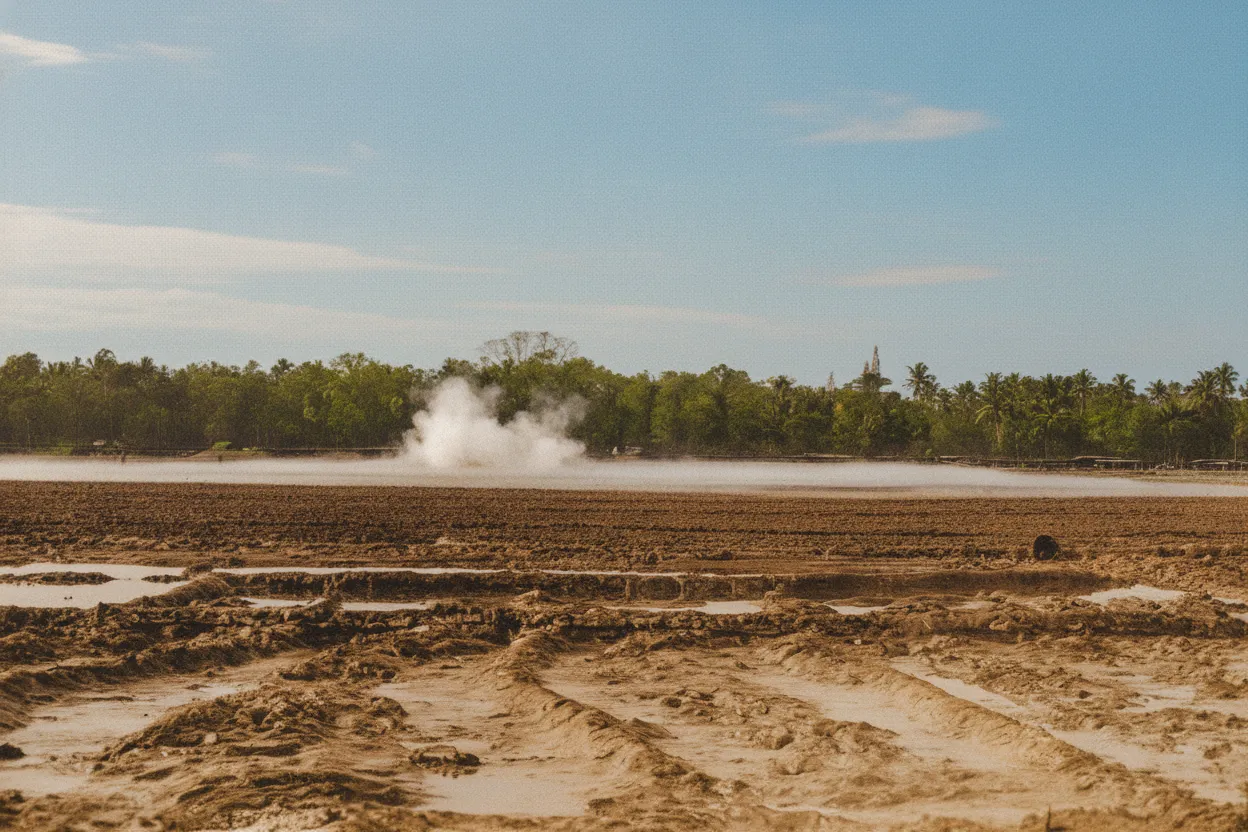
Imagine a place where the earth itself breathes, exhaling ancient gases and bubbling mud in rhythmic pulses, creating a landscape so surreal it feels plucked from another planet. Now, picture local villagers, their faces etched with generations of wisdom, patiently transforming the very brine spewed from these geological wonders into glistening crystals of salt. This isn't a scene from a fantasy novel; this is Bledug Kuwu, a mesmerizing, geologically active site nestled in the heart of Central Java, Indonesia. If you're an intrepid traveler seeking an experience that marries raw natural power with timeless human tradition, prepare to have your mind blown. Bledug Kuwu isn't just a destination; it's an encounter with the living earth.
Bledug Kuwu: Where the Earth Breathes and Salt is Born
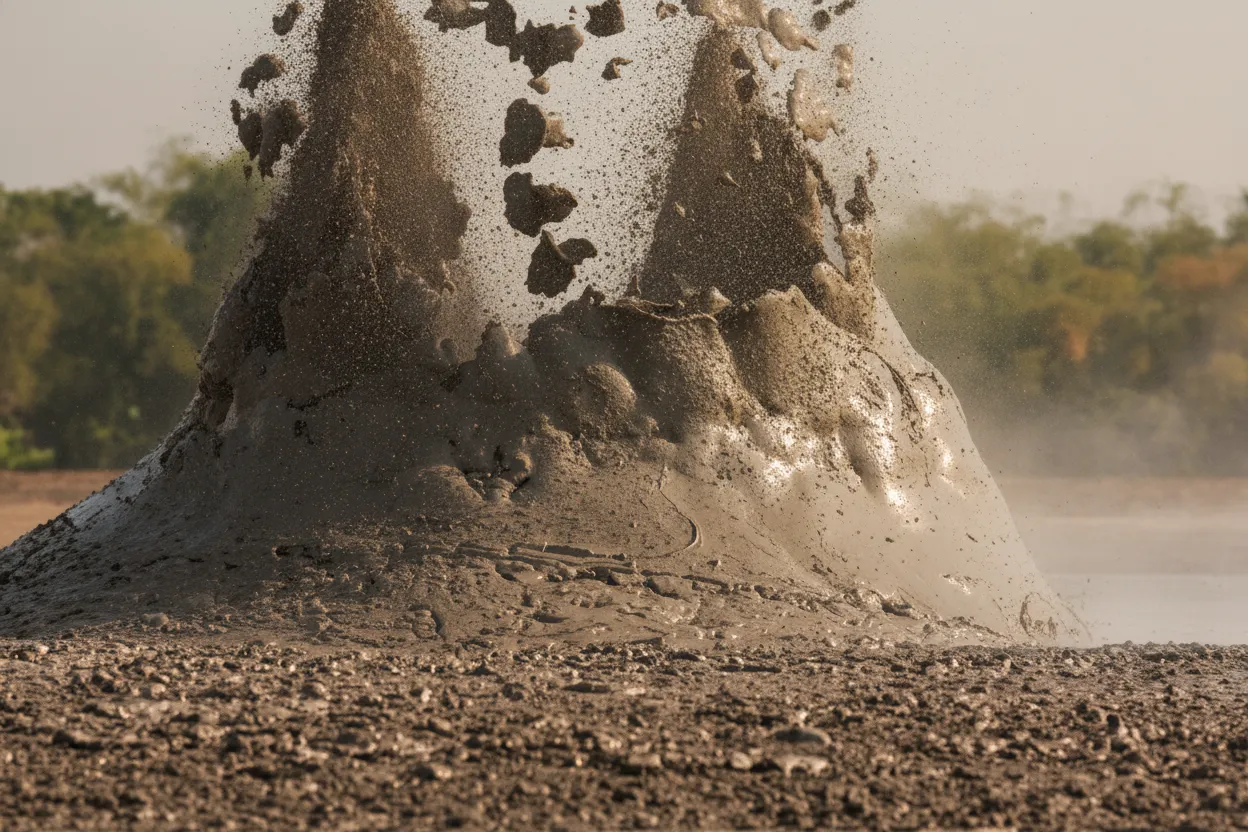
Bledug Kuwu is no ordinary tourist attraction. Forget towering volcanoes with fiery summits; here, the drama unfolds on a more intimate, yet equally profound, scale. This is a mud volcano complex, a rare geological phenomenon where deep underground pressures force mud, water, and gas to the surface. What makes Bledug Kuwu particularly special is its consistent, almost meditative, activity. You won't witness violent explosions, but rather a continuous, rhythmic bubbling and "eruption" of grey mud, often reaching several meters high, accompanied by the distinct gurgle and hiss of escaping gas.
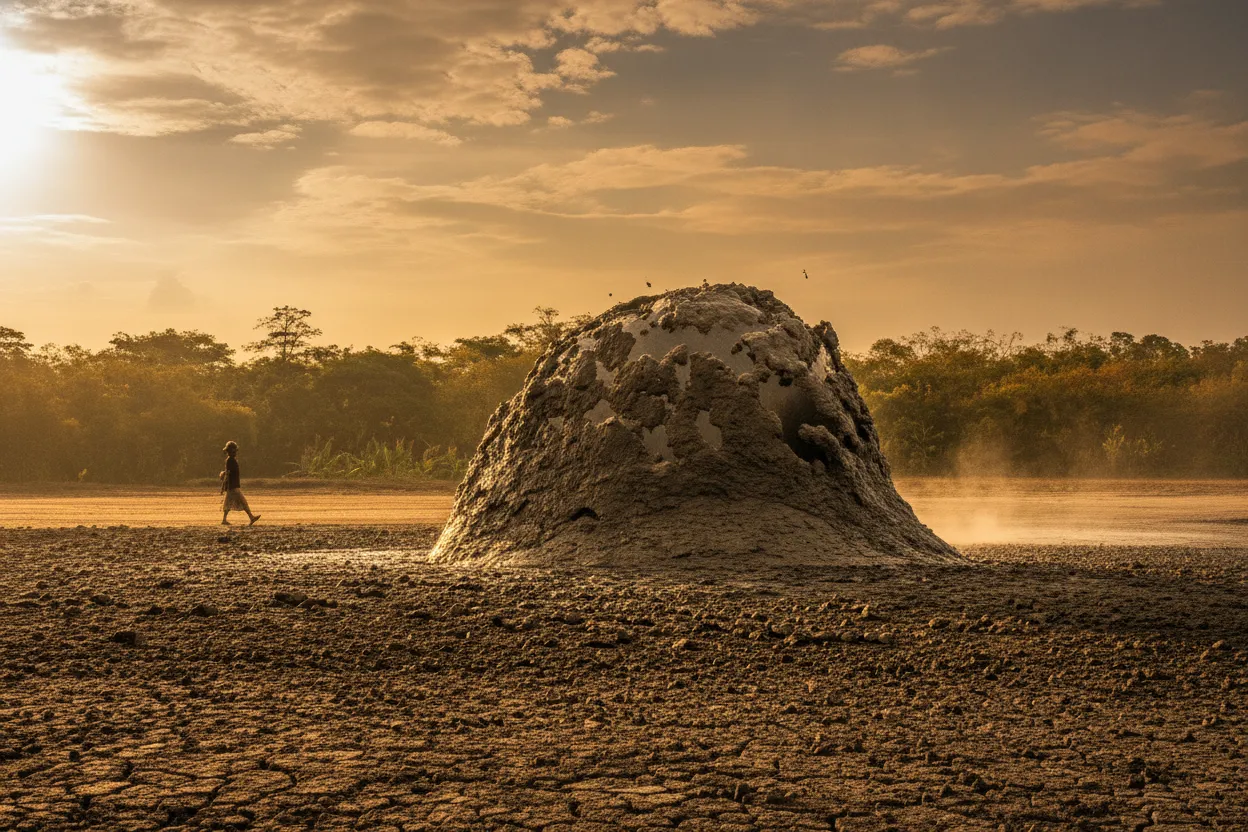
The name "Bledug Kuwu" itself hints at this spectacle: "Bledug" means "explosion" or "burst" in Javanese, while "Kuwu" is the local village. It's a fitting name for a place where the earth seems to be perpetually clearing its throat. The mud, rich in minerals and often warm, creates a constantly shifting, otherworldly terrain. Pools of saline water shimmer under the tropical sun, their surfaces disturbed by the relentless, hypnotic activity below. It's a stark, beautiful landscape that feels ancient, primal, and utterly alive.
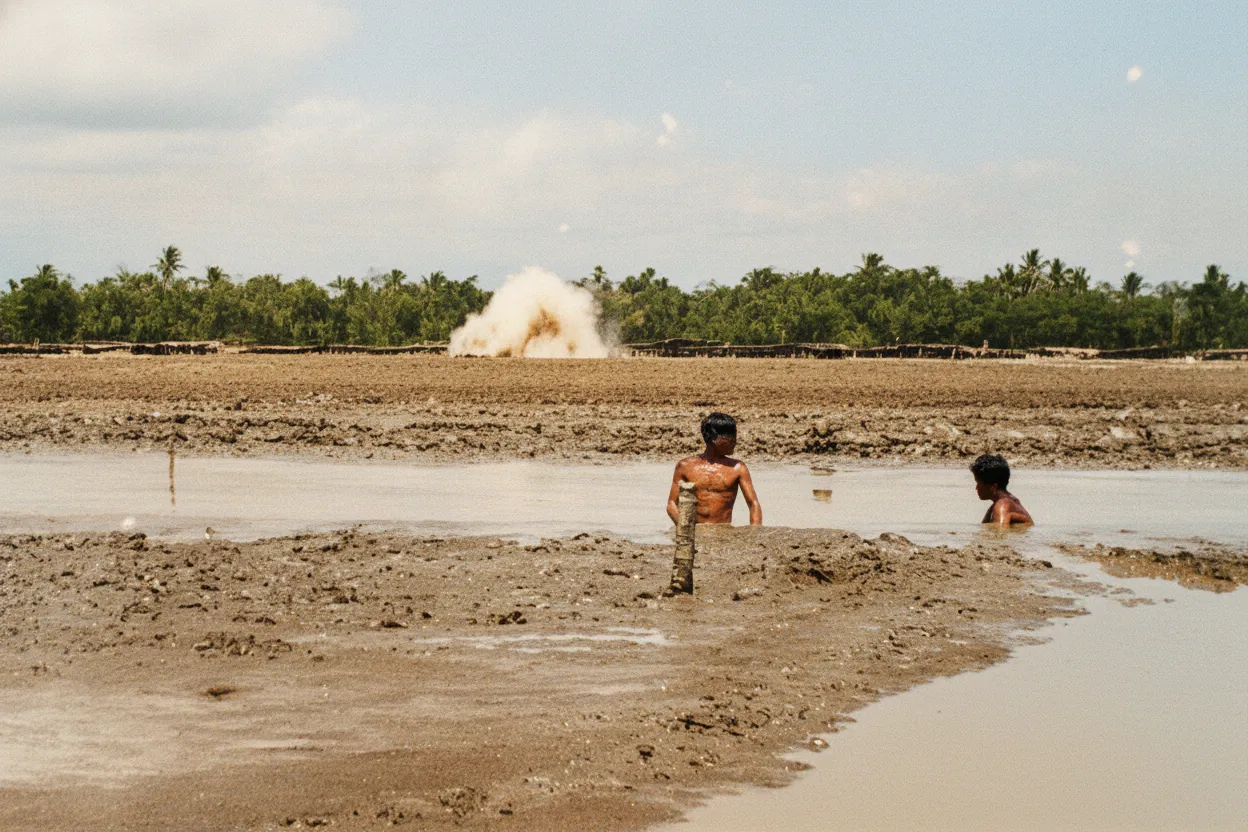
But the wonder doesn't stop at geology. For centuries, the local community has ingeniously harnessed this natural phenomenon. The water that bubbles up from Bledug Kuwu is highly saline – far saltier than seawater. Villagers collect this mineral-rich brine, carrying it in traditional bamboo containers or buckets, and transport it to nearby drying fields. Here, under the watchful eye of the sun, the water evaporates, leaving behind pure, natural salt. It's a testament to human ingenuity and resilience, a sustainable industry born directly from the earth's raw power. Witnessing this age-old process firsthand provides a profound connection to the land and its people.
A Glimpse into Geologic Time: The History of Bledug Kuwu
The story of Bledug Kuwu stretches back millennia, a testament to the slow, powerful forces shaping our planet. Geologically, it sits atop a thick layer of sedimentary rock within a vast basin. Deep beneath the surface, ancient organic matter decomposes, producing methane and other gases. These gases, along with water, are trapped under immense pressure. When geological weaknesses or faults occur, these volatile mixtures find a path to the surface, bringing with them the fine sediments that form the characteristic mud.
While the precise age of the current mud volcano complex is hard to pinpoint, the geological conditions that create it have been active for eons. The continuous nature of the eruptions suggests a stable and ongoing geological process. For the local communities surrounding Kuwu village, this site has been a part of their heritage for as long as anyone can remember. Oral traditions likely speak of its power and mystery, and the practice of harvesting salt from its briny waters has been passed down through countless generations.
This long history intertwines the natural world with human culture, creating a unique symbiotic relationship. The mud volcanoes provide a livelihood, and in return, the villagers live in harmony with this powerful natural force, understanding its rhythms and respecting its might. It's a living example of how traditional knowledge and sustainable practices can thrive alongside extraordinary natural phenomena.
What Awaits You: Exploring Bledug Kuwu's Surreal Landscape
Stepping onto the grounds of Bledug Kuwu is like entering another dimension. The first thing you'll notice is the low, rhythmic rumble, a deep gurgle that seems to emanate from the very ground beneath your feet. As you approach the main activity areas, the sounds become more pronounced: the distinct 'bledug' sound as mud erupts, a wet, earthy exhalation. The air often carries a slightly saline, mineral scent, a subtle reminder of the earth's chemistry at work.
You'll find designated viewing platforms and safe areas from which to observe the main mud vents. These vents are the stars of the show, continuously bubbling and occasionally spurting mud several meters into the air. It's a mesmerizing, almost hypnotic spectacle, and you can easily spend an hour or more just watching the earth breathe. The mud itself is a unique greyish-brown, sometimes forming intricate patterns as it settles back into the pools.
Beyond the active vents, the landscape stretches out, a canvas of cracked earth and shallow, saline pools. This is where you'll often encounter the salt farmers at work. They meticulously collect the brine, using simple tools and age-old techniques. You might see them carrying their bamboo poles laden with buckets, or tending to the drying beds where the sun does its magic. Don't be shy – a friendly smile and a respectful gesture can often open the door to a fascinating conversation or demonstration of their craft. It's a truly unique cultural exchange.
The best time for photography is usually in the morning or late afternoon when the light is softer, casting dramatic shadows and highlighting the textures of the landscape. Capture the eruptions, the intricate patterns in the dried mud, and the stoic beauty of the salt farmers at work. Remember, this is a dynamic environment, so every visit offers a slightly different perspective.
Planning Your Journey: Practical Tips for Visiting Bledug Kuwu
Ready to add Bledug Kuwu to your Indonesian adventure? Here’s what you need to know to make your visit smooth and memorable:
- Best Time to Visit: The dry season (typically May to September) is ideal. The weather is more predictable, making travel and exploring the site more comfortable. During the rainy season, the ground can become muddy and slippery, and access might be more challenging.
- Getting There: Bledug Kuwu is located in Grobogan Regency, Central Java, approximately 28 km northeast of Purwodadi, the nearest major town, and about 90 km east of Semarang, the provincial capital.
- From Semarang: You can hire a private car with a driver (recommended for convenience), take a local bus to Purwodadi, and then arrange local transport (ojek or taxi) to Bledug Kuwu. The drive from Semarang takes about 2-3 hours.
- From Purwodadi: It's a shorter drive, perhaps 30-45 minutes. Taxis or local motorbikes (ojek) are readily available.
- What to Wear: Comfortable, closed-toe shoes are essential, as the terrain can be uneven and dusty (or muddy, depending on recent weather). A hat, sunglasses, and light, breathable clothing are advisable for sun protection.
- What to Bring:
- Plenty of water: It can get hot, and there aren't many facilities immediately at the site.
- Sunscreen: Protect your skin from the tropical sun.
- Camera: You'll want to capture the unique landscape and activity.
- Small cash (IDR): For entrance fees (usually very modest) and any local purchases.
- Facilities: Basic facilities like a small parking area and simple restrooms might be available, but don't expect extensive tourist infrastructure. Embrace the raw, natural feel of the place.
- Respect Local Culture: When interacting with the salt farmers, be polite and ask for permission before taking close-up photos. A smile and a few words of Bahasa Indonesia (like "terima kasih" - thank you) go a long way.
- Safety: Stick to marked paths and designated viewing areas. The ground around active mud volcanoes can be unstable and hot.
Beyond the Bubbles: The Enduring Charm of Central Java
While Bledug Kuwu is undoubtedly a highlight, Central Java offers a wealth of other experiences that make a longer stay worthwhile. Consider combining your visit with a trip to the magnificent ancient temples of Borobudur and Prambanan, both UNESCO World Heritage Sites. Explore the vibrant city of Yogyakarta, a hub of Javanese culture, art, and delicious street food. Or venture into the lush landscapes of Mount Merapi for a thrilling jeep tour. Central Java is a region rich in history, culture, and natural beauty, offering something for every type of traveler.
Experience the Earth's Raw Power: Why Bledug Kuwu Belongs on Your Itinerary
Bledug Kuwu isn't just another stop on the tourist trail; it's an immersive experience that will challenge your perceptions of our planet. It's a place where you can stand witness to the earth's continuous, dynamic processes, feel its ancient breath, and observe human ingenuity thriving in harmony with nature. It’s a journey into the heart of Central Java, revealing a hidden gem that combines geological wonder with profound cultural insight.
If you're looking for an adventure that goes beyond the ordinary, a destination that promises both awe and introspection, then Bledug Kuwu mud volcanoes should be at the very top of your list. Come, and let the earth's rhythmic pulse awaken your sense of wonder. Don't just read about it, experience it!
Essential Travel Information
- Location Bledug Kuwu Mud Volcanoes, Indonesia
- Best Time May to September (Dry Season)
- Getting There Approx. 90km east of Semarang, 28km northeast of Purwodadi. Best reached by private car/driver or local transport from these cities.
- Airport Ahmad Yani International Airport (SRG), Semarang
- Budget Mid-range (~$60-80 USD per day, including transport and basic accommodation)
- Language Indonesian (Bahasa Indonesia), Javanese
Find Places to Stay Near Bledug Kuwu Mud Volcanoes
Compare hotels, hostels, and unique stays in Indonesia.
Search AccommodationTours & Experiences Near Bledug Kuwu Mud Volcanoes
Book guided tours, day trips, and unique experiences.
Browse Tours