Welcome to a Land Before Time: Bosque Petrificado La Leona
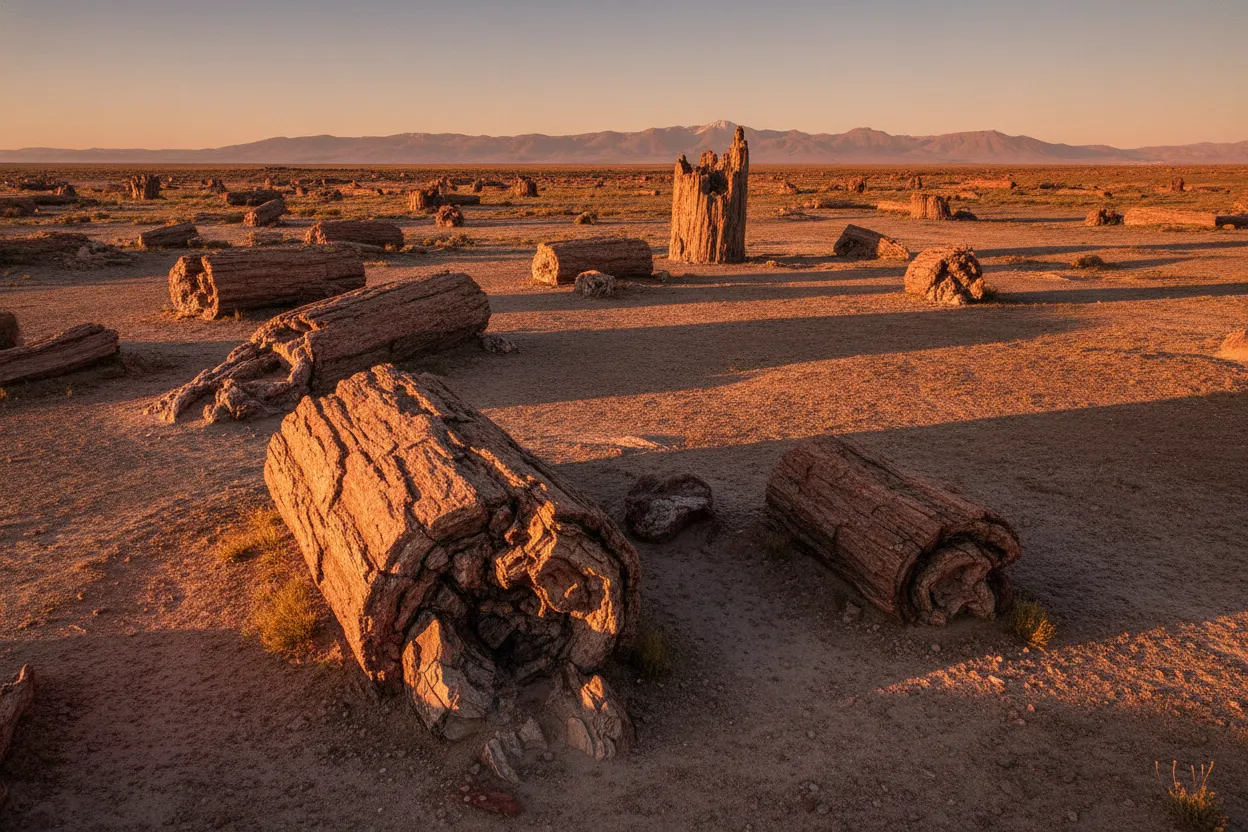
Deep within the vast, windswept plains of Santa Cruz, Patagonia, lies a destination that defies imagination: the Petrified Forest of La Leona. Unlike its more famous counterparts, La Leona remains largely a secret, offering an intimate, almost sacred encounter with Earth's ancient past. Here, the silence is profound, broken only by the wind and the crunch of your boots on volcanic ash and fossilized fragments. It’s a place where you don't just see history; you walk through it, touch it, and feel the immense weight of geological time pressing in around you. This isn't just a collection of old trees; it's a window into a world that existed long before humans, a world dominated by colossal flora and primeval landscapes. If you crave adventure, solitude, and a profound connection to our planet's epic story, La Leona is calling.Where Giants Sleep in Stone: The Geological Masterpiece
The story of Bosque Petrificado La Leona begins approximately 70 million years ago, during the late Cretaceous period. This region, now a stark desert, was once a lush, subtropical forest teeming with life. Towering *Araucaria mirabilis* trees, ancient relatives of today's monkey puzzle trees, dominated the landscape, reaching heights of over 100 meters. Then, a series of cataclysmic volcanic eruptions began. Ash clouds, rich in silica, blanketed the forests, burying these magnificent giants where they stood.Over millennia, groundwater, saturated with minerals from the volcanic ash, slowly seeped into the buried wood. Each organic cell was gradually replaced by silica, molecule by molecule, preserving the trees in astonishing detail. Every growth ring, every bark texture, even the cellular structure of the wood, was meticulously replicated in stone. This incredible process, known as permineralization, effectively turned wood into rock, creating the fossilized marvels we see today. Later, tectonic uplift and erosion brought these stony giants back to the surface, scattering them across the Patagonian steppe like the bones of mythical beasts.
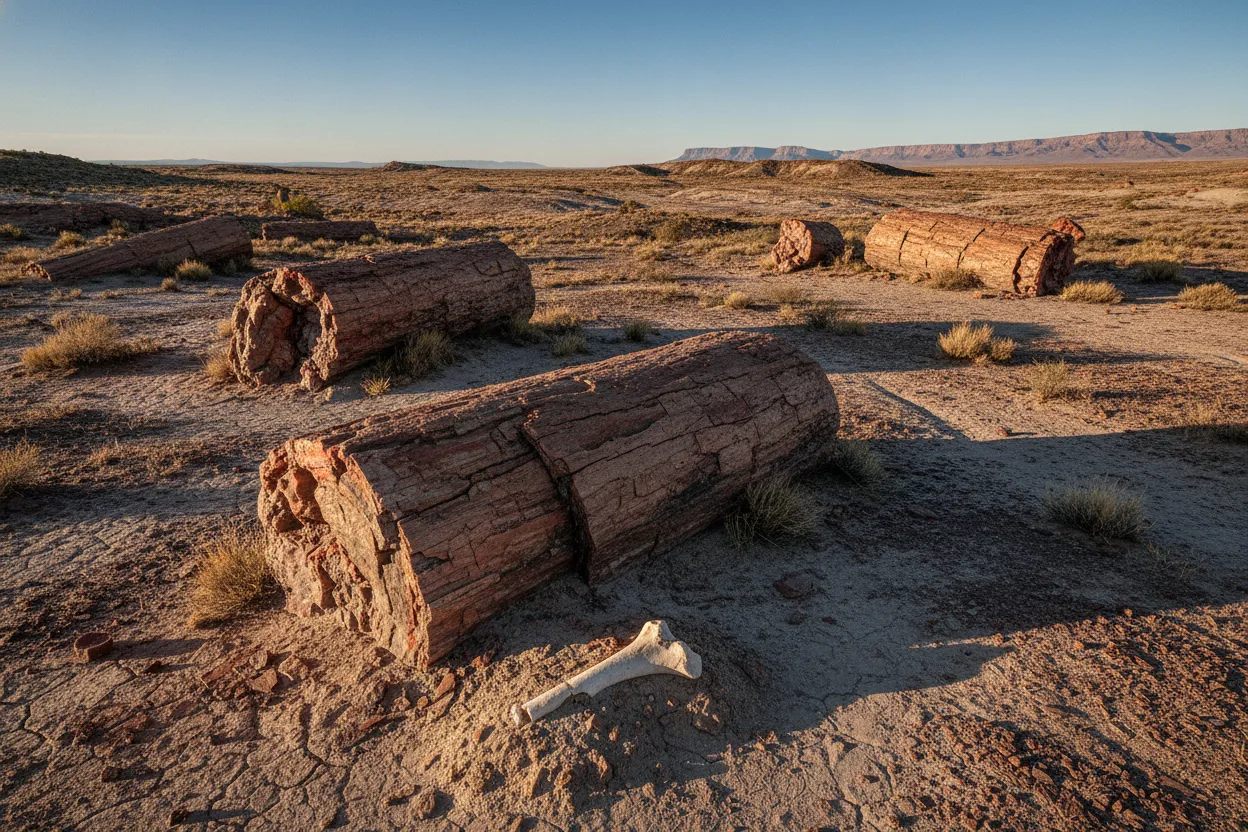
But the story doesn't end with trees. This ancient environment was also home to dinosaurs. Interspersed among the petrified logs, paleontologists have discovered fragments of dinosaur bones, adding another layer of prehistoric wonder to the site. Imagine walking among these fossilized trees, knowing that colossal reptiles once roamed the same ground, seeking shade under their living predecessors. It's a humbling thought, a tangible link to a world almost beyond comprehension.
Journey Through a Petrified Wonderland: What You'll See and Experience
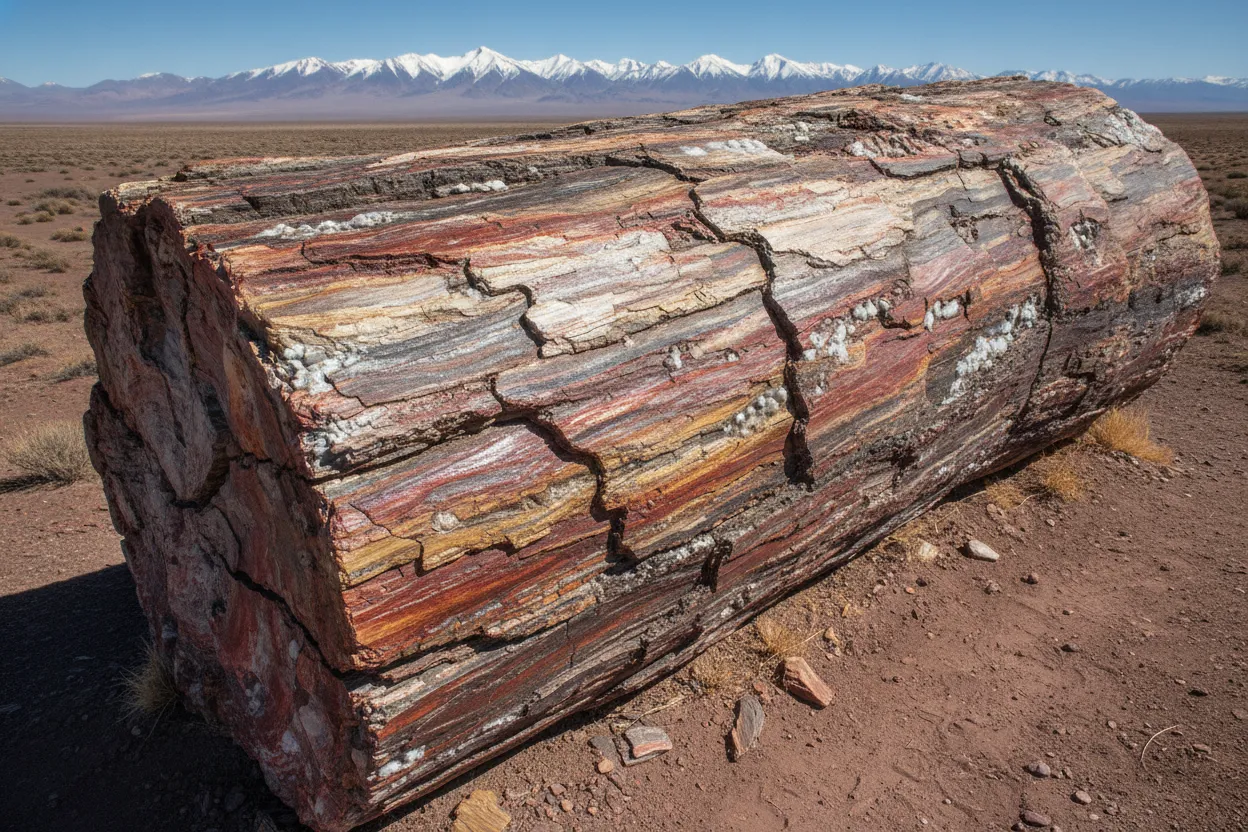
A visit to Bosque Petrificado La Leona is an immersive journey into deep time. As you traverse the sparse, ochre landscape, the first thing that strikes you is the sheer scale of the petrified logs. These aren't small fragments; many are massive trunks, some several meters long and over a meter in diameter, lying where they fell millions of years ago. Their surfaces, polished by wind and sand, reveal a stunning palette of colors – reds, browns, yellows, and grays – a testament to the diverse mineral content that replaced their organic structure.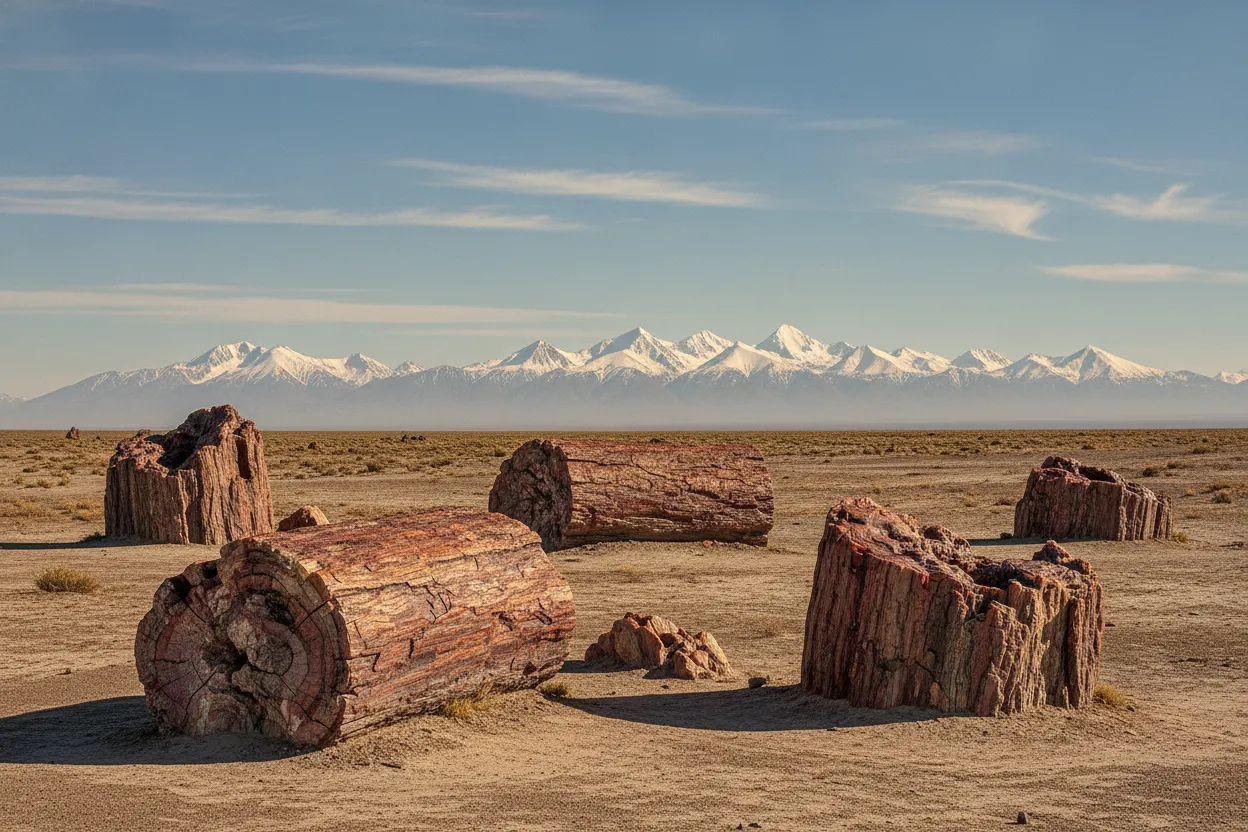
Take your time to examine the details. You can still discern the intricate patterns of bark, the concentric circles of growth rings, and even the tiny knots where branches once sprouted. It’s a scientific marvel and an artistic masterpiece all at once. The feeling of running your hand over the cold, hard stone, knowing it was once living wood, is profoundly moving. Each piece tells a silent story of life, death, and transformation, a testament to nature's enduring power.
Beyond the petrified wood, the landscape itself is an integral part of the experience. The vastness of the Patagonian steppe, with its distant horizons and dramatic skies, provides a breathtaking backdrop. The solitude here is palpable, allowing for quiet contemplation and a deep connection with nature. You’ll feel a sense of discovery, far from the bustling crowds of more popular destinations. Keep an eye out for the subtle signs of modern Patagonian life too – perhaps a guanaco grazing in the distance, or a soaring condor circling high above.
Beyond the Stone Trees: The Wider Patagonian Tapestry
While Bosque Petrificado La Leona is undeniably the star attraction, its remote location in the Santa Cruz province positions it within a broader tapestry of Patagonian wonders. This region is a land of extremes and untamed beauty, from the colossal Perito Moreno Glacier to the towering peaks of Fitz Roy and Cerro Torre. Visiting La Leona offers a unique counterpoint to these more famous ice and rock landscapes, showcasing a different, equally compelling facet of Patagonia's natural heritage.The journey to La Leona itself is part of the adventure, taking you through vast, empty stretches of steppe where the sky feels impossibly wide. It's a chance to truly experience the raw, unadulterated beauty of Argentina's deep south, to understand the forces that have shaped this incredible corner of the world. While facilities at La Leona itself are minimal, the nearby towns often serve as gateways to other Patagonian explorations, allowing you to combine your ancient journey with contemporary adventures.
Planning Your Expedition: Practical Tips for Visiting La Leona
Visiting Bosque Petrificado La Leona requires a bit of planning, but the rewards are immeasurable.- Getting There: La Leona is quite remote. The most common access point is from El Calafate (FTE), a major Patagonian hub. From there, it's typically a multi-hour drive, often requiring a 4x4 vehicle due to unpaved roads. Most visitors opt for guided tours from El Calafate, which handle transportation and provide invaluable context.
- When to Go: The Patagonian spring (October-November) and autumn (March-April) generally offer the most pleasant weather, with milder temperatures and fewer strong winds than the summer or winter. Summer (December-February) can be hot and windy, while winter (June-August) is cold, with potential for snow and road closures.
- What to Bring:
- Layers of Clothing: Patagonian weather is notoriously unpredictable. Dress in layers, including a windproof and waterproof outer shell.
- Sturdy Footwear: You'll be walking on uneven terrain.
- Water and Snacks: There are no services at the site.
- Sun Protection: Hat, sunglasses, and high-SPF sunscreen are essential, even on cloudy days.
- Camera: You'll want to capture the otherworldly beauty.
- Guided Tours: Highly recommended. Local guides offer not only transportation but also expert knowledge about the geology, paleontology, and history of the site, enriching your experience significantly.
- Respect the Site: This is a fragile natural heritage site. Do not remove any fossils or disturb the landscape. Stick to marked paths and leave no trace.
Bosque Petrificado La Leona is more than just a destination; it's an experience that transcends time. It's a place where the Earth's deep history is laid bare, inviting you to ponder the immense forces that shaped our world. If you're seeking an adventure that combines natural wonder, scientific fascination, and the profound solitude of one of the planet's most spectacular regions, then set your sights on this extraordinary petrified forest. It’s a journey you won’t soon forget.
Essential Travel Information
- Location Bosque Petrificado La Leona (Petrified Forest of La Leona), Argentina
- Best Time October to November (Spring) and March to April (Autumn)
- Getting There Typically via guided tour from El Calafate (FTE), requiring a 4x4 vehicle for unpaved roads.
- Airport El Calafate International Airport (FTE)
- Budget Mid-range (due to need for guided tours and remote access) with approximate daily cost of $150-$300+ including tour and transport.
- Language Spanish
Find Places to Stay Near Bosque Petrificado La Leona (Petrified Forest of La Leona)
Compare hotels, hostels, and unique stays in Argentina.
Search AccommodationTours & Experiences Near Bosque Petrificado La Leona (Petrified Forest of La Leona)
Book guided tours, day trips, and unique experiences.
Browse Tours