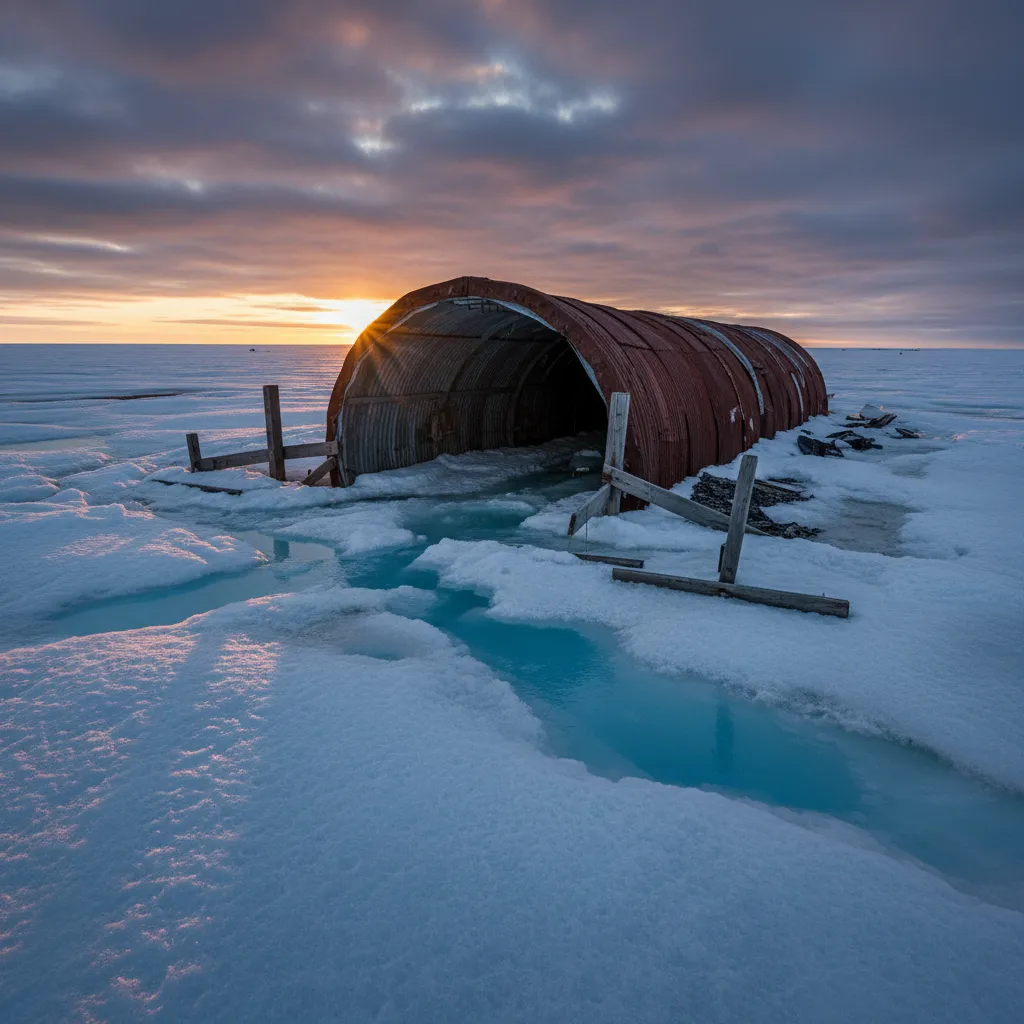
Deep beneath the shifting Greenland ice sheet lies a chilling secret, a ghost city from a bygone era, now slowly re-emerging from its icy tomb. Imagine a place where audacious Cold War ambition met the unforgiving Arctic, creating an entire self-sufficient base, powered by a nuclear reactor, hidden from the world. This isn't science fiction; it's the true story of Camp Century, a U.S. Army installation known covertly as Project Iceworm. Abandoned over half a century ago, its infrastructure, once thought permanently entombed, is now being exposed by the melting ice, revealing a frozen time capsule of human ingenuity, geopolitical tension, and looming environmental consequence.
The Ghost City Beneath the Ice: What Makes Camp Century Special?
Camp Century isn't just a former military base; it's a testament to humanity's drive to conquer extreme environments and a startling example of Cold War ingenuity. What makes it truly special is its very nature: an entire city, carved out of and buried within the Greenland ice sheet. From 1959 to 1967, this remote outpost was a fully functional, subterranean world, home to over 200 personnel. It boasted living quarters, scientific laboratories, a barbershop, a chapel, a recreation hall, and even a small shop, all interconnected by a network of tunnels beneath hundreds of feet of ice. It was designed to be self-sufficient, powered by PM-2A, the world's first portable nuclear reactor, providing heat and electricity in one of the most hostile environments on Earth.
But Camp Century had a dual purpose. While publicly presented as an Arctic research facility studying glaciology, cold-weather construction, and human factors in extreme conditions, its true, top-secret mission was far more ambitious: Project Iceworm. This covert operation aimed to explore the feasibility of deploying a mobile nuclear missile launch system within the ice sheet, capable of moving around and striking targets in the Soviet Union. The vision was breathtakingly audacious: a network of tunnels large enough to house hundreds of ballistic missiles, constantly shifting position to avoid detection. Camp Century was the prototype, the testing ground for this incredible, and ultimately unrealized, dream.
Today, as the Arctic warms at an unprecedented rate, Camp Century is transforming from a forgotten relic into a potent symbol of climate change. The ice that once protected and preserved it is now retreating, threatening to expose not just its fascinating structures but also the waste left behind – including radioactive coolant, diesel fuel, and raw sewage. This makes Camp Century not only a unique historical site but also a critical environmental concern, a chilling reminder of the long-term consequences of human ambition in a changing world.
A Cold War Dream: The Audacious History of Project Iceworm and Camp Century
The story of Camp Century begins in the late 1950s, a period of intense Cold War tension. The U.S. Army Corps of Engineers, specifically the CRREL (Cold Regions Research and Engineering Laboratory), was tasked with developing strategies for military operations in the Arctic. The idea of a "city under the ice" emerged as a way to provide a stable, protected environment for both scientific research and, more secretly, for Project Iceworm.
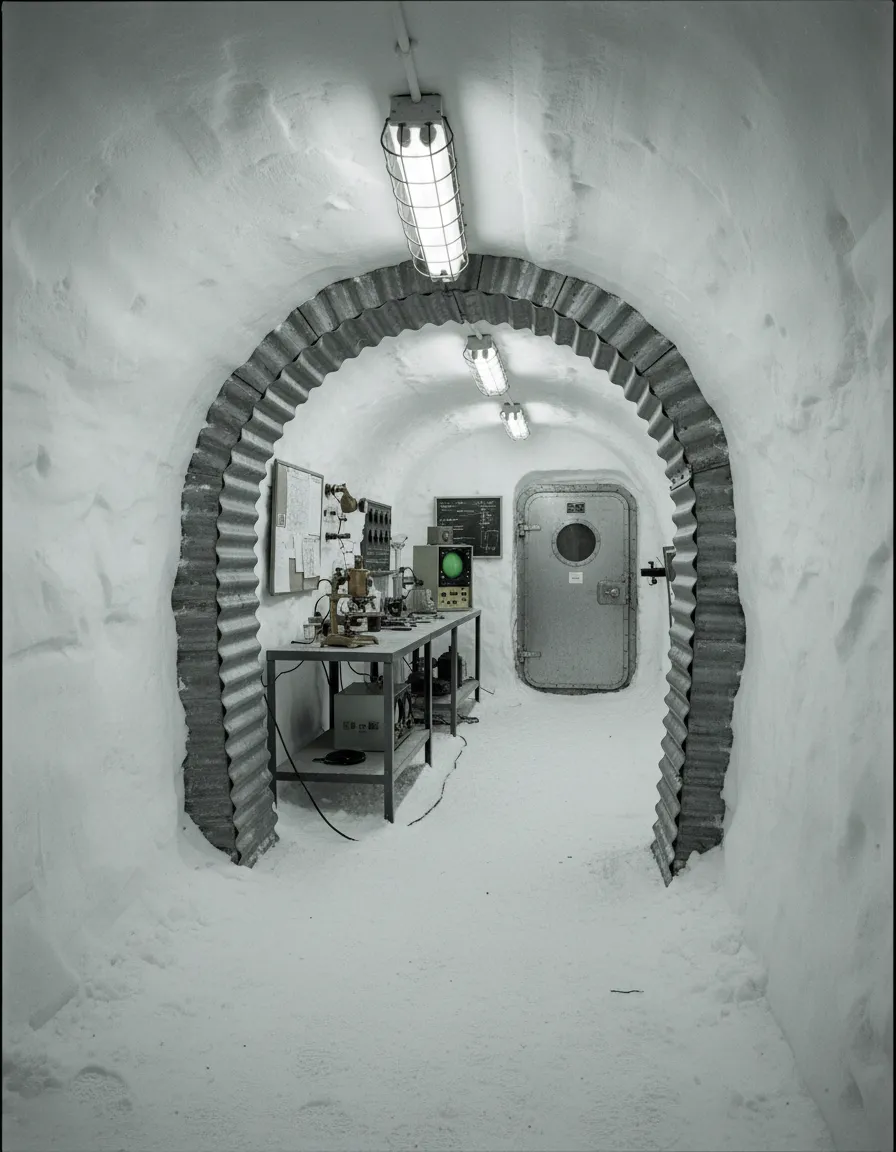
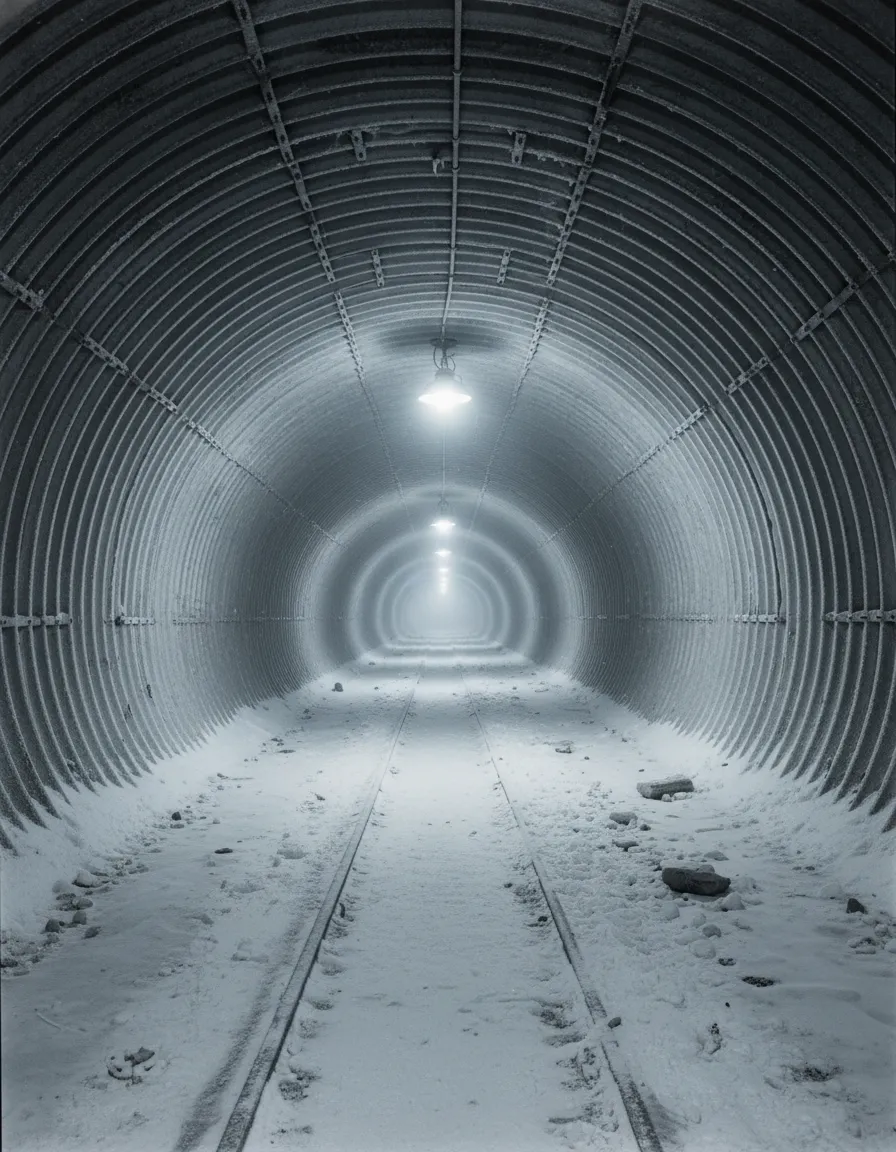
Construction began in 1959, an incredible feat of engineering. Using specialized machines, U.S. Army engineers employed a "cut-and-cover" method. Giant snow-millers carved trenches up to 26 feet deep and 42 feet wide into the ice. These trenches were then roofed with corrugated steel arches, which were subsequently covered with snow, forming a protective layer that insulated the base from the brutal Arctic elements and the prying eyes of Soviet reconnaissance. Over the next few years, a network of 21 tunnels, totaling nearly 3,000 feet in length, was created, forming the backbone of this underground city.
Life at Camp Century was extraordinary. Personnel lived, worked, and socialized in a self-contained environment, often unaware of the sun for months. The nuclear reactor, PM-2A, was the heart of the operation, providing a reliable power source that eliminated the need for constant resupply of diesel fuel, a logistical nightmare in such a remote location. Scientists conducted groundbreaking research on ice mechanics, glaciology, and Arctic living, while engineers refined techniques for building and maintaining structures in a constantly shifting ice sheet. Meanwhile, in deeper, more secluded tunnels, the true purpose of Project Iceworm was quietly being explored, testing the feasibility of a mobile ICBM system.
However, the dream was short-lived. By 1967, the shifting nature of the ice sheet proved to be Camp Century's undoing. The ice, far from being static, was slowly deforming the tunnels, causing structural integrity issues. The costs of maintaining the base and the logistical challenges of resupplying it (despite the nuclear reactor) became prohibitive. Furthermore, advancements in ICBM technology made the concept of a mobile missile system under the ice less strategically appealing. Project Iceworm was formally abandoned, and Camp Century was decommissioned. The nuclear reactor was removed, but the rest of the base, including its vast network of tunnels, equipment, and waste, was left behind, assumed to be permanently encapsulated and harmlessly preserved by the accumulating snow and ice.
What Remains: Exploring Camp Century's Icy Tomb (A Glimpse into the Past)
For decades, Camp Century lay dormant, buried under hundreds of feet of snow and ice, a frozen ghost town lost to time. But as the Greenland ice sheet melts at an accelerated pace due to climate change, this extraordinary site is slowly beginning to re-emerge. While it’s not a place you can simply visit as a tourist, the prospect of what *could* be seen, or what researchers *are* discovering, is profoundly captivating.
Imagine peering into a tunnel, perfectly preserved by the cold, and seeing the remnants of a 1960s laboratory, with scientific instruments still on benches, diagrams on walls, and perhaps even personal effects left behind by soldiers. The ice has acted as a natural preservative, creating an eerie time capsule. Researchers who have visited the site in recent years have reported seeing the outlines of the old trenches and the beginnings of the structures as the snow cover thins. The sheer scale of the operation, even in its decaying state, is mind-boggling. You can almost visualize the bustling activity, the hum of the nuclear reactor, the camaraderie of the soldiers, all frozen in a moment of history.
The potential for discovery is immense. As more of the base becomes exposed, we might uncover more about the daily lives of those stationed there, the specifics of the scientific experiments, and perhaps even further insights into the covert Project Iceworm. It’s a unique opportunity to witness the tangible legacy of the Cold War, a period of intense technological and ideological struggle, preserved in the most unlikely of places. The ice, once its protector, is now its revealer, slowly peeling back layers of history to show us a secret world that once was.
Visions of the Future: The Environmental Time Capsule and Visiting Camp Century
While the allure of exploring Camp Century is undeniable, it's crucial to understand that this is not a conventional tourist destination. The reality is far more complex and sobering. Camp Century is located deep within the Northwest Greenland Ice Sheet, an incredibly remote and inhospitable environment. There are no roads, no established visitor facilities, and access is only possible via specialized expeditions, typically involving scientific research teams. The extreme cold, unpredictable weather, and inherent dangers of glacial travel make any visit incredibly challenging, expensive, and requires extensive preparation and expertise.
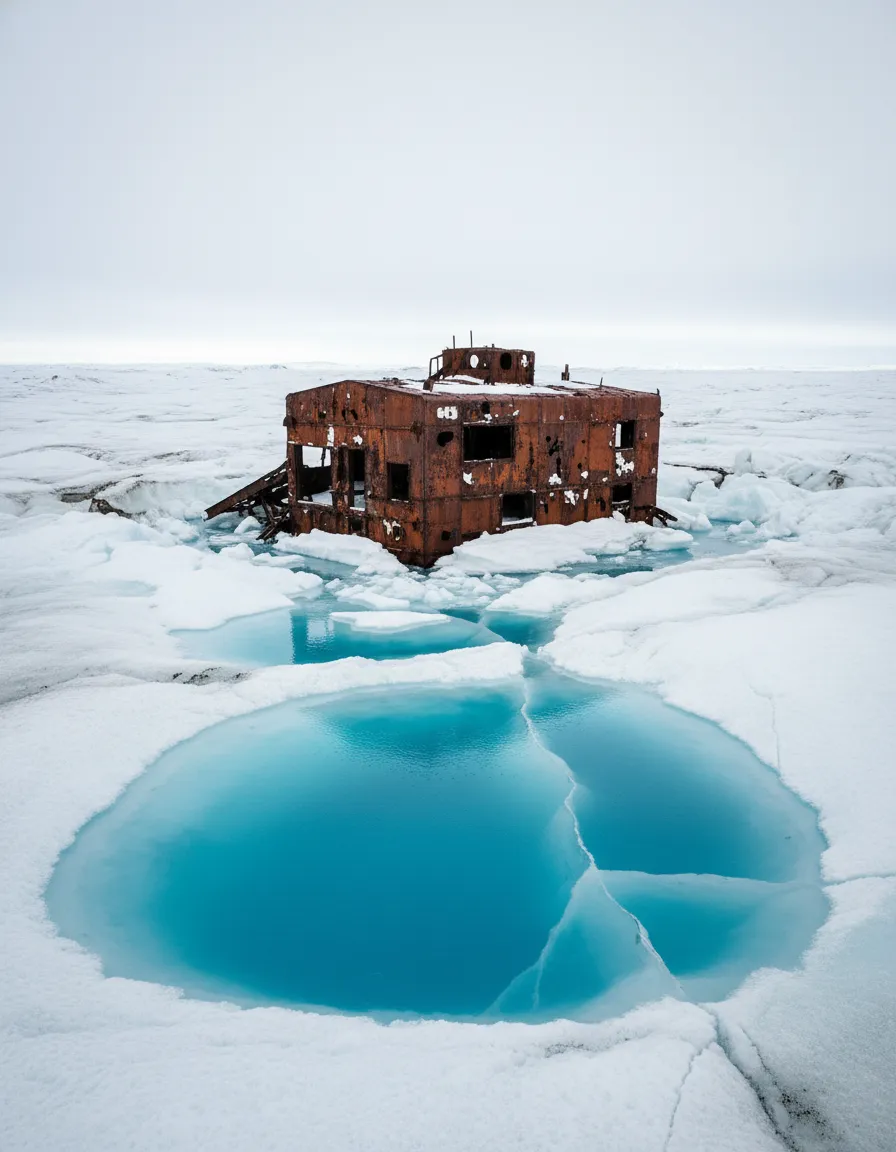
Furthermore, the ethical and environmental considerations are paramount. The site contains hazardous materials, including low-level radioactive waste from the reactor's coolant, approximately 200,000 liters of diesel fuel, and vast amounts of raw sewage, along with PCBs and other contaminants. As the ice melts, these pollutants risk being released into the environment, potentially impacting delicate Arctic ecosystems. Therefore, any future "visits" will likely be restricted to scientific missions focused on monitoring the site, assessing environmental risks, and potentially remediating the hazardous waste.
Instead of a physical visit, Camp Century serves as a powerful, albeit chilling, educational tool. It's a stark reminder of humanity's impact on even the most remote corners of the planet and a tangible symbol of the climate crisis. The re-emergence of this Cold War relic forces us to confront the long-term consequences of our actions and the unexpected ways historical decisions can resurface to shape our future. Perhaps the "visit" to Camp Century is best made through documentaries, scientific reports, and the ongoing global conversation about climate change and historical responsibility. It's a destination that compels us to look not just back at a fascinating past, but forward to a critical future.
Essential Travel Information
- Location Camp Century (Project Iceworm), Greenland
- Best Time Not a tourist destination. Expeditionary travel for researchers typically occurs during the Arctic summer (June-August) for milder conditions.
- Getting There Access is extremely difficult and restricted, requiring specialized expeditionary logistics, typically flying to Kangerlussuaq (Greenland) then chartering aircraft to the ice sheet. Not open to the public.
- Airport Kangerlussuaq Airport (SFJ)
- Budget Extremely High (expedition costs can run into hundreds of thousands of dollars for specialized teams). Not applicable for typical tourism.
- Language Kalaallisut (Greenlandic), Danish, English (among researchers)
Find Places to Stay Near Camp Century (Project Iceworm)
Compare hotels, hostels, and unique stays in Greenland.
Search AccommodationTours & Experiences Near Camp Century (Project Iceworm)
Book guided tours, day trips, and unique experiences.
Browse Tours