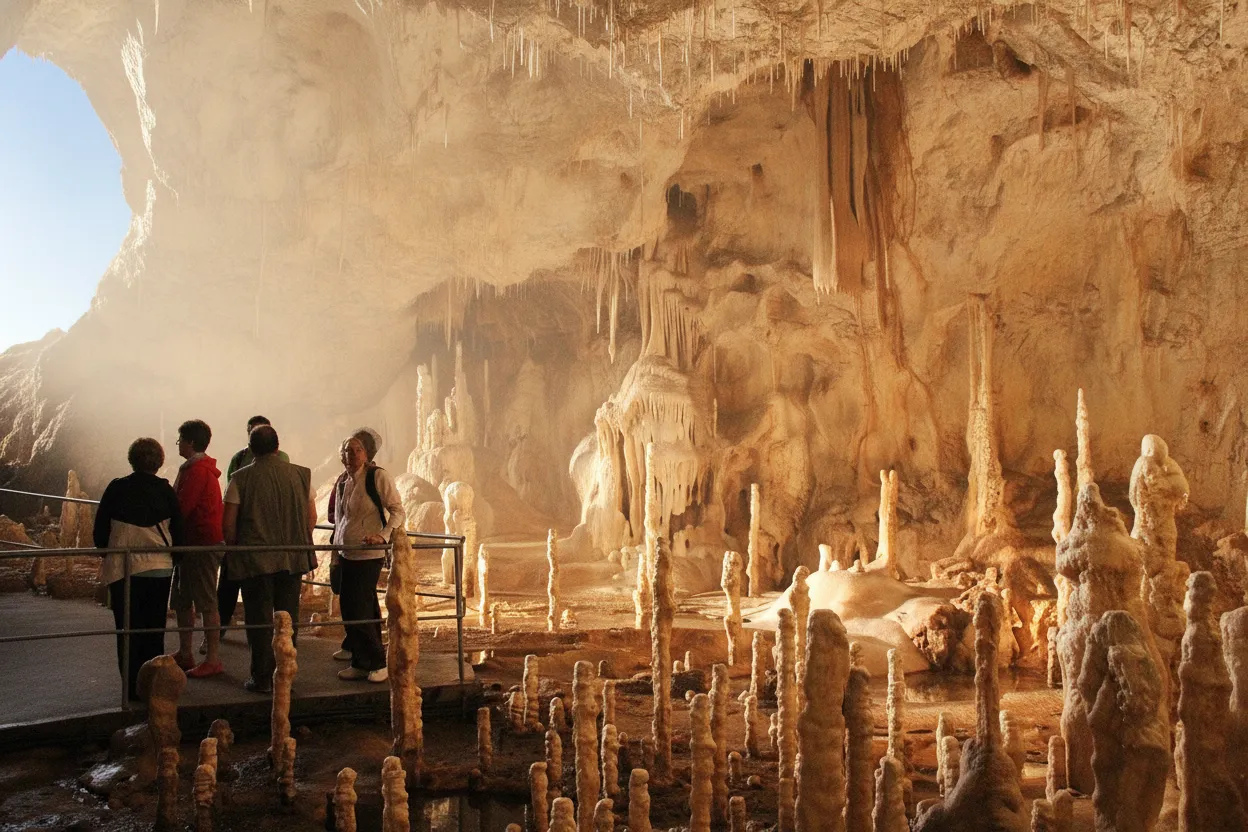
Unveiling Europe's "Grand Canyon of the Underground"
Cetățile Ponorului isn't just another cave; it's an entire karst complex, an extraordinary geological amphitheater often dubbed "Europe's Grand Canyon of the underground." This moniker, while bold, barely scratches the surface of its sheer scale and dramatic beauty. At its heart lies a colossal doline – a sinkhole of monumental proportions, stretching over 300 meters in diameter and plunging an equally impressive 300 meters deep. To stand at its edge, gazing into the abyss where ancient trees cling precariously to vertical walls, is to feel a profound sense of awe and insignificance.
What makes this natural phenomenon truly unique is that this massive depression isn't a dead end. Instead, it's a gateway to a labyrinthine world carved by the tireless efforts of the Ponorului River. This river, born high in the Apuseni Mountains, flows into the doline and then disappears into the earth, only to re-emerge further downstream. The complex features a series of interconnected caves, towering natural arches that defy gravity, and even a majestic natural bridge – all within a landscape that feels utterly primordial, untouched by the modern world. It’s a living testament to the relentless power of water and time, a place where every turn reveals a new, mind-bending geological formation.

A Journey Through Geological Time: The Story of Cetățile Ponorului
The story of Cetățile Ponorului is written in the very rocks that compose it, a saga spanning millions of years. Located in Bihor County, within the Apuseni Mountains of Transylvania, this region is renowned for its extensive karst topography. Karst landscapes are formed when soluble rocks, primarily limestone, are dissolved by acidic groundwater. Over eons, rainwater, made slightly acidic by absorbing carbon dioxide from the atmosphere and soil, seeps into cracks and fissures in the limestone, gradually enlarging them.
The Apuseni Mountains, with their vast deposits of Cretaceous limestone, have been a perfect canvas for this geological artistry. The formation of Cetățile Ponorului began with the slow but persistent erosion of the limestone by the nascent Ponorului River. As the river carved its path, it encountered weaknesses in the rock, leading to the creation of underground channels and caverns. Over immense stretches of time, sections of the cave ceiling collapsed due to erosion and gravitational forces, leading to the formation of the monumental doline we see today. The term "ponor" itself is a Slavic word referring to a sinkhole or a place where a surface stream disappears underground, perfectly encapsulating the essence of this site.
While indigenous communities likely knew of these spectacular formations for centuries, serious exploration and mapping by speleologists began in the late 19th and early 20th centuries. These intrepid explorers slowly unveiled the complex network of passages, confirming its status as one of Europe's most significant karst systems. It's a place where the earth's autobiography is laid bare, telling tales of ancient seas, tectonic shifts, and the patient, relentless work of water.
What Awaits You: Exploring the Citadels
Visiting Cetățile Ponorului is less a trip and more an expedition. The primary access point is often from the Padis area, a popular starting point for many Apuseni adventures. Your journey typically begins with a hike through dense, enchanting forest, the air crisp and clean. As you approach the complex, the first signs of its grandeur emerge – massive rock formations and the distant roar of the underground river.
The main attraction is, of course, the great doline. There are several viewpoints and trails that allow you to peer into its dizzying depths. You can follow marked paths that wind down into the sinkhole itself, a descent that feels like entering a lost world. Once inside, the sheer scale is overwhelming. Towering walls rise dramatically on all sides, often covered in moss and ferns, creating a verdant, almost prehistoric atmosphere. Here, you'll find the majestic entrance to the "Peștera Cetățile Ponorului" (Ponorului Citadels Cave), a series of massive portals and arches where the river disappears.

Exploration within the complex can be diverse. You can hike along the riverbed (when water levels permit) through the main gallery, marveling at the colossal dimensions of the cave passages. The famous Natural Bridge, a spectacular rock formation spanning the river, is a highlight, offering incredible photographic opportunities. Further exploration, especially into the deeper, more technical sections of the cave system, requires specialized equipment and expert guidance, often reserved for experienced speleologists.
Even if you stick to the well-marked and safer trails, you’ll be treated to incredible sights: colossal rock formations sculpted by water, the shimmering surface of the underground river, and the unique flora and fauna that thrive in this sheltered environment. The play of light and shadow, the echoing sounds of water, and the profound silence in between, create an unforgettable sensory experience. It's a place that truly makes you feel like an adventurer, discovering a secret corner of the planet.

Practical Tips for Your Expedition to Cetățile Ponorului
Ready to embark on this incredible journey? Here are some essential tips to make your visit to Cetățile Ponorului safe and enjoyable:
- Getting There: Cetățile Ponorului is remote and best accessed by car. The nearest major hub is Cluj-Napoca, from where you'll drive towards the Apuseni Mountains, typically via Oradea or Alba Iulia, heading towards the Padis tourist area. Roads leading to the trailheads can be unpaved and challenging, especially after rain, so a sturdy vehicle (preferably 4x4) is recommended.
- Best Time to Visit: The late spring, summer, and early autumn (May to October) are ideal. During winter, snow can make access impossible, and water levels in the caves can be dangerously high. Even in summer, check local weather conditions as heavy rains can quickly raise river levels.
- What to Bring: This is not a casual stroll. You'll need sturdy, waterproof hiking boots with good ankle support. Dress in layers, as temperatures can vary significantly between the exposed trails and the cooler, damp cave interiors. A good headlamp or powerful flashlight is absolutely essential for exploring the darker sections of the complex. Bring plenty of water, snacks, a first-aid kit, and a fully charged phone.
- Safety First: Stick to marked trails. The terrain can be slippery and challenging. Do not attempt to explore beyond clearly marked and safe areas without proper caving experience, equipment, and a local guide. Inform someone of your hiking plans and expected return time.
- Accommodation: The nearest accommodation options are typically guesthouses and cabins in the surrounding Padis area. Book in advance, especially during peak season.
- Guides: While many parts are accessible independently, consider hiring a local guide, especially if you want to delve deeper into the cave system or learn more about the geology and ecology of the area. They can also provide valuable safety advice.
- Leave No Trace: This is a protected natural area. Carry out everything you carry in, stay on marked paths, and respect the delicate ecosystem.
Cetățile Ponorului is more than just a destination; it's an adventure into the very core of our planet's wild beauty. It demands respect, preparation, and a spirit of exploration. But for those willing to venture off the well-trodden path, it promises an experience that will stay with you long after you've returned to the surface – a profound connection to the raw, untamed heart of Romania.
Essential Travel Information
- Location Cetățile Ponorului (The Ponorului Citadels), Romania
- Best Time May to October (late spring, summer, early autumn)
- Getting There By car from Cluj-Napoca (CLJ) or Oradea (OMR) to the Padis area in Bihor County. Roads to trailheads can be unpaved; 4x4 recommended.
- Airport Cluj-Napoca International Airport (CLJ)
- Budget Mid-range (approx. €50-80/day for accommodation and food in the area)
- Language Romanian
Find Places to Stay Near Cetățile Ponorului (The Ponorului Citadels)
Compare hotels, hostels, and unique stays in Romania.
Search AccommodationTours & Experiences Near Cetățile Ponorului (The Ponorului Citadels)
Book guided tours, day trips, and unique experiences.
Browse Tours