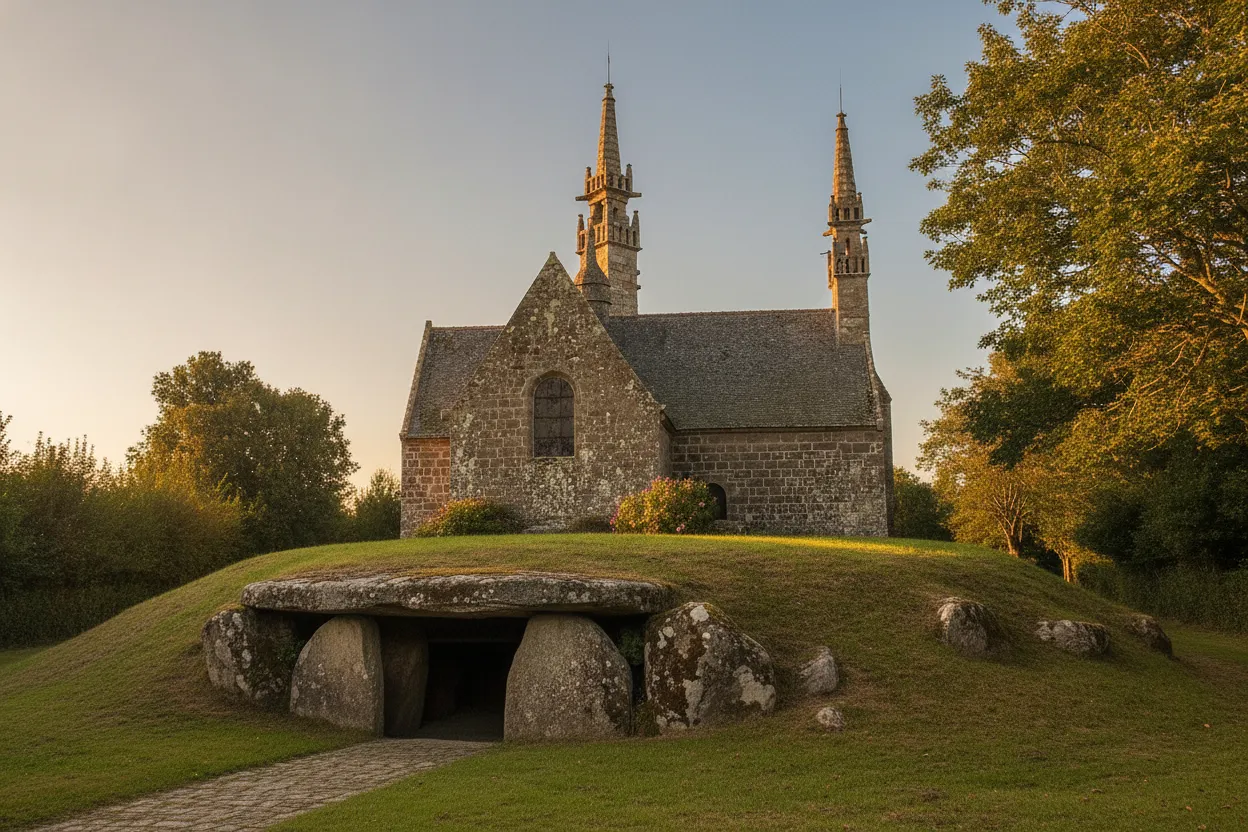
Imagine stepping into a humble, ancient chapel, its stone walls bearing witness to centuries of devotion. The air inside is cool, hushed, thick with history. But this isn't just any chapel. Deep within its foundations, hidden from the casual glance, lies a secret that defies time and tradition: a colossal megalithic dolmen, a tomb from the Stone Age, repurposed not as a relic, but as the very altar of Christian worship. Welcome to the Chapelle des Sept Saints in the mystical heart of Brittany, France, a place where the veil between ancient pagan rites and enduring Christian faith is not merely thin, but entirely absent, creating a sanctuary unlike any other on Earth.
The Chapel Where Worlds Collide: Discovering Chapelle des Sept Saints
Brittany, with its rugged coastlines, ancient forests, and mist-shrouded landscapes, has always held a special allure for those seeking a connection to something older, something profound. And tucked away in its verdant interior, near the unassuming village of Saint-Nicolas-du-Pélem, you’ll find the Chapelle des Sept Saints (Chapel of the Seven Saints). From the outside, it appears as a modest, charming Breton chapel, perhaps a little more weathered than some, sitting atop a gentle mound. But its unassuming exterior belies a spiritual depth that stretches back not hundreds, but thousands of years.
This isn't just a site where ancient and modern coexist; it's where they literally merge. The true marvel of this sacred place lies beneath the chapel floor, accessible via a narrow staircase. Here, you descend into a subterranean chamber, cool and echoing, where the immense capstones and uprights of a Neolithic dolmen dominate the space. This isn't an archaeological exhibit; it's the very heart of the chapel, deliberately integrated into its structure, with the ancient dolmen now serving as the Christian altar. It’s a breathtaking fusion, a testament to humanity's enduring need for sacred spaces, regardless of the pantheon.
A Journey Through Millennia: The History of Sept Saints
To understand the Chapelle des Sept Saints, we must journey far back in time, to an era when the landscape of Brittany was shaped by Ice Age glaciers and the first monumental builders. The dolmen at Sept Saints began its life over 5,000 years ago, a vast chambered tomb constructed by Neolithic peoples. It was a place of reverence, a final resting place for their dead, designed to connect the living with their ancestors and the spiritual realm. These were sophisticated structures, requiring immense effort and communal cooperation, signifying their profound importance to those who built them.
Fast forward several millennia, to the early days of Christianity's spread across Europe. Rather than destroying these pre-existing sacred sites, early Christian missionaries often adopted and transformed them. This was a common strategy, allowing for a smoother transition of faith for local populations who already held deep reverence for specific places. At Sept Saints, this adoption was particularly dramatic. Instead of merely building nearby or placing a cross on top, they built the chapel directly over and around the ancient dolmen, embedding the massive stones into its very foundations. The Neolithic tomb, once a pagan burial chamber, was sanctified and reborn as a Christian altar, a place where new prayers were offered upon stones that had already heard countless invocations to older gods and spirits.
The "Seven Saints" themselves are local figures, possibly early Christian martyrs or missionaries, whose veneration likely superseded or absorbed older local deities associated with the site, perhaps linked to local springs or healing waters – a common thread in Breton folklore. This syncretism, the blending of different religious beliefs, is not just a historical footnote here; it's the living essence of the Chapelle des Sept Saints, a continuous thread of spiritual devotion stretching from the Stone Age to the present day.
What You'll Experience: A Sacred Space Unlike Any Other
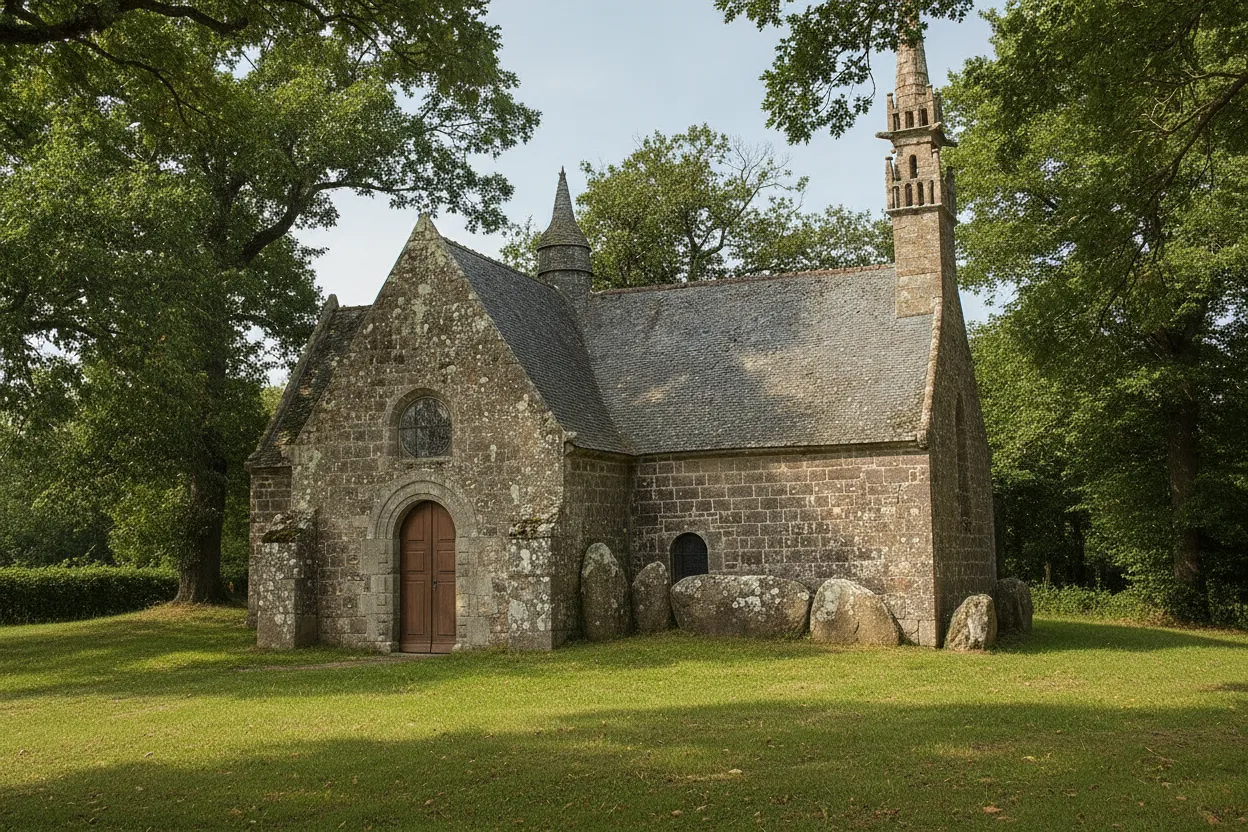
Your visit to Chapelle des Sept Saints begins with the tranquil approach through the Breton countryside. The chapel itself is a modest structure, built of local granite, with a simple bell tower. It sits on a slight rise, often surrounded by a small cemetery or calvary, typical of Breton religious sites. But the real magic awaits inside.
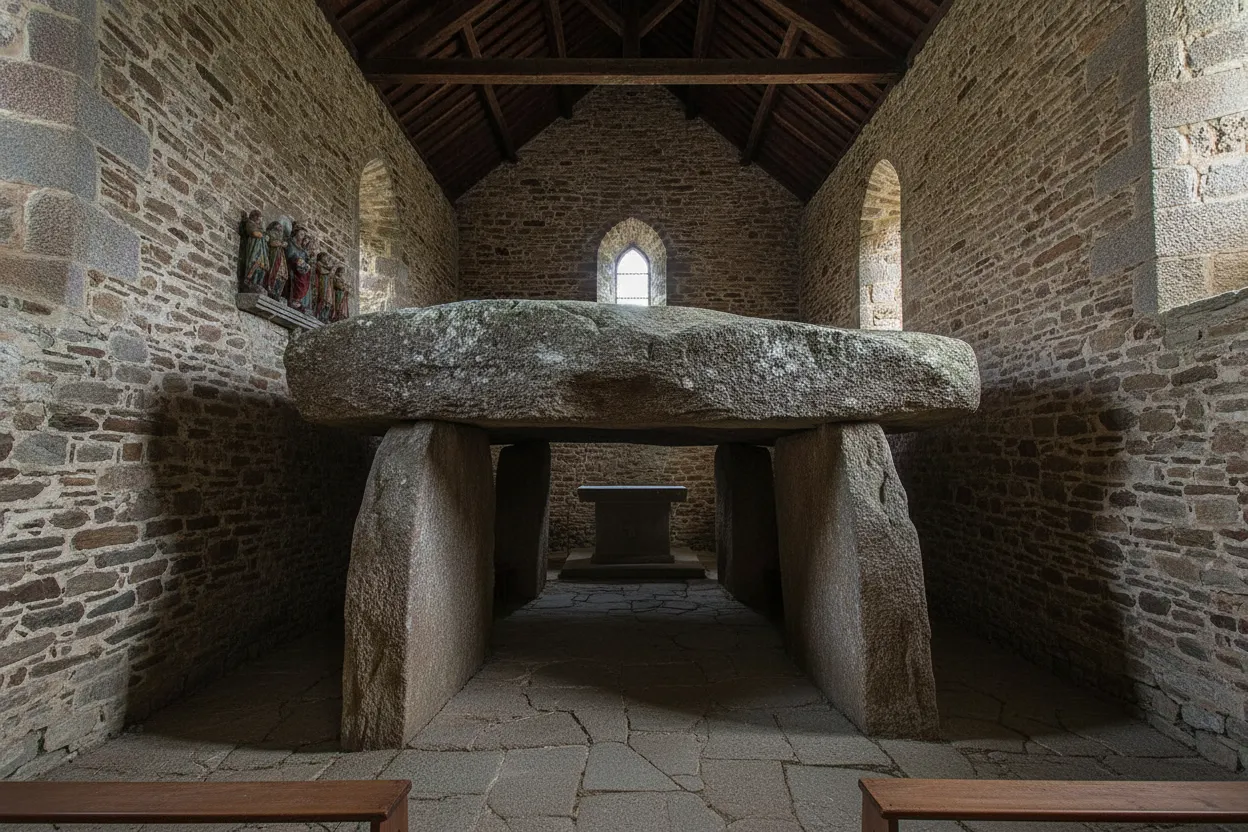
Upon entering the chapel, you'll be struck by its quiet solemnity. Look for the opening in the floor, usually covered by a trapdoor or grate, that leads down into the crypt. Descending the steps, you leave the light of the present day and enter a realm of profound antiquity. The air immediately becomes cooler, heavier, carrying the scent of damp earth and ancient stone. Here, in the dim light, you are confronted by the sheer scale of the dolmen. Massive, unhewn granite slabs form the walls and ceiling of this subterranean chamber. It’s a powerful, almost primal experience.
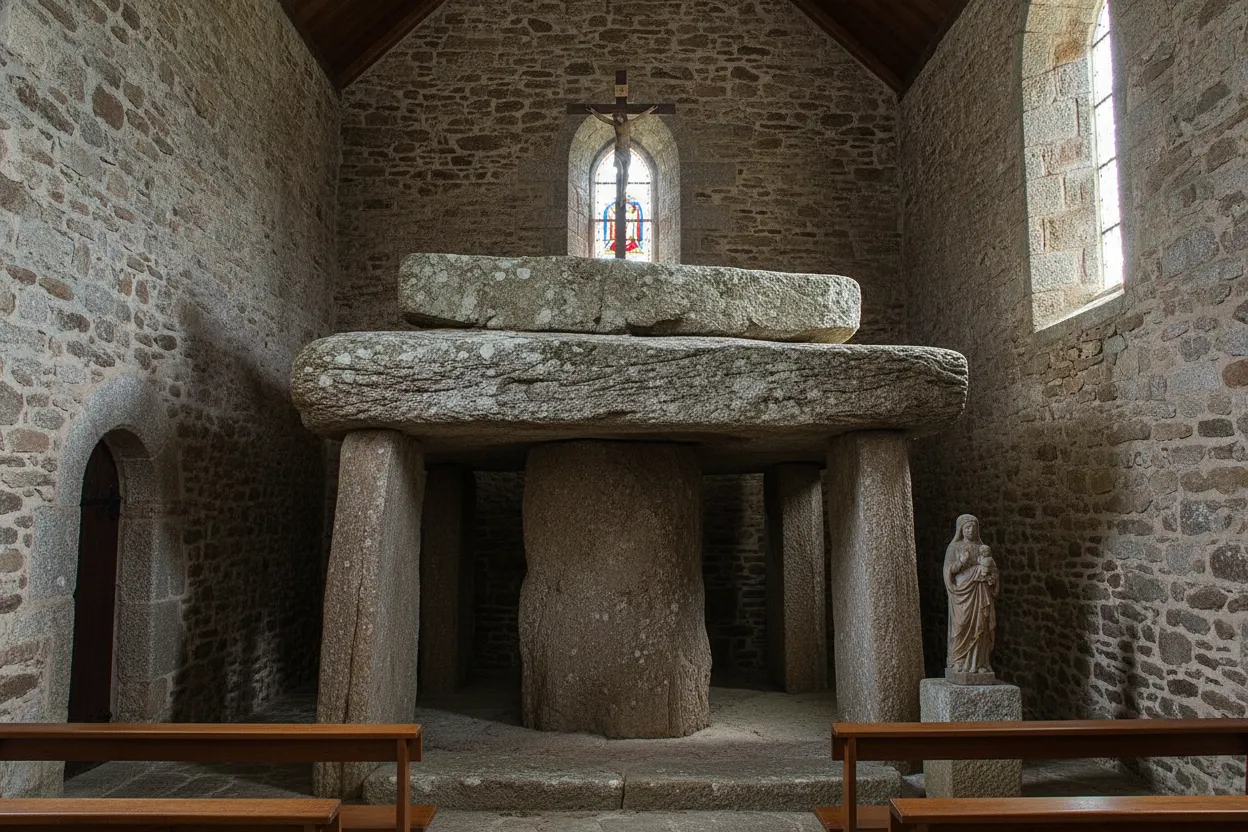
The dolmen, essentially a large stone table, is indeed the altar. You can almost feel the weight of millennia of prayers, rituals, and ceremonies that have transpired on and around these stones. It’s a place that transcends specific dogma, speaking to a universal human connection to the sacred. You might find flickering candles, small offerings, or simply the quiet reverence of fellow visitors. Take your time to absorb the atmosphere, to touch the cool, ancient stones, and to reflect on the incredible continuity of faith that this site represents.
Planning Your Pilgrimage: Practical Tips for Visiting
Visiting Chapelle des Sept Saints is an unforgettable journey, but it requires a bit of planning to fully appreciate its unique charm.
- Location: The chapel is quite remote, nestled deep in the Côtes-d'Armor department of Brittany. It’s best reached by car. Public transport options are very limited, making a rental car almost essential for flexibility and access.
- Directions: Navigate to Saint-Nicolas-du-Pélem. From there, follow local signs, which are usually well-marked for "Chapelle des Sept Saints" or "Dolmen des Sept Saints."
- Best Time to Visit: Spring (April-May) or early Autumn (September-October) offer pleasant weather, fewer crowds, and the Breton countryside is particularly beautiful. Summer can also be lovely, but you might encounter more visitors, especially during local festivals or "pardons" (traditional Breton religious pilgrimages) which are still held here.
- What to Bring: Wear comfortable shoes suitable for walking, as the ground around the chapel can be uneven. A small flashlight might be useful for exploring the dolmen's interior, though it's usually lit enough to see. As it's an active place of worship, respectful attire is always appreciated.
- Local Area: Make a day of it! Brittany is rich in history and natural beauty. Explore nearby towns like Guingamp or Quintin, visit other megalithic sites, or simply enjoy the regional cuisine. Accommodation options, from charming B&Bs to gîtes, are available in surrounding villages.
- Respect the Site: Remember, this is an active religious site and a place of immense historical significance. Be mindful of others, keep noise to a minimum, and leave no trace of your visit.
A Timeless Sanctuary Awaiting Discovery
The Chapelle des Sept Saints is more than just a historical curiosity; it's a living testament to humanity's enduring quest for meaning and connection. It challenges our modern understanding of religious boundaries, showcasing a unique spiritual resilience that transcends millennia. To stand before that ancient dolmen, knowing it has served as a sacred space for countless generations, is to feel a profound link to our ancestors and to the very essence of human spirituality.
If you're seeking a travel experience that goes beyond the picturesque, that touches the soul and sparks the imagination, then put Chapelle des Sept Saints at the top of your Brittany itinerary. It's a hidden gem, a whisper from the past, and a powerful reminder that some sacred places truly are timeless, patiently awaiting discovery by those open to their ancient magic.
Essential Travel Information
- Location Chapelle des Sept Saints (Chapel of the Seven Saints), France
- Best Time Spring (April-May) or Autumn (September-October) for pleasant weather and fewer crowds. Summer is also good but can be busier.
- Getting There Best reached by car from major Breton towns like Guingamp or Saint-Brieuc. Follow signs for Saint-Nicolas-du-Pélem, then local signs to the chapel.
- Airport Rennes Airport (RNS) or Brest Bretagne Airport (BES)
- Budget Mid-range (approx. €80-€150 per day for accommodation and food, excluding car rental, which is essential for this region).
- Language French, but basic English is often understood in tourist-facing establishments in larger towns.
Find Places to Stay Near Chapelle des Sept Saints (Chapel of the Seven Saints)
Compare hotels, hostels, and unique stays in France.
Search AccommodationTours & Experiences Near Chapelle des Sept Saints (Chapel of the Seven Saints)
Book guided tours, day trips, and unique experiences.
Browse Tours