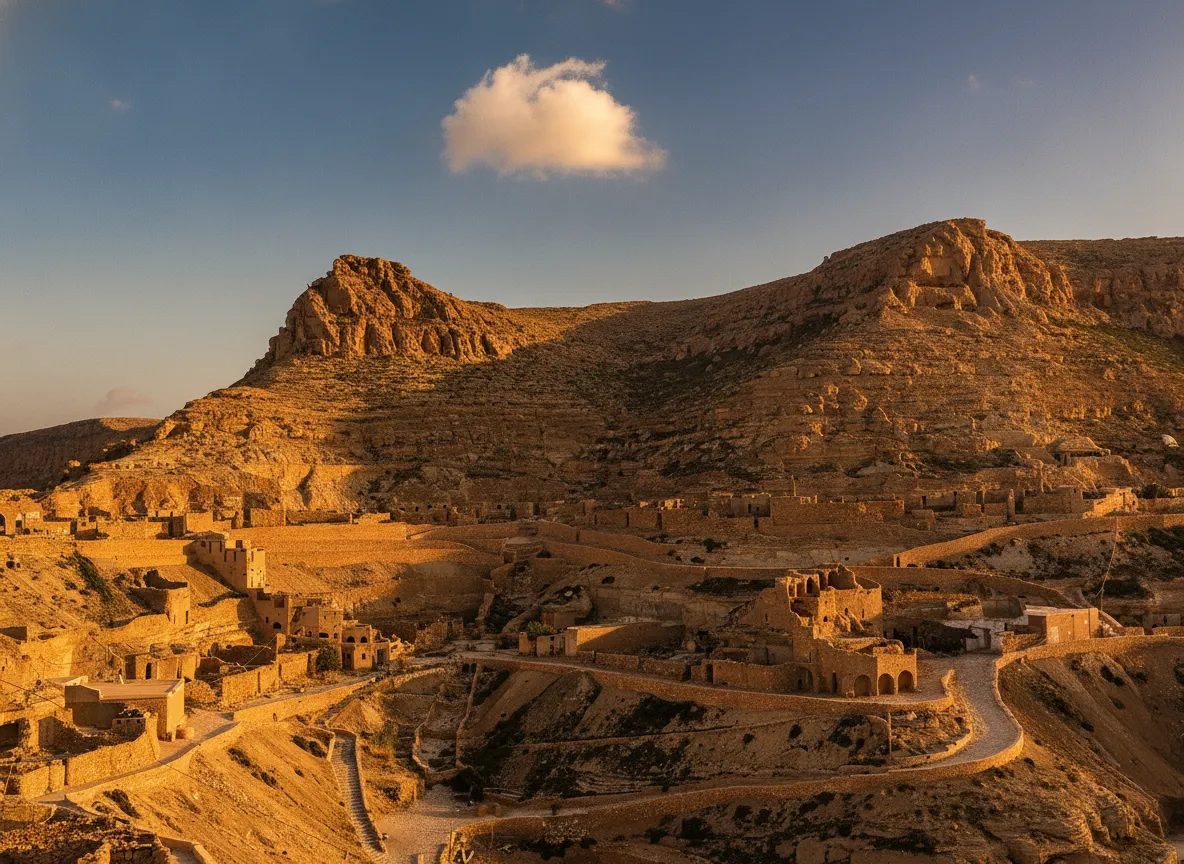
Imagine a place where homes aren't built *on* the land, but *from* it. Tucked into a rugged Tunisian hillside, this ancient Berber village seems to defy gravity, with dwellings carved directly into the rock face. It's not a movie set, nor a forgotten ruin, but Chenini – a living testament to human ingenuity and resilience, where the very mountain breathes with centuries of history. If you're a traveler yearning for destinations that challenge your perceptions of architecture and time, then prepare to be utterly captivated by this hidden gem in the heart of Tunisia's Tataouine Governorate. Chenini isn't just a village; it's a profound experience, a whisper from the past that still resonates vibrantly today.
The Stone Heart of the Sahara: Why Chenini Stands Apart
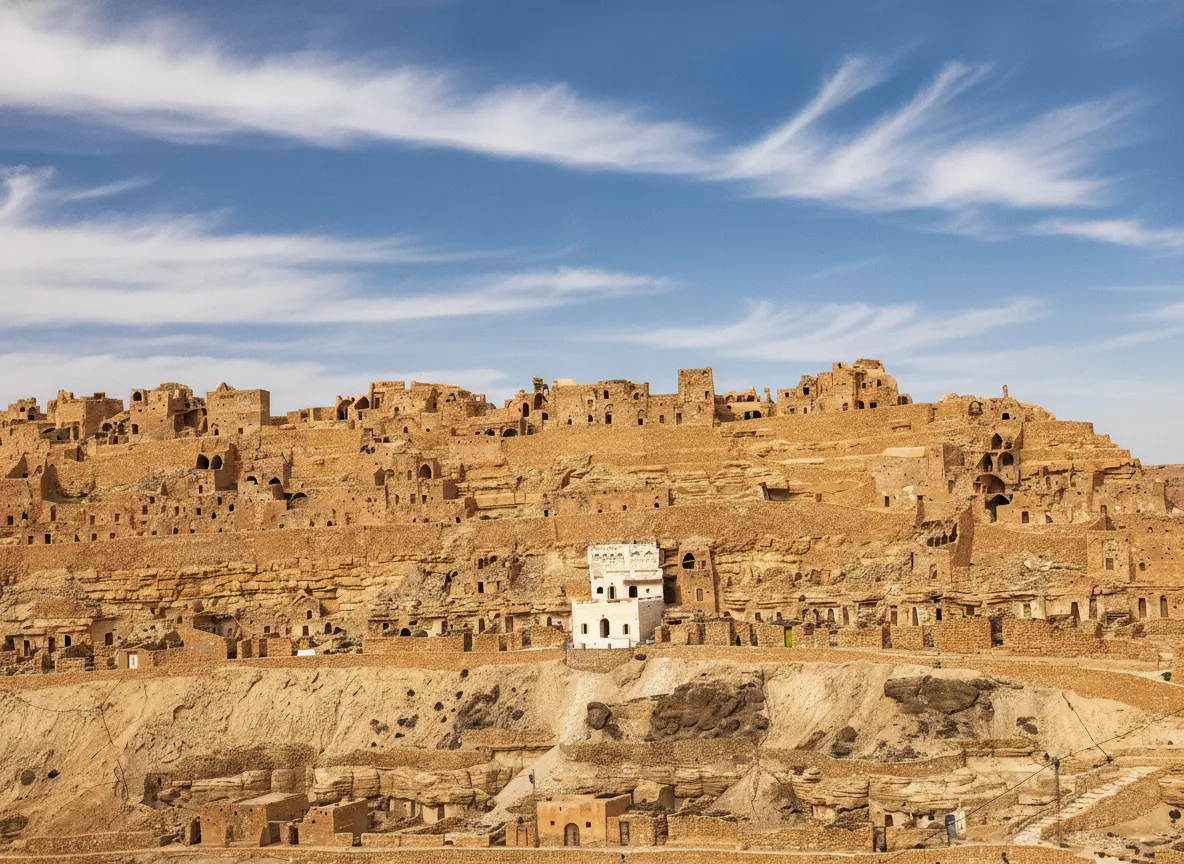
What makes Chenini so profoundly special? It's one of the last remaining examples of a living troglodyte village, where residents still inhabit dwellings seamlessly integrated with the mountain itself. Picture this: homes with multiple levels, cool in the scorching desert heat, warm in the chilly nights, all carved into the rock face with an organic flow that makes them look more like a geological formation than a human settlement. This isn't just ancient history; it's ancient history alive and breathing. As you wander its winding, almost vertical paths, you'll witness a culture that has preserved its unique architectural heritage for centuries, adapting to its environment in ways that modern engineering can only marvel at. The sheer audacity and practicality of these rock-hewn homes will leave you speechless, making you question everything you thought you knew about building and belonging.
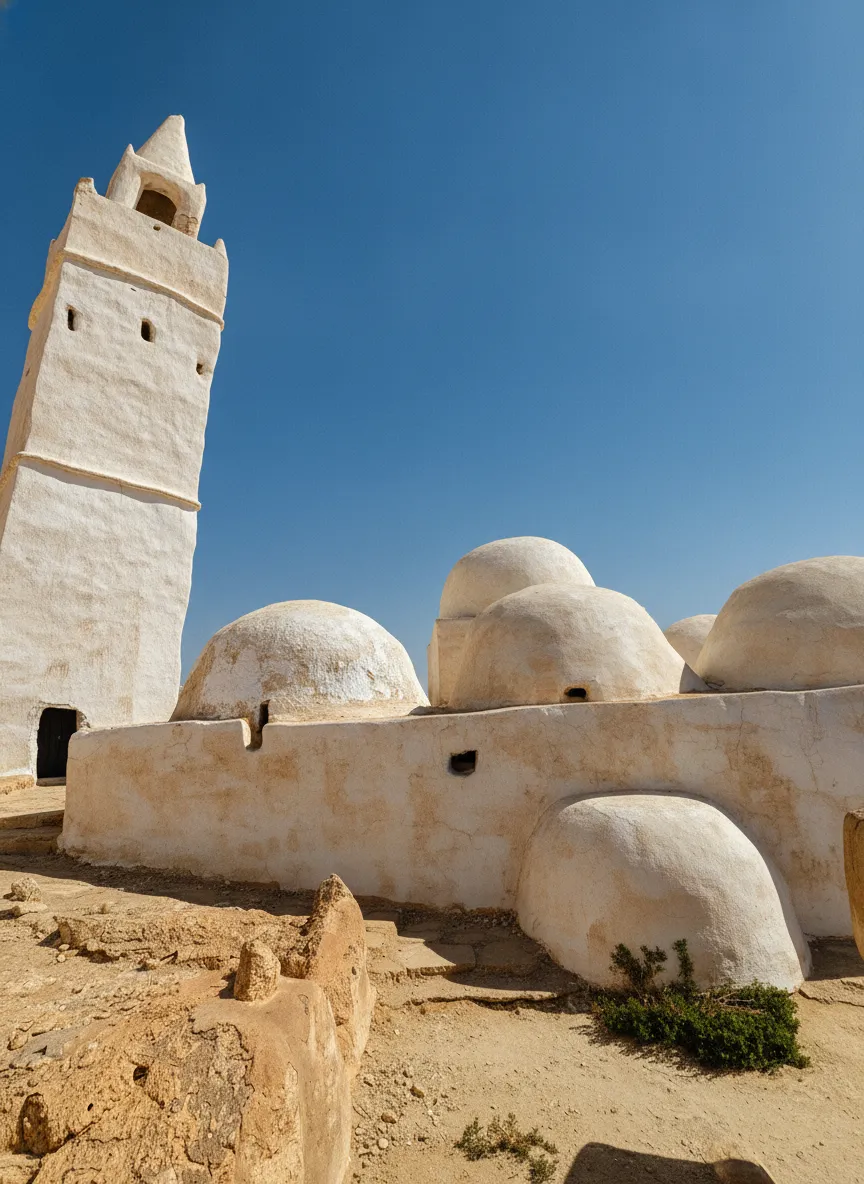
Chenini isn't merely a collection of caves; it's a sophisticated, fortified community. Its iconic ksar, a multi-story granary fortress, crowns the village at its peak, offering both protection and a communal storage solution for harvested grains. Adjacent to it, a whitewashed mosque stands sentinel, its minaret piercing the vast desert sky. This isn't just a sight to behold; it's an immersion into a way of life that has resisted the relentless march of time, a place where the past isn't just remembered, but actively lived. You’ll feel an almost primal connection to the earth here, understanding how humans can not only survive but thrive by harmonizing with nature's raw power.
Echoes of Ancient Ingenuity: Chenini's Enduring History
To truly appreciate Chenini, we must delve into its rich history, a tapestry woven with the threads of Berber heritage and ingenious adaptation. The Berbers, the indigenous people of North Africa, have a legacy stretching back millennia, and their architectural prowess is nowhere more evident than in these 'ksour' villages (plural of ksar). Chenini's origins are believed to date back to the 12th century, though some estimates place its initial settlements even earlier. The primary motivation for building in this seemingly inhospitable manner was twofold: defense and climate control.
In a region historically prone to tribal conflicts and raids, carving homes and granaries into the mountainside offered unparalleled protection. The sheer cliffs and narrow, easily defensible pathways made it a natural fortress. Raiders would have faced an almost insurmountable challenge trying to assault the village. Furthermore, the thick rock walls of the troglodyte dwellings provided natural insulation. They kept the interiors remarkably cool during the scorching summer days, when desert temperatures can soar, and surprisingly warm during the often-chilly desert nights. This sustainable design, born of necessity, is a masterclass in living off the land long before the concept of eco-friendly architecture became mainstream.
The ksar at the village's summit wasn't just a granary; it was the communal heart of the village's economy and survival. Each family would have a 'ghorfa' (cell) within the ksar to store their precious harvest of dates, olives, and grains, safe from both human and natural threats. This communal storage system underscores the strong community bonds that have sustained Chenini for centuries. The mosque, positioned strategically alongside the ksar, speaks to the spiritual resilience of its inhabitants. Walking through Chenini is like stepping into a living history book, where every carved doorway and winding path tells a story of survival, community, and an unbreakable connection to the land.
Exploring the Vertical Village: What Awaits You in Chenini
Your visit to Chenini is an adventure in itself, a physical and sensory journey that begins at the base of the mountain and ascends into its ancient heart. As you start your climb, you'll immediately notice the intricate network of paths, some paved, others merely worn earth and rock, leading upwards. These aren't just paths; they are the arteries of the village, guiding you through a labyrinth of carved doorways and hidden staircases. Every turn reveals another breathtaking vista, another glimpse into a world unlike any other.
The troglodyte homes themselves are a wonder. Many are still inhabited, and if you're lucky, a friendly local might invite you in for a cup of mint tea. Inside, you'll discover a surprisingly spacious and multi-level layout, often with a central courtyard open to the sky, providing light and ventilation. The walls, cool to the touch, are a testament to the mountain's embrace. You'll see simple furnishings, traditional crafts, and the quiet dignity of a life lived in harmony with the environment. It's an intimate look into a way of life that has largely vanished elsewhere.
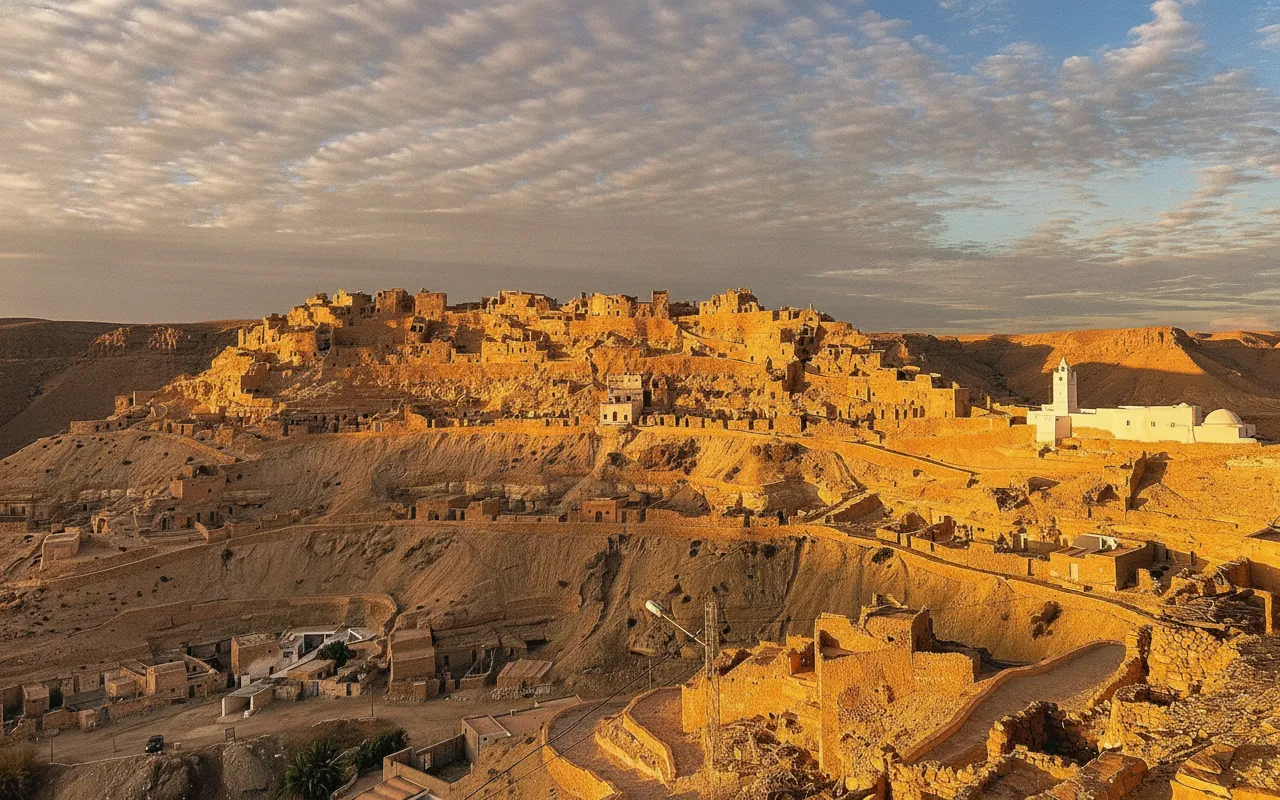
The ascent culminates at the pinnacle of the village, where the magnificent ksar and the whitewashed mosque stand proudly. The ksar, with its stacked, barrel-vaulted granary cells (ghorfas), is an architectural marvel. Imagine the effort required to carve these storage units, some reaching several stories high, directly into the rock! From this vantage point, the panoramic views are simply spectacular. You'll gaze out over the vast, undulating landscape of the Tataouine region, a sea of ochre and rust under the boundless Tunisian sky. It's a view that stretches to the horizon, dotted with other ancient settlements and the distant shimmer of the desert. The silence up here, broken only by the wind, is profound, offering a moment of true contemplation. Don't forget to explore the mosque, often simple yet deeply spiritual, offering a peaceful respite before you begin your descent. Local guides, often residents themselves, are invaluable here, sharing stories and insights that bring the stones to life.
Your Journey to Chenini: Practical Tips for an Unforgettable Visit
Ready to add Chenini to your travel map? Here are some practical tips to ensure your visit is as smooth and enriching as possible:
- Best Time to Visit: The shoulder seasons of spring (March to May) and autumn (September to November) offer the most pleasant weather. Temperatures are mild, making the climbs comfortable. Summer can be intensely hot, while winter nights can be surprisingly chilly.
- How to Get There: Chenini is located approximately 18 km southwest of Tataouine, the regional capital. Tataouine itself is accessible by louage (shared taxi) from major cities like Gabes or Djerba. From Tataouine, you can hire a private taxi for the day, or join an organized tour that often includes other Ksour villages in the region (like Douiret and Ksar Ouled Soltane). A guided tour is highly recommended as it provides context and often includes transport.
- What to Bring: Comfortable, sturdy walking shoes are an absolute must, as the paths are uneven and steep. Bring plenty of water, especially if visiting during warmer months. Sunscreen, a hat, and sunglasses are essential. Don't forget your camera – you'll want to capture every incredible angle!
- Respectful Travel: Remember, Chenini is a living village. Be respectful of the residents and their privacy. Always ask permission before photographing people. Support the local economy by purchasing crafts or enjoying a meal at one of the small, family-run establishments.
- Accommodation: While there are no hotels directly in Chenini, Tataouine offers a range of accommodations from basic to comfortable. Some tour operators also offer overnight stays in renovated troglodyte homes in nearby villages, providing an even deeper immersion.
- Guides: Hiring a local guide, often found at the entrance to the village, is highly recommended. Their knowledge of the history, culture, and hidden nooks of Chenini will significantly enhance your experience.
Chenini isn't just a destination; it's a journey into the heart of human resilience and architectural genius. It's a place that reminds us of the profound connection between people and their environment, a testament to a way of life that has endured for centuries against all odds. So, if you're seeking an adventure that transcends the ordinary, a place where history isn't just observed but felt, then pack your bags and set your sights on Chenini. You won't just visit a village; you'll uncover a piece of the world's soul.
Essential Travel Information
- Location Chenini, Tunisia
- Best Time March to May (Spring) & September to November (Autumn)
- Getting There From Tataouine (18km), typically by private taxi or organized tour. Tataouine is accessible by louage from Gabes or Djerba.
- Airport Djerba-Zarzis International Airport (DJE)
- Budget Mid-range (approx. $50-100 USD/day including transport, food, and basic tours for a solo traveler)
- Language Arabic, Tunisian Arabic (Darija), French
Find Places to Stay Near Chenini
Compare hotels, hostels, and unique stays in Tunisia.
Search Accommodation