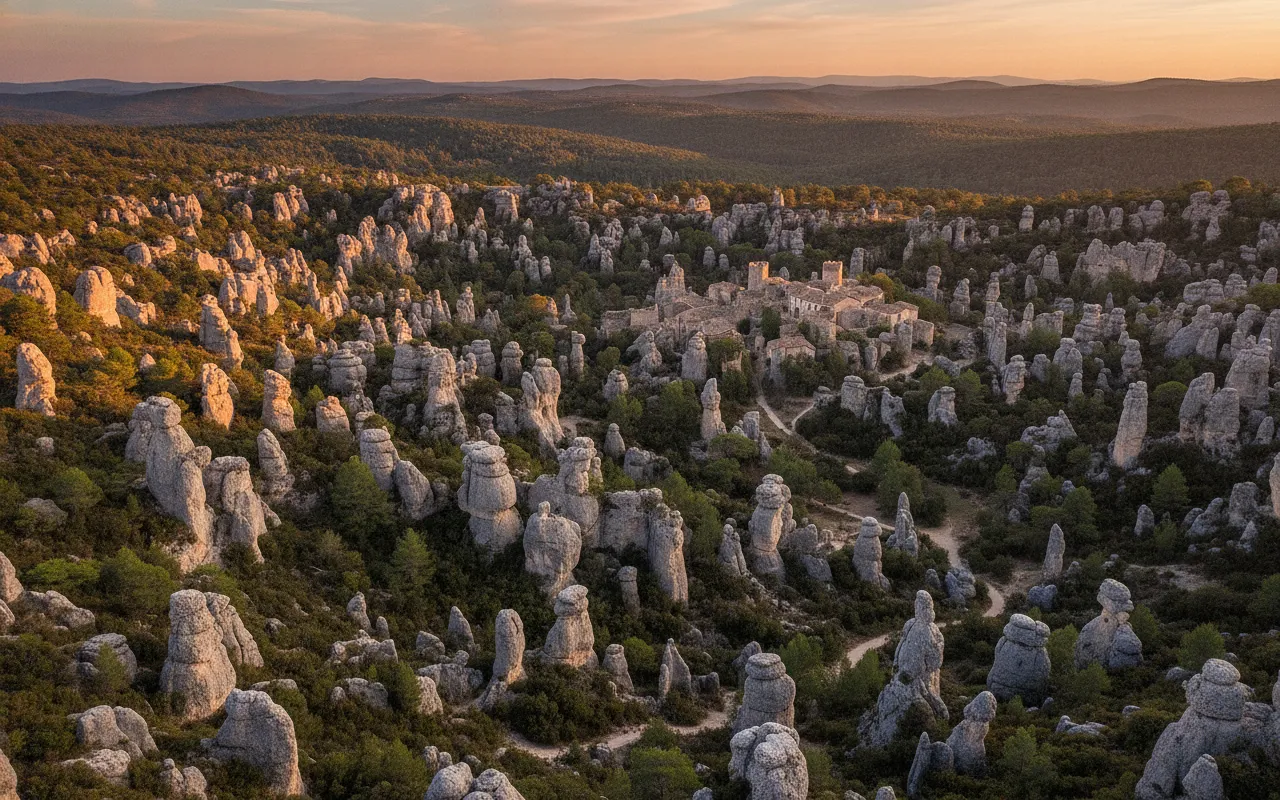
Unveiling the Petrified City: What Makes Cirque de Mourèze So Unique?
The Cirque de Mourèze isn't merely a collection of interesting rocks; it's an entire universe of them. This incredible geological phenomenon, nestled near the charming village of Mourèze, is a chaotic labyrinth where millennia of erosion have painstakingly carved soft dolomite rock into a staggering array of fantastical shapes. Picture towering pillars that seem to scrape the sky, delicate arches defying gravity, and abstract, often anthropomorphic figures that ignite the imagination. One moment you might see a watchful guardian, the next a huddled group of ancient villagers, all frozen in time, transformed into stone by the relentless dance of wind and water.
What truly sets Cirque de Mourèze apart is this unparalleled experience of accidental art. Unlike the grand, imposing cliffs of many natural parks, Mourèze invites you into its very fabric. You don't just observe; you navigate, you weave through its stony corridors, constantly discovering new perspectives and new "residents" of this petrified metropolis. It's a place where every turn reveals a new sculpture, a new story whispered by the elements. The scale is intimate yet expansive, allowing for both quiet contemplation and exhilarating exploration. It’s not just a landscape; it’s a living museum of geology, where every rock formation is a masterpiece crafted not by human hands, but by the patient, persistent hand of time.
The very composition of the rock – a particularly soft and friable dolomite – is key to its unique aesthetic. This isn't the stark, unyielding granite of mountain peaks, but a more malleable canvas that has allowed for intricate detailing and dramatic undercutting. The result is a landscape that feels organic, almost fluid, despite being solid stone. This softness also contributes to the rich, earthy tones of the rock, which shift dramatically with the changing light, from warm ochres and sienna to cool greys and purples at dawn and dusk. It’s a photographer’s dream and a wanderer’s delight, a place where the ordinary rules of geology seem to have been suspended, replaced by an alien beauty.

A Canvas of Time: The Geological Story of Cirque de Mourèze
To truly appreciate the Cirque de Mourèze, it helps to understand the epic forces that shaped it. Our story begins millions of years ago, during the Mesozoic Era, when this region was submerged beneath a vast sea. Over eons, layers of marine sediments, rich in calcium and magnesium, accumulated and compressed, eventually forming the soft dolomite rock we see today. Fast forward to the Cenozoic Era, and tectonic plate movements caused the land to uplift, exposing these ancient seabeds to the elements. This is where the magic truly began.
The primary sculptor here is erosion, a process that has worked tirelessly for hundreds of thousands, if not millions, of years. Water, in particular, has been the main protagonist. Rainwater, slightly acidic, seeps into cracks and fissures in the dolomite, slowly dissolving the rock and widening these natural fault lines. Frost-thaw cycles, where water freezes and expands, then thaws, further fracture the rock. Wind, laden with abrasive sand particles, acts like a natural sandblaster, smoothing surfaces and carving intricate details. But it’s not just the external forces; the very nature of dolomite, being relatively soluble and prone to fracturing, makes it particularly susceptible to this kind of creative erosion.
What we observe today is a landscape in constant, albeit slow, evolution. The formations are not static; they are still being subtly reshaped by every raindrop and gust of wind. The amphitheater itself is a testament to differential erosion – harder bands of rock protect softer layers beneath, leading to the creation of mushroom-like formations and towering spires with caps. Imagine the sheer patience of nature, meticulously chipping away, grain by grain, year after year, until this breathtaking "city" emerged from the earth. It’s a humbling reminder of the immense timescales over which our planet operates, and the spectacular results that can arise from such relentless, subtle forces.
Navigating the Labyrinth: Your Adventure in Cirque de Mourèze
Stepping into Cirque de Mourèze is an invitation to explore. There are well-marked hiking trails that wind through the heart of the "city," offering various levels of difficulty and duration. From gentle strolls suitable for families to more challenging climbs that reward you with panoramic views, there’s a path for everyone. The most popular route, often a loop, takes you right into the midst of the formations, allowing you to get up close and personal with the petrified giants.
As you wander, take your time. There’s no rush here. Stop, look around, let your imagination run wild. What do you see in the shapes before you? A colossal elephant? A hooded monk? A dragon emerging from the stone? Every visitor finds something different, and that’s part of the joy. The interplay of light and shadow is constantly changing, transforming the figures throughout the day. Early mornings offer a serene, mystical atmosphere as the first rays of sun kiss the rock formations, while late afternoons bathe the landscape in warm, golden hues, casting dramatic shadows that accentuate the sculptures' rugged beauty.
Don't forget your camera! This is a place begging to be photographed, with countless opportunities for stunning shots, from sweeping vistas to intricate close-ups of eroded patterns. Look for the small details: lichens clinging to the rock, resilient shrubs finding purchase in cracks, and the occasional lizard basking in the sun. There are several viewpoints along the trails that offer magnificent perspectives of the entire cirque, allowing you to grasp the sheer scale of this natural wonder. Pack a picnic and find a comfortable spot amidst the rocks to truly immerse yourself in the tranquility and unique ambiance of this incredible place. It’s an experience that engages all your senses, leaving you with memories of a truly extraordinary day.

Planning Your Expedition: Essential Tips for Cirque de Mourèze
To make the most of your visit to Cirque de Mourèze, a little preparation goes a long way. This is an outdoor adventure, so come prepared!
Best Time to Visit
The shoulder seasons – spring (April to June) and autumn (September to October) – are ideal. The weather is pleasantly mild, perfect for hiking, and the crowds are generally thinner than in the peak summer months. Summer (July and August) can be very hot, making midday hiking less enjoyable, but early mornings or late afternoons are still beautiful. Winters are generally mild, but occasional rain can make paths slippery, and some facilities might be reduced.
Getting There
Cirque de Mourèze is located in the Hérault department of Occitanie, just a short drive from the village of Mourèze. The nearest major cities are Montpellier (about 45 minutes to an hour drive) and Béziers (around 30-40 minutes). A car is highly recommended as public transport options are limited. There is a dedicated parking area near the entrance to the trails, usually with a small fee.
What to Bring
- Sturdy Footwear: The trails can be uneven, rocky, and sometimes slippery. Hiking boots or good quality walking shoes are essential.
- Water: Especially on hot days, carry plenty of water. There are no facilities for refilling once you are on the trails.
- Sun Protection: A hat, sunglasses, and sunscreen are crucial, as there is limited shade among the rocks.
- Snacks/Picnic: Enjoying a meal amidst the formations is a fantastic experience. Remember to pack out everything you pack in.
- Camera: You'll want to capture the unique beauty of this place.
- Map: While trails are marked, a physical map or a reliable offline map on your phone can be helpful.
Respecting the Environment
Cirque de Mourèze is a fragile natural site. Please stick to marked paths to protect the delicate flora and prevent erosion. Do not climb on the rock formations, as they can be unstable and easily damaged. Take all your rubbish with you, and leave no trace of your visit. Let’s ensure this incredible petrified city remains pristine for future generations to marvel at.

Cirque de Mourèze is more than just a destination; it’s an experience that awakens the imagination and deepens your appreciation for the natural world. It’s a place that whispers stories of ancient seas and relentless winds, inviting you to become a part of its ongoing narrative. So, if you're seeking an adventure that transcends the ordinary, a landscape that truly feels out of this world, then pack your bags and set your sights on this magnificent petrified city in Occitanie. You won't just see rocks; you’ll discover a masterpiece carved by time itself.
Essential Travel Information
- Location Cirque de Mourèze, France
- Best Time April to June, September to October
- Getting There Best reached by car; approximately 45-60 minutes drive from Montpellier, 30-40 minutes from Béziers. Parking available near the site entrance.
- Airport Montpellier–Méditerranée Airport (MPL)
- Budget Budget/Mid-range with approximate daily cost of 20-50 EUR (excluding accommodation, including parking, snacks/picnic)
- Language French
Find Places to Stay Near Cirque de Mourèze
Compare hotels, hostels, and unique stays in France.
Search AccommodationTours & Experiences Near Cirque de Mourèze
Book guided tours, day trips, and unique experiences.
Browse Tours