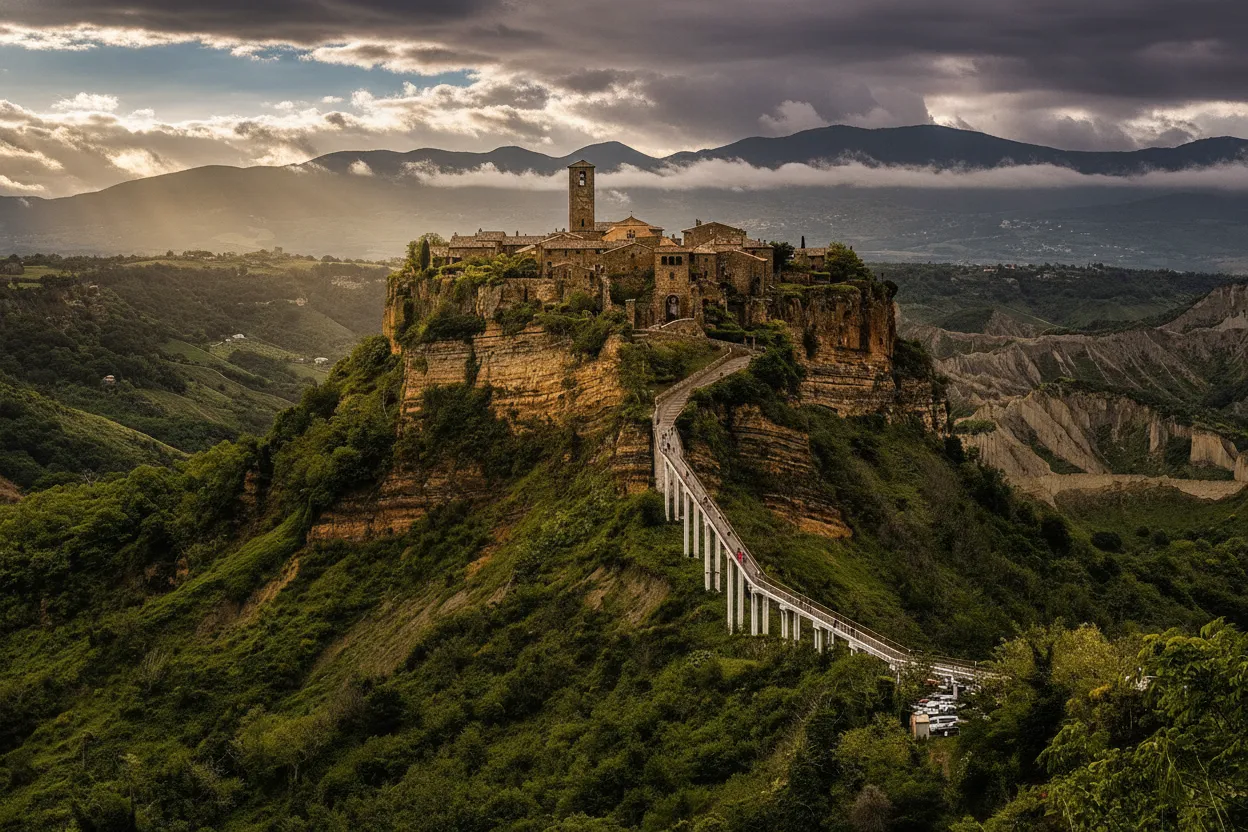
The pedestrian bridge leading to Civita di Bagnoregio stretches over 1,000 feet, an audacious concrete ribbon connecting the modern world to a village that seems to defy time itself. This dramatic walkway, the sole link for visitors and residents, arcs across a deep, eroding valley in central Italy, a visual prelude to the extraordinary destination that awaits.
Perched precariously atop a crumbling volcanic peak in the Lazio region, Civita di Bagnoregio is a place of stark, unforgettable beauty. Known to many as 'The Dying City,' it's a living, breathing demonstration of human persistence against relentless natural forces. As you traverse the long, winding path towards its ancient gates, the world below falls away, replaced by sweeping views of the 'Calanchi' – a surreal landscape of clay hills sculpted by centuries of wind and water erosion. It's a journey that immediately sets the tone: you are entering somewhere unique, a place where history isn't just preserved, but actively battling for survival.
The Dramatic Approach to Civita
Your visit begins not at a bustling train station or a busy highway, but at the edge of Bagnoregio, the larger, modern town. From here, Civita appears almost like a mirage, an island of stone floating above a sea of green and ochre ravines. There's no driving into Civita; your car stays in Bagnoregio, and the rest of the journey is on foot. The bridge itself is an experience. It's steep in parts, a gentle climb that builds anticipation with every step. As you ascend, the views become more expansive, revealing the full, majestic isolation of Civita. The air often carries a quiet hush, broken only by the crunch of footsteps and perhaps the distant cry of a bird, enhancing the feeling of stepping back in time.
This pedestrian-only access is not merely a charm; it's a necessity. The very ground Civita stands on, a type of volcanic rock known as 'tuff,' slowly erodes, losing chunks of its foundation each year. This relentless geological process has isolated the village, creating the dramatic landscape we see today. The bridge, built to ensure continued access, is a symbol of the community's determination to keep Civita alive, linking its ancient past with a precarious present.
Civita: A Village on the Edge
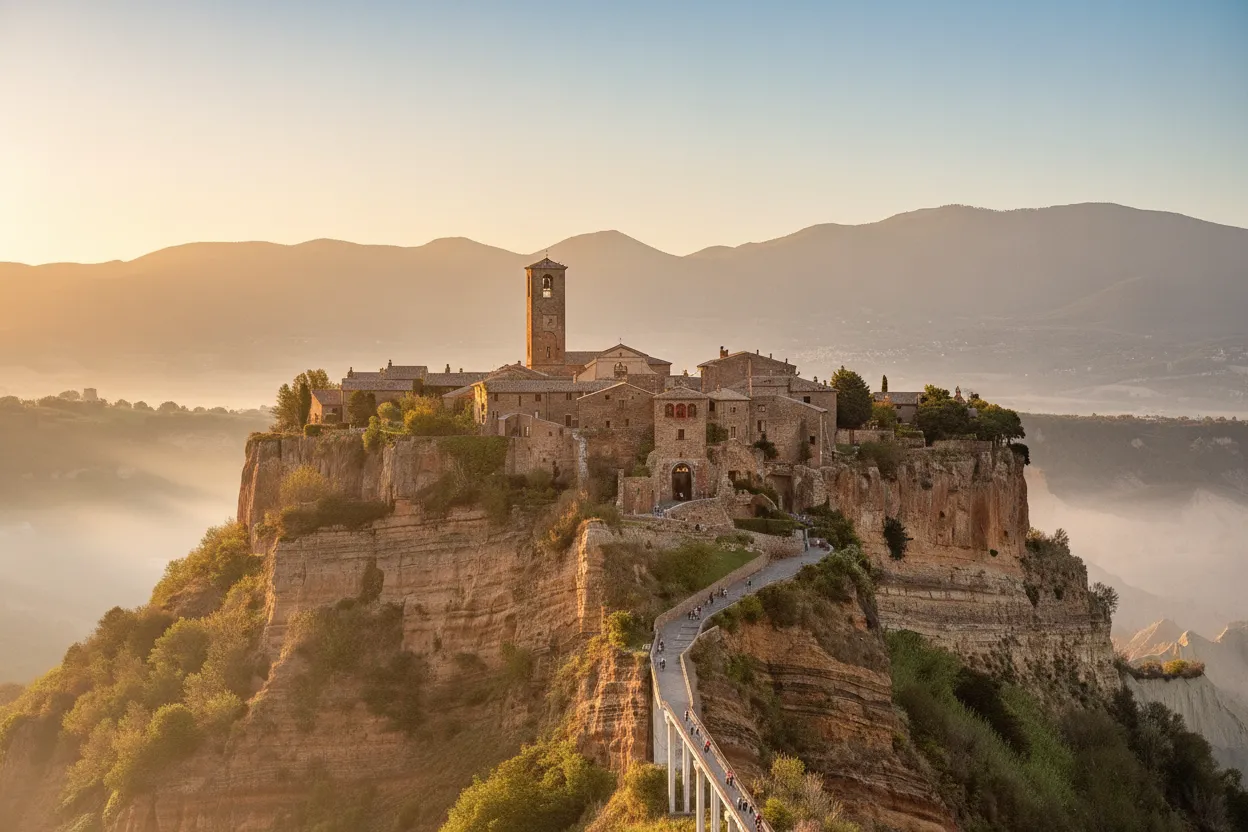
The nickname 'The Dying City' isn't just poetic; it reflects the stark reality of Civita's existence. The 'tuff' mesa it occupies is constantly being worn away by rain, wind, and seismic activity. Landslides have repeatedly threatened its existence, drastically shrinking its footprint over centuries. Where once Civita was a thriving medieval hub, it now houses a permanent population that can dip to fewer than ten people during the winter months, swelling with visitors and seasonal residents in warmer seasons. These few tenacious souls are the guardians of its heritage, maintaining the ancient buildings and welcoming those who make the pilgrimage.
Despite the geological challenges, there's a profound sense of life within Civita's walls. Gardens bloom vibrantly from every available space, local trattorias serve simple, delicious meals, and artisans display their crafts. It's a village that refuses to surrender, its residents embodying a quiet strength that mirrors the sturdy stone of their homes. This resilience is a core part of Civita's allure, making it far more than just a beautiful ruin; it's a story of survival being written in real-time.
Echoes of Ancient Lives: Civita's Enduring Story
The history of Civita di Bagnoregio stretches back thousands of years, long before its medieval fame. Its origins lie with the Etruscans, who settled this strategic plateau around the 7th century BC. They carved tombs and tunnels into the softer rock beneath the village, some of which are still visible today. The Romans later took control, further developing the settlement and its surrounding agricultural lands. During the Middle Ages, Civita flourished, becoming a significant town with a castle, churches, and a network of fortified walls.
However, its geological instability has been a constant companion throughout its history. Earthquakes in the 17th and 18th centuries caused significant damage, accelerating the erosion and leading to the eventual decline of its population. The main access road collapsed in the 19th century, cutting Civita off and solidifying its isolated status. It was this isolation that, paradoxically, helped preserve its medieval character, shielding it from the widespread modernization that transformed many other Italian villages. Today, walking through Civita is to step directly into its layered past, where Etruscan foundations support Roman walls, which in turn give way to medieval arches.
Wandering Through Timeless Stone
Once you pass through the Porta Santa Maria, the fortified medieval gate, you enter a different world. Civita's charm lies in its intricate network of narrow, cobbled alleys, archways, and small squares. There's no grand itinerary needed here; the joy is in simply wandering, allowing yourself to get lost (briefly!) in its quiet corners. Every turn reveals another picturesque view: a vine-covered archway, a glimpse of the valley through a weathered stone window, or a beautifully maintained planter overflowing with flowers.
The main piazza hosts the Romanesque Church of San Donato, its facade a mix of ancient and restored elements, inviting a moment of quiet contemplation. Inside, you'll find simple, beautiful religious art and a sense of enduring faith. Beyond the church, explore the small artisan shops offering local ceramics, olive oil, and handmade souvenirs. You might even stumble upon a small museum dedicated to the village's geological history, providing deeper insight into the forces that shape its destiny.
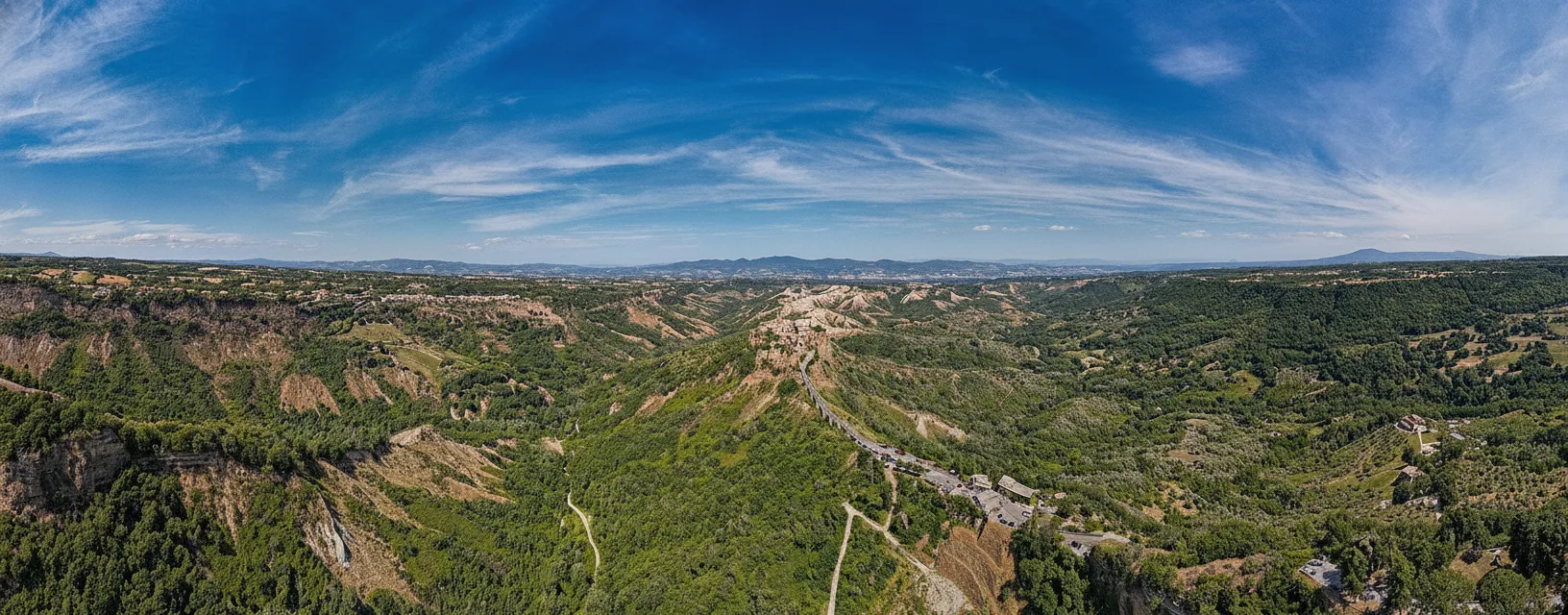
Don't miss the panoramic viewpoints at the village's edges. From these precipices, you can truly appreciate the vastness of the Calanchi valley, the sheer drop of the tuff cliffs, and the incredible feat of human engineering and spirit that keeps Civita alive. It's a truly humbling experience to stand there, witnessing the slow, powerful dance between nature and human endeavor.
Planning Your Journey to Civita di Bagnoregio
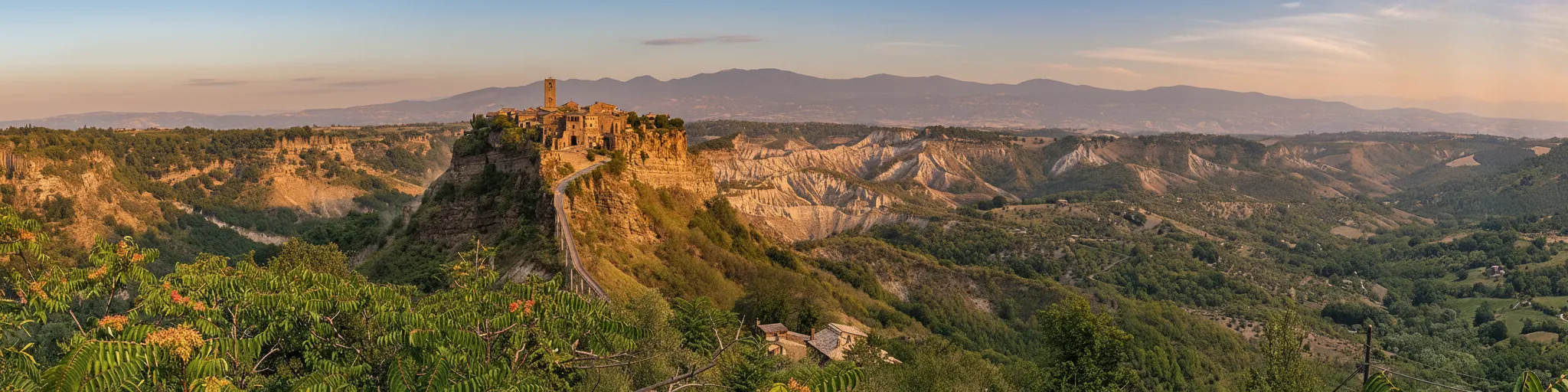
Visiting Civita di Bagnoregio requires a bit of planning, but the rewards are immense. Here's what you need to know:
Getting There
Civita is located in the Lazio region, about 120 km (75 miles) north of Rome. The easiest way to reach it is by car. Drive to Bagnoregio, where you'll find designated parking areas (paid). From the parking, it's a short walk to the start of the pedestrian bridge. There are also bus connections from Orvieto or Viterbo, which can be reached by train from Rome.
Entrance Fee
To help fund the preservation efforts and maintenance of the bridge, there is a small entrance fee (typically a few Euros) to cross the pedestrian bridge into Civita. This is collected at a booth before you begin your walk.
Best Time to Visit
Spring (April-May) and Autumn (September-October) offer the most pleasant weather for walking and exploring, with fewer crowds than the peak summer months. Summer can be hot, but the longer daylight hours allow for leisurely exploration. Winter brings a stark, quiet beauty, but facilities might be more limited.
What to Expect
The walk across the bridge is uphill on the way to Civita, and while not overly strenuous, comfortable walking shoes are essential. The village itself has uneven cobblestone streets. Facilities within Civita are limited to a few restaurants, cafes, and artisan shops. There are no large hotels, though a few charming B&Bs offer intimate stays.
Duration of Visit
Most visitors find 2-4 hours sufficient to explore Civita itself, including time for lunch or a coffee. However, if you wish to delve deeper into its history, enjoy a leisurely meal, or simply soak in the atmosphere, you could easily spend half a day or more.
Civita di Bagnoregio is more than just a destination; it's an experience that stays with you long after you've descended the bridge. It's a reminder of nature's power and humanity's enduring spirit, a place where every crumbling stone tells a story. Don't just read about it – go and feel the ancient magic for yourself.
Essential Travel Information
- Location Civita di Bagnoregio, Italy
- Best Time Spring (April-May) and Autumn (September-October)
- Getting There Drive to Bagnoregio, park, then walk the 1,000-foot pedestrian bridge. Buses also connect from Orvieto or Viterbo.
- Airport Rome Fiumicino (FCO)
- Budget Mid-range, approx. €50-€100 per day (excluding accommodation)
- Language Italian
Find Places to Stay Near Civita di Bagnoregio
Compare hotels, hostels, and unique stays in Italy.
Search AccommodationTours & Experiences Near Civita di Bagnoregio
Book guided tours, day trips, and unique experiences.
Browse Tours