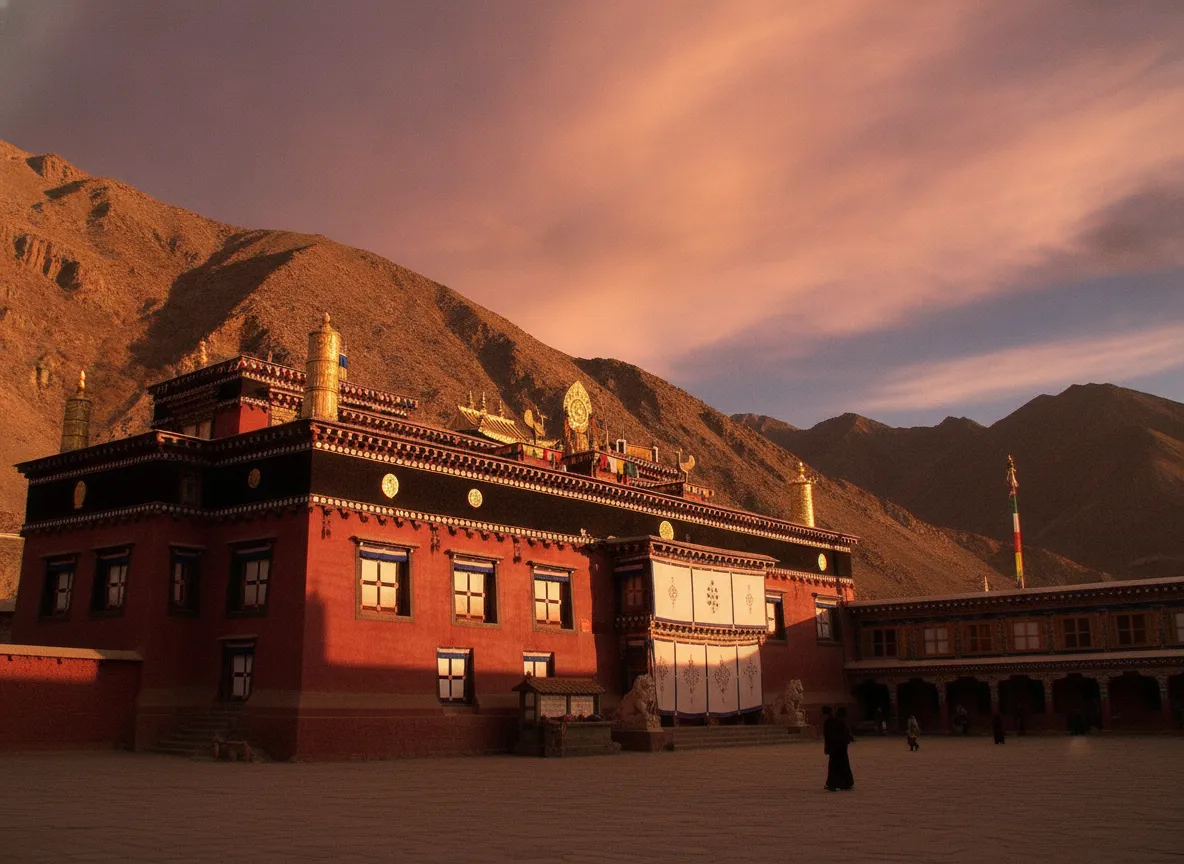
Hidden deep in the Himalayas, nestled in a remote corner of China's Sichuan Province, lies a living library unlike any other on Earth. Imagine a place where time seems to stand still, where the entirety of Tibetan Buddhist scripture, history, medicine, and art is preserved not on digital files or fragile scrolls, but through ancient, hand-carved wooden blocks. This isn't a forgotten ruin, but a vibrant, bustling sanctuary of knowledge: the Dege Parkhang, also known as the Derge Printing House. For centuries, this extraordinary institution has been the beating heart of Tibetan culture, a testament to enduring faith and meticulous artistry. It's a place that whispers tales of enlightenment and dedication, inviting the intrepid traveler to step back into a world where wisdom is painstakingly pressed onto paper, one sacred page at a time.
What Makes Dege Parkhang So Special? A Living Legacy of Wisdom
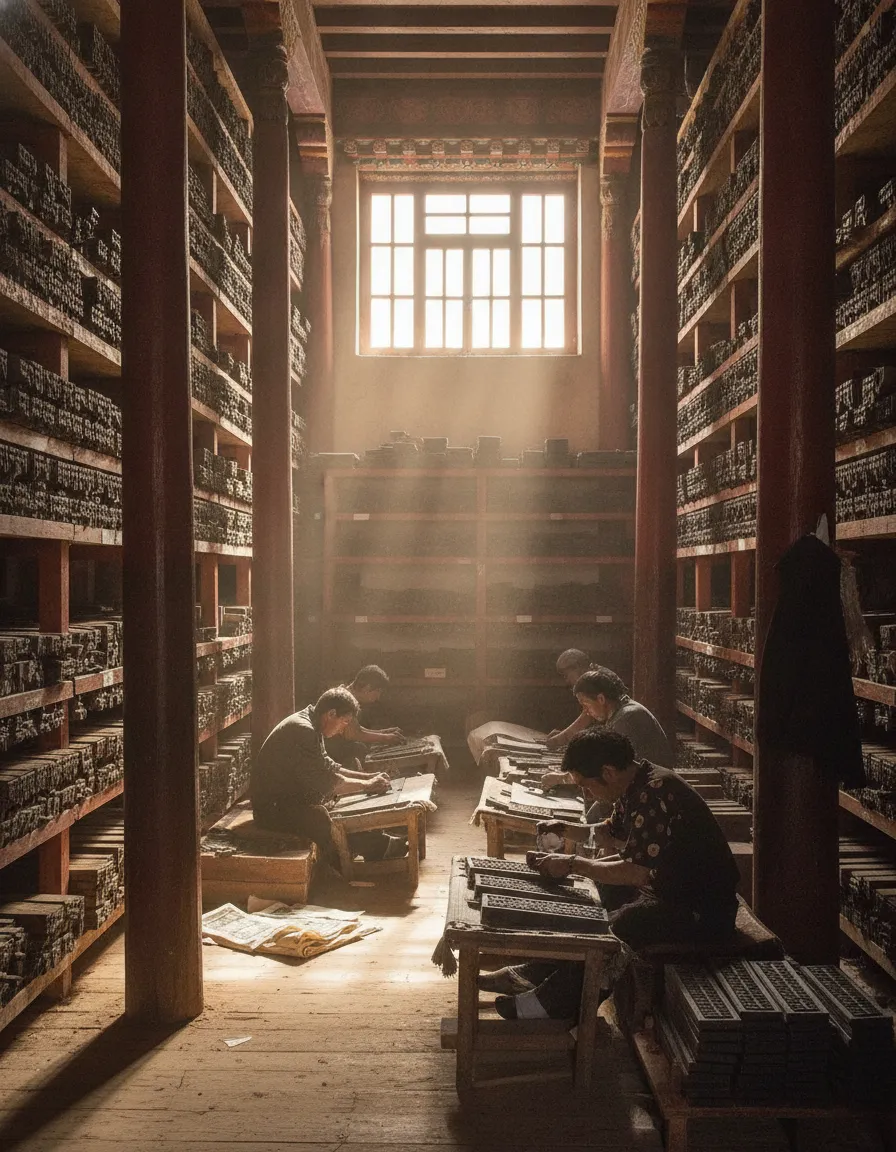
Dege Parkhang isn't just a building; it's a monumental achievement in cultural preservation. What sets it apart from any other library or archive in the world is its collection of over 210,000 intricately carved wooden printing blocks. Each block is a masterpiece, painstakingly etched with Tibetan script, religious iconography, or intricate illustrations. These aren't museum pieces locked behind glass; they are actively used every single day by generations of monks who continue the ancient craft of xylography (woodblock printing) with unwavering devotion.
This 18th-century printing house stands as one of the most important cultural institutions in the entire Tibetan world. It houses the complete Kangyur (the translated words of Buddha) and Tengyur (translated commentaries on Buddhist doctrine), along with countless other texts covering history, medicine, astrology, grammar, and art. Think about that for a moment: every major text of the Tibetan Buddhist canon, along with centuries of accumulated knowledge, is preserved here in a physical, tangible form, ready to be reproduced at a moment's notice.
In an age dominated by digital information and mass production, Dege Parkhang offers a profound counterpoint. It's a place where the value of knowledge is measured not by speed or convenience, but by the reverence and effort invested in its creation and dissemination. The rhythmic thud of the printing blocks, the earthy scent of ink and wood, the quiet concentration of the monks – it all creates an atmosphere of profound spirituality and timeless dedication. Visiting Dege Parkhang isn't just seeing history; it's witnessing history being made, day after day, in a tradition virtually unchanged for hundreds of years. It’s a vibrant, living museum, a testament to the enduring power of faith, art, and the written word.
A Journey Through Time: The History of Dege Parkhang
The story of Dege Parkhang begins in 1729, a period when the Derge Kingdom was a powerful and influential cultural hub in Eastern Tibet. It was founded by Chokyi Tenpa Tsering, the 12th King of Derge, a ruler renowned for his wisdom and patronage of the arts and sciences. His vision was ambitious: to create a central repository for all Tibetan Buddhist knowledge, ensuring its preservation and widespread dissemination for future generations. He gathered master craftsmen, scholars, and artists, initiating the monumental task of carving the tens of thousands of wooden blocks.
The construction and initial carving efforts were immense, spanning decades and involving countless skilled individuals. From its inception, the printing house was designed not just as a place of work, but as a sacred space, imbued with spiritual significance. The architecture itself reflects this, blending traditional Tibetan monastery design with practical elements suited for a large-scale printing operation.
Over the centuries, Dege Parkhang faced numerous challenges. Political upheavals, natural disasters, and periods of conflict threatened its existence. Yet, remarkably, it has endured. During the tumultuous Cultural Revolution in China, when many monasteries and cultural sites were destroyed, Dege Parkhang managed to survive relatively intact. This survival is often attributed to its remote location, the deep respect it commanded, and perhaps even a stroke of luck or divine intervention. Its resilience speaks volumes about its profound importance to the Tibetan people and the wider Buddhist world.
Today, the Dege Parkhang stands as a symbol of cultural endurance and continuity. It's not merely an ancient relic but a vital, active institution, continuing its original mission to print and distribute sacred texts to monasteries and individuals across the Tibetan plateau and beyond. Its history is etched not just in its walls, but in every single one of its priceless wooden blocks.
Stepping Inside: What You'll Experience at the Printing House
Approaching the Dege Parkhang, you'll first be struck by its imposing, traditional Tibetan architecture, often adorned with colorful prayer flags fluttering in the mountain breeze. But it's stepping inside that truly transports you. The air is thick with the scent of aged wood, fresh ink, and burning incense, creating an atmosphere that is both ancient and alive.
Your journey through the printing house will likely begin in the vast storage rooms, where the sheer scale of the operation becomes breathtakingly clear. Floor-to-ceiling shelves stretch endlessly, holding row upon row of meticulously organized wooden blocks. Each block, typically about the size of a large tablet, is a mirror image of two pages of text, carved with astonishing precision. You'll see blocks for different texts, different sizes, and different scripts, a testament to the diverse body of knowledge housed here.
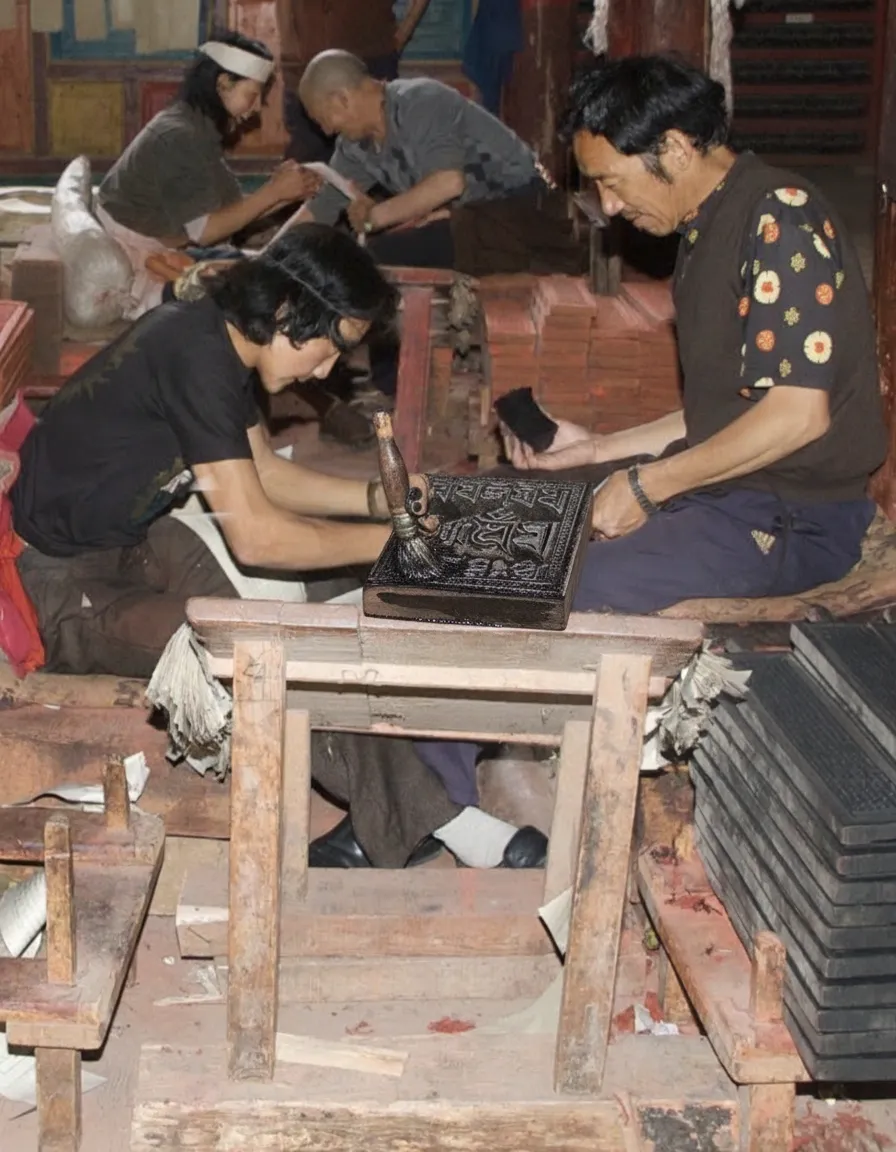
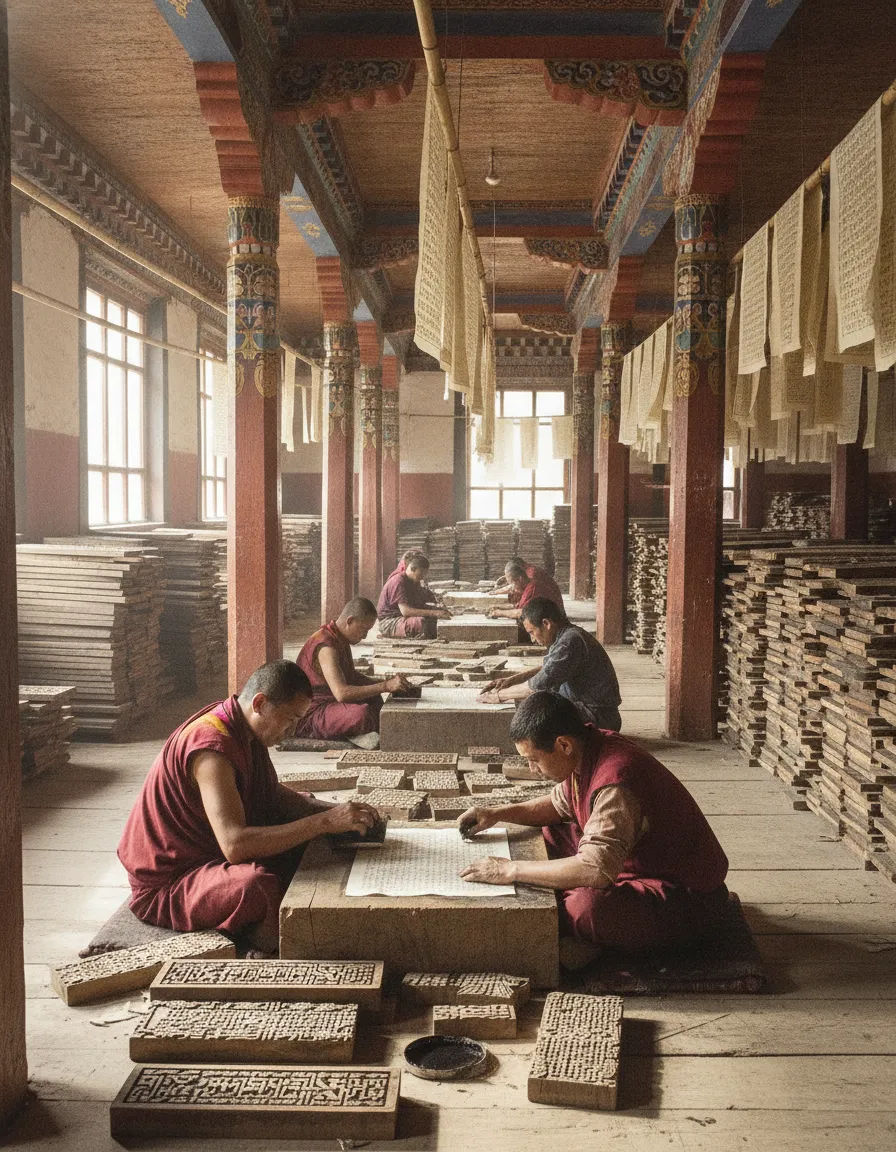
Next, you'll enter the printing rooms, the heart of the operation. Here, monks, often young and old working side-by-side, engage in the rhythmic, meditative process of printing. They work with an almost surgical precision, first inking a carved block with a dabber, then carefully laying a sheet of handmade Tibetan paper over it. With a swift, practiced motion, they rub the back of the paper with a roller or a felt pad, transferring the ink from the block to the page. The sound is mesmerizing: a soft, repetitive thud, a quiet testament to centuries of tradition.
Watching this process unfold is a profound experience. There's a tangible sense of reverence and dedication in the air. You'll see stacks of freshly printed pages being carefully laid out to dry in designated areas, sometimes strung up like laundry in sunlit courtyards or airy corridors. The process is slow, deliberate, and entirely manual – a stark contrast to the rapid pace of the modern world. Finally, you might visit the binding rooms, where the dried pages are collated and expertly stitched into traditional Tibetan books.
Every corner of Dege Parkhang tells a story. From the worn wooden floors polished by centuries of footsteps to the intricate murals adorning the walls, it’s a place that engages all your senses and leaves an indelible mark on your soul. It’s an unparalleled opportunity to witness a living, breathing piece of history, an enduring beacon of Tibetan culture and spirituality.
Planning Your Pilgrimage: Practical Tips for Visiting Dege Parkhang
Visiting Dege Parkhang is an adventure, a journey to one of the most remote and culturally rich corners of the Tibetan plateau. It requires careful planning, but the rewards are immeasurable.
Getting There
Dege is located in the Garze Tibetan Autonomous Prefecture of Sichuan Province, China. It’s not easy to reach, and that’s part of its charm. Most travelers fly into Chengdu Shuangliu International Airport (CTU), the provincial capital. From Chengdu, you'll need to embark on a long journey, typically a multi-day bus ride (or private car hire) through stunning mountain landscapes. The journey often includes overnight stops in towns like Kangding or Ganzi, allowing for acclimatization to the high altitude. While Kangding has a small airport (KGT), flights are limited and often connect via Chengdu.
Best Time to Visit
The best time to visit Dege is generally from May to June and September to October. During these months, the weather is milder, and the mountain passes are typically clear of heavy snow. July and August bring the monsoon season, which can mean heavy rains and potential road closures, while winters (November to April) are severely cold with heavy snowfall, making travel challenging and sometimes impossible.
Altitude Acclimatization
Dege town sits at an elevation of approximately 3,200 meters (10,500 feet). Altitude sickness is a real concern. Plan to spend a few days at lower altitudes (like Kangding, around 2,500m) before ascending to Dege. Drink plenty of water, avoid strenuous activity upon arrival, and consult your doctor about preventative measures.
Accommodation and Facilities
Accommodation in Dege town is generally basic but comfortable, ranging from guesthouses to simple hotels. Don't expect luxury, but you'll find clean rooms and friendly hospitality. Food options are mostly local Tibetan and Sichuanese cuisine. It's advisable to carry some cash (Chinese Yuan), as ATMs can be scarce or unreliable in remote areas, and credit card payments are not widely accepted outside major cities.
Respectful Conduct
Dege Parkhang is a sacred site. Dress modestly, covering your shoulders and knees. Maintain a quiet and respectful demeanor inside the printing house. Always ask for permission before taking photographs, especially of monks or the printing process. Follow any instructions from the staff or monks. Tipping is not customary in China, but a small donation to the printing house for its preservation efforts would be a thoughtful gesture.
Permits and Guides
For foreign travelers, travel to certain parts of the Garze Tibetan Autonomous Prefecture can sometimes require special permits or be restricted, especially around sensitive political periods. It's highly recommended to travel with a reputable local guide or tour company who can navigate these regulations, assist with language barriers, and enrich your experience with their knowledge of the region and its culture.
A Timeless Tapestry of Tradition
The Dege Parkhang is more than just a printing house; it's a profound cultural treasure, a beacon of knowledge, and a testament to the enduring human spirit. It offers a rare glimpse into a world where tradition and devotion intertwine, creating a timeless tapestry of wisdom that continues to inspire. If you seek an adventure that transcends the ordinary, a journey into the heart of Tibetan culture, then Dege Parkhang awaits. It's a place that truly leaves an imprint, not just on paper, but on your very soul.
Essential Travel Information
- Location Dege Parkhang (Derge Printing House), China
- Best Time May-June, September-October
- Getting There Long bus/car ride from Chengdu (Sichuan's capital) or Kangding.
- Airport Chengdu Shuangliu International Airport (CTU)
- Budget Mid-range (approx. USD 50-100+ per day, depending on transport/guide)
- Language Mandarin, Tibetan
Find Places to Stay Near Dege Parkhang (Derge Printing House)
Compare hotels, hostels, and unique stays in China.
Search AccommodationTours & Experiences Near Dege Parkhang (Derge Printing House)
Book guided tours, day trips, and unique experiences.
Browse Tours