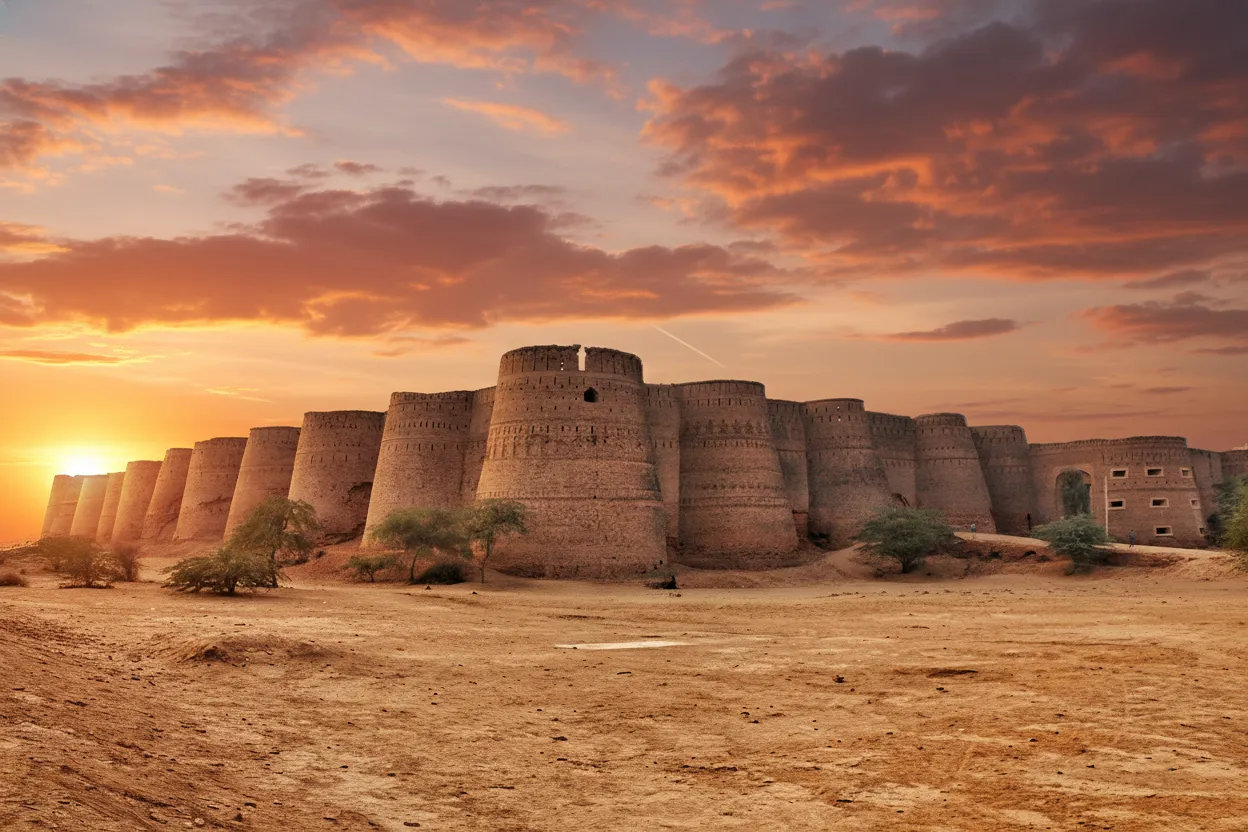
Forty colossal bastions rise dramatically from the endless expanse of the Cholistan Desert, guarding a fort almost completely unknown to the outside world. Imagine a place so vast, so perfectly symmetrical, and so utterly isolated that it feels like stepping onto another planet, or perhaps into a forgotten chapter of history. This isn't a fantasy; it's Derawar Fort, a colossal sentinel in the heart of Pakistan's Punjab province, waiting to be discovered by those brave enough to venture off the beaten path. If you've ever dreamed of unearthing a true hidden wonder, a place that takes your breath away with its sheer scale and raw beauty, then prepare to be captivated by the story of Derawar.
What Makes Derawar Fort Uniquely Special?
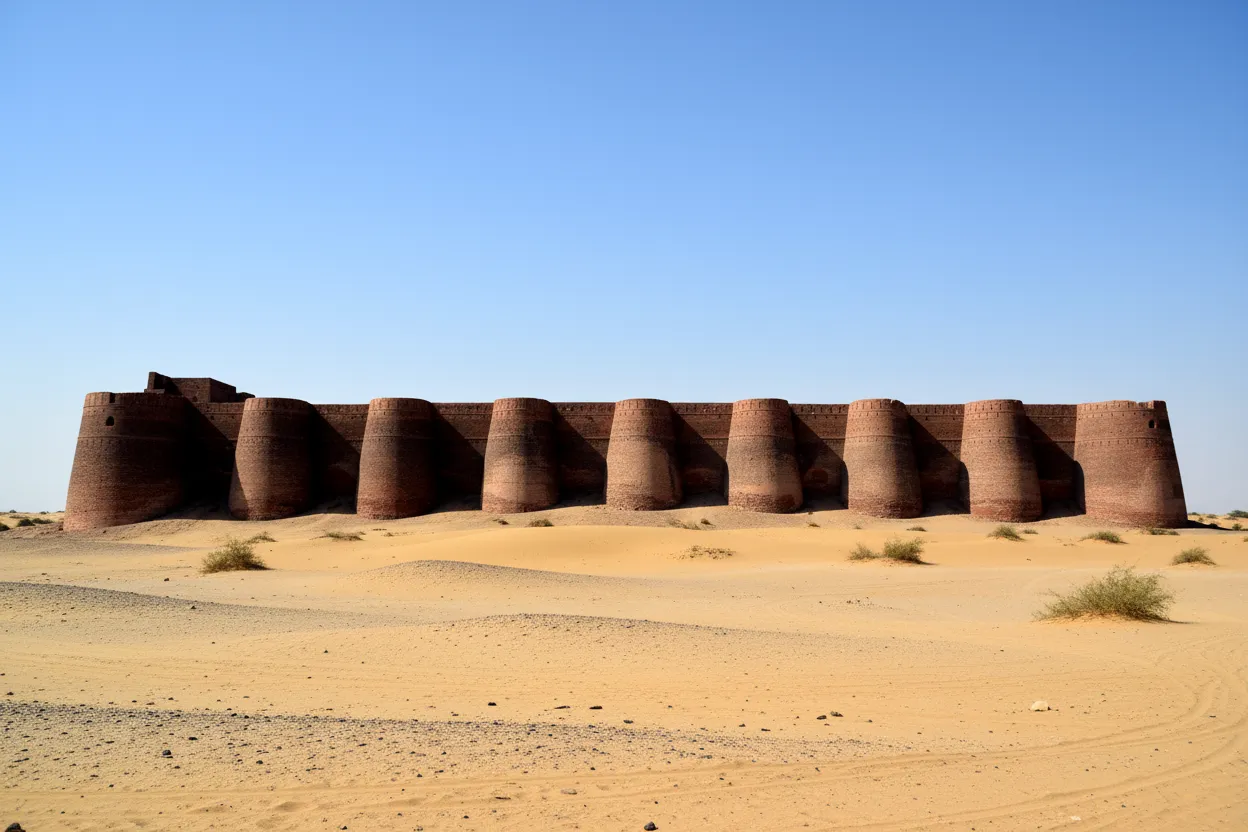
Derawar Fort isn't just another historical site; it's an experience. What sets it apart is its staggering scale combined with its profound isolation. Picture this: a perfectly square fort, each side stretching for hundreds of meters, flanked by 40 towering bastions, all constructed from deep red brick that glows with an otherworldly warmth against the golden desert sands. It’s a masterpiece of military architecture, a testament to human ingenuity and endurance in one of the world's most unforgiving landscapes.
Unlike many famous forts that are easily accessible and thronged with tourists, Derawar stands as a forgotten sentinel. Its towering walls and bastions, reaching up to 30 meters high, stretch for miles, enclosing a labyrinthine interior that once housed a thriving city. Today, that city is a ghostly echo, its ruins whispering tales of empires and battles, trade routes and daily life. The silence here is profound, broken only by the whisper of the desert wind, allowing for an immersive experience that transports you back in time. The sheer scale and isolation make it an awe-inspiring spectacle, a true hidden wonder that demands to be seen to be believed.
A Glimpse into the Past: The History of Derawar Fort
The story of Derawar Fort is as captivating as its appearance. Its origins trace back to the 9th century, when it was originally built by Rai Jajja Bhati, a Hindu Rajput ruler, and was known as Dera Rawal. For centuries, it served as a strategic stronghold, guarding the ancient trade routes that snaked through the Cholistan Desert, connecting various kingdoms and civilizations. Imagine caravans laden with goods, weary travelers, and fierce warriors all passing through the shadow of these mighty walls.
The fort as we largely see it today, however, owes much to the Abbasi family, the rulers of the princely state of Bahawalpur. In 1733, Nawab Sadiq Muhammad Khan I of Bahawalpur captured the fort from the Bhati clan. It was under the Abbasis that Derawar underwent significant reconstruction and expansion, transforming it into the formidable structure we witness today. For the Abbasis, Derawar was not just a military outpost but a symbol of their power and a vital part of their desert dominion. The fort's location was crucial for controlling access to water sources and protecting their territory from invaders. Just outside the fort walls, you'll find a beautiful mosque built by Nawab Sadiq Muhammad Khan III in 1849, a stunning white marble structure that contrasts beautifully with the fort's red brick. Nearby lies the royal graveyard of the Abbasi family, a poignant reminder of the lineage that once ruled this vast desert expanse.
Over time, as political landscapes shifted and new routes emerged, Derawar's strategic importance waned. It slowly receded from prominence, becoming a forgotten relic swallowed by the sands of time, preserving its grandeur in silent testament to a bygone era.
Exploring Derawar: What You'll See and Experience
Approaching Derawar Fort is an experience in itself. As you traverse the seemingly endless desert, the fort gradually emerges from the shimmering heat haze, first as a distant mirage, then slowly solidifying into a monumental reality. The first sight of its 40 bastions, each a formidable tower, marching in perfect formation across the horizon, is genuinely breathtaking.
Once you arrive, the sheer scale of the exterior is overwhelming. Walking around the base of the walls, you'll feel dwarfed by their height and thickness, marveling at the precision of the brickwork that has withstood centuries of harsh desert conditions. The intricate patterns and defensive features speak volumes about the architectural prowess of its builders.
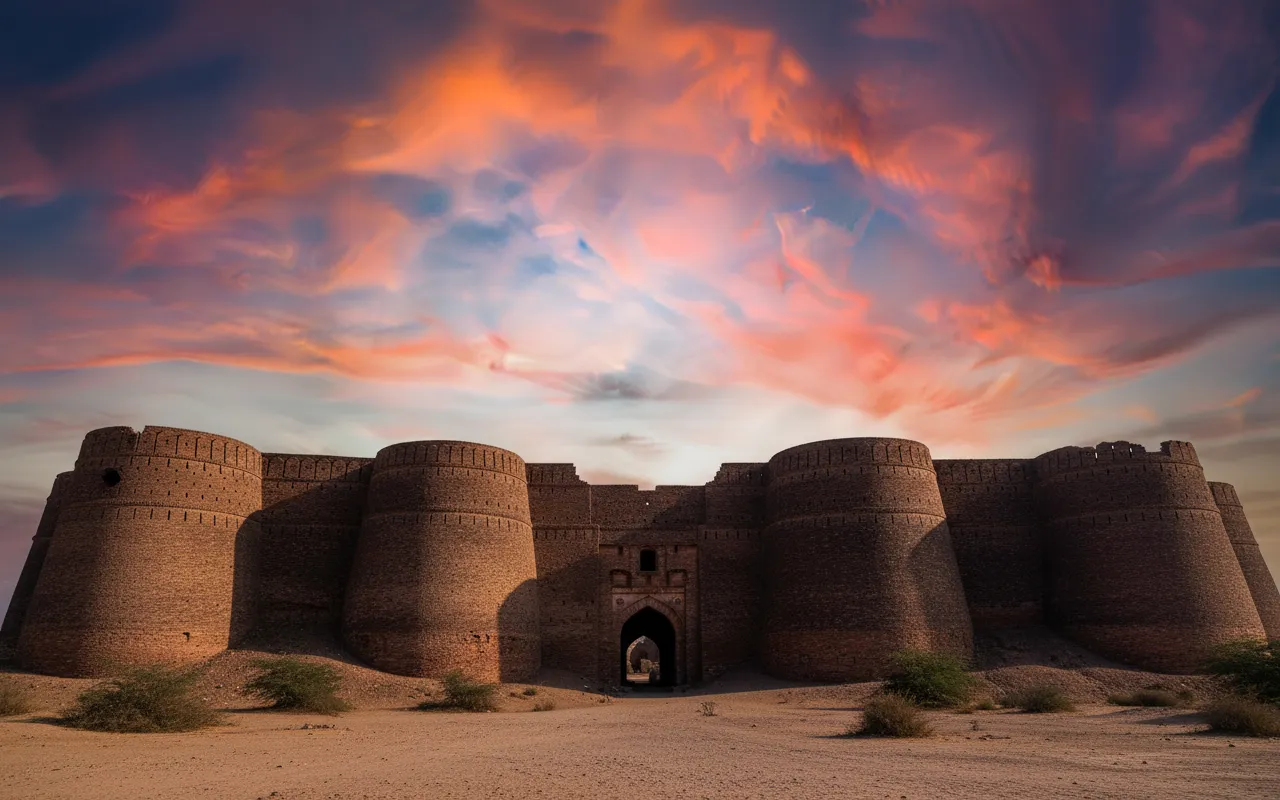
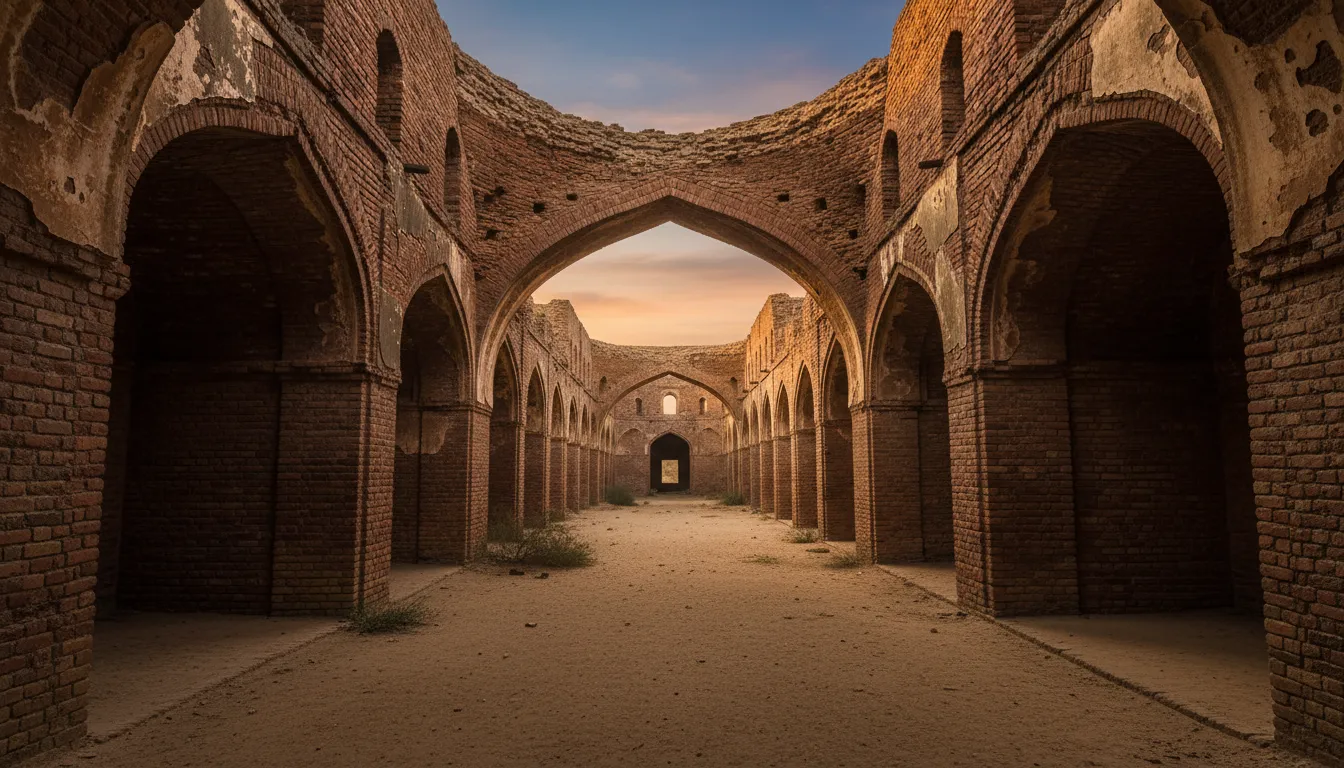
Entering the fort, you step into a different world. The interior is a sprawling network of crumbling structures, courtyards, and passages. While much of the original city within is in ruins, the skeletal remains of what were once palaces, barracks, and residential areas evoke a powerful sense of history. You can wander through these silent spaces, imagining the bustling life that once filled them. The silence is profound, broken only by the wind whistling through ancient doorways, creating an atmosphere of deep contemplation and wonder. Climb to the top of one of the accessible bastions (with care, as some areas may be unstable), and you'll be rewarded with an unparalleled panoramic view of the fort's vast interior and the endless, undulating expanse of the Cholistan Desert stretching to the horizon. It's a view that instills both humility and awe.
Don't forget to visit the nearby Abbasi Mosque. Its gleaming white marble stands in stark contrast to the fort's red brick, offering a moment of serene beauty. The intricate calligraphy and delicate arches are a sight to behold, providing a beautiful counterpoint to the fort's rugged majesty. A short distance away, the Royal Graveyard offers a glimpse into the final resting place of the Abbasi Nawabs, with impressive tombs that reflect their status and the artistic traditions of their era.
Practical Tips for Your Derawar Adventure
Visiting Derawar Fort is an adventure that requires some planning, but the rewards are immense. Here's what you need to know:
Best Time to Visit: The Cholistan Desert is notoriously hot. The ideal time to visit is during the cooler months, from **October to March**. Avoid the summer (April to September) when temperatures can soar to extreme levels.
How to Get There: The nearest major city is Bahawalpur. From Bahawalpur, Derawar Fort is about 100 kilometers (60 miles) away. The journey requires a sturdy **4x4 vehicle** as the last stretch involves driving over sandy tracks and through the desert. It is highly recommended to hire a **local guide** or go with a reputable tour operator who knows the terrain and local conditions. Self-driving without local expertise is not advisable.
Accommodation: There are no hotels or guesthouses directly at Derawar Fort. Most visitors stay in **Bahawalpur**, which offers a range of accommodation options from budget to mid-range. Some tour operators might offer desert camping experiences near the fort, which can be an unforgettable way to experience the desert night sky.
What to Bring: Be prepared for desert conditions. Essential items include:
- Plenty of **water and rehydration salts**.
- Sun protection: **hat, sunglasses, high-SPF sunscreen**.
- Lightweight, breathable clothing that covers your skin.
- Comfortable, sturdy **walking shoes**.
- A **camera** with extra batteries/power bank (you'll want to take many photos!).
- Snacks and any personal medications.
Cultural Sensitivity: Pakistan is a conservative country. Dress modestly, especially when visiting religious sites like the mosque. Always ask for permission before taking photos of locals.
Safety and Logistics: Always inform someone of your travel plans. Ensure your vehicle is in excellent condition. Local guides are invaluable not just for navigation but also for insights into the fort's history and the local culture. While generally safe, it's always wise to travel with trusted local support in such remote areas.
Derawar Fort is more than just a destination; it's an adventure into the heart of history and the vastness of nature. It challenges you to step out of your comfort zone and rewards you with an unparalleled sense of discovery. If you're seeking a travel experience that will leave an indelible mark on your soul, add Derawar Fort to your bucket list. It's a hidden gem, waiting patiently to share its ancient secrets with you.
Essential Travel Information
- Location Derawar Fort, Pakistan
- Best Time October to March
- Getting There Approximately 100km from Bahawalpur city. Requires a 4x4 vehicle and local guide for desert terrain.
- Airport Bahawalpur Airport (BHV)
- Budget Mid-range (approx. $70-$120 per day, excluding major transport to Pakistan, but including local transport and guide fees)
- Language Urdu, Punjabi, Siraiki
Find Places to Stay Near Derawar Fort
Compare hotels, hostels, and unique stays in Pakistan.
Search AccommodationTours & Experiences Near Derawar Fort
Book guided tours, day trips, and unique experiences.
Browse Tours