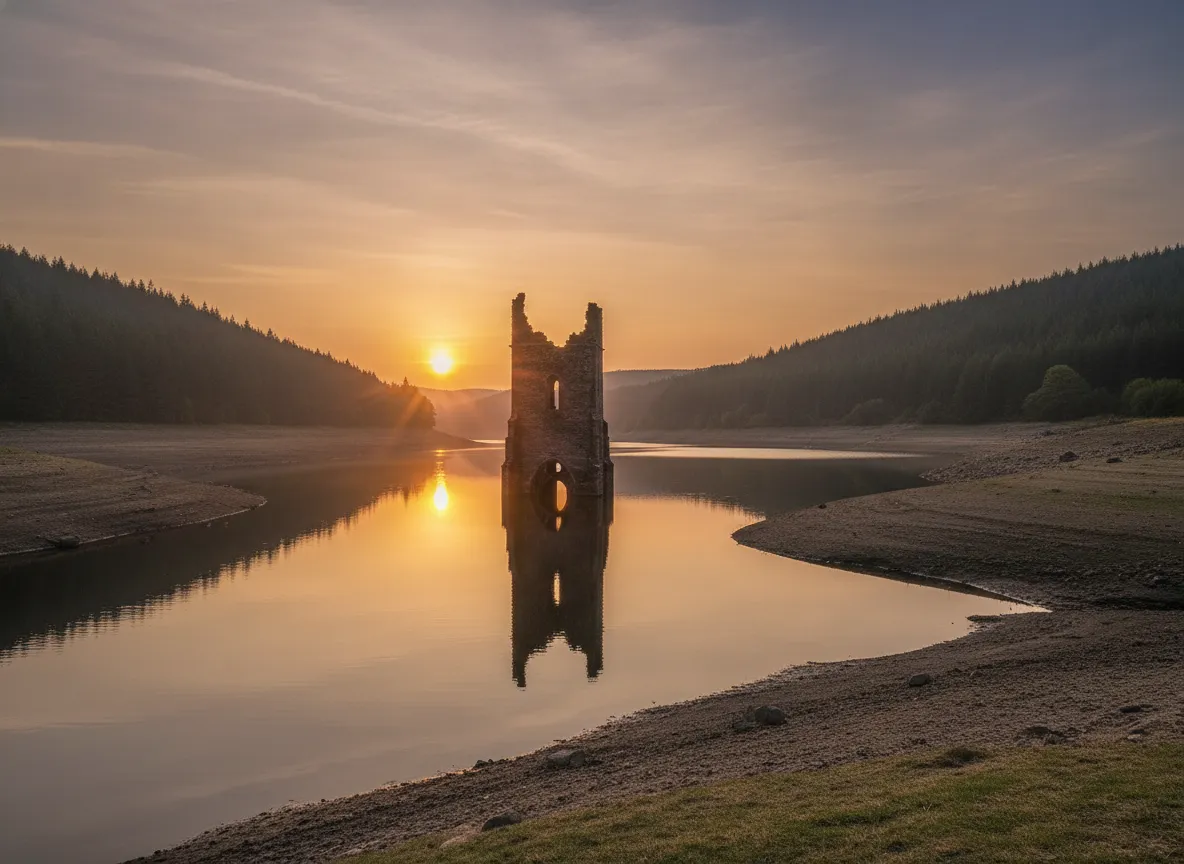
Imagine walking through the foundations of a forgotten world, where the echoes of daily life, once vibrant and real, now cling to exposed stones. This isn't a scene from a fantasy novel; it's the captivating reality of Derwent Village, nestled within the breathtaking landscapes of the Peak District in Derbyshire, England. It's a place that transcends the ordinary, inviting you on a journey through time, memory, and the powerful forces of nature and human endeavor.
The Ghostly Village Beneath the Waves: What Makes Derwent So Special?
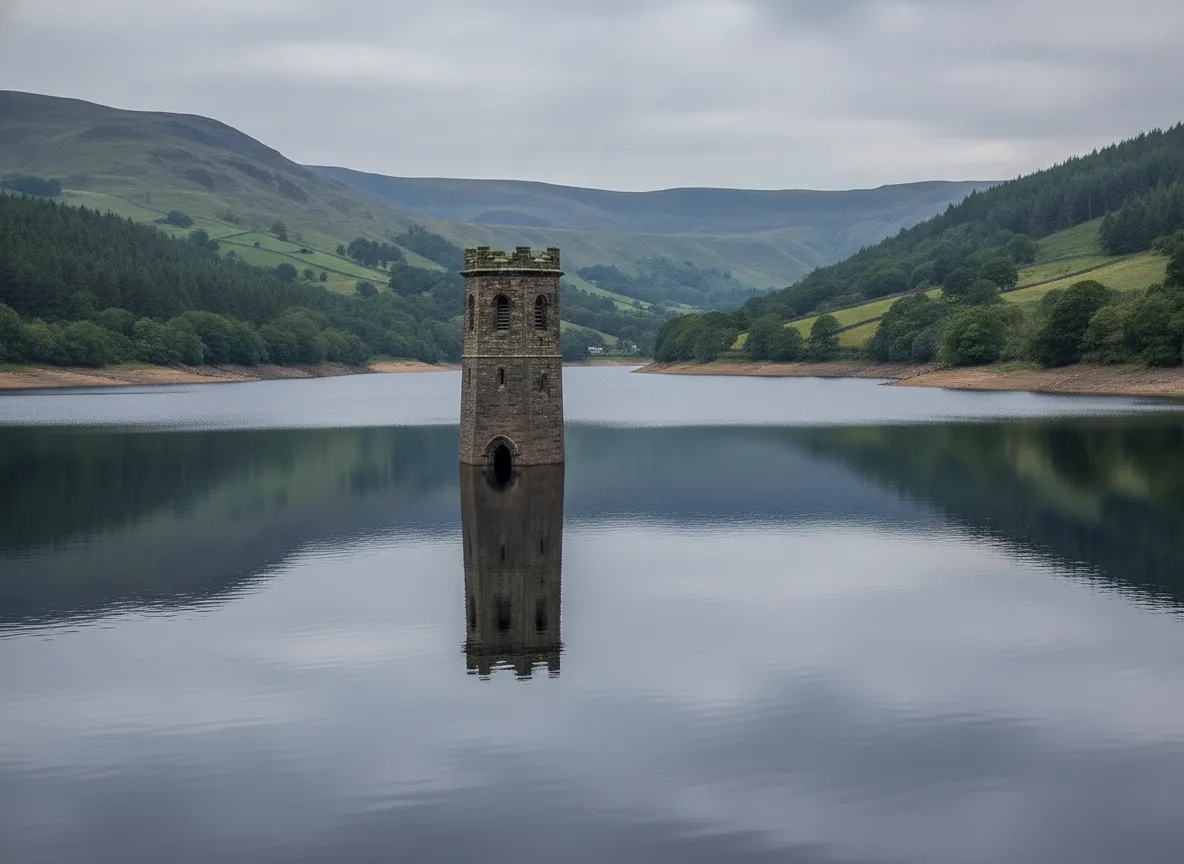
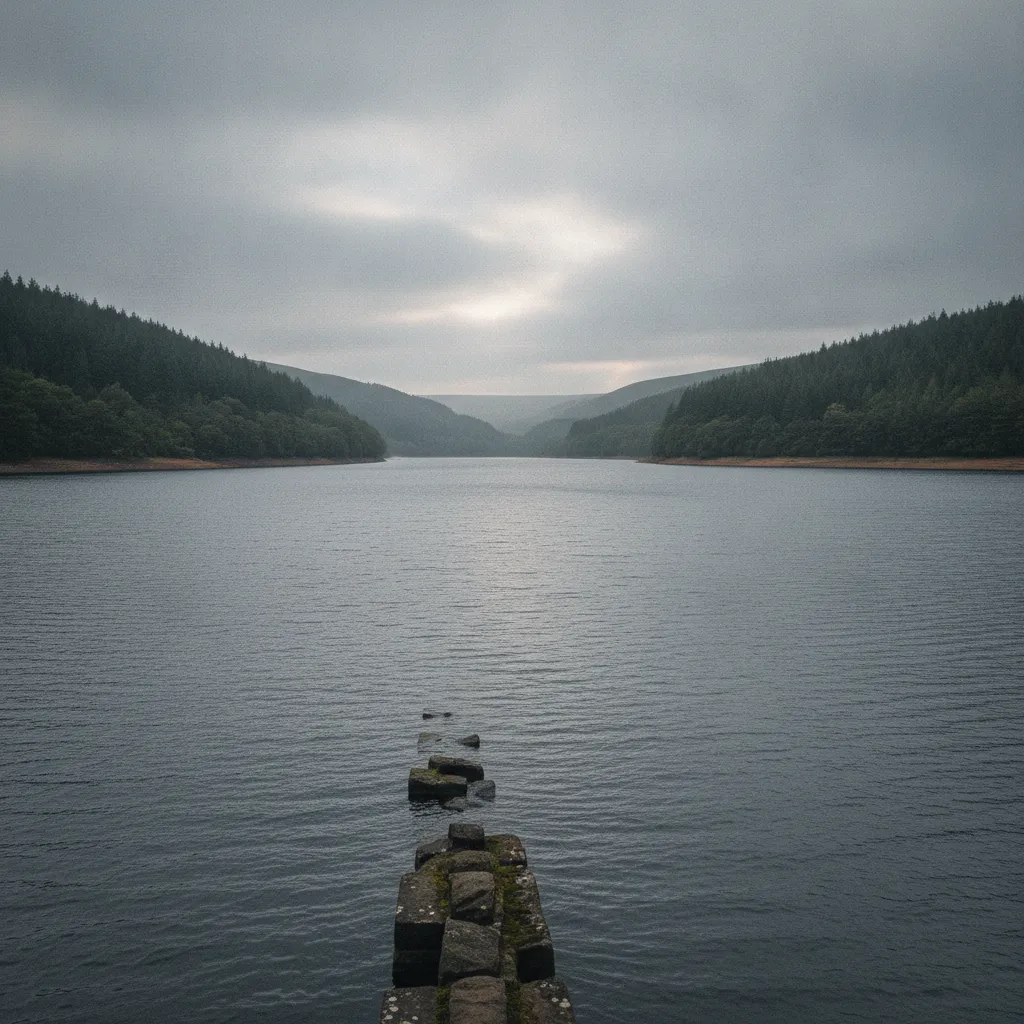
What truly sets Derwent Village apart isn't just its unique history, but the sheer emotional impact of witnessing it. For most of the year, Ladybower Reservoir is a picture of tranquil beauty, its deep waters reflecting the dramatic surrounding hills. Visitors come to hike, cycle, and enjoy the stunning vistas, completely unaware of the secrets hidden beneath. But when drought strikes, the reservoir transforms. The water levels plummet, and slowly, painstakingly, the outlines of a lost community begin to materialize.
It's a sight that stirs the soul: the ghostly remains of what was once a thriving village, complete with a medieval manor house and a beautiful church, rising from the depths. This isn't just an archaeological site; it's a poignant reminder of human sacrifice and adaptation. The village was deliberately flooded in the 1940s to create Ladybower Reservoir, a vital water source for the burgeoning industrial cities of Sheffield, Derby, and Nottingham. The sacrifice of Derwent and its sister village, Ashopton (whose remains are less frequently seen), paved the way for modern life, but at an immense human cost.
The experience of walking among these exposed ruins is unlike any other. It’s a profound connection to history, a tangible link to lives lived and lost, all set against the dramatic backdrop of one of England's most stunning national parks. It’s a place where natural beauty intertwines with a powerful, melancholy narrative, making it an unforgettable destination for those who seek more than just a pretty view.
A Drowned History: The Story of Derwent Village
To truly appreciate Derwent Village, one must understand its poignant backstory. For centuries, the valley was home to a close-knit agricultural community. The focal point was the beautiful St. John and St. James Church, consecrated in 1757, and Derwent Hall, a striking Jacobean manor. Life here, though perhaps simple by modern standards, was rich in community spirit and deeply rooted in the land.
However, the industrial revolution brought with it burgeoning populations and an insatiable demand for water. The Derwent Valley, with its high rainfall and steep-sided valleys, was identified as the perfect location for a series of reservoirs. Howden and Upper Derwent reservoirs were completed in the early 20th century, but by the 1930s, even more capacity was needed. The decision was made to build Ladybower Reservoir, which would be the largest of the three, and it meant sacrificing Derwent Village.
The displacement of the villagers was a slow, heartbreaking process. Homes were vacated, livelihoods uprooted, and the church was deconsecrated. In a final act of remembrance and practicality, the church's bells were removed, and the graveyard was exhumed, with over 300 bodies reinterred in a new cemetery at nearby Fairholmes. The village was systematically demolished, not because it was falling apart, but to prevent debris from floating to the surface of the new reservoir. Walls were knocked down, roofs removed, and the valley prepared for its watery fate.
The dam construction began in 1935, and by 1943, the valves were closed, and the valley began to fill. It took two years for Ladybower Reservoir to reach its capacity, slowly, inexorably swallowing the remains of Derwent Village. The spire of St. John and St. James Church was the last part of the village to disappear beneath the rising waters, a final, defiant farewell before it too was consumed, leaving only the memory of a community that once was.
What You'll See When Derwent Re-Emerges: A Glimpse into the Past
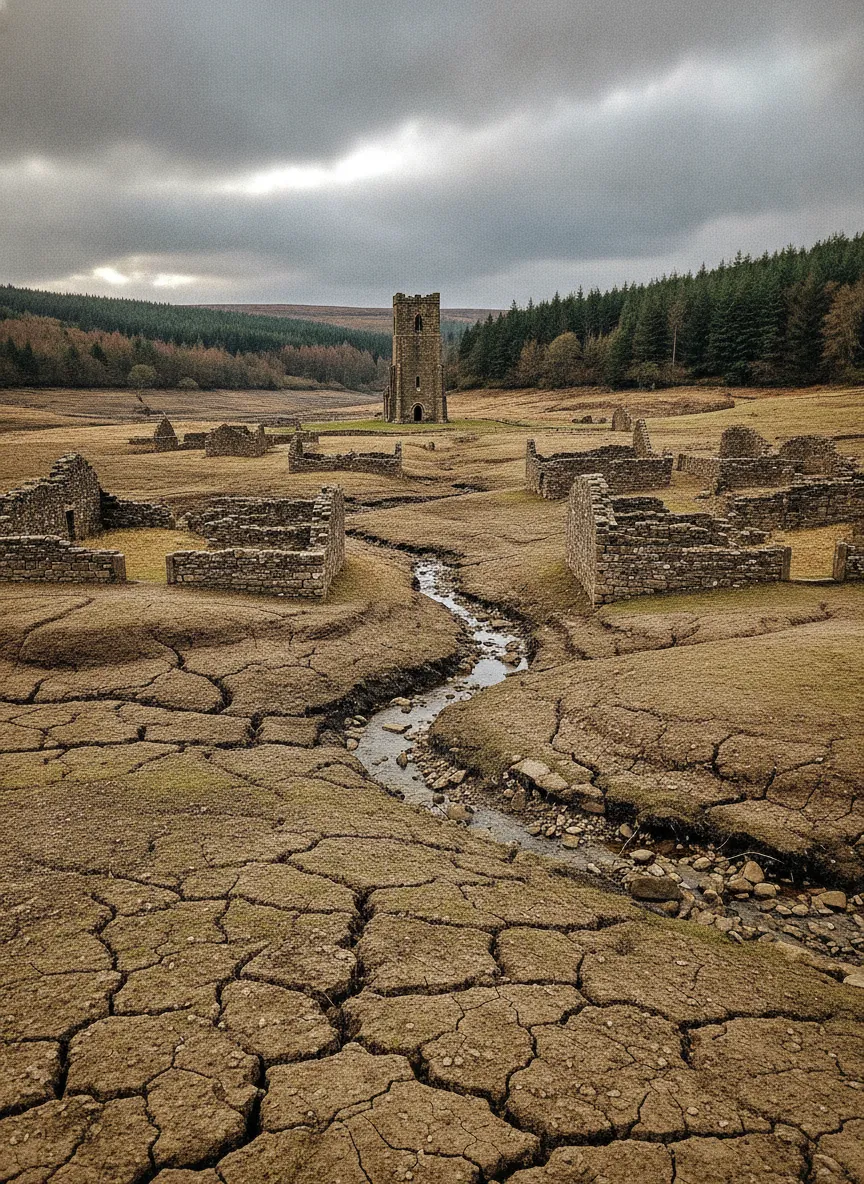
When the conditions are just right – typically after prolonged periods of dry weather – the magic happens. As the water levels drop, the first signs of the lost village emerge. Initially, it might be the top of the old stone walls, tracing the outline of fields and gardens. Then, the foundations of cottages and farmhouses become visible, revealing the layouts of homes where families once lived, loved, and worked.
The most dramatic and iconic sight is undoubtedly the skeletal remains of the Derwent church tower. Standing stark against the sky, often surrounded by muddy, cracked earth, it’s a truly haunting spectacle. You can walk right up to it, touch the weathered stone, and imagine the bells that once rang out across the valley. Nearby, the remains of the old village bridge, which once spanned the River Derwent, can also be seen, its sturdy arches still intact despite decades underwater.
Walking through these exposed ruins feels like stepping onto a movie set, but the history is intensely real. You’ll trace the routes of old roads, see the remnants of gateposts, and discern the shapes of buildings. It's a powerful experience to stand on what was once solid ground, knowing that for most of time, this very spot lies beneath meters of water. The air itself seems to whisper tales of the past, of children playing, farmers tilling fields, and the quiet rhythm of village life.
Planning Your Expedition: Practical Tips for Visiting Derwent Village
Visiting Derwent Village is a unique privilege, but it requires a bit of planning, primarily due to its ephemeral nature. Here’p how to make the most of your journey:
When to Go: The Drought Factor
The absolute best (and only) time to see Derwent Village is during periods of extreme drought. This typically happens after prolonged dry spells, often in late summer or autumn, but it can occur at any time. There's no guaranteed season. Your best bet is to check local news, social media groups dedicated to the Peak District, or the Severn Trent Water website for updates on Ladybower Reservoir's water levels. Don't plan a trip specifically to see the village without first confirming its visibility.
Getting There: Your Gateway to the Peak District
Ladybower Reservoir is located in the beautiful Peak District National Park, easily accessible by car. The nearest major towns are Sheffield to the east and Manchester to the west. There are several car parks around the reservoir, with Fairholmes Car Park (S33 0AQ) being a popular starting point, offering facilities and often the best access to the exposed village remains when they appear. Be aware that parking can fill up quickly during peak times.
What to Bring: Prepare for the Elements
- Sturdy Footwear: The exposed reservoir bed can be muddy, uneven, and rocky. Waterproof hiking boots are essential.
- Appropriate Clothing: The Peak District weather can be unpredictable. Layers, waterproofs, and windproofs are always a good idea.
- Water & Snacks: While there are cafes nearby (e.g., Fairholmes Visitor Centre), bring plenty of water, especially if you plan to explore for a while.
- Camera: You’ll want to capture the haunting beauty of this lost world.
- Binoculars: Useful for spotting details from a distance.
Respecting the Site: Leave No Trace
Derwent Village is a Scheduled Monument and a site of immense historical and emotional significance. Please tread carefully, stick to established paths where possible, and do not remove any artifacts or disturb the ruins. It's crucial to leave the site exactly as you found it, preserving it for future generations. Also, be mindful of the natural environment and local wildlife.
Beyond the Village: Explore Ladybower and the Peak District
Even if Derwent Village isn't fully visible, Ladybower Reservoir itself is a stunning destination. Enjoy walks or cycles around its perimeter, visit the impressive Derwent Dam (famous for its role in the Dambusters raids of WWII), and explore the countless other natural wonders of the surrounding Peak District National Park. The area offers incredible hiking, charming villages, and breathtaking scenery.
A visit to Derwent Village is more than just a sightseeing trip; it’s an immersive journey into a profound chapter of British history. It’s a chance to witness the resilience of nature and the echoes of human life, all revealed by the shifting waters. This hidden gem, with its blend of natural beauty and poignant history, promises an experience that will linger in your memory long after the waters rise again, once more reclaiming their silent, sleeping village.
Essential Travel Information
- Location Derwent Village (Ladybower Reservoir), United Kingdom
- Best Time During periods of extreme drought (check local water levels before visiting)
- Getting There Located in the Peak District National Park, accessible by car. Nearest car parks at Ladybower Reservoir (e.g., Fairholmes Visitor Centre).
- Airport Manchester Airport (MAN)
- Budget Budget to Mid-range (main costs are travel and potentially parking)
- Language English
Find Places to Stay Near Derwent Village (Ladybower Reservoir)
Compare hotels, hostels, and unique stays in United Kingdom.
Search AccommodationTours & Experiences Near Derwent Village (Ladybower Reservoir)
Book guided tours, day trips, and unique experiences.
Browse Tours