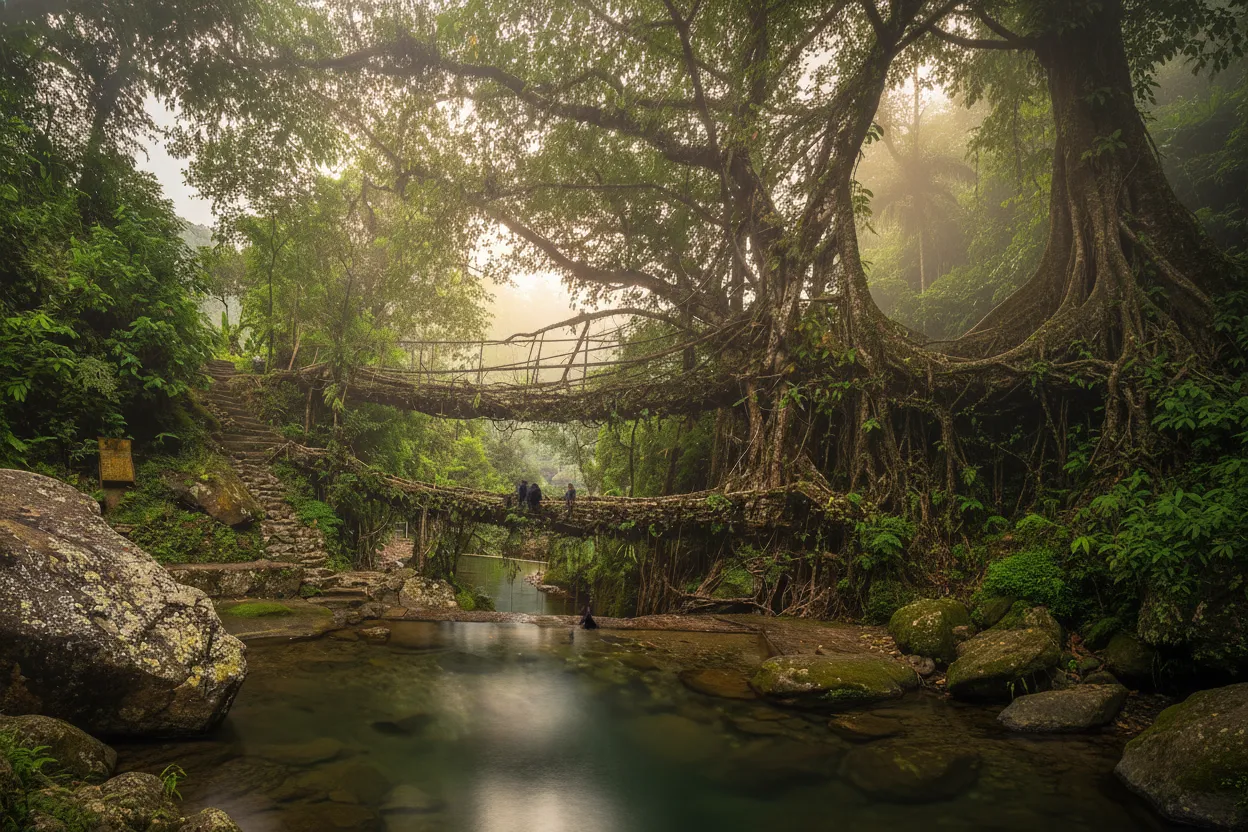
Forget concrete and steel—the remote jungles of Meghalaya conceal ancient bridges that are still alive, painstakingly grown from the very roots of trees by indigenous ingenuity. Imagine stepping onto a living, breathing structure, a marvel of bio-engineering that defies conventional architecture and strengthens with every passing year. This isn't a fantasy; it's the awe-inspiring reality of the Living Root Bridges, and tucked away in the heart of this verdant Indian state lies its undisputed crown jewel: the Double Decker Living Root Bridge of Nongriat. Prepare to have your perception of construction, nature, and human resilience utterly transformed.
The Double Decker Marvel: A Symphony of Nature and Ingenuity
In a world increasingly dominated by man-made wonders, the Double Decker Living Root Bridge, locally known as Jingkieng Nongriat, stands as a testament to a profound connection between humanity and the natural world. For centuries, the Khasi people of Meghalaya have perfected a unique form of bio-engineering, guiding the aerial roots of the mighty Ficus elastica, or Indian Rubber Fig tree, across rivers and ravines. These aren't just any trees; their roots are incredibly strong, flexible, and capable of growing to immense lengths.
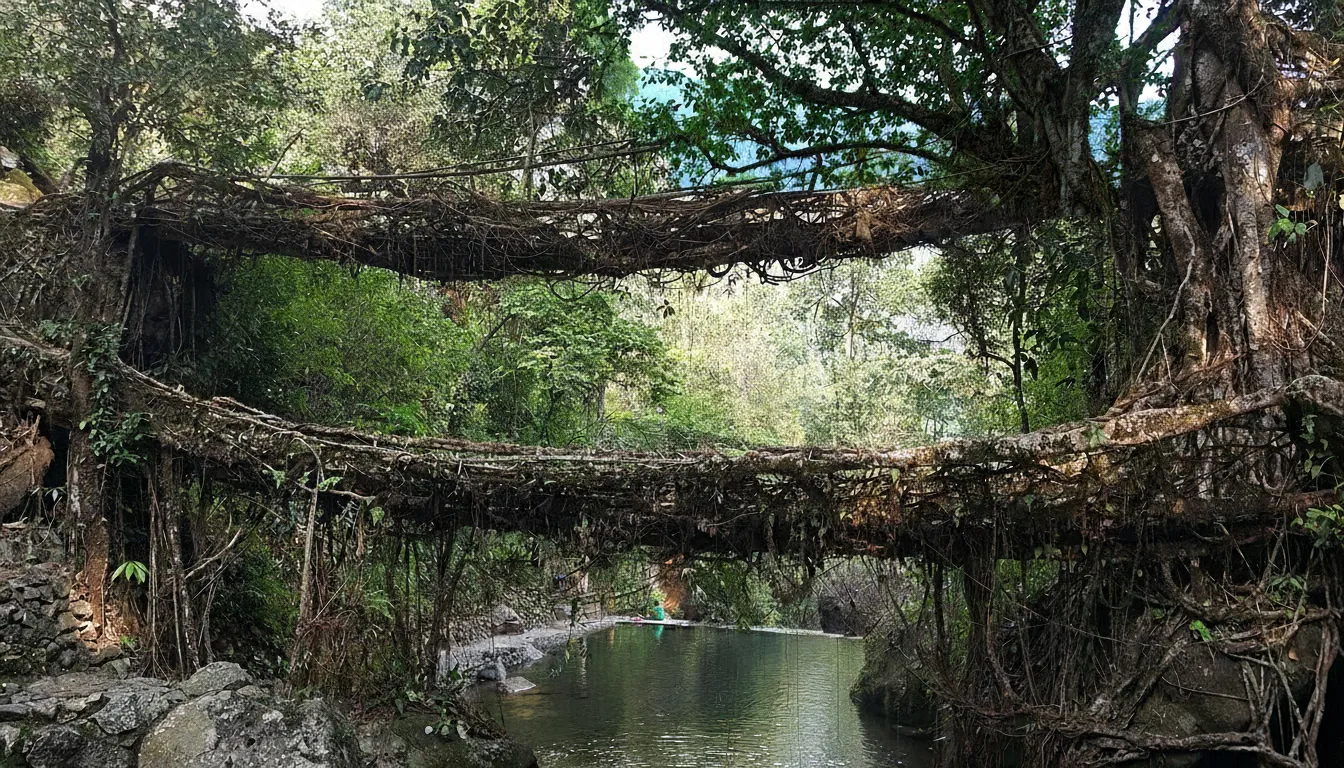
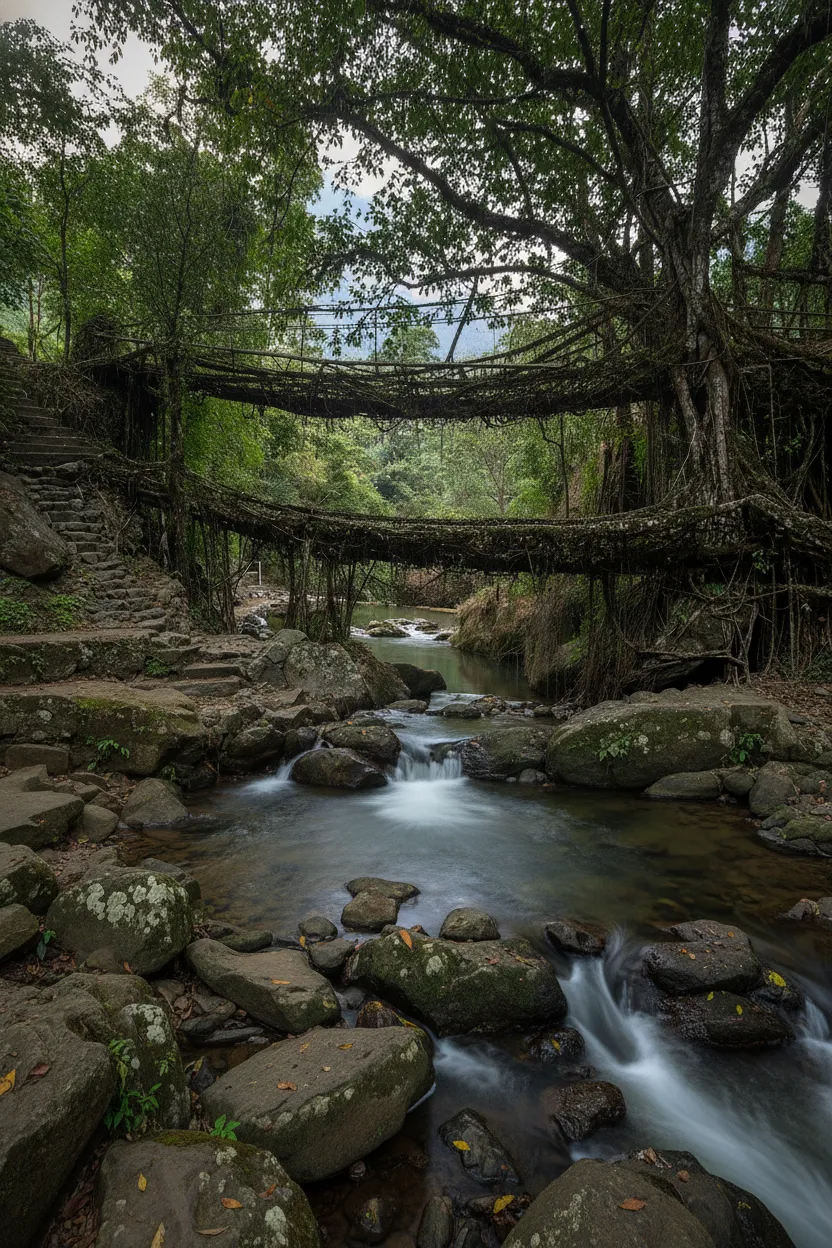
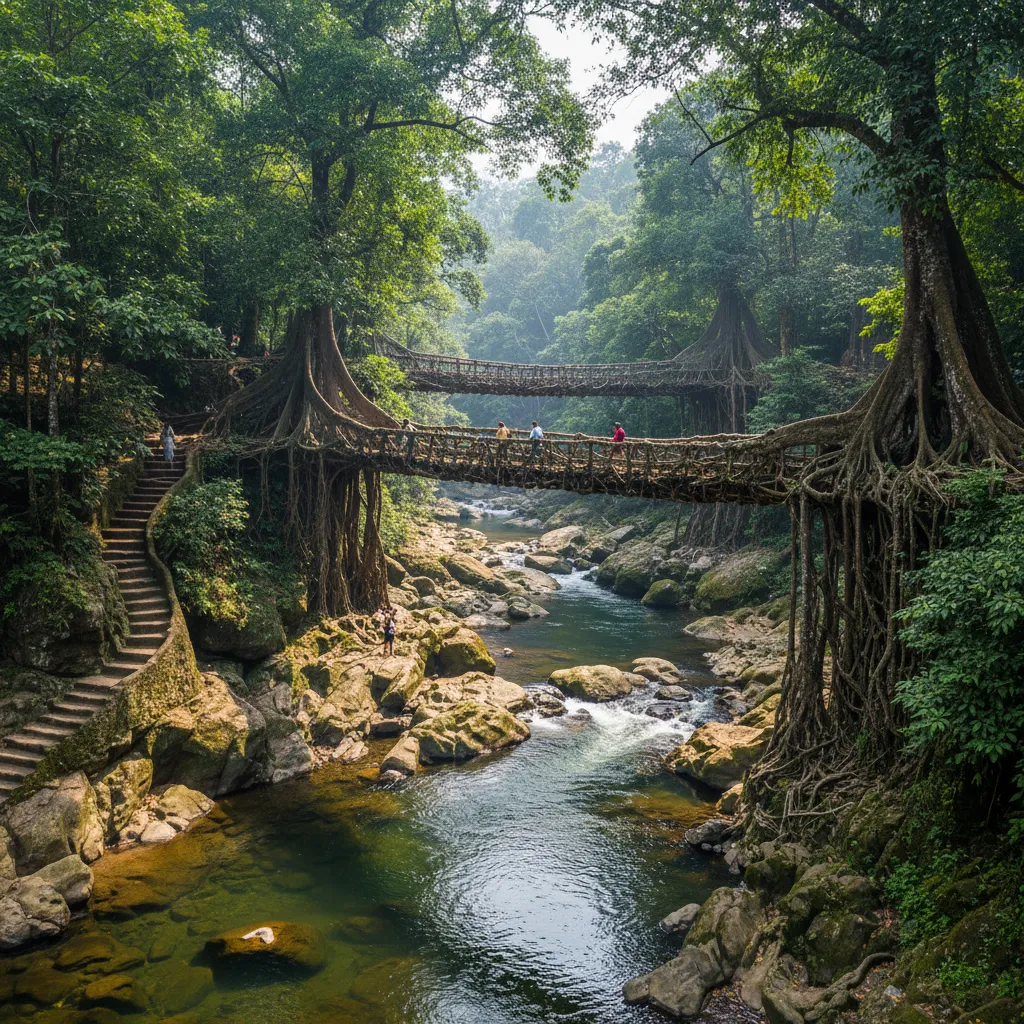
What makes the Nongriat bridge so exceptionally special is its incredible two-tiered structure. Imagine two bridges, one built atop the other, both entirely composed of interwoven, living roots. It's a sight that beggars belief, a testament to generations of patient, meticulous work. The Khasi elders would thread the young, tender roots through hollowed-out betel nut trunks or bamboo, directing their growth across turbulent streams. Over decades, these roots would intertwine, fuse, and thicken, eventually forming robust, self-renewing pathways. Unlike steel or concrete, these bridges don't degrade; they strengthen with age, becoming more resilient and integrated with their environment. They are literally alive, growing stronger with every passing monsoon, a vital lifeline across a challenging, rain-drenched landscape.
Walking across these organic structures is an experience unlike any other. The roots beneath your feet are smooth and gnarled, a natural carpet that flexes slightly with each step. The air is thick with the scent of damp earth and lush vegetation, and the sounds of the jungle—chirping insects, distant bird calls, the rush of water—envelop you. It's an immersive journey into a living legend.
A Legacy Forged in Nature: History and Background
The story of the Living Root Bridges is deeply intertwined with the history and culture of the Khasi people. Living in one of the wettest places on Earth, where torrential monsoon rains can swell rivers into impassable torrents, conventional bridge-building materials like wood would quickly rot away. The Khasi, with their intimate knowledge of the forest, observed the incredible strength and growth patterns of the rubber fig tree. They realized its potential not just as a source of fruit or shade, but as a living building material.
The process of growing a root bridge is not for the impatient. It takes anywhere from 15 to 30 years for a bridge to become fully functional and strong enough to support human weight. This long-term vision, passed down through oral tradition and practical demonstration, speaks volumes about the Khasi people's foresight and their deep respect for nature. Each generation contributes to the ongoing maintenance and strengthening of these vital connections, ensuring that the legacy continues for future generations. These bridges are not just crossings; they are cultural landmarks, symbols of ingenuity, and a sustainable solution born from necessity.
The Double Decker bridge, in particular, showcases an advanced level of this bio-engineering, perhaps a response to increased traffic or simply a desire to push the boundaries of what was possible. It's a monumental achievement that has garnered global attention, yet it remains a humble, integral part of daily life for the villagers of Nongriat and surrounding communities.
Your Journey to the Heart of Nongriat: What to Expect
Reaching the Double Decker Living Root Bridge is an adventure in itself, a pilgrimage that rewards perseverance with unparalleled natural beauty. The journey typically begins from Cherrapunjee (Sohra), once famed as the wettest place on Earth. From there, you'll embark on a trek that is as challenging as it is breathtaking.
The path descends into a deep valley, primarily consisting of thousands of stone steps that wind through dense, emerald-green jungle. You'll pass smaller, equally fascinating single-decker root bridges, cross crystal-clear streams, and encounter suspension bridges made of steel cables, offering thrilling views of the ravines below. The air is humid, the vegetation vibrant, and the sounds of unseen wildlife fill the atmosphere. It’s a true immersion into the raw beauty of Meghalaya.
After a strenuous descent and a few hours of trekking, you'll finally arrive in Nongriat village, a serene hamlet nestled amidst the hills. And there it is: the magnificent Double Decker Living Root Bridge, spanning a gushing stream. Standing beneath its interwoven canopy of roots, feeling the cool spray of the water, and marveling at the sheer scale and organic complexity is an experience that resonates deep within. You'll want to spend time simply sitting, absorbing the atmosphere, and perhaps even dipping your feet into the natural pools formed by the stream. The village itself offers a glimpse into local life, with friendly faces and simple guesthouses providing a much-needed respite.
Practical Tips for Your Unforgettable Visit
Ready to embark on this incredible journey? Here’s what you need to know to make your visit to the Double Decker Living Root Bridge of Nongriat as smooth and enjoyable as possible:
Best Time to Visit: The ideal time is from October to March, after the monsoon rains have subsided but before the peak summer heat. The weather is pleasant, and the trails are less slippery. Avoid the monsoon season (June to September) unless you're prepared for heavy rain and extremely challenging, muddy trails.
Getting There: The nearest major airport is Guwahati (GAU) in Assam. From Guwahati, you can hire a taxi to Cherrapunjee (Sohra), which is about a 3-4 hour drive. The trek to Nongriat village starts from Tyrna village, a short drive from Sohra. You can hire a local guide from Tyrna, which is highly recommended for navigation and cultural insights.
Physical Fitness: Be prepared for a challenging trek. It involves descending and ascending thousands of steps (estimated 3,500-4,000 one way) and crossing several suspension bridges. A good level of physical fitness is essential. Take your time, carry enough water, and rest when needed.
What to Pack:
- Sturdy, comfortable hiking shoes with good grip.
- Lightweight, quick-drying clothing.
- Rain gear (jacket, umbrella) – even outside monsoon season, Meghalaya can have unexpected showers.
- Water bottle (refill stations are available in Nongriat).
- Snacks for energy.
- First-aid kit (especially for blisters or minor injuries).
- Insect repellent.
- Camera to capture the magic!
- A light backpack to keep your hands free.
Accommodation: While many trekkers do a day trip from Sohra, staying overnight in Nongriat is highly recommended. There are basic guesthouses and homestays run by locals, offering a truly authentic experience. This allows you to explore the bridge and surrounding areas at a leisurely pace and enjoy the tranquility after the day-trippers leave.
Respectful Travel: Remember you are visiting a living village. Be respectful of local customs, traditions, and the environment. Do not litter, avoid loud noise, and ask for permission before photographing people.
The Double Decker Living Root Bridge of Nongriat is more than just a tourist attraction; it's a profound experience, a journey into the heart of nature's ingenuity and human resilience. It's a reminder that the most incredible structures aren't always built with steel and concrete, but sometimes, they're simply grown, nurtured, and loved into existence. This hidden gem in Meghalaya isn't just a destination; it's an education, an inspiration, and an adventure waiting to unfold.
Essential Travel Information
- Location Double Decker Living Root Bridge of Nongriat, India
- Best Time October to March (post-monsoon to dry season)
- Getting There Fly to Guwahati (GAU), then drive to Cherrapunjee (Sohra). From Sohra, drive to Tyrna village, and trek 2-3 hours to Nongriat village.
- Airport Guwahati (GAU)
- Budget Budget/Mid-range (approx. $30-70 USD daily, excluding flights, depending on accommodation choices)
- Language Khasi, English, Hindi
Find Places to Stay Near Double Decker Living Root Bridge of Nongriat
Compare hotels, hostels, and unique stays in India.
Search AccommodationTours & Experiences Near Double Decker Living Root Bridge of Nongriat
Book guided tours, day trips, and unique experiences.
Browse Tours