What Makes Dragon's Breath Cave So Special?
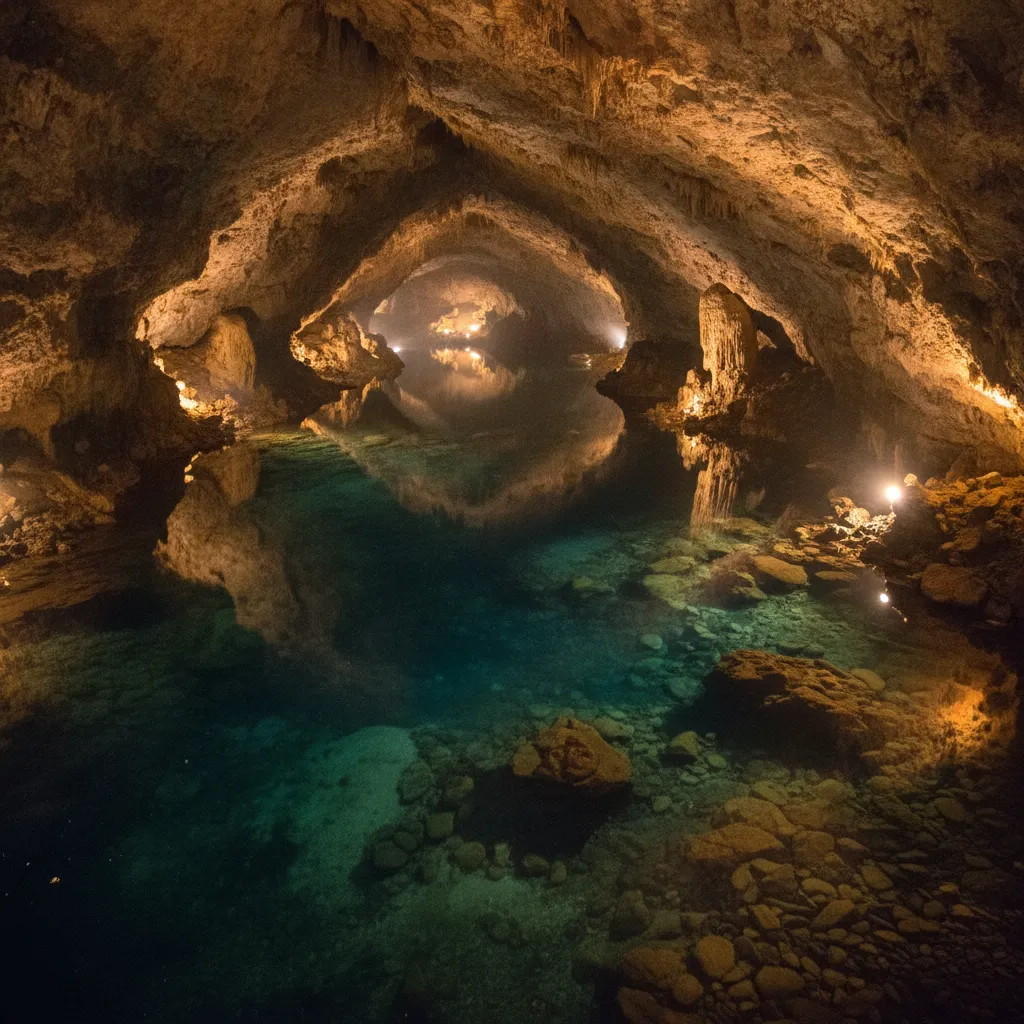
Dragon's Breath Cave isn't just another cave; it's a geological and biological marvel of staggering proportions. What truly sets it apart is its crowning glory: an immense, pristine underground lake spanning over two hectares. To put that into perspective, imagine a body of water roughly the size of two international rugby fields, hidden thousands of feet beneath the desert floor. This isn't a mere puddle; it's a vast aquatic world, untouched by sunlight, fed by ancient aquifers, and holding water so clear it defies belief. Its status as the largest non-subglacial underground lake makes it a unique global benchmark, a testament to the planet's hidden hydrological systems.
But the lake's size is only part of its allure. This isolated aquatic environment has fostered a unique ecosystem, a biological treasure trove of isolated evolution. The most famous resident is the blind cave catfish, Clarias cavernicola. This remarkable species has adapted entirely to its subterranean existence, losing its eyesight over millennia, relying instead on highly sensitive barbels and lateral lines to navigate its lightless world. It's a living fossil, a testament to the incredible power of natural selection in extreme environments. Discovering such a specialized creature in an untouched realm makes Dragon's Breath Cave a focal point for biologists and evolutionary scientists worldwide. It’s a true window into how life adapts when completely cut off from the surface world, a precious, fragile ecosystem demanding our utmost respect and protection.

A Glimpse into the Depths: History and Discovery
The existence of Dragon's Breath Cave, or Drachenhöhle as it's known locally, was first documented in 1986. Farmers in the Otjozondjupa Region, long aware of a mysterious sinkhole on their land, brought it to the attention of scientists. What began as a local curiosity soon transformed into an international scientific endeavor. Early explorations revealed a narrow, treacherous entrance shaft, hinting at something much larger below. It wasn't until expert cavers and divers, equipped with specialized gear and an insatiable sense of adventure, managed to navigate the complex passages that the true scale of the cavern and its magnificent lake were unveiled.
The initial dives into the vast subterranean lake were monumental achievements, pushing the boundaries of human exploration. Scientists meticulously mapped the colossal chamber, studied the unique geological formations, and, most importantly, began to understand the delicate balance of its isolated ecosystem. The discovery of Clarias cavernicola sent ripples through the scientific community, highlighting the incredible biodiversity that can exist in the most unexpected places. Since then, Dragon's Breath Cave has remained primarily a site for scientific research, its depths only rarely disturbed by human presence, ensuring its pristine condition is maintained for future generations to study and marvel at.
What Awaits You Inside Dragon's Breath Cave?
For the select few who have been granted access, the descent into Dragon's Breath Cave is an experience unlike any other. The journey begins with a challenging vertical drop, requiring ropes and specialized caving techniques. As you leave the Namibian sunlight behind, the air cools, and the silence becomes profound, broken only by the drip of ancient water. The passages open up into a vast, cathedral-like chamber, an immense void carved out of the earth over millennia. Here, the true spectacle begins.
Illuminated by powerful dive lights, the colossal underground lake stretches out before you, an ethereal expanse of water so clear it's almost invisible. The feeling of being hundreds of feet below the surface, surrounded by ancient rock and an untouched lake, is utterly humbling. When you slip into the water, the temperature is constant, and the visibility is infinite, allowing your lights to cut through the darkness for what feels like miles. You might catch a glimpse of the elusive blind cave catfish, a ghostly presence gliding through its eternal night, a creature perfectly adapted to its unique world. Every dive is a journey into a primordial realm, a profound connection to the raw power and mystery of our planet. It’s a place that whispers tales of deep time, geological forces, and the tenacity of life.

Planning Your Expedition: Practical Tips for Visiting
Let's be upfront: Dragon's Breath Cave is not a typical tourist destination. Its extreme isolation, geological challenges, and the fragility of its ecosystem mean that access is highly restricted. This is not a place you can simply visit on a whim; it requires extensive planning, specialized skills, and official permits.
For the Aspiring Explorer (and the rest of us):
- Accessibility: This is paramount. Dragon's Breath Cave is primarily a scientific research site. Access for recreational tourism, especially diving, is extremely limited, if not outright prohibited, to protect the unique environment. Only highly experienced, internationally certified technical cave divers with specific scientific or exploratory objectives, backed by official permits from the Namibian government, are even considered.
- Permits and Guides: If, by some extraordinary circumstance, you are part of an approved scientific expedition, you will require extensive permits from the Namibian Ministry of Environment, Forestry and Tourism. You would also be accompanied by expert local guides and a support team intimately familiar with the cave's complexities and safety protocols.
- Specialized Equipment: Forget your standard scuba gear. This is advanced technical cave diving territory, requiring rebreathers, multiple redundant gas systems, specialized lighting, communication equipment, and extensive safety lines. The logistical challenge of transporting and setting up this equipment in such a remote location is immense.
- Physical and Mental Fortitude: The descent, the confined spaces, the absolute darkness, and the sheer depth demand peak physical condition, advanced diving skills, and an iron will. This is an environment that tests the limits of human endurance and technical proficiency.
- Alternative Exploration: For most of us, the best way to experience Dragon's Breath Cave is through documentaries, scientific papers, and immersive virtual tours (should they become available). Appreciating its wonder from afar helps ensure its preservation. Consider exploring other accessible natural wonders in Namibia, like the Fish River Canyon or the Namib Desert, which offer incredible experiences without the extreme risks.

Dragon's Breath Cave stands as a powerful reminder of the Earth's enduring mysteries and the incredible life it harbors in its most secluded corners. It’s a symbol of exploration, scientific discovery, and the critical importance of conservation. While its depths remain largely inaccessible, its story inspires awe and wonder, drawing us closer to understanding the vast, unseen worlds that lie beneath our feet.
Essential Travel Information
- Location Dragon's Breath Cave (Drachenhöhle), Namibia
- Best Time Dry season (May to October) for easier overland travel to the region, though cave conditions are stable year-round.
- Getting There Access is highly restricted and requires special permits. Generally reached by 4x4 from Grootfontein or Tsumeb in the Otjozondjupa Region, followed by a challenging overland journey to the cave site.
- Airport Hosea Kutako International Airport (WDH)
- Budget Luxury (due to extreme specialization, permits, and logistical costs for scientific expeditions or approved exploration)
- Language English (official), Afrikaans, German, various indigenous languages
Find Places to Stay Near Dragon's Breath Cave (Drachenhöhle)
Compare hotels, hostels, and unique stays in Namibia.
Search AccommodationTours & Experiences Near Dragon's Breath Cave (Drachenhöhle)
Book guided tours, day trips, and unique experiences.
Browse Tours