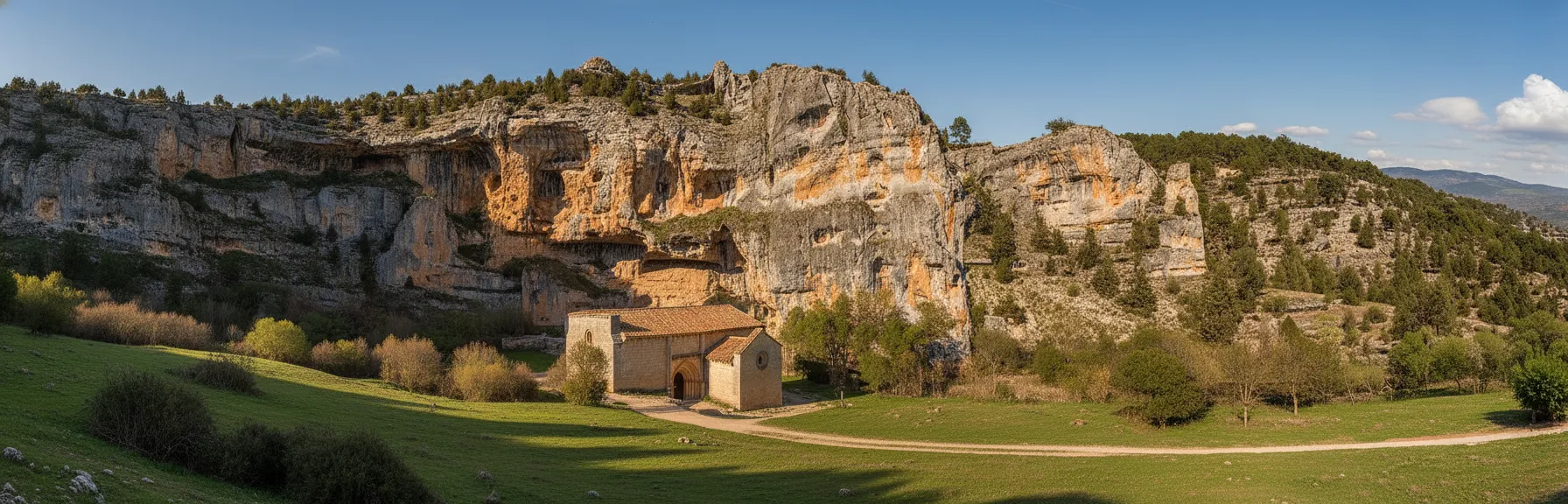
Imagine a place where the earth itself holds secrets, where ancient stone whispers tales of knights and forgotten orders. Deep within the dramatic, sun-drenched limestone cliffs of Spain’s Castilla y León region, a sanctuary unlike any other awaits. This isn't just a building; it's a living part of the landscape, a Romanesque hermitage dedicated to Saint Bartholomew, carved directly into the very rock face of a dramatic canyon. Welcome to the Ermita de San Bartolomé, a hidden gem in the heart of the Cañón del Río Lobos, a place so steeped in natural beauty and enduring mystery that it feels plucked from the pages of an epic fantasy. And yes, the whispers you hear about its origins? They often lead back to the legendary Knights Templar.
Where Stone Meets Spirit: The Unparalleled Allure of San Bartolomé
What makes the Ermita de San Bartolomé so utterly captivating isn't merely its age or its stunning setting, but its profound, almost symbiotic relationship with the natural world. This isn't a hermitage built *near* a cave; it is a hermitage built *into* one. The rough-hewn rock forms an intrinsic part of its walls, its ceiling, its very soul. It’s a masterful blend of human ingenuity and natural grandeur, creating a space that feels both ancient and alive.
Nestled deep within the breathtaking Cañón del Río Lobos Natural Park, the hermitage is a testament to the enduring human desire for solitude and spiritual connection in awe-inspiring locations. The canyon itself is a marvel – a vast gorge carved by the Río Lobos over millennia, boasting towering cliffs, hidden grottoes, and a vibrant ecosystem. To reach San Bartolomé is to embark on a pilgrimage, a journey through a landscape that prepares your senses for the unique marvel that awaits. Its isolation, far from bustling towns, only adds to its mystique, creating an atmosphere of profound peace and contemplation.
But beyond the architectural wonder and natural splendor, there's a powerful undercurrent of legend that truly sets San Bartolomé apart. For centuries, this remote sanctuary has been inextricably linked to the Knights Templar. While concrete historical evidence remains elusive, the persistent tales of the Templars' presence, their esoteric knowledge, and the hermitage's strategic location and unusual design fuel the imagination, inviting visitors to ponder the deeper secrets held within these ancient stones.

Whispers of the Past: Templars, Romanesque, and Ancient Secrets
The Ermita de San Bartolomé is a magnificent example of Romanesque architecture, believed to date back to the late 12th or early 13th century. Its construction period aligns perfectly with the peak influence of the Knights Templar in Spain. While the hermitage was later passed to the Order of St. John of Jerusalem (Hospitallers) after the dissolution of the Templars, the echoes of the warrior monks remain strong.
Why the Templar connection? Several factors contribute to this enduring legend. Firstly, the hermitage's remote, almost inaccessible location deep within the canyon was ideal for an order that valued secrecy and strategic positioning. The Templars were known for establishing their commanderies and chapels in places of power and spiritual significance. Secondly, the design of the hermitage itself holds clues. While not strictly octagonal like some of the most famous Templar churches (such as the Church of the Holy Sepulchre or the Vera Cruz in Segovia), its intricate relationship with the natural rock formations, incorporating existing caves, suggests a deliberate and unique architectural approach that could be interpreted as symbolic.
Furthermore, the Cañón del Río Lobos itself is said to be centrally located on a "Templar axis" or ley line, connecting other significant Templar sites across the Iberian Peninsula. Whether these connections are purely coincidental or evidence of a grander design, they add layers of intrigue to the hermitage's history. The Templars were masters of symbolism and guardians of ancient knowledge, and the idea that they chose this dramatic, almost otherworldly spot to build a sanctuary resonates deeply with their mystical reputation. It's a place where history blurs with legend, inviting you to become a detective of the past.
Exploring the Sanctuary: Inside the Rock, Beyond the Walls
Your visit to the Ermita de San Bartolomé begins long before you set foot inside. The journey through the Cañón del Río Lobos is an experience in itself. As you hike along the tranquil river, flanked by towering, sculpted cliffs, you'll feel the modern world melt away. The air is crisp, the silence profound, broken only by the rush of the river or the piercing cries of griffon vultures soaring high above, masters of this dramatic domain.
Suddenly, around a bend, the hermitage appears, almost camouflaged against the towering rock face. Its Romanesque entrance, though modest, invites you into a space where human craftsmanship meets raw nature. Step inside, and you'll immediately notice the unique integration. One wall might be smoothly dressed stone, while the opposing wall is the rough, ancient limestone of the canyon itself. The altar, simple and reverent, is bathed in a soft, diffused light filtering in from the entrance. The atmosphere is one of profound peace, a tangible sense of history and spirituality that transcends time.

Behind the main altar, a small opening leads to the "Cueva Grande" or Great Cave, a natural grotto that extends further into the rock. This natural cavity, once perhaps a primitive dwelling or a site of ancient pagan worship, was seamlessly incorporated into the Christian sanctuary, further blurring the lines between the built and the natural, the sacred and the wild. It’s a fascinating insight into how early builders adapted to and revered their environment.
Beyond the hermitage, the Cañón del Río Lobos beckons. Take time to explore the trails, marvel at the geological formations, and spot the abundant wildlife. The canyon is a designated Natural Park and a Special Protection Area for Birds (SPA), renowned for its impressive colony of griffon vultures. Watching these magnificent birds circle effortlessly on thermal currents above the cliffs is an unforgettable spectacle, a powerful reminder of nature's grandeur.

Your Journey to the Heart of the Canyon: Planning Your Trip
Visiting the Ermita de San Bartolomé is an adventure that requires a little planning, but the rewards are immense. This isn't a place you stumble upon; it's a destination you seek out.
Access: The hermitage is best reached by car. You'll drive to one of the designated parking areas within the Natural Park (there's often a small fee). From the main parking lot near Ucero (known as the "Parking de la Ermita"), it's a relatively easy and scenic walk of about 2.5 kilometers (1.5 miles) along a well-maintained path beside the river to reach the hermitage. Allow about 45 minutes to an hour for the walk each way, plus ample time to explore the hermitage and its surroundings.
Best Time to Visit: Spring (April-June) and Autumn (September-October) are ideal. The weather is pleasant for hiking, the natural park is vibrant with life, and you avoid the intense heat of summer and the potential snow or extreme cold of winter. Weekdays are generally less crowded than weekends.
What to Bring: Comfortable walking shoes are essential. Bring plenty of water, snacks, sunscreen, a hat, and layers of clothing, as temperatures can vary within the canyon. A camera is a must, and binoculars will enhance your wildlife spotting, especially for the vultures. Respectful attire is appreciated when entering the hermitage.
Respect the Environment: The Cañón del Río Lobos is a protected natural park. Stay on marked trails, do not disturb wildlife, and take all your rubbish with you. Help preserve this pristine environment for future generations.
Nearby Attractions: Consider combining your visit with other local gems. The nearby Castillo de Ucero (Ucero Castle) offers fantastic views and more history. The charming medieval town of El Burgo de Osma, with its magnificent cathedral, is also within easy driving distance and makes for an excellent base to explore the region of Soria.
The Ermita de San Bartolomé is more than just a historical site; it’s an experience for the soul. It’s a place where the grandeur of nature and the mystery of history intertwine, leaving an indelible mark on all who venture into its sacred embrace. Whether you're drawn by the allure of Templar legends, the majesty of the Romanesque, or simply the breathtaking beauty of a hidden Spanish canyon, this forgotten hermitage promises a journey filled with wonder, contemplation, and a deep connection to a truly extraordinary corner of the world.
Essential Travel Information
- Location Ermita de San Bartolomé, Spain
- Best Time Spring (April-June) and Autumn (September-October)
- Getting There By car to designated parking within Cañón del Río Lobos Natural Park, followed by a scenic 2.5km walk to the hermitage.
- Airport Adolfo Suárez Madrid–Barajas Airport (MAD)
- Budget Mid-range (Car rental, accommodation in nearby villages like Ucero or El Burgo de Osma, park entrance fees)
- Language Spanish
Find Places to Stay Near Ermita de San Bartolomé
Compare hotels, hostels, and unique stays in Spain.
Search AccommodationTours & Experiences Near Ermita de San Bartolomé
Book guided tours, day trips, and unique experiences.
Browse Tours