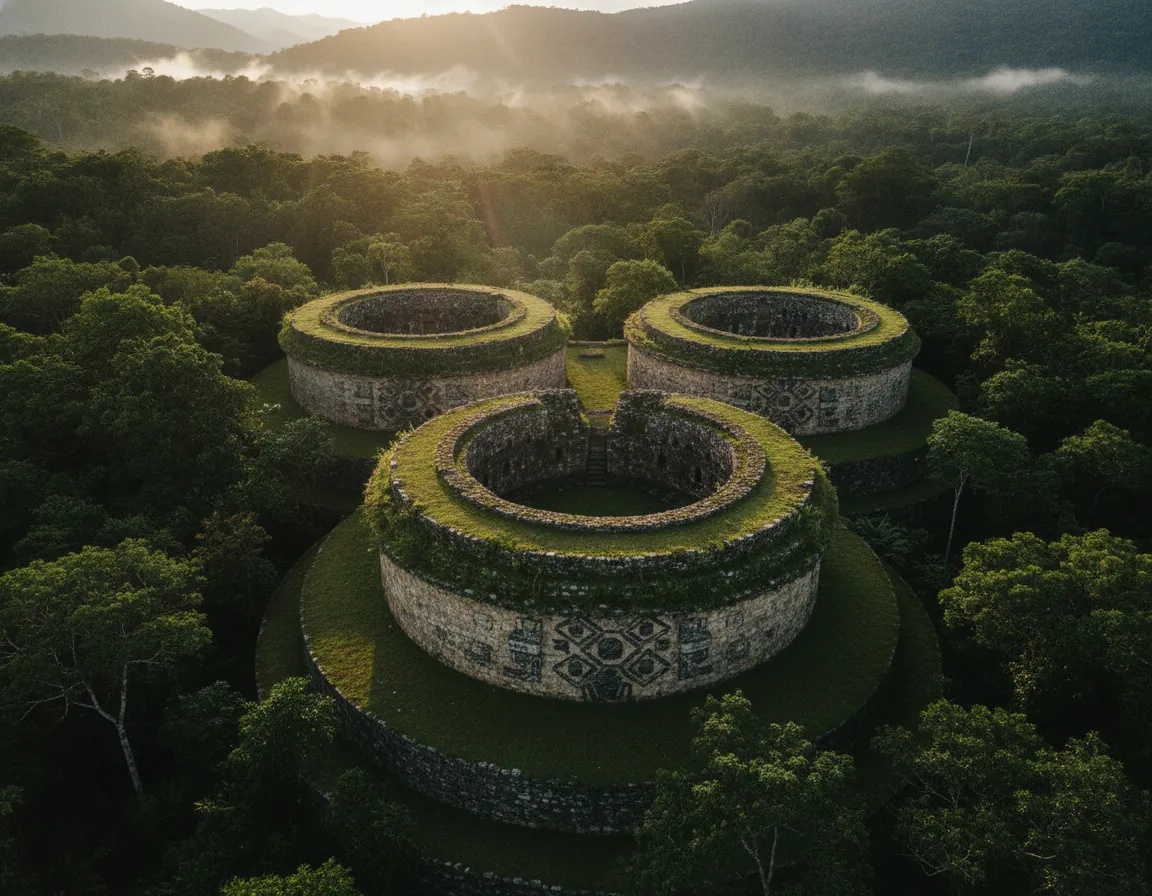
Imagine a place so secluded, so steeped in mystery, that its very existence feels like a whisper from another time. Hidden deep within Peru's emerald cloud forest, where mist clings perpetually to ancient trees, a forgotten pre-Incan city adorned with enigmatic stone friezes watches over a pristine wilderness. This isn't a scene from an adventure novel; this is Gran Pajatén, an archaeological marvel that guards its secrets fiercely, known only to a handful of intrepid explorers and conservationists. For those who dream of uncovering the truly untouched, of stepping back into a world reclaimed by nature, Gran Pajatén represents the ultimate journey into the heart of the unknown.
What Makes Gran Pajatén So Special?
Gran Pajatén isn't just another ruin; it's a testament to human ingenuity, resilience, and the relentless power of nature. Built by the enigmatic Chachapoyas people—often referred to as the "Cloud Warriors"—this remote citadel is a breathtaking blend of sophisticated architecture and raw, untamed jungle. What sets it apart immediately are its distinctive circular stone structures, unique in a region famed for rectangular Incan designs. These multi-tiered buildings are not merely functional; they are canvases, intricately decorated with mosaic-like figures crafted from slate and stone. Here, stylized human forms with outstretched arms mingle with majestic condors, jaguars, and other geometric patterns, all imbued with a profound, yet largely undeciphered, symbolic meaning.
But the true essence of Gran Pajatén's allure lies in its profound isolation and fragility. Almost completely swallowed by the Amazon's verdant embrace, its stone walls are draped in moss, its courtyards carpeted in ferns, and its ancient stories whispered by the wind through the canopy. This delicate balance between human heritage and wild nature means that Gran Pajatén is not a destination for mass tourism. Its protection is paramount, requiring special permits from the Peruvian Ministry of Culture and SERNANP (Peru's National Service of Natural Protected Areas). This exclusivity isn't a barrier; it's a promise—a promise that for the privileged few, a visit here offers an unparalleled, almost spiritual, connection to a lost world, preserved in its most authentic state.

Unveiling the Cloud Warriors: A Glimpse into Chachapoyas History
To understand Gran Pajatén is to journey back to a time before the Inca Empire dominated the Andean landscape. The Chachapoyas culture flourished in what is now the San Martín and Amazonas regions of northern Peru from approximately 800 AD to the late 15th century. Known for their distinct culture, sophisticated agricultural practices, and impressive architectural feats, the Chachapoyas were formidable warriors who resisted Inca expansion for decades. Their name, "Chachapoyas," is believed to derive from the Quechua word "sachapuyos," meaning "cloud people" or "cloud warriors," a fitting moniker for a civilization that built its cities high in the misty cloud forests.
While much about the Chachapoyas remains a mystery—they left no written records, and their oral traditions were largely lost after the Spanish conquest—archaeological sites like Gran Pajatén offer tantalizing clues. Constructed sometime between 1200 and 1500 AD, Gran Pajatén is believed to have served as a significant administrative, ceremonial, or possibly defensive center. Its strategic location, perched on a ridge overlooking the Río Montecristo valley, suggests both a desire for protection and a profound connection to the surrounding landscape, which they likely revered. The intricate friezes, featuring zoomorphic and anthropomorphic figures, are not merely decorative; they are windows into the Chachapoyas' cosmology, their beliefs about the natural world, and their spiritual connection to creatures like the condor, a symbol of power and the heavens.
The Chachapoyas eventually succumbed to the Inca Empire shortly before the arrival of the Spanish. Their cities, including Gran Pajatén, were gradually abandoned, left to be reclaimed by the very cloud forest that had once nurtured them. Rediscovered in 1964, Gran Pajatén has since been the subject of intensive study and conservation efforts, recognizing its immense historical and cultural value. It stands as a silent monument to a powerful civilization, a reminder of the rich tapestry of pre-Columbian cultures that thrived in Peru.
Journey to the Lost City: What Awaits You
A visit to Gran Pajatén is not just a sightseeing trip; it's an expedition, an odyssey into a living, breathing natural sanctuary. The journey itself is an integral part of the experience, traversing dense jungle trails, crossing rivers, and ascending through the ever-present mist of the cloud forest. As you approach, the first glimpses of the ruins, partially obscured by the emerald canopy, are nothing short of magical. It's like discovering a secret world that time forgot.
Once you arrive, you'll be struck by the sheer scale and complexity of the site. Gran Pajatén consists of at least 26 circular stone structures, built on terraced platforms, with staircases connecting different levels. The most prominent buildings feature the iconic mosaic friezes. Imagine standing before these ancient walls, tracing the outlines of a stone condor, its eyes seemingly watching you, as the sounds of exotic birds and the rustle of the jungle provide a natural soundtrack. The detailed craftsmanship, particularly considering the remote location and the tools available to the Chachapoyas, is truly astounding.

Beyond the archaeological wonders, the natural environment is a spectacle in itself. Gran Pajatén is situated within the Río Abiseo National Park, a UNESCO World Heritage site renowned for its exceptional biodiversity. This park is a haven for endangered species, including the yellow-tailed woolly monkey, spectacled bear, and a myriad of unique bird species. The air is fresh and humid, filled with the scent of damp earth and exotic flora. Everywhere you look, nature is reclaiming its own, with roots intertwining with ancient stones, and vibrant orchids blooming from moss-covered walls. It’s a powerful reminder of the delicate balance between human history and the wild, a place where you feel profoundly connected to both past and present.

Practicalities for the Intrepid: Planning Your Expedition
Let's be clear: a visit to Gran Pajatén is not for the faint of heart or the casually curious. This is an adventure reserved for the truly intrepid, those prepared for a multi-day, physically demanding trek through challenging terrain. The extreme remoteness and the site's fragile nature necessitate strict regulations and careful planning.
Firstly, access to Gran Pajatén is highly restricted. You absolutely need special permits from Peru's Ministry of Culture and SERNANP, and these are often granted only to researchers, conservationists, or very limited, specialized tour groups dedicated to sustainable tourism. There are no independent visits allowed, and for good reason—the ecosystem is delicate, and the site requires constant monitoring and protection. You'll need to work with a reputable, authorized tour operator who specializes in expeditions to this region and can navigate the permit process.
The journey typically involves flying into Tarapoto or Chachapoyas, then overland travel to a starting point, often near the town of Juanjui. From there, it's a multi-day trek—expect several days of hiking through dense cloud forest, often in humid and muddy conditions, with significant elevation changes. You'll need excellent physical fitness, appropriate trekking gear (waterproof clothing, sturdy boots, insect repellent), and a readiness to camp in basic conditions. Guides and porters are essential for navigation, safety, and cultural interpretation.
While challenging, the reward for this arduous journey is immeasurable. You will be one of the very few people in the world to experience Gran Pajatén firsthand, to witness its haunting beauty, and to connect with a history that few others ever will. This isn't just a trip; it's a pilgrimage, a profound encounter with one of Earth's most precious and hidden treasures. It's a journey that will not only show you incredible sights but will also deepen your appreciation for the power of nature and the enduring legacy of ancient civilizations.
Gran Pajatén stands as a powerful reminder that some of the greatest wonders are still hidden, waiting to be discovered by those with the courage and respect to seek them out. It's a place that whispers tales of cloud warriors and sacred animals, inviting a rare few to listen. Are you ready to answer the call?
Essential Travel Information
- Location Gran Pajatén, Peru
- Best Time Dry season, May to October, offers more stable weather for trekking, though rain is possible year-round in the cloud forest.
- Getting There Fly to Tarapoto (TPP) or Chachapoyas (CHH), then overland to a trekking base (e.g., near Juanjui). Requires a multi-day guided expedition with special permits from the Peruvian Ministry of Culture and SERNANP.
- Airport Tarapoto (TPP)
- Budget Luxury (due to highly specialized guides, permits, logistics, and multi-day expedition). Expect costs upwards of $500-1000+ per person per day for a multi-day all-inclusive expedition.
- Language Spanish, with some local communities speaking Quechua dialects.
Find Places to Stay Near Gran Pajatén
Compare hotels, hostels, and unique stays in Peru.
Search AccommodationTours & Experiences Near Gran Pajatén
Book guided tours, day trips, and unique experiences.
Browse Tours