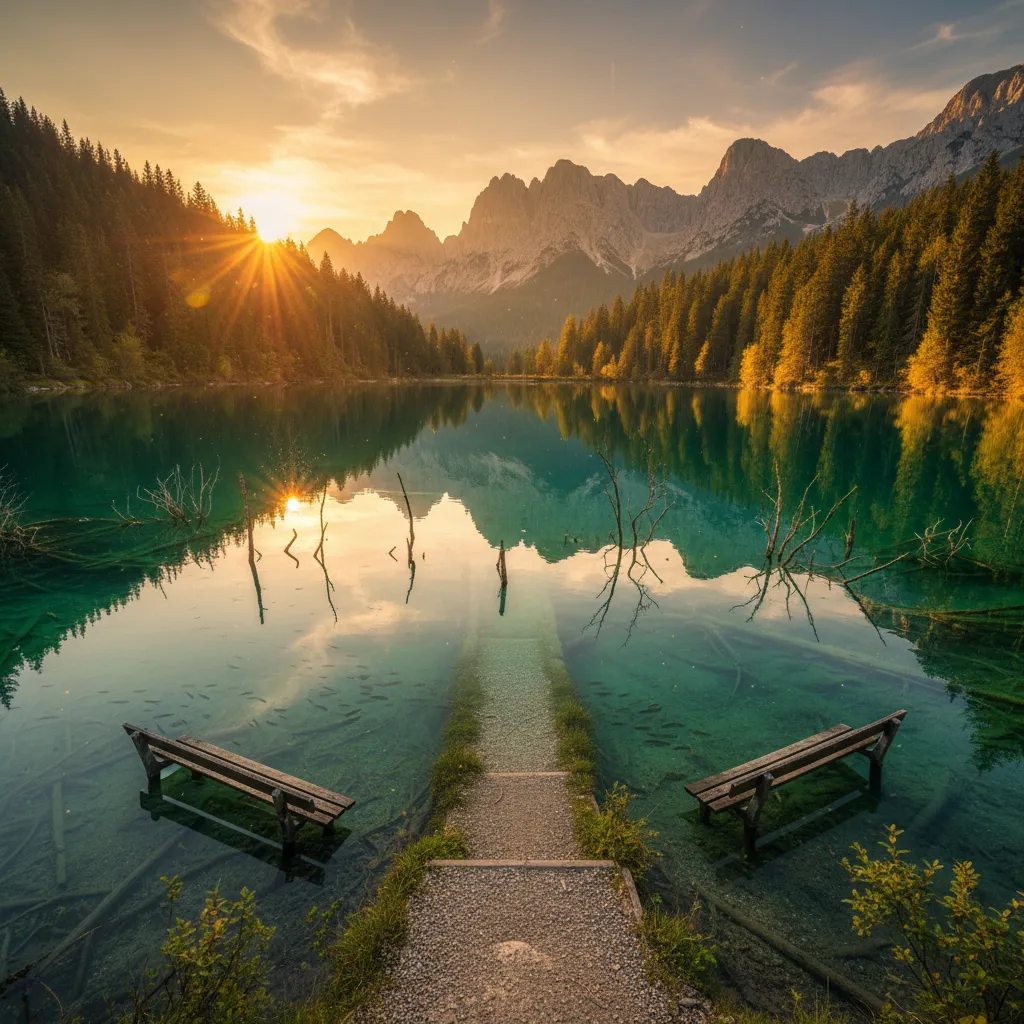
For a brief, magical window each spring, Grüner See offers a truly unique spectacle, captivating nature lovers, hikers, and those who once sought its otherworldly depths. It's a place where the boundaries between land and water blur, where a hike becomes a dive, and where nature performs an annual disappearing act unlike any other on Earth.
The Annual Metamorphosis: Grüner See's Secret
What makes Grüner See so utterly unique is its dramatic seasonal transformation. Throughout autumn and winter, the lake is little more than a shallow pond, perhaps one to two meters deep, surrounded by a charming parkland near the village of Tragöß. Locals and visitors enjoy its walking trails, sit on its benches, and admire the reflection of the snow-capped Hochschwab peaks in its calm, shallow waters.
But as spring arrives, bringing warmer temperatures, the magic truly begins. The surrounding Hochschwab mountains, a dramatic limestone massif, hold vast quantities of melting snow. This pure, frigid meltwater rushes down into the valley, and due to the karst geology of the area, it finds its way into the Grüner See basin. The lake level begins to rise, rapidly swelling from its modest winter size to a magnificent, emerald-green expanse over 10 meters deep at its peak in late May or early June.
During this period of dramatic swelling, the parkland itself becomes submerged. What were once dry footpaths transform into underwater avenues, small wooden bridges become submerged arches, and the familiar park benches find themselves resting on the lakebed, waiting for intrepid explorers. The clarity of the water, fed by pristine mountain snowmelt, is breathtaking, often offering visibility of up to 50 meters. It’s this combination of crystal-clear water and a recognizably terrestrial landscape beneath the surface that makes Grüner See an unparalleled natural wonder.

A Glimpse into an Underwater Fairytale (and Current Realities)
For many years, this surreal phenomenon made Grüner See a pilgrimage site for divers from around the globe. Imagine gliding through water so clear it feels like air, passing over lush green meadows of grass that were once dry land. You'd encounter submerged trees, their branches swaying gently with the subtle currents, and perhaps even "sit" on a park bench at the bottom, an experience that truly messed with your sense of reality. The sensation was akin to exploring a lost city, except this city was a vibrant, living park, temporarily reclaimed by the water.
Divers would marvel at the vibrant green hues, caused by the fine algae and grasses thriving in the cold, nutrient-rich water, reflecting the sunlight in a way that truly earned the lake its name. The frigid temperatures (often just 4-8°C even in late spring) were a small price to pay for the privilege of witnessing such an extraordinary, ephemeral world.
However, it’s important for prospective visitors to know that due to environmental concerns and the fragile nature of this unique ecosystem, recreational diving in Grüner See has been prohibited since 2016. The sheer volume of divers and the disturbance caused by their activities were impacting the delicate underwater flora and contributing to sedimentation, threatening the very clarity and beauty that made the lake famous. While you can no longer don your gear and explore its depths, the lake remains an absolutely stunning place to visit and experience from the surface.
Even without diving, the magic of Grüner See is palpable. Standing on the shore during its peak water level, you can still gaze into its unbelievably clear, emerald waters and often glimpse the submerged landscape beneath. The vibrant greens, the stillness, and the knowledge of what lies just beneath the surface create an atmosphere of profound wonder and tranquility. It’s a testament to nature's artistry and its incredible power to transform.

The Science Behind the Magic: How Grüner See Works
The annual flooding of Grüner See is a fascinating interplay of geology, hydrology, and meteorology. The Hochschwab region is characterized by porous limestone (karst) formations. During winter, snow accumulates on these mountains. When spring arrives, the snow melts, and the water percolates through the cracks and fissures in the limestone, forming underground rivers and reservoirs. The Grüner See basin is essentially a natural depression that becomes a collection point for this meltwater.
As the snowmelt intensifies, the water table in the area rises dramatically. The Grüner See, being at a relatively low elevation in the valley, is quickly inundated. The process is remarkably consistent, making the lake's seasonal cycle a predictable natural event. By late summer and autumn, as the snowmelt subsides and temperatures rise, evaporation and natural drainage cause the water level to recede once more, revealing the parkland again. The cycle then begins anew with the first winter snows.
The incredible clarity and color of the water are also due to this pristine source. The meltwater filters through the limestone, which naturally purifies it and imbues it with minerals that contribute to its distinctive emerald hue. The cold temperatures also inhibit the growth of many types of algae that might otherwise cloud the water, ensuring that Grüner See remains breathtakingly transparent.

Planning Your Expedition: Practical Tips for Visiting Grüner See
While diving is no longer an option, Grüner See remains a must-visit destination for anyone exploring Austria's natural beauty. Here’s how to make the most of your trip:
Best Time to Visit
To witness Grüner See at its most spectacular, plan your visit for late May or early June. This is typically when the lake reaches its maximum depth and clarity. If you visit earlier in spring, the water might still be rising; later in summer, it will likely have begun to recede. For hikers who want to see the dry park, late autumn or early spring (before the heavy melt) are ideal.
Getting There
Grüner See is located near the picturesque village of Tragöß in Styria, Austria. The easiest way to reach it is by car, which offers the flexibility to explore the surrounding region. From major cities like Graz or Vienna, the drive is scenic and takes a few hours. There are well-marked parking areas near the lake, usually for a small fee. Public transport options are limited and often involve multiple connections, making a car the recommended choice.
What to Do (Besides Dive)
- Hiking: Even when the lake is at its fullest, there are beautiful walking trails around the perimeter and in the surrounding Hochschwab nature park. Enjoy the fresh mountain air and stunning scenery.
- Photography: The lake offers endless photographic opportunities, from its emerald waters to the reflections of the mountains and forests.
- Relaxation: Find a quiet spot by the shore and simply soak in the unique atmosphere. It’s a place of profound tranquility.
- Picnic: Pack a lunch and enjoy it amidst one of Austria's most beautiful natural settings.
Respecting the Environment
Grüner See is a sensitive natural area. Please help preserve its beauty by:
- Sticking to marked paths.
- Taking all your trash with you.
- Not disturbing the flora or fauna.
- Respecting any local regulations or signage.
Grüner See is more than just a lake; it’s a living, breathing testament to the power and beauty of nature's cycles. It's a reminder that some of the most extraordinary wonders are hidden in plain sight, waiting for us to discover their unique stories. Whether you witness it as a serene park or a crystal-clear emerald lake, Grüner See promises an unforgettable experience, a true hidden gem in the heart of Austria.
Essential Travel Information
- Location Grüner See (Green Lake), Austria
- Best Time Late May to early June for peak water level and clarity
- Getting There Best by car to Tragöß, then short drive to lake parking. Limited public transport.
- Airport Graz Airport (GRZ)
- Budget Budget/Mid-range (daily costs depend on accommodation and activities, but natural park entry is minimal to free)
- Language German
Find Places to Stay Near Grüner See (Green Lake)
Compare hotels, hostels, and unique stays in Austria.
Search AccommodationTours & Experiences Near Grüner See (Green Lake)
Book guided tours, day trips, and unique experiences.
Browse Tours