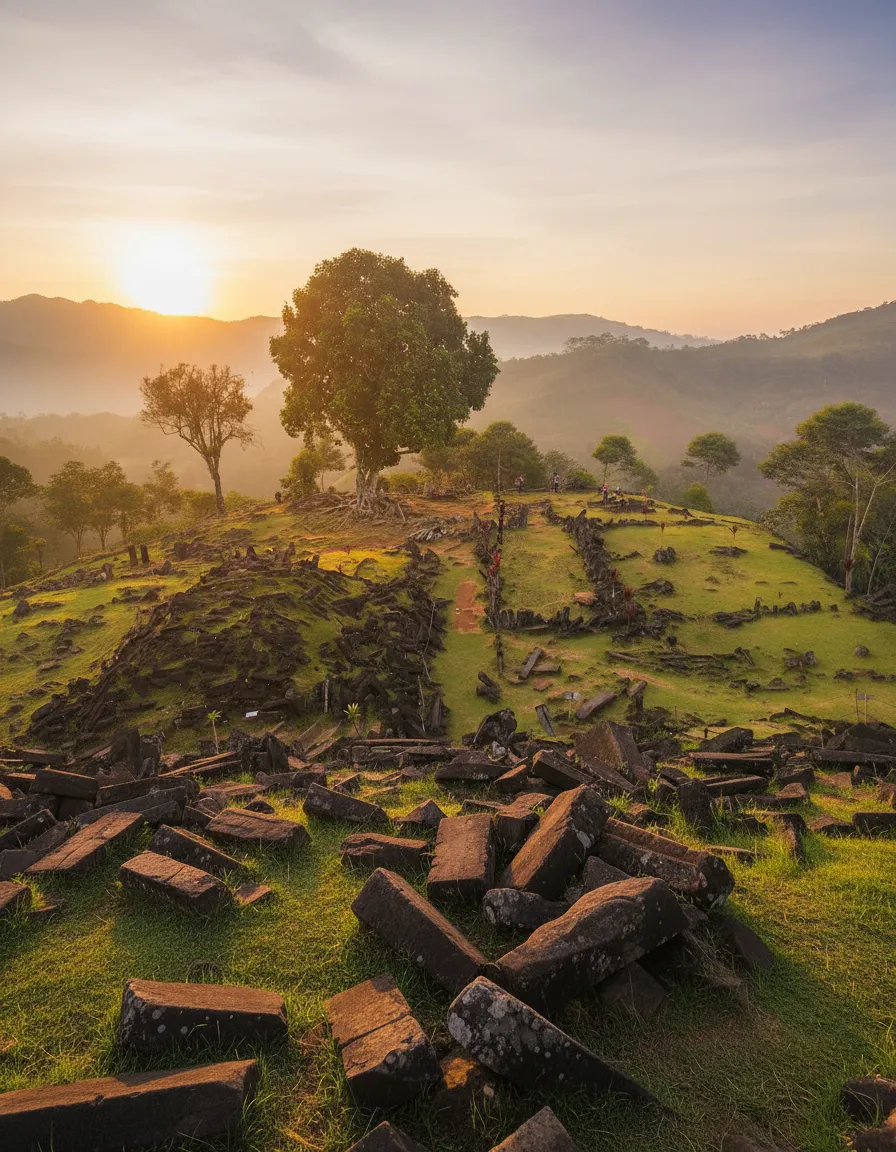
Forget what you thought you knew about ancient civilizations — because tucked away in the misty highlands of West Java, Indonesia, lies a site that might just shatter our understanding of human history. Imagine a place so old, so enigmatic, that its very existence sparks fervent debate among archaeologists and geologists worldwide. This isn't just another ancient ruin; this is Gunung Padang, a sprawling megalithic complex that some believe could be the oldest pyramid-like structure on Earth, hiding layers of secrets beneath its verdant surface.
If you're anything like me, a true seeker of the world's most profound mysteries, then Gunung Padang needs to be at the very top of your bucket list. It’s a journey not just to a physical location, but to the very edge of our historical knowledge, a place where the past whispers of possibilities we're only just beginning to comprehend.
What Makes Gunung Padang So Uniquely Fascinating?
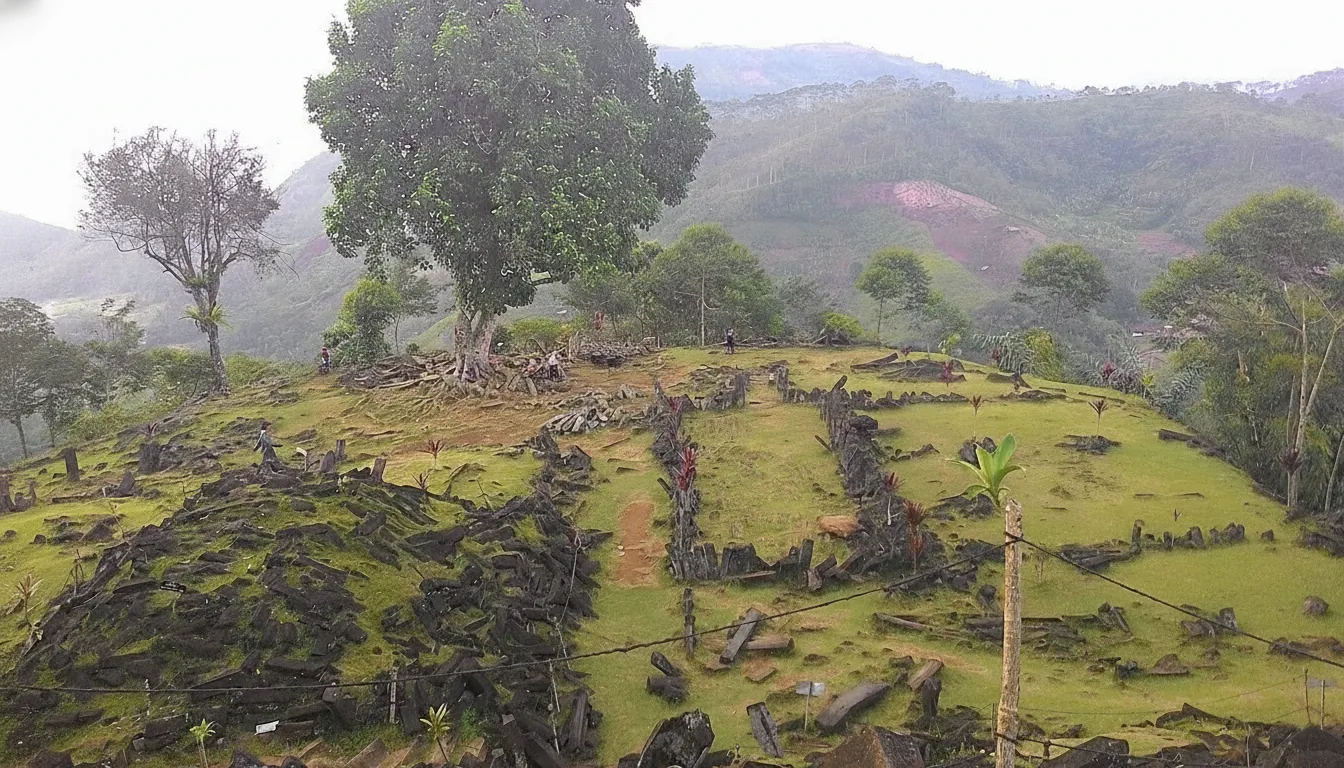
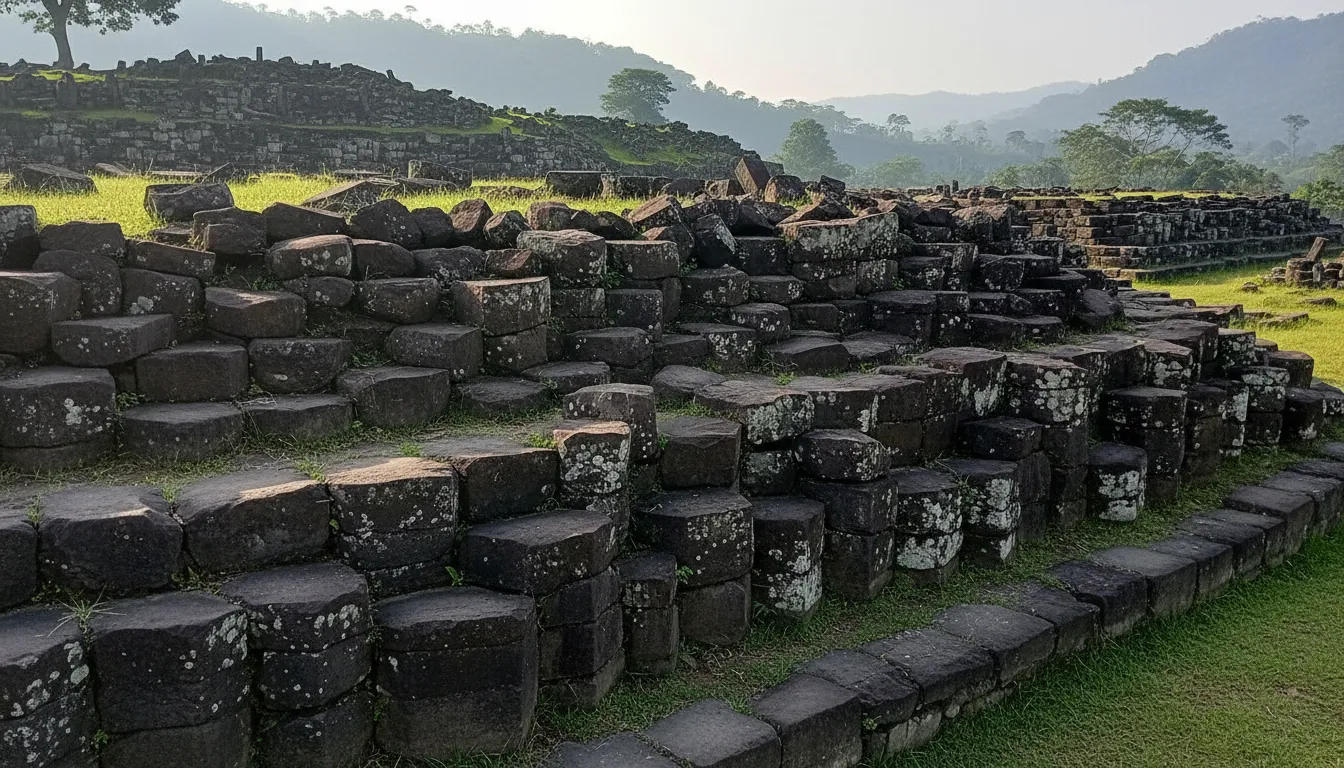
At first glance, Gunung Padang appears as a majestic hill, crowned with a series of five distinct terraces. But look closer, and you'll see these aren't natural formations. They are meticulously crafted from thousands of massive, elongated stones of columnar basalt, arranged in intricate patterns, forming walls, pathways, and what appear to be ancient platforms and chambers. The sheer scale and precision of this construction are breathtaking, hinting at a sophisticated culture that existed long, long ago.
What truly sets Gunung Padang apart, however, is its potentially mind-boggling age. While its surface layers are visibly ancient, archaeological consensus traditionally placed its origins around 2,500 to 5,000 years old. But recent, extensive geological surveys using ground-penetrating radar, seismic tomography, and core drilling have yielded astonishing results. These studies suggest that the site isn't just a surface monument but a multi-layered structure, with deeper sections potentially dating back an incredible 20,000 years or even more.
Think about that for a moment: 20,000 years. If these findings are confirmed and widely accepted, Gunung Padang would dramatically predate other celebrated ancient sites like Göbekli Tepe in Turkey (around 11,600 years old), which is currently considered the oldest known large-scale human-made structure. This isn't just pushing back a few centuries; it's rewriting the entire timeline of complex human structures, suggesting that advanced engineering and communal organization might have existed in Southeast Asia during the last Ice Age, an era conventionally associated with nomadic hunter-gatherer societies.
The implications are profound. It challenges everything we thought we knew about the capabilities of prehistoric humans. Who built this? How did they move and shape such immense stones? And why is their story so conspicuously absent from our history books? These are the questions that hang in the air as you stand amidst its ancient stones, making Gunung Padang an irresistible enigma for anyone captivated by the origins of civilization.
A Glimpse into its Mysterious History and Background
Gunung Padang, which translates to "Mountain of Light" or "Mountain of Enlightenment" in the local Sundanese language, has long been revered by the indigenous Sundanese people as a sacred place. Its existence was first documented by Dutch colonists in the early 20th century, but it remained relatively obscure to the international archaeological community for decades. Locals, however, always knew of its spiritual significance, often visiting for meditation and ritual.
The modern era of intense study began in the early 2010s when a team led by Indonesian geologist Dr. Danny Hilman Natawidjaja embarked on a comprehensive investigation. Their findings, particularly the deep core samples and geophysical imaging, pointed to multiple layers of construction beneath the visible terraces, extending hundreds of feet into the earth. These layers, according to their research, showed evidence of artificial construction and extremely old organic material, leading to the controversial age estimates.
This controversy is an integral part of Gunung Padang's story. Mainstream archaeologists often view the deeper age claims with skepticism, citing a lack of conventional archaeological evidence (like pottery, tools, or burials) directly associated with the deepest layers, and questioning the interpretation of the geological data. Yet, the geological team maintains that the evidence of intelligent design and incredibly ancient construction is compelling. This ongoing debate only adds to the site's allure, transforming it from a mere ruin into an active frontier of scientific and historical inquiry.
Whether it's 5,000 or 20,000 years old, Gunung Padang represents an extraordinary feat of engineering and a testament to the ingenuity of ancient peoples. It forces us to confront the possibility that complex societies may have risen and fallen in regions and eras we previously thought impossible, leaving behind monuments that defy our current understanding.
What You'll See and Experience at Gunung Padang
Visiting Gunung Padang is an adventure for both the body and the mind. The site is located at an elevation of about 885 meters (2,900 feet) above sea level, nestled amidst lush tea plantations and rolling hills. The journey itself, winding through the scenic West Javanese countryside, is a treat.
Upon arrival, you'll begin your ascent up a series of steps, some of which are quite steep. It's a climb that builds anticipation, preparing you for the ancient wonders ahead. As you reach the first terrace, the sheer scale of the megalithic stones becomes apparent. You'll walk among these massive basalt columns, many standing upright, others forming walls and foundations, feeling the palpable energy of a place steeped in millennia of history.
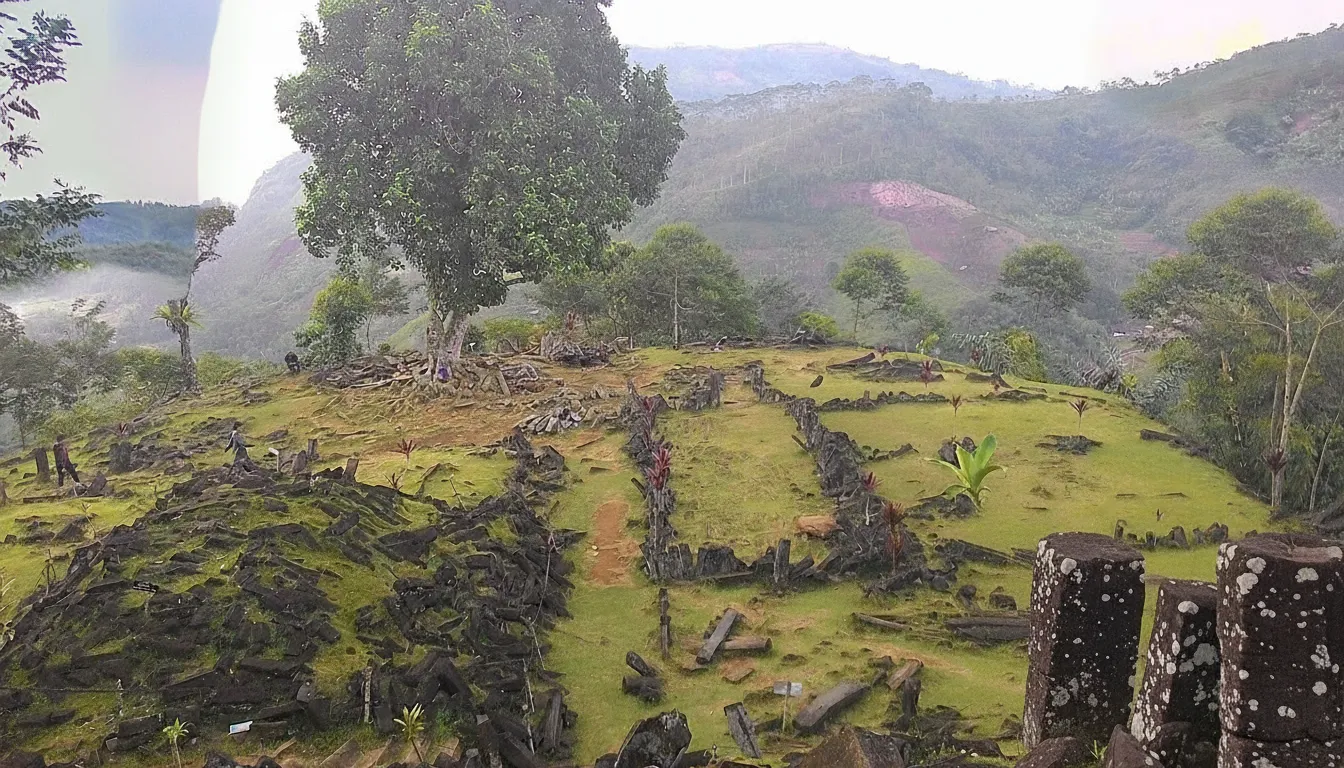
The site is divided into five main terraces, each slightly higher than the last, leading up to the summit. Each terrace offers a unique perspective and different arrangements of stones. You'll see what appear to be ancient pathways, ceremonial areas, and perhaps even remnants of structures that once housed unknown rituals. Local guides, often available at the entrance, can point out specific formations and share traditional stories and interpretations, enriching your visit immensely.
From the highest terrace, the views are simply magnificent – a panoramic vista of the surrounding West Javanese landscape, a patchwork of green forests and distant mountains. It's a perfect spot for quiet contemplation, allowing you to absorb the mystery and majesty of Gunung Padang. Imagine standing here thousands of years ago, when perhaps the world was a very different place, and these stones were new, imbued with the hopes and beliefs of their creators.
Take your time to explore, touch the cool, ancient stones, and let your imagination wander. There's a distinct feeling of reverence and awe that permeates the air, a sense of connection to something deeply ancient and profoundly significant. It’s a place that truly encourages you to look beyond the visible and ponder the unseen layers of history.
Practical Tips for Your Gunung Padang Adventure
Ready to embark on this extraordinary journey? Here's what you need to know to make your visit smooth and memorable:
-
Best Time to Visit: The dry season, typically from May to September, offers the most pleasant weather for exploring. While the site is accessible year-round, the rainy season can make the ascent slippery and views less clear due to mist.
-
How to Get There: Gunung Padang is located near the town of Cianjur in West Java. The most common way to reach it is by hiring a private car or motorbike from larger cities like Bandung (approximately 2-3 hours drive) or Jakarta (4-5 hours drive). Public transport options are available to Cianjur, but from there, you'll need local transport (like an ojek or angkot) to the site itself. Negotiate fares in advance!
-
What to Bring:
- Comfortable walking shoes with good grip are essential for the climb.
- Plenty of water and snacks.
- Sunscreen and a hat, as parts of the site are exposed.
- Rain gear, just in case, even during the dry season, as mountain weather can be unpredictable.
- A camera to capture the stunning scenery and megalithic structures.
- Some small Rupiah notes for entrance fees, guides, and local vendors.
-
Local Guides: While not mandatory, hiring a local guide at the entrance is highly recommended. They can provide valuable insights into the site's history, local folklore, and point out interesting features you might otherwise miss. Their knowledge truly enhances the experience.
-
Respect the Site: Gunung Padang is a sacred and culturally significant location. Dress modestly, behave respectfully, and do not disturb any stones or natural formations. Leave no trace behind.
-
Accommodation: You can find basic guesthouses and hotels in Cianjur. Many visitors choose to stay in Bandung, which offers a wider range of accommodation and dining options, and make Gunung Padang a day trip.
Gunung Padang isn't just a destination; it's an invitation to ponder the great unknowns of our past. It's a place where the veil between what we know and what we might yet discover feels wonderfully thin. If you have an adventurous spirit and a thirst for ancient mysteries, pack your bags and prepare to be utterly captivated by the secrets held within Indonesia's enigmatic "Mountain of Light."
Essential Travel Information
- Location Gunung Padang Megalithic Site, Indonesia
- Best Time May to September (Dry Season)
- Getting There Hire a private car or motorbike from Bandung (2-3 hrs) or Jakarta (4-5 hrs) to Cianjur, then local transport to the site.
- Airport Husein Sastranegara International Airport (BDO) in Bandung, or Soekarno-Hatta International Airport (CGK) in Jakarta.
- Budget Mid-range (approx. $50-100 USD/day including transport and basic guide, excluding main accommodation in Bandung/Jakarta)
- Language Indonesian, Sundanese (local)
Find Places to Stay Near Gunung Padang Megalithic Site
Compare hotels, hostels, and unique stays in Indonesia.
Search AccommodationTours & Experiences Near Gunung Padang Megalithic Site
Book guided tours, day trips, and unique experiences.
Browse Tours