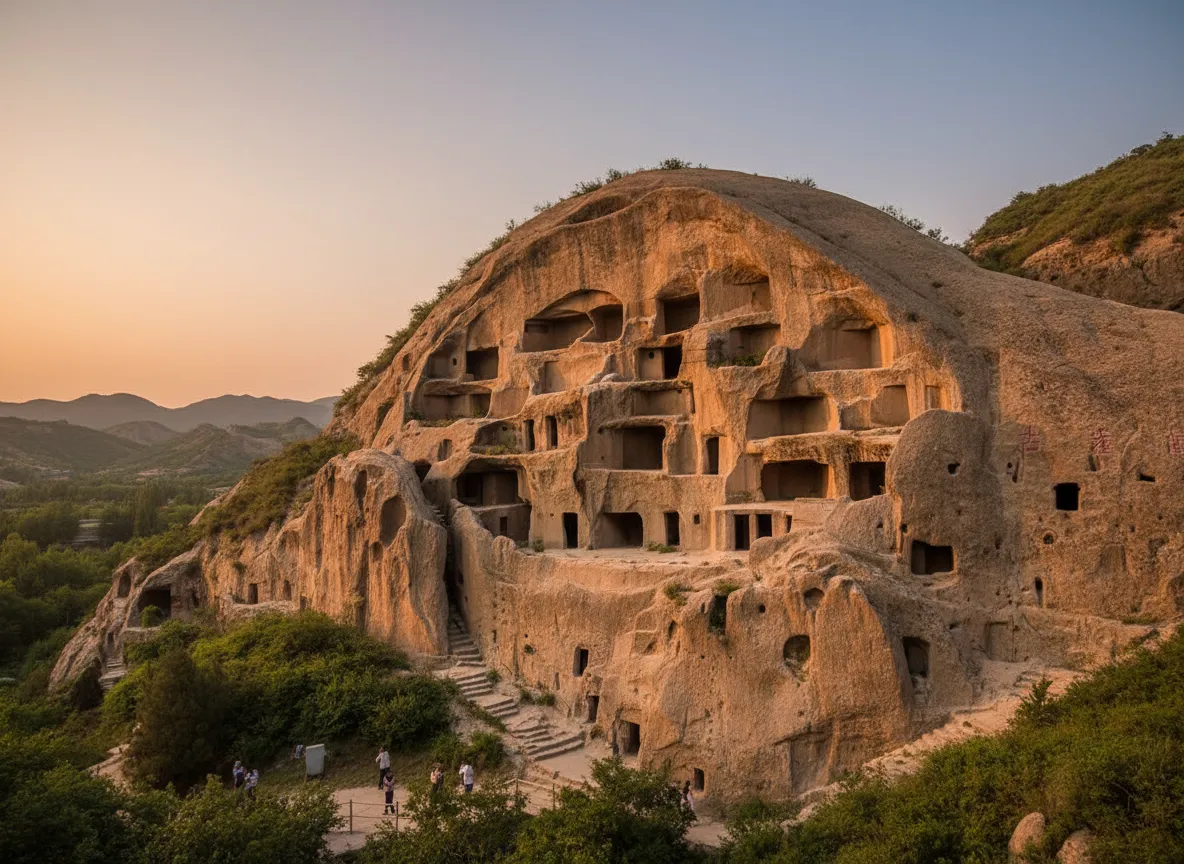
Imagine an entire ancient community, not just built *on* a cliff, but carved directly *into* its sheer face. Hundreds of rooms, forming a mysterious, multi-story 'cliff city,' hidden away in the rugged mountains north of Beijing. This isn't the stuff of fantasy novels; it's Guyaju, China's Ancient Cliff Dwellings, a monumental archaeological puzzle that will leave you utterly spellbound. Forget the usual tourist trails – Guyaju offers a journey into an forgotten world, literally embedded in stone, waiting for adventurous souls to uncover its secrets.
As someone who loves stumbling upon hidden gems, Guyaju quickly became one of my absolute favorites. It's not just a collection of ruins; it's an entire ghost city, a silent testament to a civilization whose story has largely vanished into the mists of time. If you're looking for an adventure that combines breathtaking natural beauty with profound historical mystery, then pack your bags – we're heading to the Yanqing District to explore one of China's most enigmatic wonders.
What Makes Guyaju So Special? A City Carved from Stone
What sets Guyaju apart from virtually any other historical site is its sheer audacity. We're talking about more than 100 rock-hewn dwellings, meticulously carved out of a massive, imposing cliff face. This isn't a small cave here or there; it's an interconnected network of homes, storage areas, and communal spaces, spiraling upwards and across the rock in an incredible display of ancient engineering and sheer human will. From simple single rooms to multi-chambered homes that hint at family life, and even a grander structure speculated to be a 'chieftain's palace,' the scale is simply mind-boggling.
Walking through Guyaju feels like stepping into a forgotten dream. You navigate intricate stairways carved directly into the rock, clamber through narrow passages, and emerge into surprisingly spacious chambers, each offering a unique perspective of the valley below. The precision of the carvings, the strategic placement of windows and doorways, and the sheer effort involved in creating such a complex settlement without modern tools, all contribute to an overwhelming sense of wonder. It's a place that forces you to pause, to imagine the lives lived within these stone walls, and to grapple with the profound mystery of its creators.
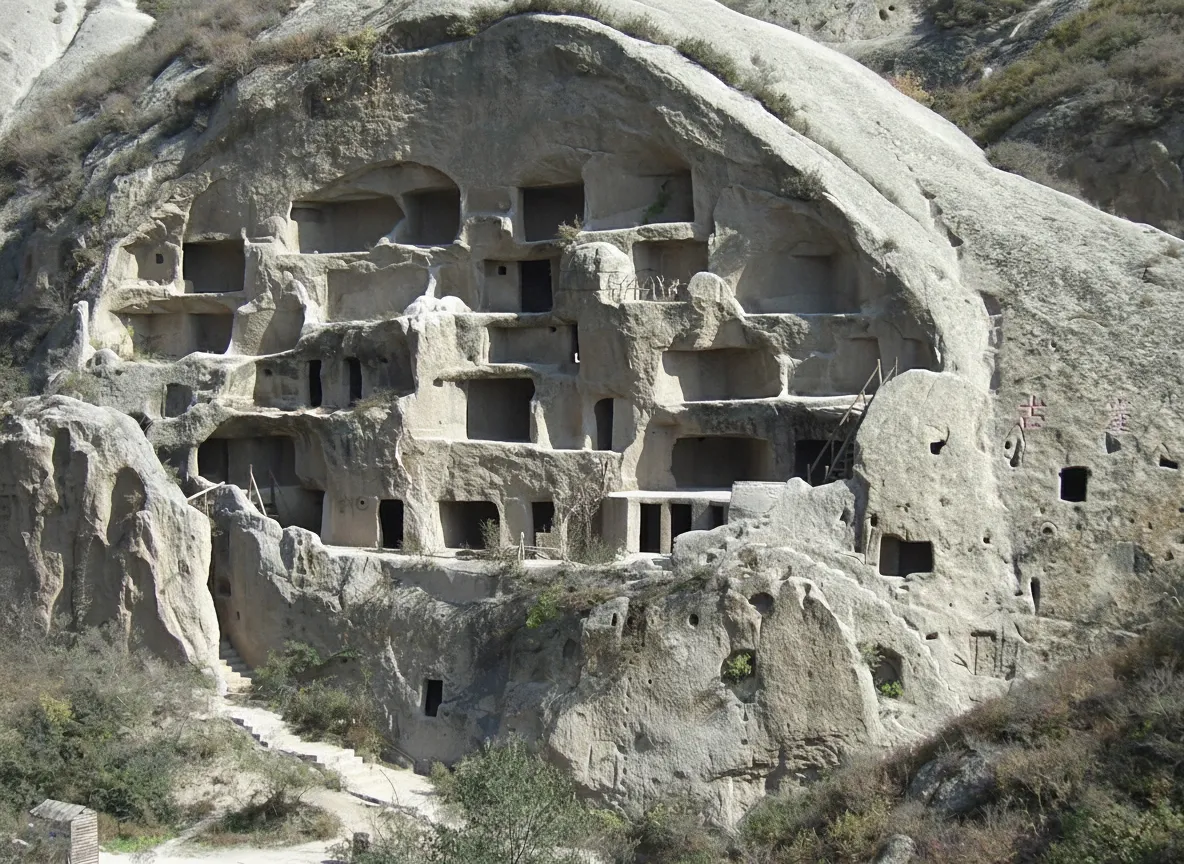
Unlike many ancient sites with detailed historical records, Guyaju remains stubbornly enigmatic. Who were these people? Why did they choose to live in such an extraordinary, challenging environment? And where did they go? These unanswered questions are precisely what make Guyaju so profoundly fascinating, transforming it from a mere archaeological site into a living, breathing puzzle.
A Glimpse into a Forgotten Past: History and Theories
The true history of Guyaju is a tale told in whispers and archaeological speculation, rather than definitive texts. What we do know is that these dwellings are believed to date back to the Tang Dynasty (618-907 AD) or possibly the Five Dynasties period (907-960 AD). For centuries, this "cliff city" lay hidden, largely forgotten, until its rediscovery in modern times.
Archaeologists and historians have put forward several theories regarding the identity of its inhabitants. One prominent theory suggests they were the Xi people, an ancient nomadic tribe related to the Khitan, who inhabited parts of northern China. Another possibility points to the Khitan themselves, or perhaps a local mountain tribe seeking refuge or a strategic advantage in this rugged terrain. The sheer defensive nature of the dwellings, elevated high above the valley floor, certainly supports the idea that security was a primary concern.
Imagine the world these people inhabited: a landscape of shifting power, tribal conflicts, and the constant need for protection. Building a city directly into the rock face would have provided an almost impregnable fortress, a sanctuary where families could live, work, and defend themselves. The challenging environment itself, with its natural caves and hard rock, might have inspired this unique architectural approach, turning a natural barrier into a permanent home.
The lack of written records, however, is the biggest hurdle in piecing together their story. There are no tablets, no inscriptions, no scrolls detailing their daily lives, their beliefs, or the events that led to their eventual departure. This absence of information only deepens the allure of Guyaju. It's a ghost city not because of a tragic event, but because its inhabitants simply vanished from the historical record, leaving behind only their incredible stone legacy.
Exploring the Stone Labyrinth: What You'll See and Experience
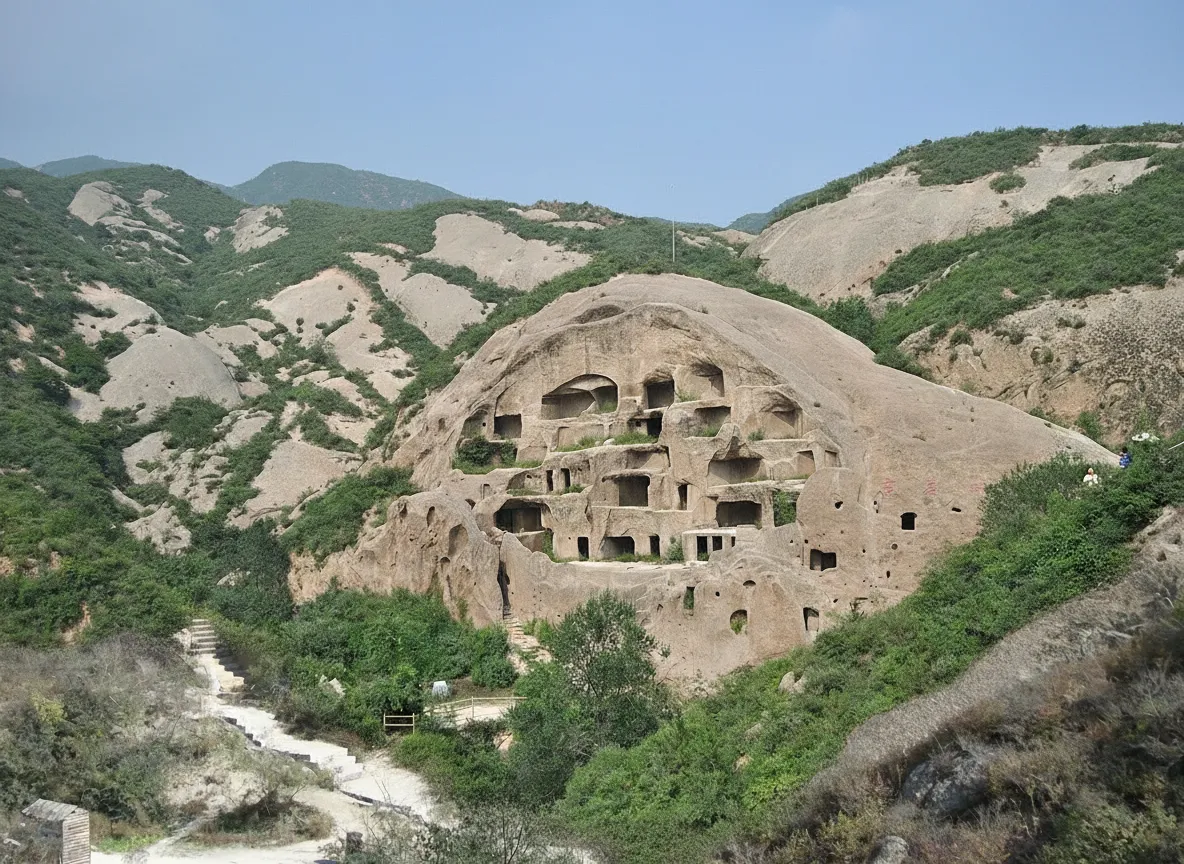
Visiting Guyaju is an adventure, a hands-on exploration that engages all your senses. As you approach the cliff face, the sheer scale of the dwellings slowly reveals itself, a honeycomb of dark openings against the lighter rock. The initial ascent involves a series of well-maintained wooden staircases, but soon you'll find yourself navigating pathways and steps that are themselves carved directly into the cliff.
Each dwelling offers a unique perspective. Some are simple, single-room affairs, perhaps for individuals or as storage. Others are multi-chambered, complete with stone beds, hearths, and even ventilation shafts, giving you a tangible sense of ancient domestic life. You can duck into these cool, quiet rooms, run your hand over the ancient rock, and try to picture the families who once called this incredible place home. The ingenuity is striking: some rooms even have rudimentary window openings, perfectly positioned to catch the morning sun or offer strategic views of the valley below.
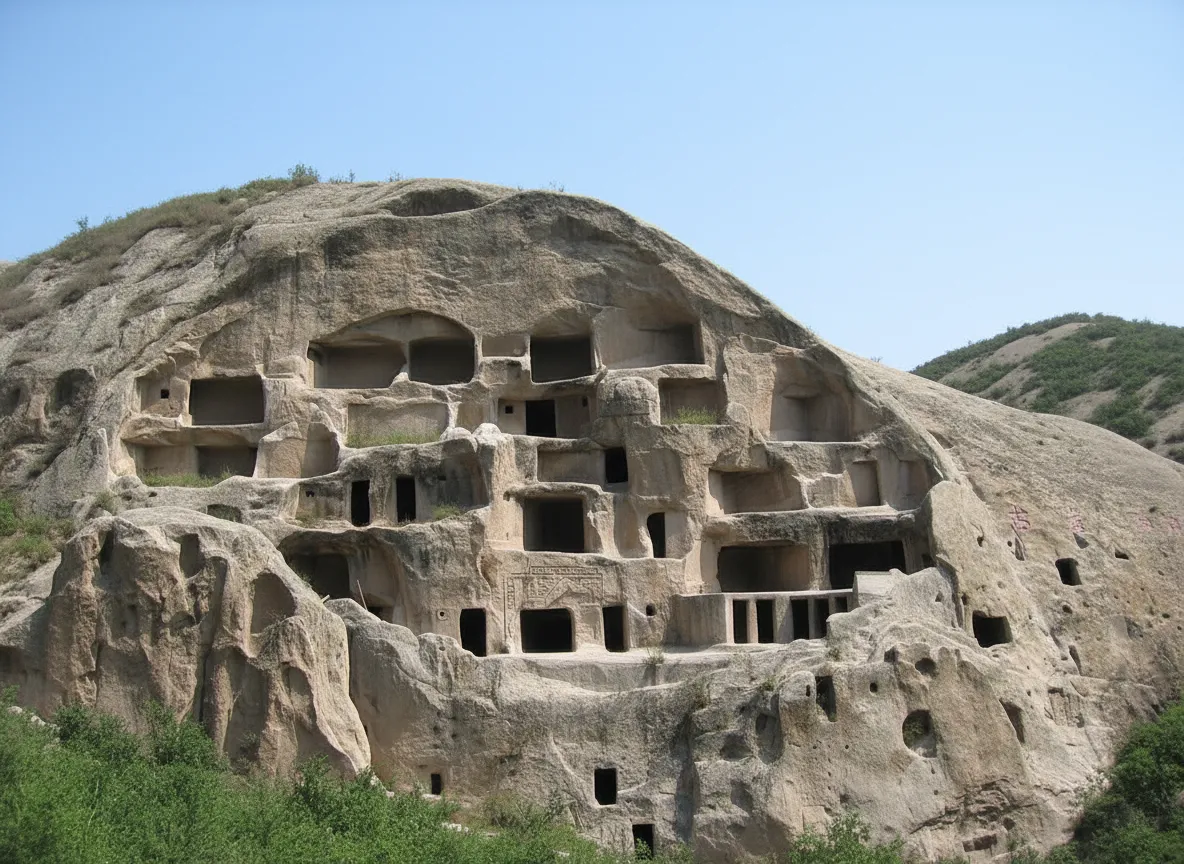
The highlight for many is the so-called 'chieftain's palace' or 'temple,' a larger, more elaborate complex located higher up the cliff. This area features more spacious rooms, intricate carving details (though time has weathered much), and a commanding vantage point. It’s here that you truly grasp the communal aspect of Guyaju, imagining gatherings, decisions made, and the daily rhythms of a society living in such close, vertical proximity.
As you climb higher, the views become increasingly spectacular. The rolling hills of the Yanqing District stretch out before you, a serene landscape that contrasts sharply with the rugged, ancient architecture. It's a place that encourages contemplation, a quiet moment to reflect on the passage of time and the enduring mysteries of human history. You'll feel a palpable connection to the past, a sense of wonder at what ancient people were capable of achieving with nothing but grit, determination, and simple tools.
Planning Your Expedition: Practical Tips for Visiting Guyaju
Ready to embark on your own Guyaju adventure? Here’s what you need to know to make your trip as smooth and memorable as possible:
Location: Guyaju is situated in the Yanqing District, approximately 80 kilometers (50 miles) northwest of Beijing city center. It makes for an excellent day trip from the capital.
Getting There:
- By Bus: The most common public transport option is to take Bus No. 919 (or 880) from Deshengmen Bus Station in Beijing directly to Yanqing County. From Yanqing, you can take a local taxi or another bus (e.g., Yanqing Bus No. 920) towards the Badaling Great Wall Scenic Area, and get off at the Guyaju entrance. The entire journey can take 2-3 hours one way, depending on traffic and connections.
- By Car/Taxi: Hiring a private car or taxi is the most convenient option, especially if you're traveling with a group or want more flexibility. The drive takes about 1.5-2 hours from central Beijing. Many tour operators also offer guided day trips that include Guyaju.
Best Time to Visit: The ideal times to visit Guyaju are spring (April-May) and autumn (September-October). During these months, the weather is mild and pleasant, perfect for climbing and exploring. Spring brings fresh greenery, while autumn offers beautiful foliage. Summers can be hot and humid, and winters are cold, often with snow, which can make the climbs slippery and challenging.
What to Bring:
- Comfortable Walking Shoes: This is non-negotiable! You'll be doing a lot of climbing, navigating uneven surfaces, and scaling stone steps.
- Water and Snacks: While there might be vendors at the entrance, it's always wise to carry your own provisions, especially water for the climb.
- Camera: You'll want to capture the incredible views and the unique architecture.
- Layers: Even on a warm day, the cliff dwellings themselves can be cooler, and the weather can change.
- Sun Protection: Hat, sunglasses, and sunscreen are recommended, especially if visiting during sunnier months.
Accessibility: Be aware that visiting Guyaju involves a significant amount of climbing and navigating uneven terrain. It may not be suitable for individuals with mobility issues, very young children, or those with a fear of heights. The paths are generally safe, but require a reasonable level of fitness.
Combine Your Trip: Guyaju is relatively close to the Badaling section of the Great Wall, another iconic Beijing attraction. If you start early, it's possible to visit both in one long, action-packed day. However, to truly appreciate Guyaju without rushing, dedicating a full half-day or more is recommended.
Guyaju is more than just an ancient ruin; it's an invitation to step back in time, to engage with an enduring mystery, and to marvel at the ingenuity of a forgotten people. It's a truly unforgettable experience that offers a profound glimpse into a unique corner of China's vast and fascinating history. So, if you're seeking adventure beyond the well-trodden path, make Guyaju your next hidden destination!
Essential Travel Information
- Location Guyaju (Ancient Cliff Dwellings), China
- Best Time Spring (April-May) and Autumn (September-October)
- Getting There Bus from Beijing (Deshengmen Bus Station to Yanqing, then local transport) or private car/taxi (approx. 1.5-2 hours drive).
- Airport Beijing Capital International Airport (PEK), Beijing Daxing International Airport (PKX)
- Budget Mid-range (Entry fee approx. 50-60 RMB, plus transport and food; estimate 150-300 RMB/day per person for basic expenses)
- Language Mandarin Chinese
Find Places to Stay Near Guyaju (Ancient Cliff Dwellings)
Compare hotels, hostels, and unique stays in China.
Search AccommodationTours & Experiences Near Guyaju (Ancient Cliff Dwellings)
Book guided tours, day trips, and unique experiences.
Browse Tours