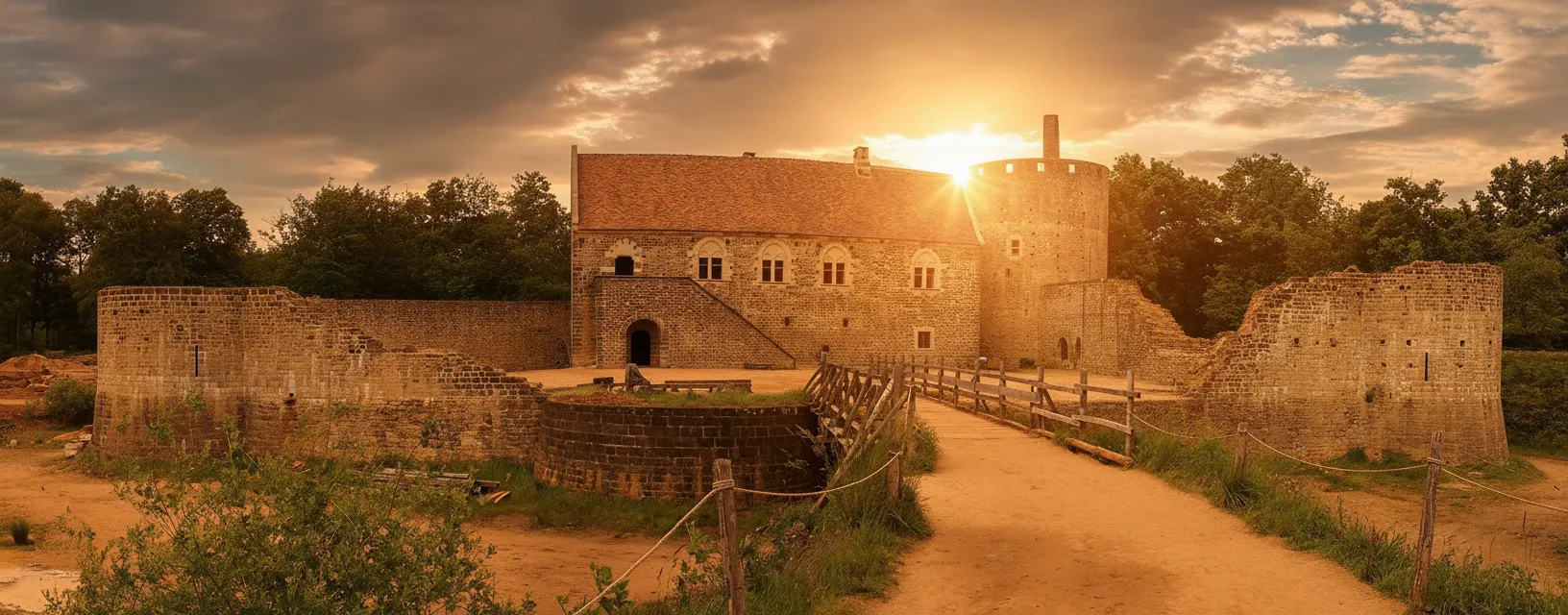
Guédelon: A Journey Back to the 13th Century
What makes Guédelon so profoundly special isn't just that a castle is being built; it's *how* it's being built. From the moment you arrive, you're not just a visitor; you're a time-traveler to 1229. Every single tool, every material, and every method employed on this sprawling site is meticulously authentic to the period. There are no power tools, no modern cranes, no shortcuts. Master builders, stonemasons, carpenters, quarrymen, blacksmiths, and an army of dedicated artisans work tirelessly, recreating the daily life and monumental efforts required to construct such a magnificent edifice eight centuries ago. It's a symphony of human effort, a living textbook of medieval craftsmanship unfolding before your very eyes. You'll hear the rhythmic clang of the blacksmith's hammer, the rasp of the stonemason's chisel, the creak of timber frames being hoisted into place, and the murmur of French spoken with a passion for history. This isn't just a castle; it's a profound educational experience, a testament to the power of human hands and ingenuity, and an unparalleled window into the past.
The Genesis of Guédelon: A Dream Forged in Stone
The story of Guédelon began not with an ancient blueprint, but with a daring idea in 1997. Michel Guyot, the owner of the nearby Château de Saint-Fargeau, envisioned an ambitious project: to build a new castle from scratch, using only medieval techniques and resources. The goal was twofold: to provide a deeper understanding of medieval construction and life through experimental archaeology, and to create a unique cultural attraction. The chosen site, an abandoned quarry in a secluded forest, provided all the necessary natural resources: stone for the walls, wood for the frames, clay for tiles, sand, and water. The project quickly attracted historians, archaeologists, and skilled craftspeople eager to put theory into practice. It became more than just a construction site; it transformed into a vast, open-air laboratory where ancient texts and illustrations were brought to life. Every decision, from the choice of stone to the design of the archways, is informed by rigorous research into 13th-century architectural principles. The castle itself, though "new," is designed to reflect the architectural style prevalent during the reign of Philip Augustus, around 1229, in the local region of Puisaye. It’s a decades-long endeavor, a testament to patience and dedication, with an estimated completion date still years in the future, ensuring that every visit offers new progress and fresh discoveries.What You'll Witness at This Living Medieval Site
Prepare to be utterly mesmerized. Guédelon is not a static exhibition; it's a dynamic, evolving spectacle where every corner reveals a new facet of medieval life and labor. As you wander through the site, you'll encounter various workshops and activities, each offering a glimpse into a specific craft: * **The Quarry:** Here, you'll see stonemasons extracting and shaping the local sandstone, just as their predecessors did centuries ago. Watch as they split massive blocks with wedges and mallets, then meticulously carve them into precise shapes for walls, arches, and windows. * **The Mortar Workshop:** Discover the ancient art of making lime mortar. You'll see the kiln where limestone is burned, and then watch as the lime is slaked and mixed with sand and water to create the essential "glue" that holds the castle together. * **The Carpenters' Yard:** The air here is thick with the scent of freshly cut oak. Witness skilled carpenters using axes, adzes, and hand saws to fell, shape, and join massive timbers. You might even catch a glimpse of a timber frame being raised, a truly awe-inspiring feat of teamwork and engineering. * **The Blacksmith's Forge:** The rhythmic clang of hammer on anvil echoes from the forge. Here, blacksmiths heat iron in charcoal fires and skillfully hammer it into tools, nails, hinges, and other essential ironwork needed for the castle's construction and daily life. * **The Potter and Tile Makers:** See how clay is processed and shaped into roofing tiles, floor tiles, and various pottery items, all fired in an authentic medieval kiln. * **The Basket Weavers, Rope Makers, and Dye Masters:** Beyond the primary construction, you’ll find artisans engaged in the myriad supporting crafts that made medieval life possible, from weaving baskets for transport to dyeing wool with natural pigments. * **The Castle Itself:** Of course, the star of the show is the castle. You’ll see walls steadily rising, towers taking shape, the chapel's intricate stonework, and the beginnings of living quarters. Observing the sheer scale and complexity of the structure, knowing it's all built by hand, is truly humbling. * **The Animals:** Medieval breeds of horses, donkeys, and other livestock are also part of the living tableau, playing their roles in transport and agriculture. You're not just an observer; you're encouraged to interact, ask questions, and even participate in some smaller workshops, truly immersing yourself in the sights, sounds, and even smells of a bygone era. It's an educational adventure for all ages, where history comes alive in the most spectacular way.
Planning Your Expedition to Guédelon Castle
Embarking on a journey to Guédelon is an adventure in itself, and a little planning will ensure your experience is as rewarding as possible. **Best Time to Visit:** Guédelon is typically open from March/April through November. The shoulder seasons (April-May and September-October) are often ideal. The weather is usually pleasant, and the crowds are generally smaller than during the peak summer months of July and August. During the summer, it can get quite hot, and the site can be very busy, though the atmosphere remains vibrant. Check their official website for exact opening dates and hours, as these can vary. **How to Get There:** Guédelon is located in a relatively rural part of Burgundy, France, near the village of Treigny. The easiest and most recommended way to reach it is by car, which also gives you the flexibility to explore the beautiful surrounding region. There is ample free parking on site. If you're relying on public transport, it's a bit more challenging. The nearest major train station is Auxerre-Saint-Gervais, from which you would likely need to arrange a taxi or find a local bus service (which can be infrequent). Consider combining your visit with a stay in a charming nearby town like Saint-Fargeau or Auxerre. **Tickets & Opening Hours:** Always check the official Guédelon website (guedelon.fr) for the most up-to-date information on opening days, hours, and ticket prices. It's often possible to buy tickets online in advance, which can save time during peak season. **What to Wear:** You’ll be walking on uneven terrain, including dirt paths, gravel, and sometimes muddy areas, so comfortable, sturdy closed-toe shoes are an absolute must. Dress in layers, as the weather in Burgundy can change throughout the day. A hat and sunscreen are advisable during sunny months. **Food & Drink:** There are several options on site, including a restaurant, snack bars, and picnic areas. You can bring your own picnic to enjoy amidst the medieval atmosphere, or savor a meal prepared with local ingredients. **Accessibility:** Due to the nature of a construction site and the historical authenticity, the terrain can be challenging for those with mobility issues. While efforts are made to accommodate visitors, some areas may be difficult to navigate for wheelchairs or strollers. **Duration of Visit:** To truly appreciate everything Guédelon has to offer, allocate at least a full day. There's so much to see, learn, and experience, from watching the artisans work to exploring the castle's progress and the surrounding forest. Guédelon Castle isn't just a tourist attraction; it's a living, breathing monument to human endeavor, a bridge between our modern world and the distant past. It’s a place that sparks imagination, ignites curiosity, and leaves you with a profound appreciation for the skills and determination of medieval builders. So, pack your sense of wonder, prepare for an unforgettable journey, and step back in time to witness history being made, one stone at a time, in the heart of beautiful Burgundy.
Essential Travel Information
- Location Guédelon Castle, France
- Best Time April-May or September-October (shoulder seasons for pleasant weather and fewer crowds)
- Getting There Best reached by car; located near Treigny in Burgundy. Nearest major train station is Auxerre-Saint-Gervais, requiring further taxi/bus.
- Airport Paris-Orly Airport (ORY) or Paris Charles de Gaulle Airport (CDG)
- Budget Mid-range (approx. €20-€40 daily for entry and basic food)
- Language French (English spoken by some staff, especially at information points)
Find Places to Stay Near Guédelon Castle
Compare hotels, hostels, and unique stays in France.
Search AccommodationTours & Experiences Near Guédelon Castle
Book guided tours, day trips, and unique experiences.
Browse Tours