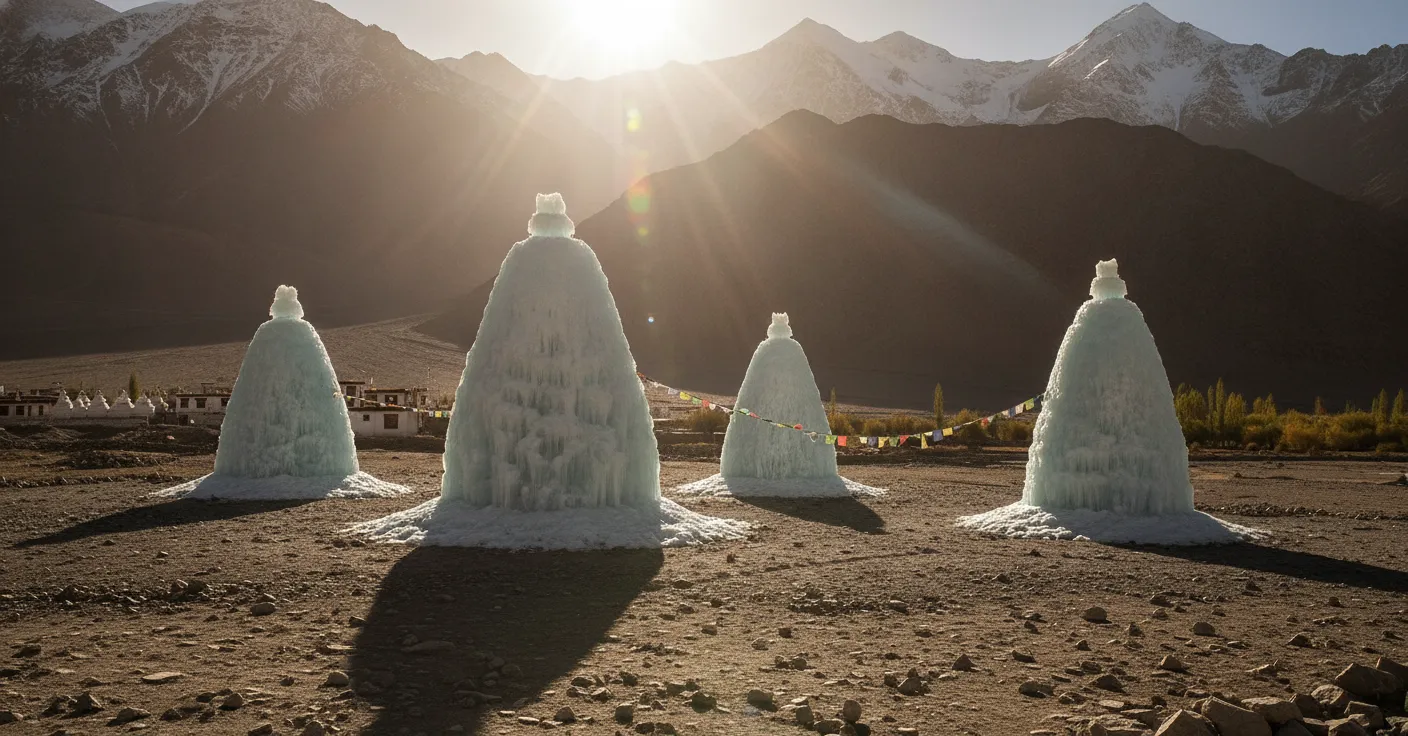
Imagine a landscape so stark, so demanding, that its very existence hinges on a miracle. Not a divine one, but a marvel of human ingenuity. In the desolate, high-altitude desert of Ladakh, where towering peaks scrape the sky and rivers dwindle to trickles in spring, locals have engineered a breathtaking solution: conical, frozen towers that sprout from the earth, acting as glacial reservoirs for the arid months. These aren't ancient monuments, nor are they natural formations. They are the Ice Stupas of Ladakh, a testament to human resilience, innovative thinking, and a profound connection to the rhythm of nature.
For centuries, the people of Ladakh have faced the brutal reality of water scarcity. Their agriculture, their very way of life, depends on the meltwater from distant glaciers. But with climate change accelerating glacial retreat and altering weather patterns, the spring melt, when water is most critically needed for crops, often arrives too early or too late, or simply isn't enough. The Ice Stupas are more than just impressive ice formations; they are a lifeline, a sustainable answer to a growing crisis, and an inspiring example for communities worldwide grappling with similar environmental challenges.
The Miracle of the Ice Stupas: What Makes Them So Special?
At first glance, these colossal ice cones, often reaching heights of 30-50 feet, might seem like an otherworldly art installation. But their purpose is profoundly practical. These 'Ice Stupas' are artificial glaciers, meticulously constructed by diverting glacial meltwater during the bitter Ladakh winter. Instead of flowing away unused, the water is channeled through a pipe system, often simply gravity-fed, to a point where it's sprayed upwards into the freezing air. As it falls, it freezes layer upon layer, slowly building these distinctive, stupa-like conical shapes.
Why a cone? The conical shape is brilliant in its simplicity. It offers the minimum surface area exposed to the sun, significantly reducing the rate of melt compared to a flat ice sheet. As spring arrives and temperatures begin to climb, these stupas slowly melt, releasing a steady, controlled stream of water. This vital water source arrives precisely when the parched fields of Ladakh need it most for irrigation, transforming the barren landscape into fertile ground. It's a sustainable, low-tech solution that harnesses nature's own processes to support the resilience of remote Himalayan communities in one of the world's most arid regions.
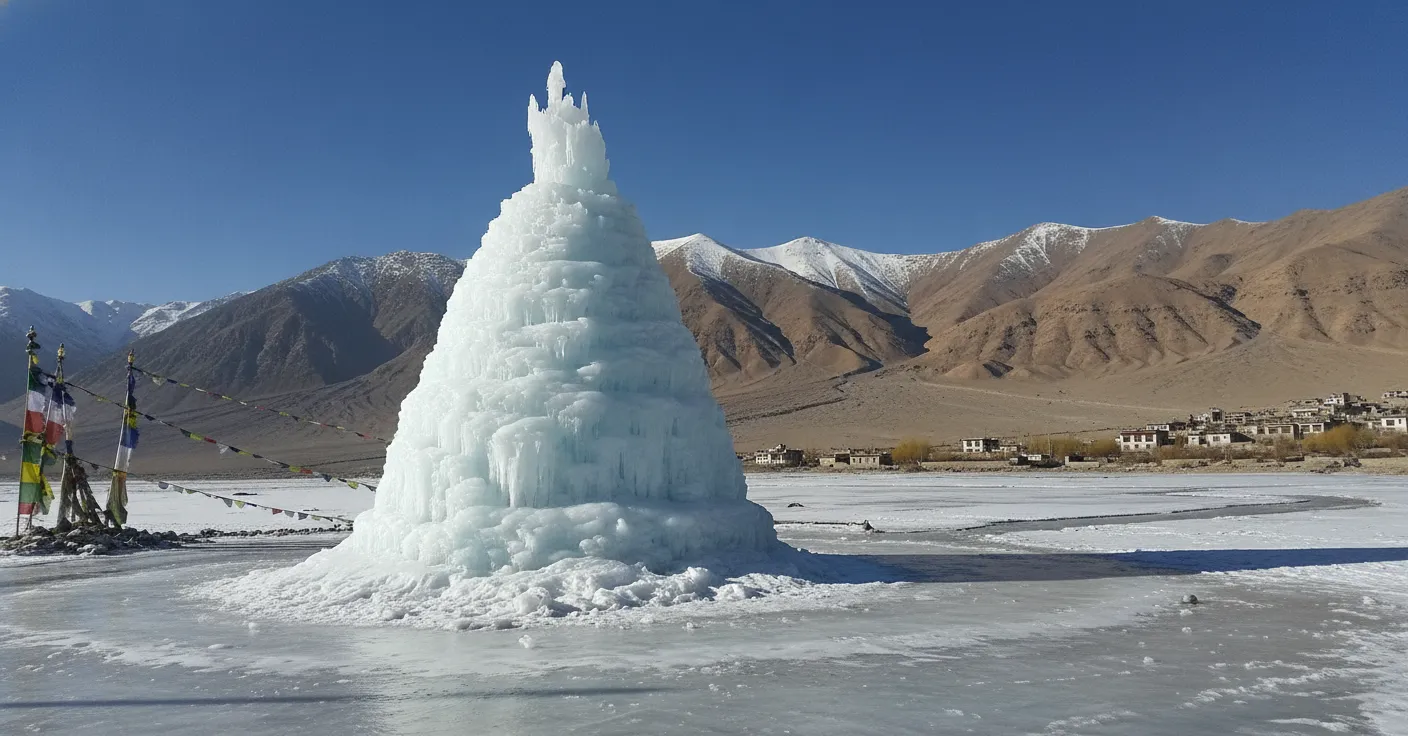
The beauty of the Ice Stupas lies not just in their ingenious design but in their profound impact. They stabilize agricultural yields, improve food security, and reduce the need for villagers to abandon their traditional livelihoods due to water stress. They are a powerful symbol of adaptation in the face of climate change, demonstrating how local wisdom, combined with simple scientific principles, can create powerful solutions.
The Genesis of an Idea: History and Background
The visionary behind the Ice Stupas is Sonam Wangchuk, a renowned Ladakhi engineer, innovator, and education reformist. His story, and the story of the Ice Stupas, is one of deep observation and a relentless drive to solve real-world problems. Wangchuk observed that natural ice formations, particularly those found in shaded areas or at high altitudes, often took on a conical or mound-like shape and melted much slower than flat ice. He realized that if nature could create such efficient ice reservoirs, perhaps humans could too.
The inspiration was also drawn from the traditional Buddhist stupa architecture, which dots the Ladakhi landscape, giving these ice structures their name. In 2013, Wangchuk and his team at the Students’ Educational and Cultural Movement of Ladakh (SECMOL) launched the pilot project. The initial challenge was significant – diverting water in sub-zero temperatures, ensuring it froze correctly, and building a stable structure. But through perseverance and community involvement, the first successful Ice Stupa was created.
Since then, the concept has gained international recognition, winning awards and inspiring similar projects in other high-altitude regions. It’s a testament to the power of community-led innovation, proving that sometimes the most effective solutions are not complex, high-tech inventions, but rather elegant, nature-inspired adaptations that empower local populations.
Witnessing the Wonder: What You'll See There
Visiting an Ice Stupa is an experience that transcends mere sightseeing; it's an encounter with hope and ingenuity. Depending on the time of year, what you'll witness will vary, each phase offering its own unique spectacle.
If you visit during the harsh Ladakhi winter (roughly November to March), you might be lucky enough to see the stupas under construction. Imagine watching the water spray upwards, freezing almost instantly in the frigid air, slowly adding layers to these colossal ice cones. It’s a mesmerizing dance between water, air, and human effort, set against a backdrop of snow-dusted mountains and crisp, clear skies. You'll feel the biting cold, but also the warmth of human determination.
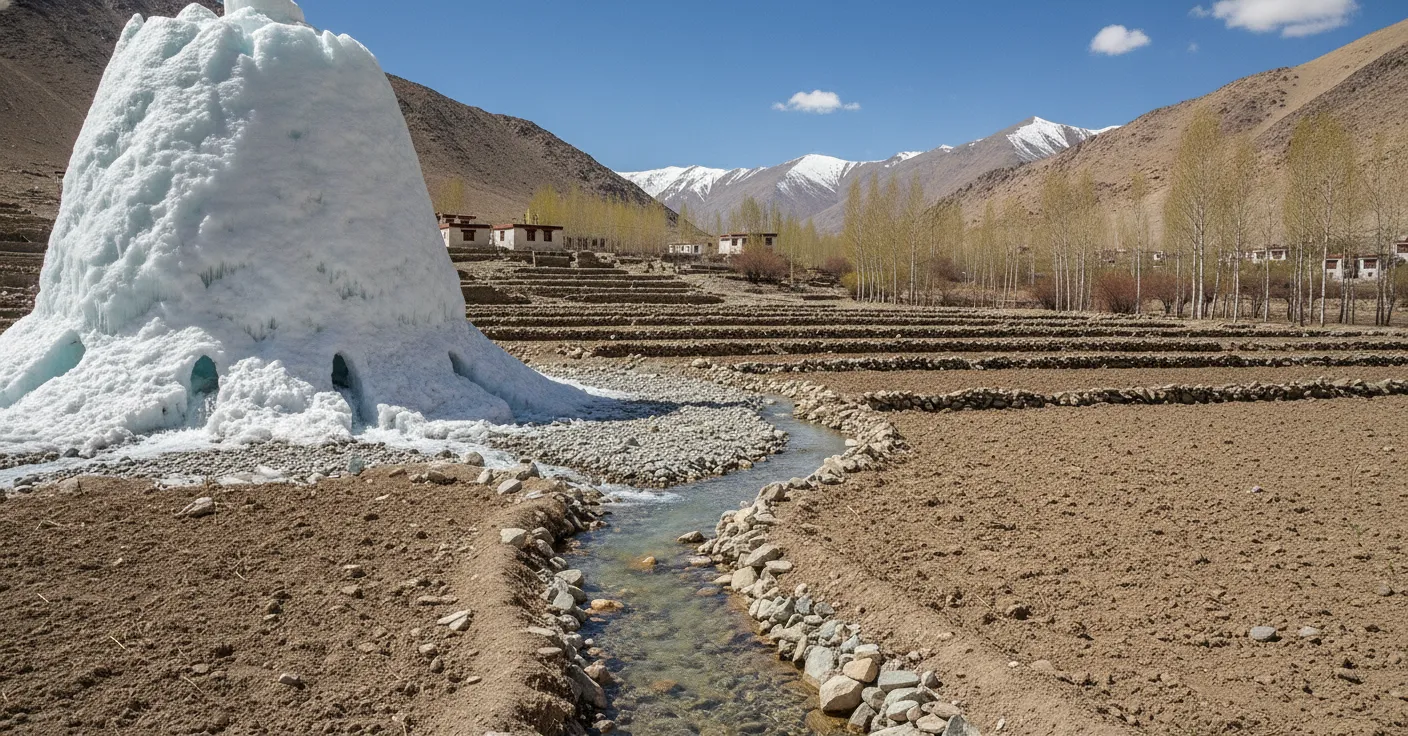
The most impactful time to see the stupas is typically in late spring (April to early June). This is when they are actively melting, providing their life-giving water to the nascent crops. You'll see the massive ice structures slowly shrinking, with streams of crystal-clear water flowing from their bases, channeled directly into irrigation systems. The contrast between the brilliant white of the ice, the stark brown of the surrounding mountains, and the emerging green of the fields is breathtaking. You’ll witness firsthand the transformation these stupas bring, turning a parched land into a thriving oasis.
Beyond the stupas themselves, you’ll be immersed in the unparalleled beauty of Ladakh. The vast, silent landscapes, the ancient monasteries clinging to cliffs, and the vibrant culture of the Ladakhi people all contribute to an unforgettable journey. You might even have the opportunity to interact with the local communities, hearing their stories and understanding the profound impact these artificial glaciers have on their daily lives. It’s a chance to connect with a place where tradition meets innovation, and where the human spirit thrives against formidable odds.
Practical Tips for Your Visit to Ladakh's Ice Stupas
Planning a trip to see the Ice Stupas requires a bit of foresight, but the reward is immense. Here’s what you need to know:
Best Time to Visit:
To see the Ice Stupas at their fullest and most impactful, aim for late winter to early spring.
- **February to March:** Stupas are typically fully formed and at their largest, though the weather will be extremely cold.
- **April to early June:** This is arguably the best time. The stupas are actively melting, providing water for the spring planting, and you can truly appreciate their purpose. The weather is also more pleasant for travel.
How to Get There:
The gateway to Ladakh is Leh.
- **By Air:** The easiest and most common way is to fly into Leh's Kushok Bakula Rimpochee Airport (IXL). Direct flights are available from major Indian cities like Delhi, Mumbai, and Srinagar.
- **By Road:** For the adventurous, the Manali-Leh Highway and Srinagar-Leh Highway offer breathtaking (and challenging) road trips, typically open from June to October. However, these routes are closed during winter when the stupas are being built.
Accommodation:
Leh offers a range of accommodation, from budget guesthouses to mid-range hotels and even some luxury options. Homestays in local villages can also be arranged, offering a more immersive cultural experience, though options might be limited closer to the stupa sites themselves.
Acclimatization is Key:
Ladakh is a high-altitude desert, with Leh itself at over 11,000 feet (3,500 meters). Altitude sickness (Acute Mountain Sickness or AMS) is a real concern. Plan to spend at least 1-2 full days in Leh upon arrival to acclimatize before venturing to higher altitudes or engaging in strenuous activities. Stay hydrated, avoid alcohol, and consult your doctor before traveling.
Responsible Tourism:
The Ice Stupas are a vital resource for local communities. Practice responsible tourism by:
- Respecting local customs and traditions.
- Not littering and carrying out all your waste.
- Asking for permission before taking photos of people.
- Supporting local businesses and homestays.
What to Bring:
- **Warm Layers:** Even in spring, temperatures can drop significantly, especially in the evenings.
- **Sun Protection:** Sunscreen, hat, and sunglasses are essential due to the high altitude and strong UV rays reflecting off snow/ice.
- **Comfortable Walking Shoes:** You might do some light trekking around the stupas or villages.
- **Camera:** You'll want to capture the incredible landscapes and the stupas themselves.
- **Basic First Aid Kit:** Including any personal medications.
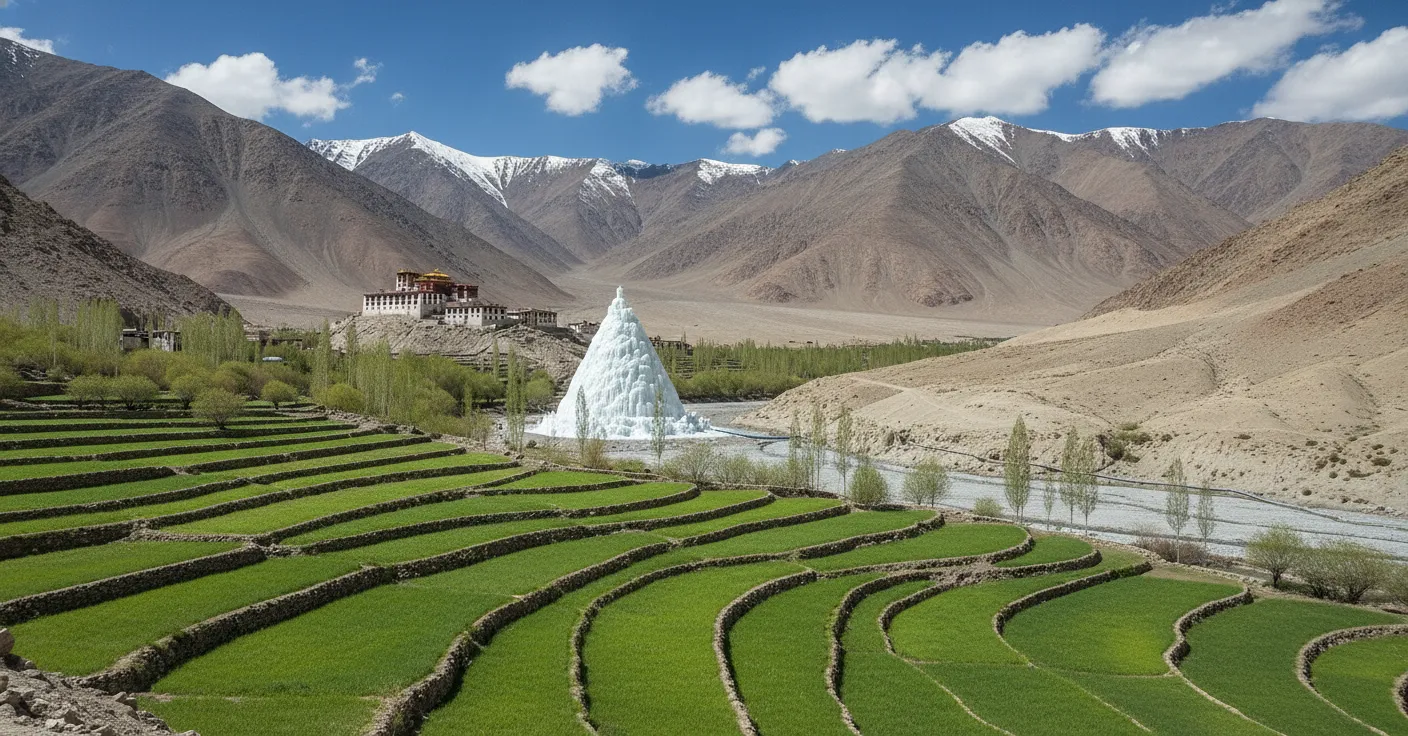
The Ice Stupas of Ladakh are more than just a destination; they are a story. A story of human resilience, environmental innovation, and a deep, respectful partnership with nature. To witness them is to witness a quiet revolution, a testament to what is possible when communities come together to face their challenges head-on. It’s an experience that will not only awe you with its beauty but also inspire you with its profound message of hope for a sustainable future.
Essential Travel Information
- Location Ice Stupas of Ladakh, India
- Best Time February to June (February-March for fully formed stupas, April-June for melting phase and water distribution)
- Getting There Fly to Leh (IXL), then hire a taxi or join a tour to villages like Phyang or Shara where stupas are located.
- Airport Leh Kushok Bakula Rimpochee Airport (IXL)
- Budget Mid-range (approx. $50-100 USD/day including accommodation, food, and local transport)
- Language Ladakhi, Hindi, English
Find Places to Stay Near Ice Stupas of Ladakh
Compare hotels, hostels, and unique stays in India.
Search AccommodationTours & Experiences Near Ice Stupas of Ladakh
Book guided tours, day trips, and unique experiences.
Browse Tours