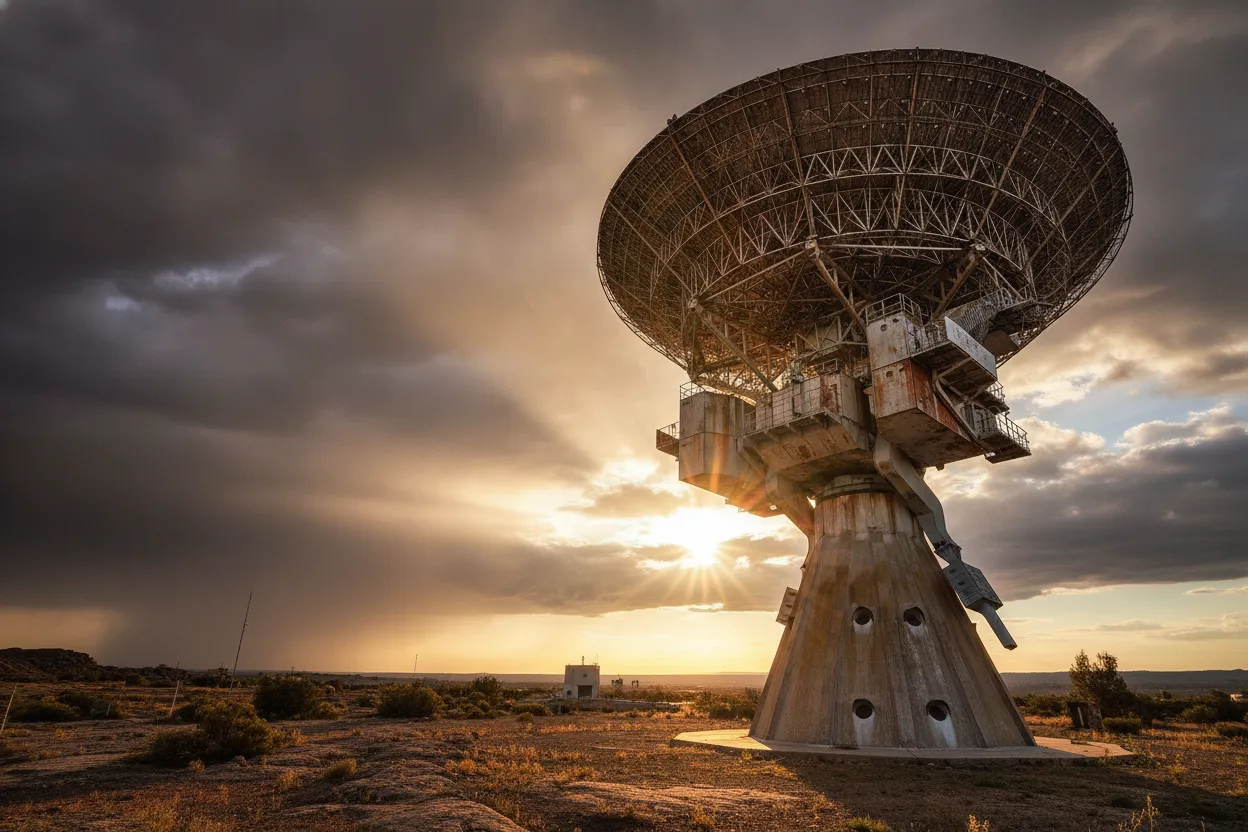
Imagine this: deep within a serene, remote Latvian forest, two colossal, decaying satellite dishes stand silently pointed at the sky. They are not mere abandoned structures; they are relics of a secret Soviet listening post, once shrouded in impenetrable mystery, now open to the curious gaze of the world. This isn't a scene from a sci-fi movie; it's the haunting, awe-inspiring reality of Irbenes Radioteleskops, also known as the Ventspils International Radio Astronomy Centre.
For decades, this site was a top-secret installation known only by its codename, 'Zvezda' (Star). It was a place where the Soviet Union’s most sensitive ears listened across the Iron Curtain, scanning the cosmos not just for scientific discovery, but perhaps for whispers from the West. Today, these gigantic, rusted ears remain eerily intact, a powerful monument to Cold War espionage and audacious scientific ambition. If you're searching for an adventure that blends history, science, and a touch of the sublime, then pack your bags – Irbene is calling.
Echoes of the Cold War: Unveiling 'Zvezda'
To truly appreciate Irbenes Radioteleskops, you need to understand its dramatic past. Born in the crucible of the Cold War in the 1960s, this facility was designed as a cutting-edge radio astronomy centre. But beneath its scientific facade lay a darker, more clandestine purpose. 'Zvezda' was a critical intelligence-gathering hub, tasked with intercepting communications from NATO countries and perhaps even monitoring their missile launches. The sheer scale of the operation, hidden away in the dense forests of the Ventspils Municipality, speaks volumes about its strategic importance.
The facility boasted two main dishes: a monumental 32-meter RT-32 and a smaller, though still impressive, 16-meter RT-16. These colossal structures were engineering marvels of their time, capable of peering deep into space and, more crucially, deep into enemy territory. The personnel who worked here lived in a self-contained, heavily guarded community, their lives dictated by secrecy and the relentless pursuit of information. The forest itself served as a natural barrier, concealing their activities from prying eyes and satellite surveillance.
The collapse of the Soviet Union in 1991 brought an abrupt end to 'Zvezda's' secret life. As Soviet troops withdrew from Latvia, the base was abandoned. It wasn't long before Latvia reclaimed its territory, discovering the massive, silent dishes standing sentinel over the forest. The site was initially stripped of valuable equipment, but the core structures, the dishes themselves, proved too enormous to dismantle easily. Instead of letting them crumble into complete ruin, Latvia saw an opportunity: to transform a relic of espionage into a beacon of scientific research. The facility was eventually taken over by the University of Latvia and reborn as the Ventspils International Radio Astronomy Centre, a testament to resilience and the enduring human quest for knowledge.
What Awaits You at Irbenes Radioteleskops
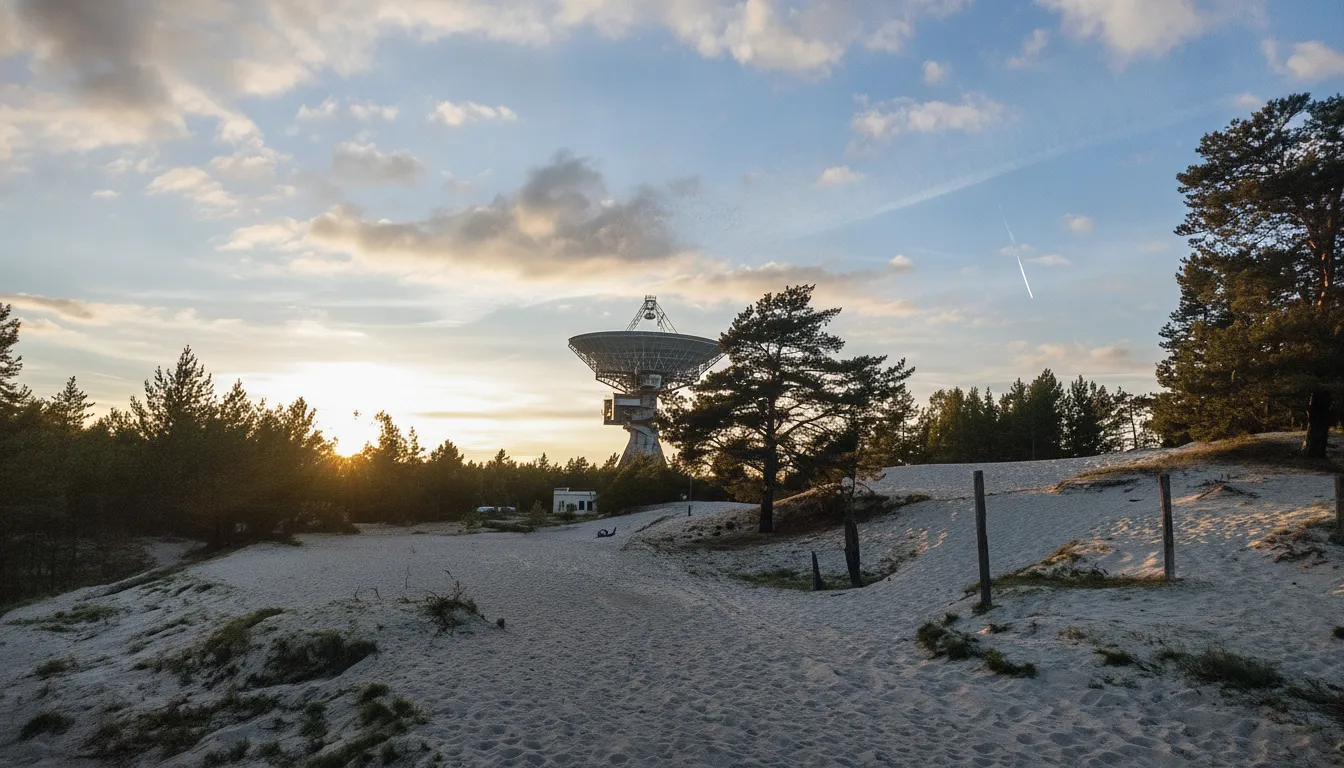
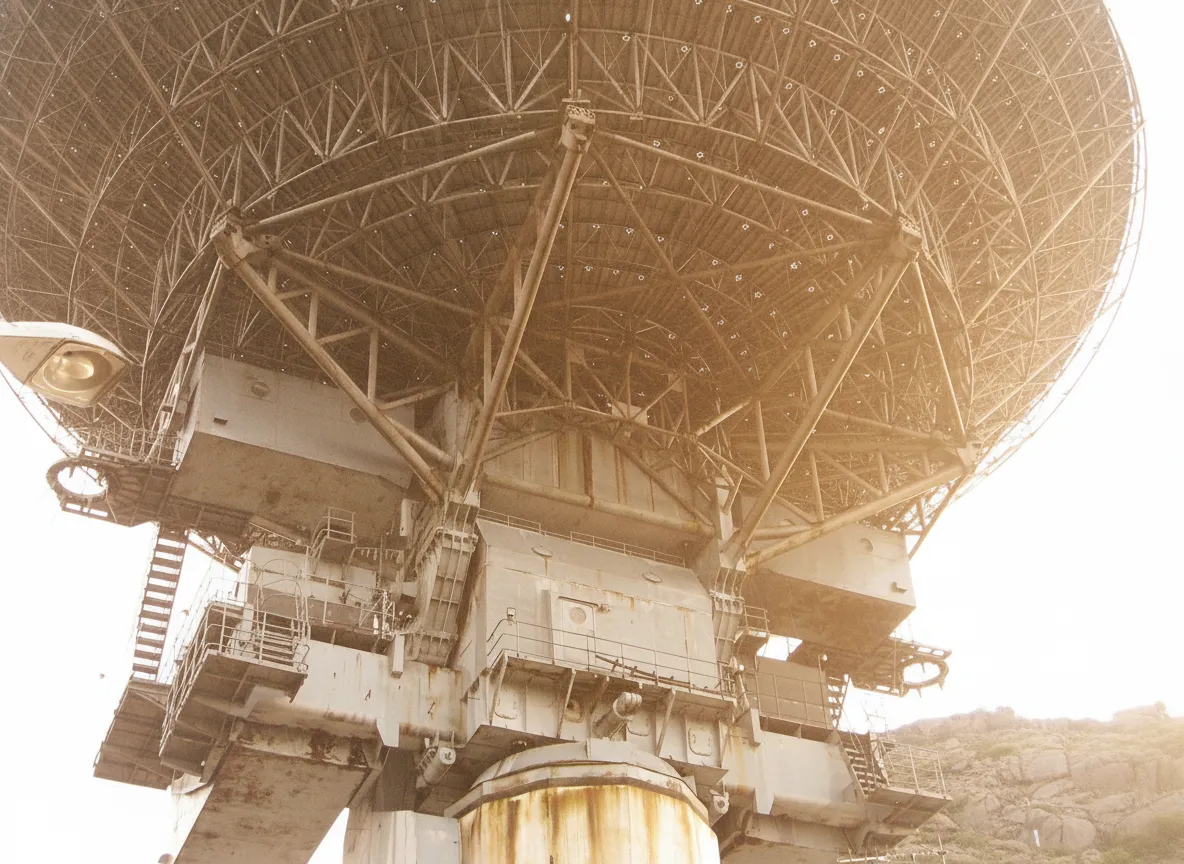
Visiting Irbenes Radioteleskops is an experience unlike any other. As you drive deeper into the forest, the trees eventually part, revealing the staggering sight of the RT-32. It’s a truly humbling moment. The dish is enormous, a rusted behemoth of steel and concrete, its surface textured by decades of exposure to the elements. Standing directly beneath it, craning your neck to take in its full scale, you feel a profound sense of awe. The sheer engineering required to build and operate such a machine in a remote location is mind-boggling.
The smaller RT-16 dish, while not as overwhelmingly large, is equally fascinating. Both dishes retain an eerie sense of purpose, even as nature slowly reclaims their surroundings. You can walk around the bases of these dishes, touch the weathered metal, and imagine the scientists and spies who once scurried beneath them, working tirelessly. The silence of the forest is often broken only by the wind whistling through the structures, a melancholic soundtrack to a bygone era.
Beyond the dishes themselves, the site offers glimpses into the former military base. You might find remnants of old barracks, technical buildings, and pathways, all slowly being absorbed back into the wilderness. These details paint a vivid picture of the isolated lives once lived here. It’s a photographer’s dream, with endless opportunities to capture the stark beauty of industrial decay against the vibrant backdrop of the Latvian landscape. Every angle reveals a new texture, a new shadow, a new story.
More Than Just Rust: The Science Continues
What makes Irbenes Radioteleskops even more compelling is that it's not merely a static museum piece. While its Cold War history is a major draw, the facility is still very much alive and operating as a cutting-edge scientific instrument. The RT-32, in particular, has been refurbished and upgraded, now actively participating in international very-long-baseline interferometry (VLBI) networks. This means it collaborates with other radio telescopes around the globe to form a virtual telescope the size of the Earth, capable of incredibly precise astronomical observations.
Scientists here study everything from distant quasars and pulsars to the cosmic microwave background radiation, helping us unravel the mysteries of the universe. This dual identity – a haunting monument to a secret past and a vibrant hub of modern scientific discovery – makes Irbene truly unique. It’s a place where history and the future converge, where the echoes of espionage blend with the whispers of the cosmos. If you're lucky, you might even catch a glimpse of the dishes slowly rotating, a silent, majestic dance as they track celestial objects across the sky.
Planning Your Expedition to Irbene
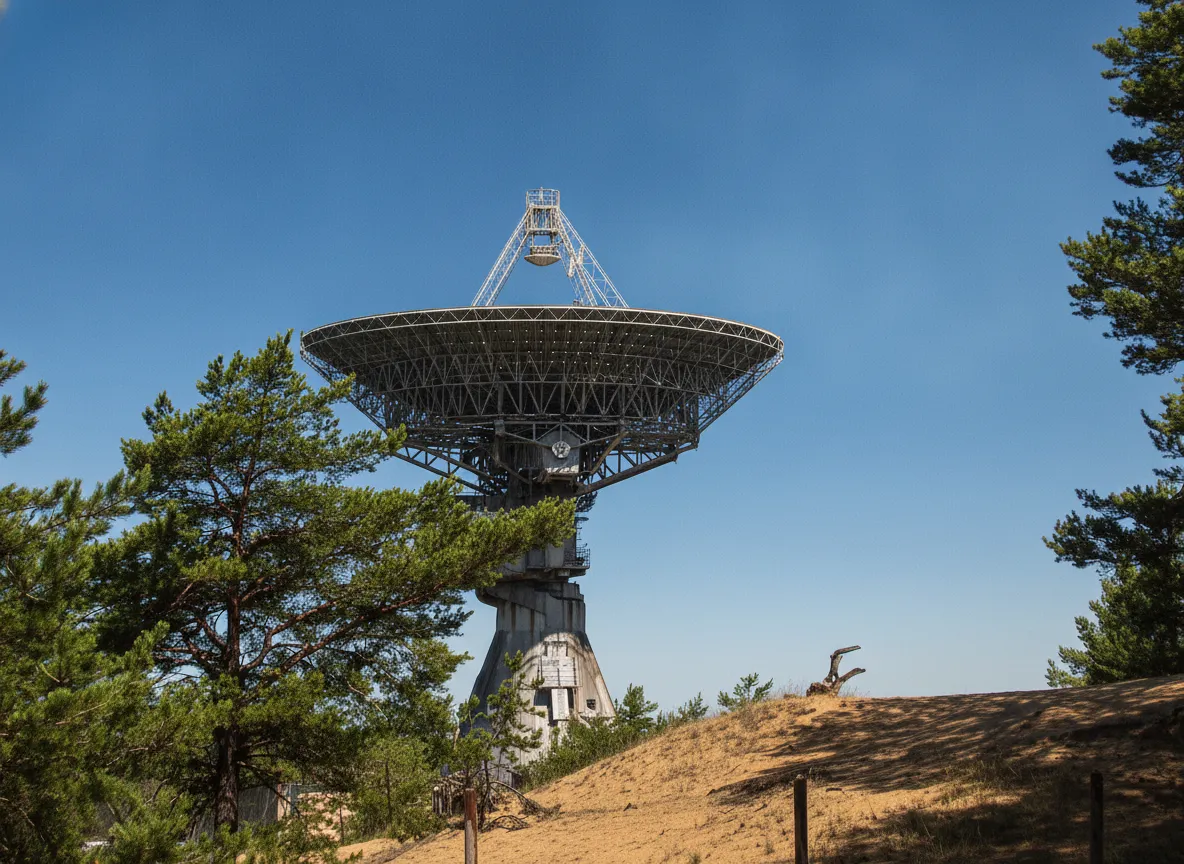
Ready to embark on this extraordinary journey? Visiting Irbenes Radioteleskops requires a bit of planning, but the reward is immeasurable. The centre is located in the Ventspils Municipality, a short drive from the charming coastal city of Ventspils itself. While there are sometimes organized tours, the most flexible way to get there is by car, allowing you to explore at your own pace.
The road leading to the site is well-maintained, but once you turn off the main road, expect narrower, possibly unpaved forest paths. The journey itself becomes part of the adventure, building anticipation as you delve deeper into the woods. There's a visitor center on site, where you can learn more about the history and current scientific work, and sometimes even arrange for a guided tour that offers deeper insights and access to areas you might not explore on your own.
Dress comfortably and practically, especially if you plan to walk around the dishes and explore the surrounding area. Sturdy shoes are a must, as the terrain can be uneven. Bring water and snacks, as amenities are limited once you arrive. Most importantly, bring your camera! The photographic opportunities here are simply incredible, from wide-angle shots of the colossal dishes against the sky to detailed close-ups of the rusted metal and overgrown foliage.
Irbenes Radioteleskops is more than just a destination; it's an experience that transcends time. It’s a place where you can feel the weight of history, marvel at human ingenuity, and ponder the vastness of the universe, all within the serene embrace of a Latvian forest. It’s a hidden gem, waiting to be discovered by those with an adventurous spirit and a thirst for the truly extraordinary.
Essential Travel Information
- Location Irbenes Radioteleskops (Ventspils International Radio Astronomy Centre), Latvia
- Best Time May to September (late spring, summer, early autumn) for pleasant weather and lush greenery.
- Getting There Located in Ventspils Municipality, Latvia. Best reached by car from Ventspils city (approx. 30-40 min drive). Follow signs for 'Irbene' or 'Radioteleskops'.
- Airport Riga International Airport (RIX)
- Budget Mid-range (approx. €50-€80 per day for accommodation, food, and basic transport in Latvia)
- Language Latvian, Russian, English (especially in tourist areas)
Find Places to Stay Near Irbenes Radioteleskops (Ventspils International Radio Astronomy Centre)
Compare hotels, hostels, and unique stays in Latvia.
Search AccommodationTours & Experiences Near Irbenes Radioteleskops (Ventspils International Radio Astronomy Centre)
Book guided tours, day trips, and unique experiences.
Browse Tours