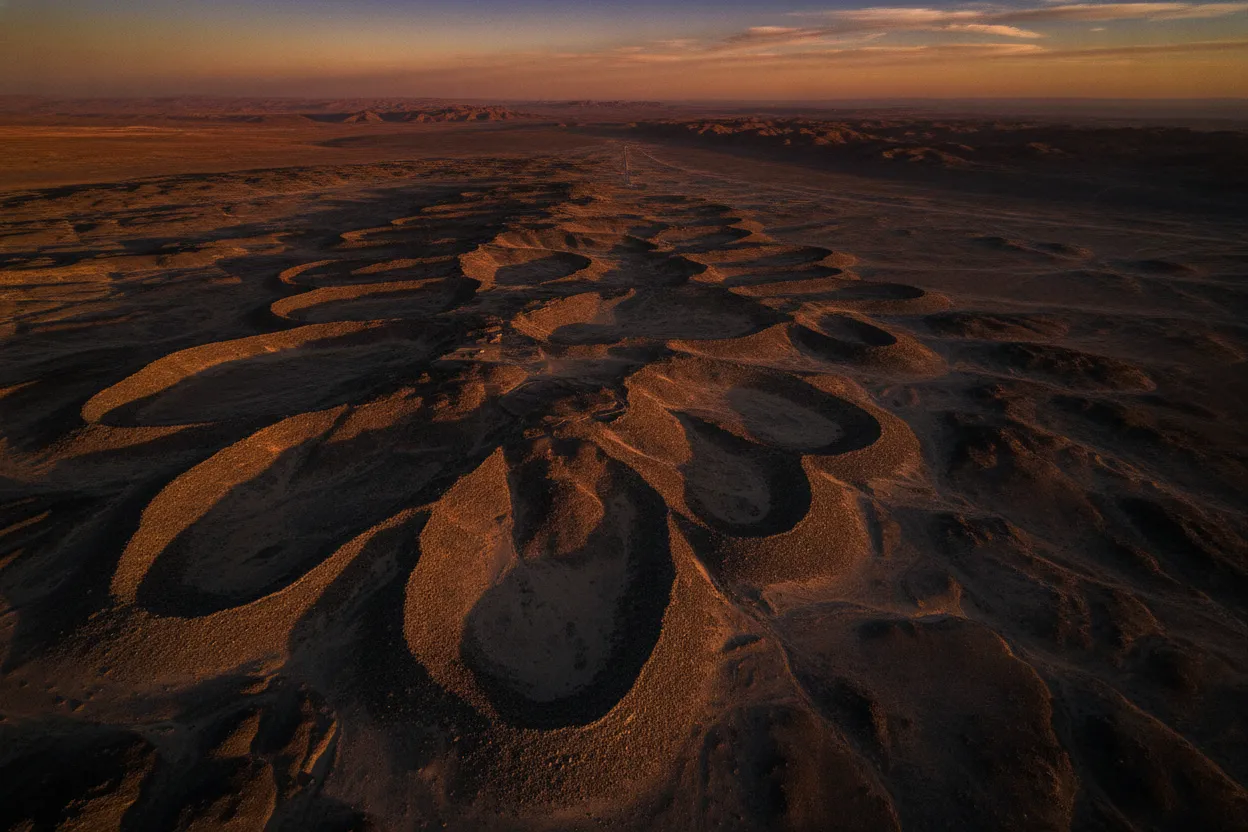
Imagine a landscape so vast and ancient, it holds secrets etched into its very surface – not by nature, but by human hands thousands of years ago. Sprawling across a desolate, shimmering expanse of Jordan's black basalt desert, near the border with Saudi Arabia, lies Jebel Qurma. This isn't just any desert; it's a monumental, open-air archaeological puzzle, home to tens of thousands of enigmatic stone structures, some stretching for kilometers. Their original purpose is still being uncovered, but what archaeologists *do* know will leave you breathless: this is one of the largest concentrations of ancient hunting traps and habitation sites on Earth, a testament to a forgotten, sophisticated society that once thrived in this now-barren wilderness.
Jebel Qurma: Unveiling Jordan's Landscape-Sized Mystery
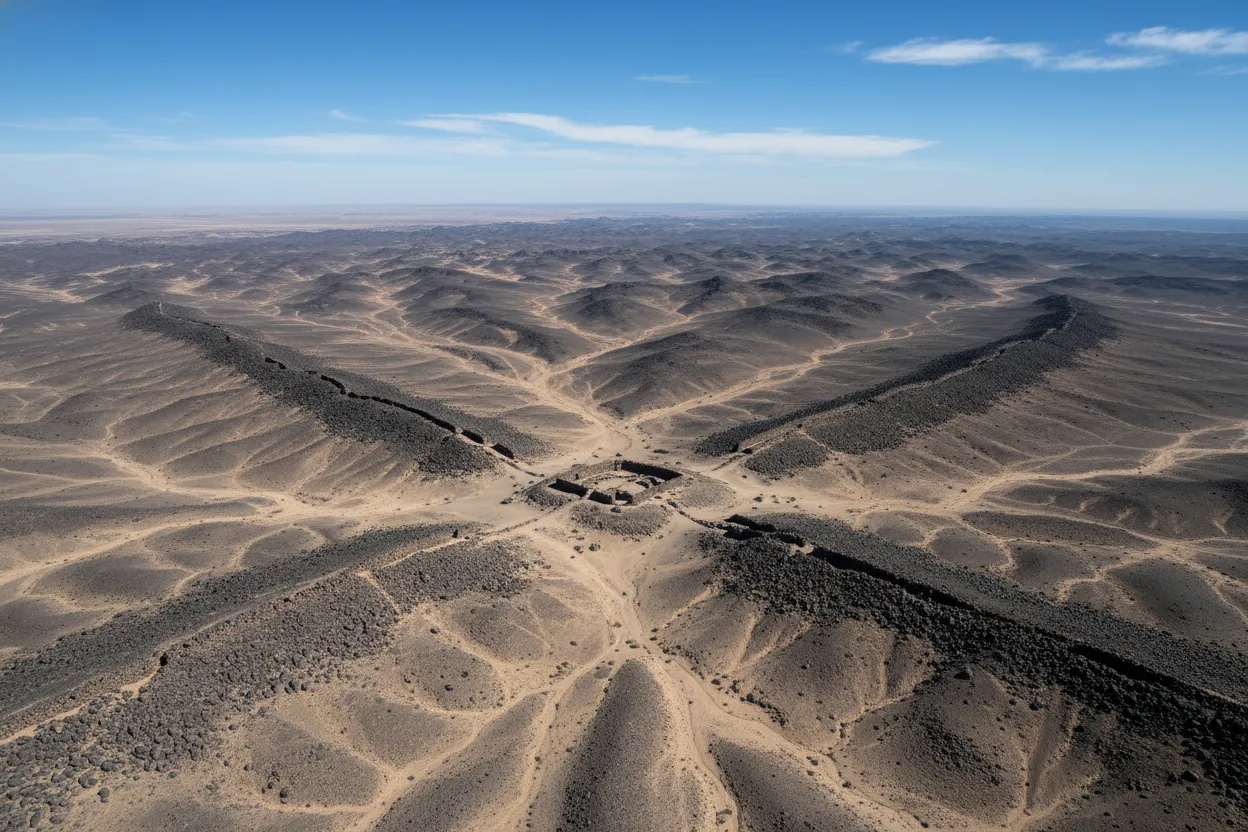
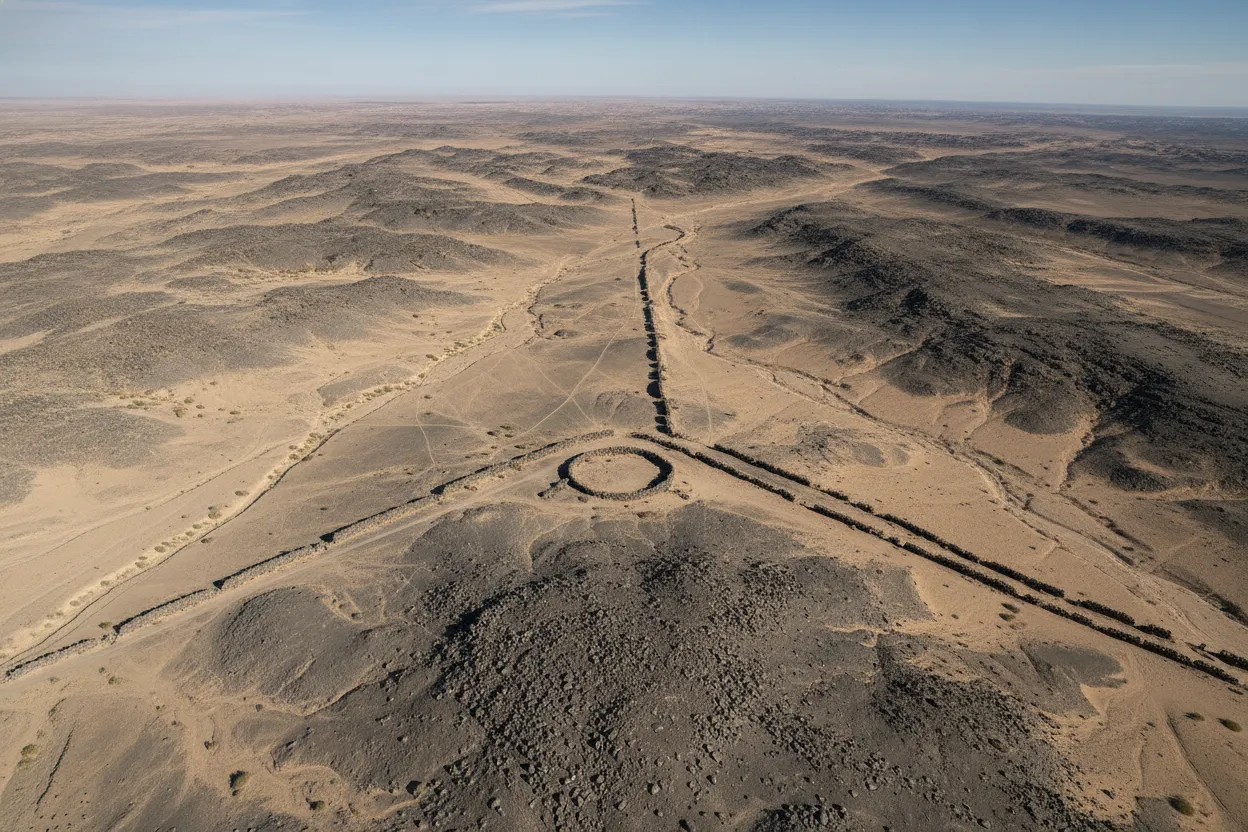
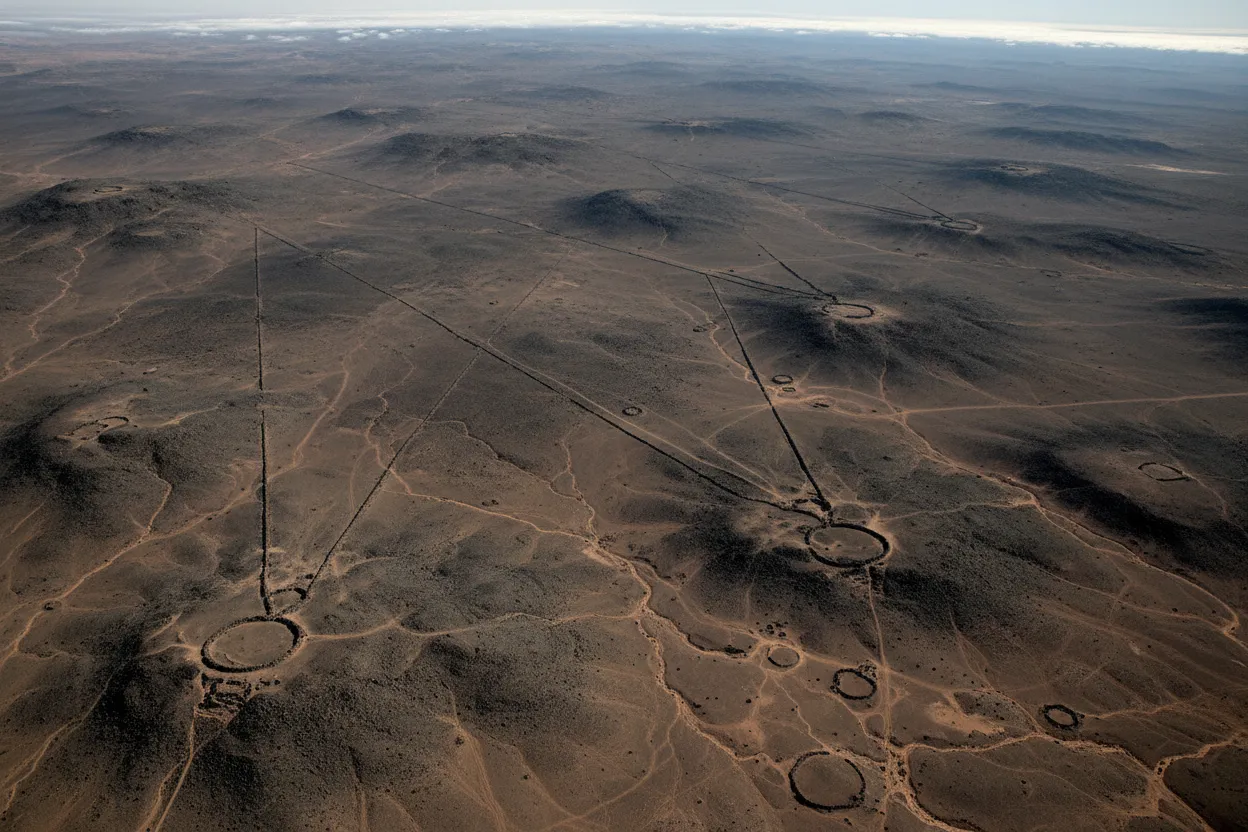
Jebel Qurma, often referred to by the archaeological structures it hosts – 'desert kites' – is unlike anything you've ever seen. These aren't just piles of rocks; they are elaborate, precisely engineered constructions, some dating back as far as 8,000 to 10,000 years, from the Neolithic period. Picture colossal, V-shaped stone walls, sometimes several kilometers long, converging on a central enclosure. From above, they resemble giant kites, hence their evocative name. These 'wings' were meticulously designed to funnel massive herds of gazelles and other wild animals into killing pits or enclosures, demonstrating an astonishing understanding of animal behavior and collective hunting strategies.
What makes Jebel Qurma so uniquely fascinating isn't just the sheer age or the monumental scale of these structures, but the story they tell. They speak of a time when this arid landscape was greener, teeming with wildlife, and supported a complex human society capable of organizing vast communal projects. The precision and scale of these kites hint at a level of social cohesion and technological ingenuity that challenges our conventional understanding of prehistoric desert dwellers. It's a landscape-sized archaeological mystery, offering a rare glimpse into a forgotten chapter of human history, etched into the very fabric of the earth.
Whispers of a Lost Civilization: History and Background
The history of the desert kites at Jebel Qurma is a story still being written. While the most prominent structures are the hunting traps, the area also contains numerous smaller enclosures, cairns, and even petroglyphs, indicating long-term human occupation and diverse activities. Research suggests these structures were built and used over millennia, with some dating to the early Neolithic period (around 8000-6000 BCE) and others continuing into the Bronze Age. The earliest builders were likely semi-nomadic hunter-gatherers who adapted to and thrived in an environment that was significantly wetter than today's.
The discovery and understanding of desert kites largely came from the advent of aerial photography and, more recently, high-resolution satellite imagery. From the ground, their immense scale can be hard to grasp, often appearing as low, broken walls. But from above, the intricate patterns and strategic designs become breathtakingly clear. Archaeologists like those from the Leiden University project have been instrumental in mapping and studying these structures, using advanced techniques to understand their construction, chronology, and the people who built them. They reveal not just hunting practices, but potentially territorial markers, ritual sites, and evidence of a sophisticated social hierarchy capable of coordinating such vast endeavors.
The builders of these kites were masters of their environment, utilizing the natural topography and the migratory patterns of animals. Their ingenuity allowed them to sustain large populations in what we now perceive as an uninhabitable wilderness. The decline of these societies likely coincided with increasing desertification, forcing a shift in lifestyle or migration to more fertile lands. Today, the kites stand as silent monuments to an era when humans and nature were intertwined in a delicate, yet powerful, balance.
Stepping into a Monumental Past: What You'll See and Experience
Visiting Jebel Qurma is less a casual outing and more an expedition into the heart of ancient mystery. The journey itself is part of the adventure. As you traverse the vast, stark black basalt desert, you'll feel an immense sense of isolation and wonder. The landscape is otherworldly, a seemingly endless expanse of dark, volcanic rock, broken only by the shimmering horizon.
Once you reach an area dense with kites, the true scale of human ambition begins to unfold. While the full 'kite' shape is best appreciated from aerial views, walking among the low stone walls, you can trace the paths where countless gazelles were once driven. You'll see the converging 'horns' of the traps, sometimes barely a meter high, leading to the 'killing enclosures' – circular or oval pits where the trapped animals would have been contained. The sheer effort involved in constructing these walls, stone by stone, over vast distances, is humbling. It's like walking through a colossal, open-air museum, where the exhibits are as old as civilization itself.
Beyond the kites themselves, the experience is profoundly sensory. The silence of the desert is deafening, broken only by the wind. The air is clean and vast. You'll feel the weight of millennia, the whispers of a lost civilization carried on the breeze. You might spot rare desert wildlife – a fleeting gazelle, a soaring raptor – a poignant reminder of the ecosystem that once flourished here. It's a place that sparks the imagination, prompting questions about who these people were, how they lived, and what secrets the desert still holds. It’s an immersive journey into deep time, a chance to connect with the earliest human endeavors on a monumental scale.
Embarking on the Expedition: Practical Visit Tips
A trip to Jebel Qurma is not for the faint of heart or the unprepared. This is an off-the-beaten-path adventure requiring careful planning and respect for the challenging environment.
Accessibility: Jebel Qurma is extremely remote. A sturdy 4x4 vehicle is absolutely essential, and navigating the trackless desert requires expert knowledge. Hiring a local guide familiar with the Eastern Desert is highly recommended, if not mandatory. They can ensure your safety, navigate the terrain, and provide invaluable insights into the history and significance of the sites.
Best Time to Visit: The desert can be brutally hot. The ideal time to visit is during the cooler months, from November to March, when temperatures are more manageable. Avoid the scorching summer months (June-August) entirely.
What to Bring: Pack plenty of water (more than you think you'll need!), sun protection (hat, sunglasses, high SPF sunscreen), sturdy closed-toe shoes suitable for uneven terrain, and layers of clothing as desert temperatures can fluctuate dramatically between day and night. A camera, binoculars, and a good map/GPS are also crucial.
Accommodation: There are no facilities or accommodations at Jebel Qurma itself. Most visitors make it a long day trip from Amman or Azraq. For the truly adventurous, wild camping in the desert is an option, but only with an experienced guide and proper equipment. Be prepared for a complete lack of amenities.
Respect the Site: This is an incredibly fragile and significant archaeological site. Do not disturb any stones, structures, or artifacts. Leave no trace of your visit – pack out everything you pack in. The desert environment is delicate, and its history must be preserved for future generations.
Safety and Preparation: Inform someone of your travel plans and expected return time. Ensure your vehicle is in excellent condition and that you have emergency supplies. Mobile phone reception can be spotty to non-existent. This is a true wilderness experience, demanding self-reliance and preparedness.
Jebel Qurma offers a profound experience for those seeking adventure, history, and a connection to the earliest human narratives. It's a journey into the heart of Jordan's untamed east, a place where the past isn't just buried, but sprawled across the landscape, waiting to be discovered by intrepid explorers.
Essential Travel Information
- Location Jebel Qurma (Desert Kites), Jordan
- Best Time November to March
- Getting There Requires a 4x4 vehicle and an experienced local guide. Typically accessed from Amman or Azraq.
- Airport Queen Alia International Airport (AMM)
- Budget Mid-range to Luxury, approx. $200-500+ per day for a guided tour and 4x4 rental.
- Language Arabic (local), English (with guides)
Find Places to Stay Near Jebel Qurma (Desert Kites)
Compare hotels, hostels, and unique stays in Jordan.
Search AccommodationTours & Experiences Near Jebel Qurma (Desert Kites)
Book guided tours, day trips, and unique experiences.
Browse Tours