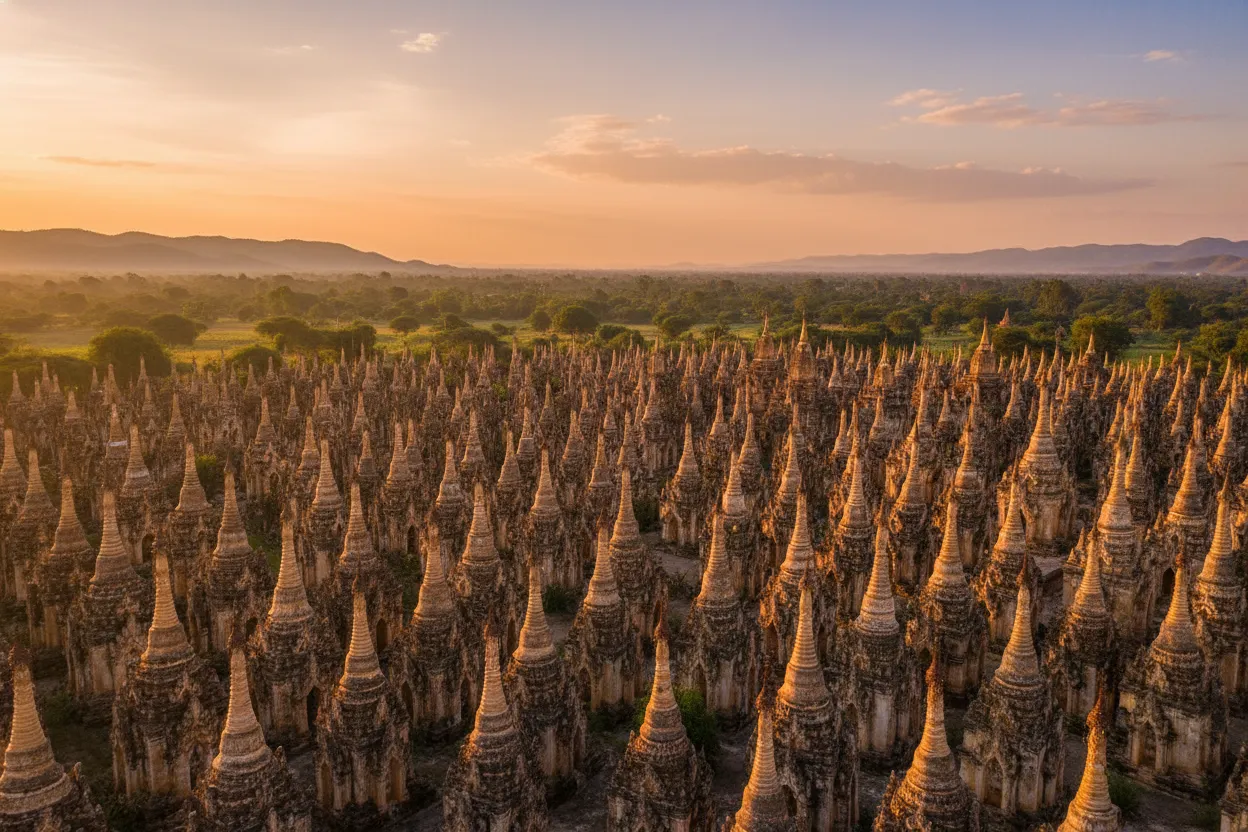
Imagine stumbling upon an ancient forest where instead of trees, thousands of slender, spire-like pagodas rise from the earth, each telling a silent story of centuries past. This isn't a dream, nor a scene from a fantasy novel; it's the breathtaking reality of the Kakku Pagoda Complex in Myanmar. Tucked away in the remote Shan State, Kakku is one of those rare, truly off-the-beaten-path destinations that profoundly changes your perception of beauty, history, and devotion. If you’ve ever yearned for a travel experience that feels like uncovering a forgotten wonder, let me tell you about a place that will absolutely steal your breath away.
What Makes Kakku Special: A Forest of Faith
Picture this: you round a bend in a dusty path, and suddenly, the landscape transforms. Before you, stretching as far as the eye can see, are over 2,478 stupas, densely packed together like an ancient, sacred cityscape. They vary in size, from towering spires reaching for the sky to smaller, more intimate structures, each one a unique testament to devotion. This isn't just a collection of pagodas; it's a living, breathing tapestry of faith, carved from stone and time, whispering tales of countless prayers and offerings.
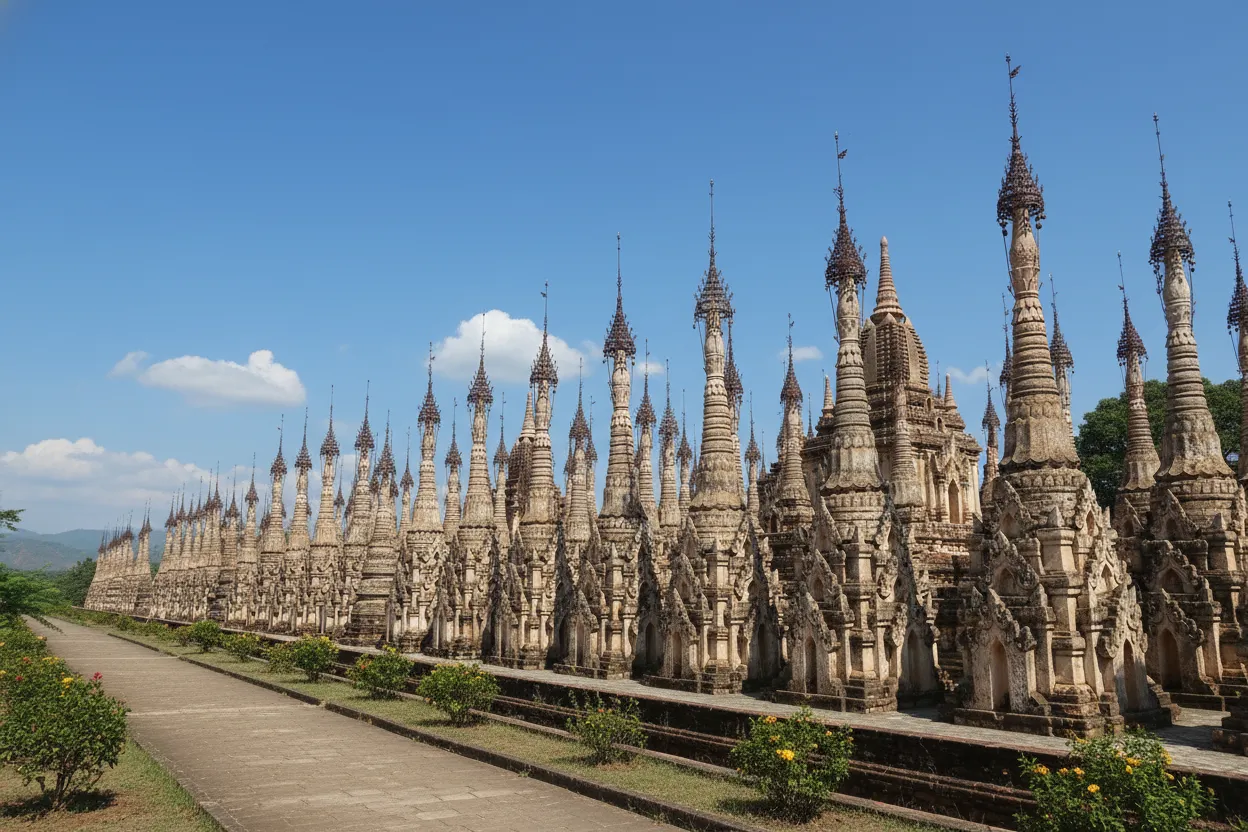
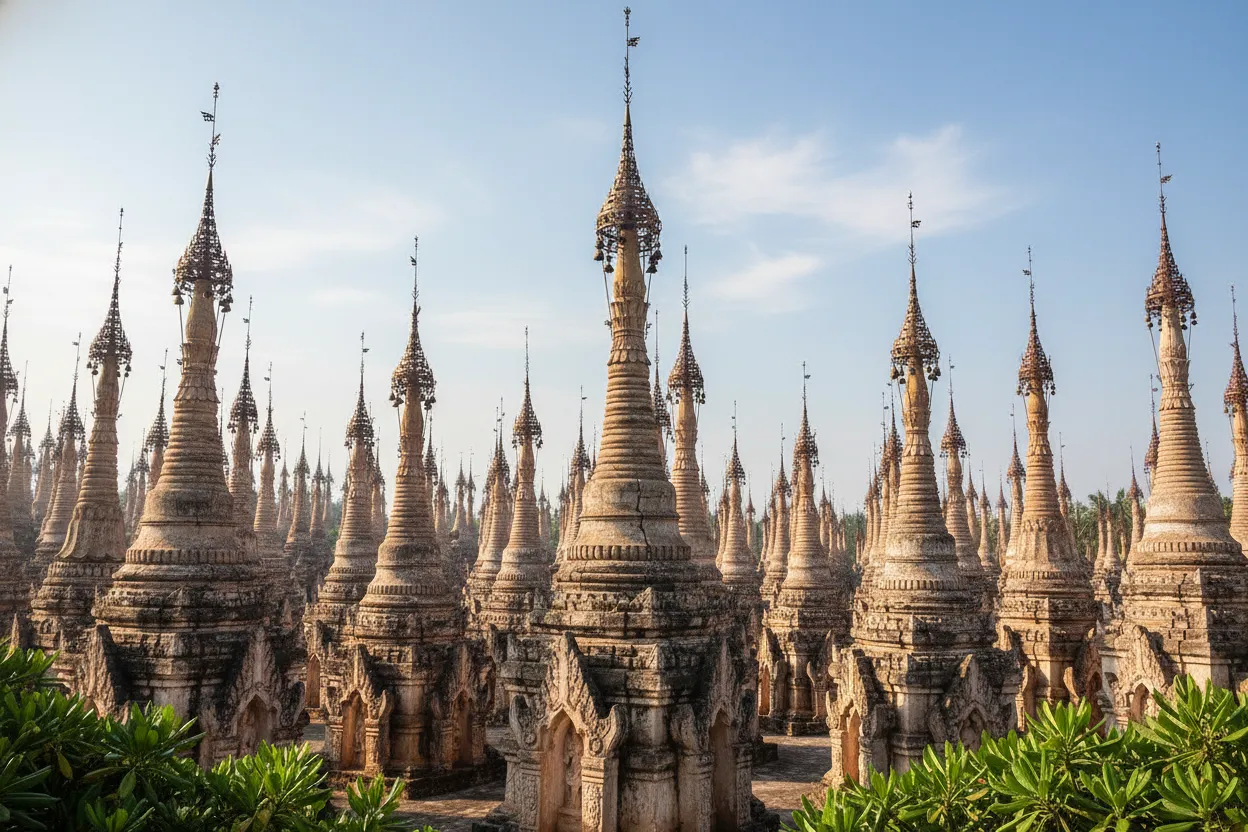
What truly sets Kakku apart is its sheer density and the uniformity of its design, primarily the Shan style, yet with enough individual variation to keep you mesmerized. Many of these pagodas are adorned with intricate stucco carvings, depicting mythical creatures, celestial beings, and scenes from Buddhist lore. As the gentle breeze sweeps through the complex, hundreds of tiny bells, fixed to the hiltis (the umbrella-like tops) of the stupas, chime in a harmonious, ethereal symphony. It’s a sound that resonates deep within your soul, a constant reminder of the spiritual energy that permeates this sacred ground.
Unlike more famous sites in Myanmar, Kakku remains largely untouched by mass tourism. Its remote location has preserved its pristine beauty and authentic atmosphere. Visiting Kakku feels less like a tourist excursion and more like a pilgrimage, an intimate encounter with history and spirituality. You won’t find throngs of people or souvenir hawkers on every corner; instead, you’ll find tranquility, space for reflection, and the quiet awe that comes from witnessing something truly extraordinary. It’s a hidden gem, waiting to be discovered by those willing to venture a little further off the well-trodden path.
Whispers of Time: Kakku's Ancient Roots
The history of Kakku is as captivating as its appearance, shrouded in a blend of legend and archaeological evidence. While most of the stupas visible today were renovated or rebuilt in the 17th and 18th centuries, local tradition and some historical records suggest the complex’s origins date back much further – possibly as early as the 3rd century BCE, during the reign of the Indian Emperor Ashoka, a great patron of Buddhism. It's believed that Emperor Ashoka sent missionaries to spread Buddhism throughout Southeast Asia, and Kakku may have been one of the sites where his influence took root.
Over centuries, the complex grew, maintained and expanded by the local Pa-O people, an ethnic group indigenous to the Shan State. The Pa-O consider Kakku to be one of their most sacred sites, a focal point of their spiritual and cultural identity. The 17th and 18th-century renovations were a massive undertaking, reflecting an era of profound Buddhist devotion and exceptional craftsmanship. Imagine the thousands of artisans, laborers, and devotees who contributed to this monumental project, each stupa a prayer solidified in stone, a testament to their unwavering faith and dedication to preserving their spiritual heritage.
Walking through Kakku, you’re not just observing ancient architecture; you’re stepping into a living timeline. Each stupa, with its unique details and varying states of preservation, tells a silent story of the hands that built it, the prayers offered before it, and the centuries that have passed over it. It’s a powerful reminder of the enduring legacy of Buddhism in Myanmar and the incredible human capacity for devotion and artistic expression.
Exploring the Sacred Spire-scape: What You'll See and Experience
Your visit to Kakku is an immersive experience. As you enter, you’ll likely be greeted by a sense of profound peace. The main path leads you directly into the heart of the complex, where the sheer number of stupas is almost overwhelming. Take your time. Wander along the narrow pathways that weave between the pagodas, allowing yourself to get lost in the intricate details. You'll discover stupas of different heights and widths, some perfectly preserved, others showing the gentle wear of centuries. Look closely at the bases and spires; many feature delicate stucco work, depicting mythical animals, floral motifs, and figures from Buddhist cosmology. Keep an ear out for the gentle tinkling of bells – a constant, soothing soundtrack to your exploration.
The central area often features larger, more elaborately decorated pagodas, standing as focal points amidst the dense forest of spires. You might find small altars where locals come to offer flowers, incense, and prayers. Observe these moments of quiet devotion; they are a beautiful insight into the enduring spiritual significance of Kakku. Don't rush through the experience. Find a quiet spot, sit for a moment, and simply absorb the atmosphere. The play of light and shadow across the pagodas throughout the day, especially during sunrise or sunset, creates an ever-changing spectacle that is truly magical.
Beyond the main complex, there's often a small market where local Pa-O people sell traditional crafts, textiles, and snacks. This is a wonderful opportunity to interact with the community, learn about their culture, and perhaps pick up a unique souvenir. You might also find a small monastery or a cave temple nearby, offering further glimpses into the local religious practices. The surrounding landscape, often lush and green, provides a beautiful contrast to the golden and brick-red hues of the pagodas, making for incredible photographic opportunities.
Your Journey to Kakku: Practical Tips for a Seamless Visit
Venturing to Kakku requires a little planning, but trust me, the reward is immeasurable. Its remoteness is part of its charm and preservation.
Getting There
Kakku is located about 25-30 miles south of Taunggyi, the capital of Shan State. The most common way to visit is as a day trip from Nyaungshwe, the main town for exploring Inle Lake. You'll need to hire a private car and driver, and it's mandatory to travel with a local Pa-O guide. This is not just a rule; it's a wonderful opportunity to learn about the Pa-O culture and the history of Kakku from a local perspective. The drive itself is scenic, winding through rolling hills and traditional villages, offering glimpses into rural Myanmar life. The entire round trip from Nyaungshwe can take 6-8 hours, including travel time and exploration.
Best Time to Visit
The dry season, from October to March, is ideal. The weather is cooler and more pleasant, making it comfortable for exploring. Avoid the peak of the hot season (April-May) and the rainy season (June-September), as heavy rains can make roads difficult and obscure views.
What to Bring & Wear
- Comfortable Walking Shoes: You'll be doing a fair bit of walking on uneven ground.
- Sun Protection: Hat, sunglasses, and sunscreen are essential, especially during the dry season.
- Respectful Clothing: As a sacred site, shoulders and knees should be covered. Lightweight, breathable long pants or skirts and shirts are perfect.
- Camera: You'll want to capture the incredible beauty of Kakku, but remember to be respectful when photographing people.
- Water & Snacks: While there might be small local stalls, it's always good to have your own provisions.
Etiquette & Fees
Entry to the Kakku complex typically requires a small fee. Your Pa-O guide will usually handle this. Remember to remove your shoes and socks when entering any sacred areas (your guide will advise you). Always ask for permission before taking photos of people, especially monks or local villagers. A genuine smile and a "Mingalabar" (hello in Burmese) go a long way.
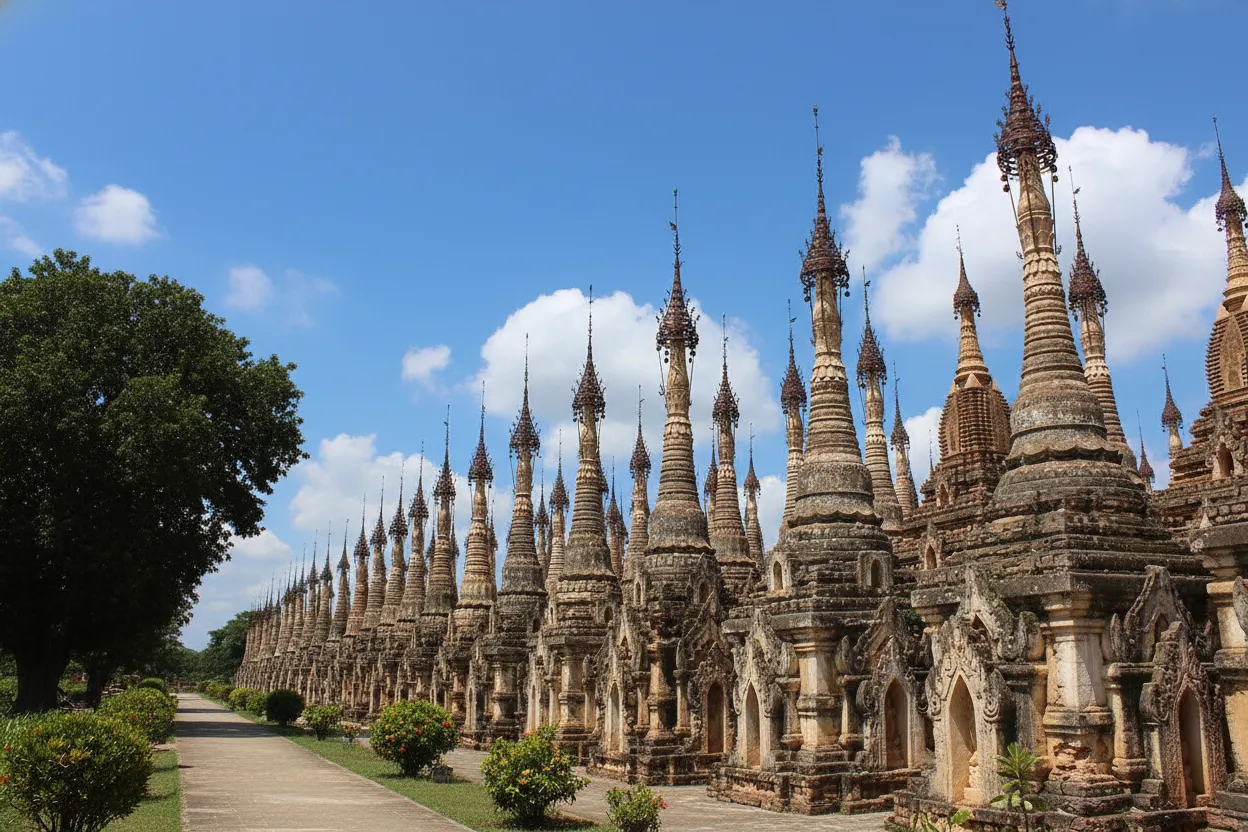
Kakku is more than just a collection of ancient structures; it's an experience that connects you to centuries of faith, culture, and natural beauty. It’s a journey that rewards the curious and the adventurous, leaving an indelible mark on your memory. If you’re seeking a destination that truly feels like uncovering a secret, a place where history whispers from every spire, then pack your bags and set your sights on the magnificent, awe-inspiring Kakku Pagoda Complex. It's an unforgettable chapter waiting to be written in your travel story.
Essential Travel Information
- Location Kakku Pagoda Complex, Myanmar
- Best Time October to March (dry season)
- Getting There Typically a day trip from Nyaungshwe (Inle Lake) by hired private car with a mandatory local Pa-O guide.
- Airport Heho Airport (HEH)
- Budget Mid-range (due to private car and guide costs; approx. $80-120 USD per person for the day trip including transport, guide, and fees, not including accommodation/food in Nyaungshwe)
- Language Burmese, Pa-O
Find Places to Stay Near Kakku Pagoda Complex
Compare hotels, hostels, and unique stays in Myanmar.
Search AccommodationTours & Experiences Near Kakku Pagoda Complex
Book guided tours, day trips, and unique experiences.
Browse Tours