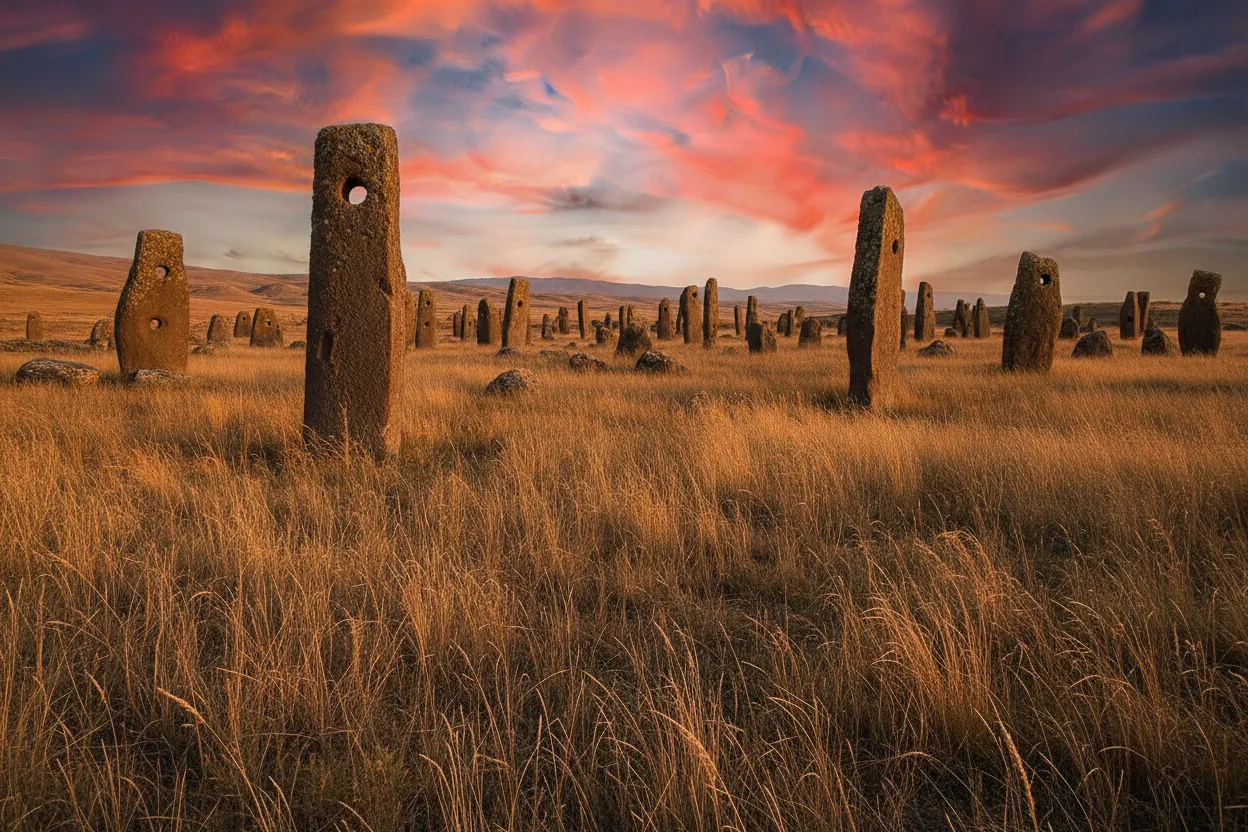
Imagine standing on a windswept plateau, surrounded by a silent army of ancient stones, each one whispering tales of a civilization that gazed at the cosmos with profound wisdom. Now, imagine this place is older than Stonehenge, shrouded in celestial mystery, and boasts standing stones pierced with enigmatic holes, precisely aligned to track the movements of long-vanished stars. Welcome, my friend, to Karahunj Observatory – or Zorats Karer, as it’s also known – a breathtaking, mind-bending journey into Armenia’s prehistoric past, nestled in the rugged, beautiful Syunik Province. If you thought you knew ancient wonders, prepare to have your perception of history, astronomy, and human ingenuity completely rewritten.
What Makes Karahunj So Special?
Karahunj isn't just a collection of old rocks; it's a monumental puzzle, a prehistoric observatory that predates its more famous British cousin, Stonehenge, by as much as 3,500 years. That's right – while the earliest structures at Stonehenge date back to around 3000 BCE, evidence suggests Karahunj's origins could stretch as far back as 5500 BCE. This incredible antiquity alone sets it apart, but it's the sheer astronomical sophistication that truly elevates Karahunj into a league of its own.
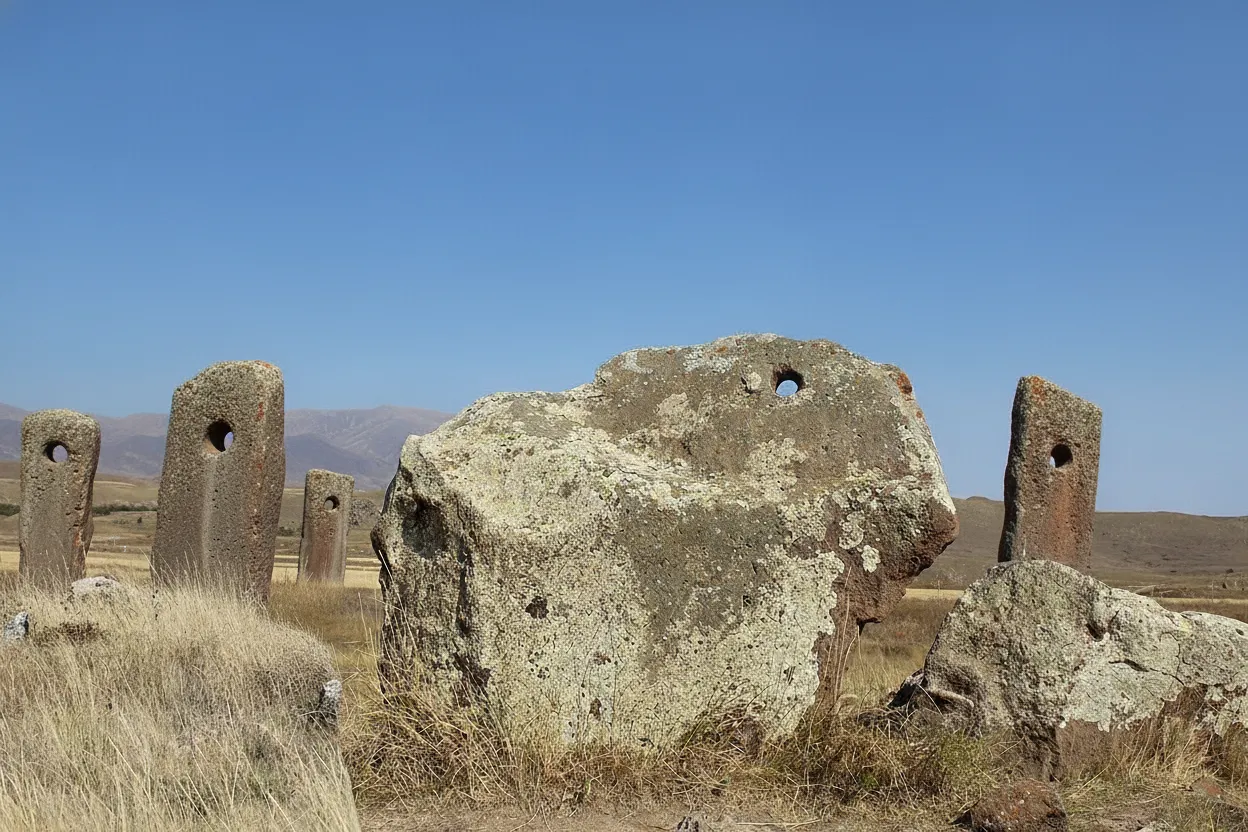
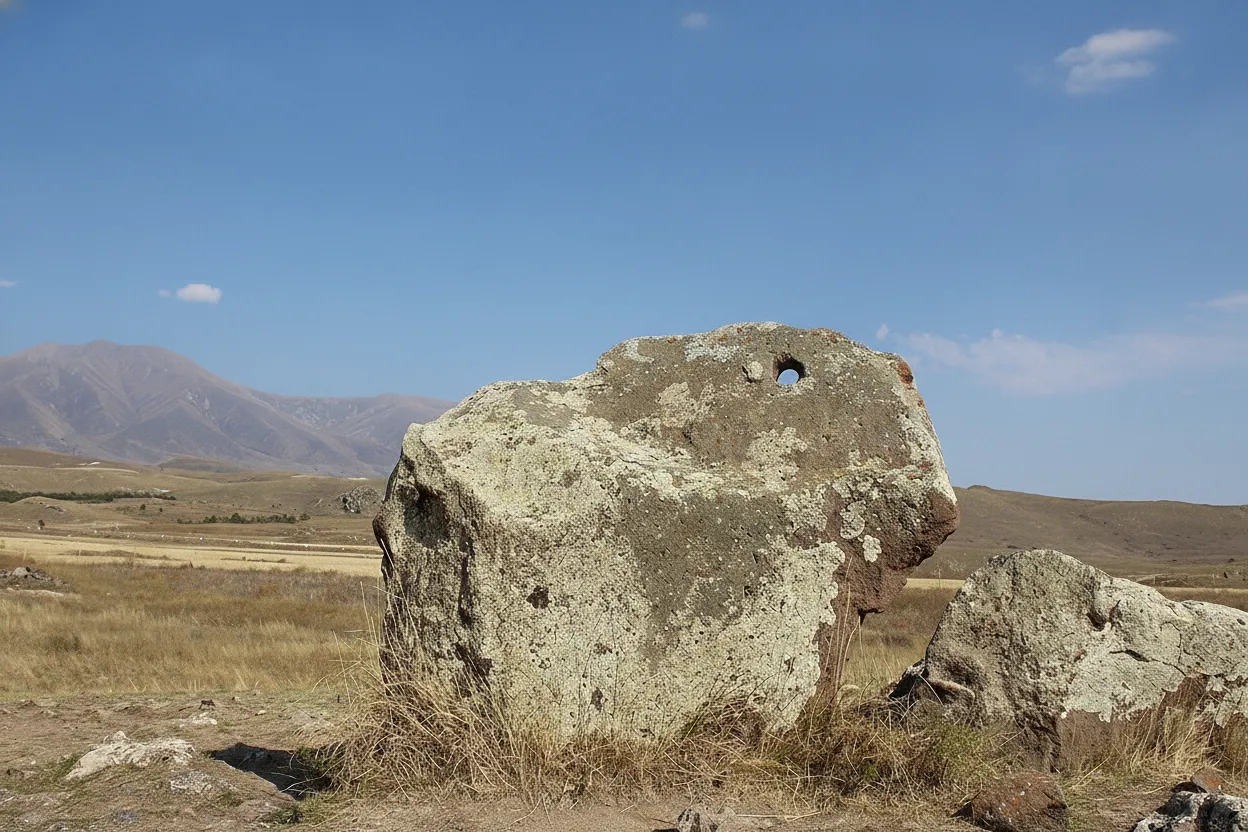
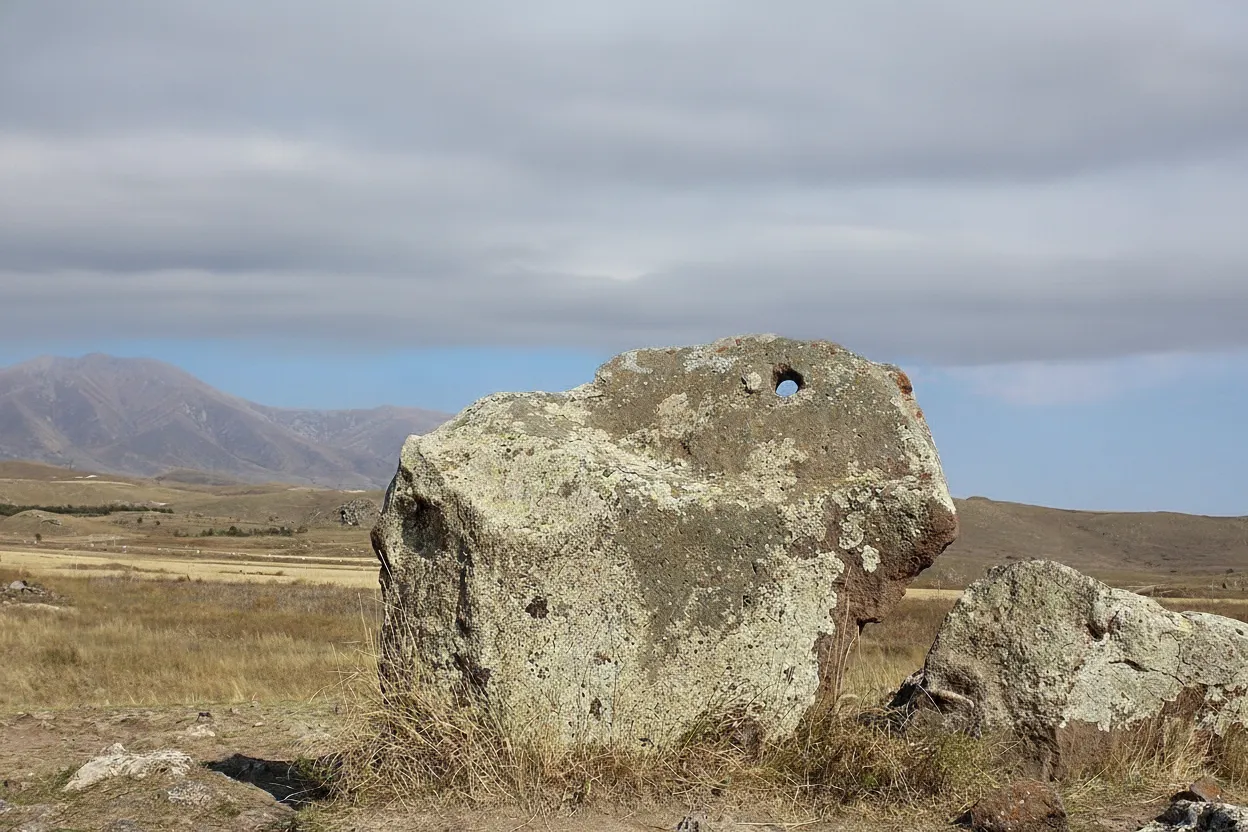
Scattered across a vast, windswept plateau, over 200 colossal basalt stones stand sentinel. Many of these monoliths, some towering up to ten feet tall, feature precisely drilled, smooth-sided holes, typically about two inches in diameter. These aren't random imperfections; they are deliberate, meticulously crafted apertures. Imagine a prehistoric astronomer, eye pressed against one of these ancient scopes, tracking the rise and set of constellations, marking solstices and equinoxes, and perhaps even predicting celestial events. The sheer precision required to drill these holes with primitive tools, and their alignment with specific stars and cosmic phenomena, speaks volumes about the advanced knowledge of the people who built this place.
The debate among archaeologists and archaeoastronomers rages on: was it primarily a sophisticated observatory, a sacred burial ground, a ritualistic site, or perhaps a combination of all three? This captivating enigma is precisely what makes Karahunj so compelling. It's a place where science, spirituality, and history intertwine, leaving you with more questions than answers, and an insatiable desire to uncover its secrets.
Whispers from the Past: The History and Mystery of Karahunj
The name "Karahunj" itself is steeped in ancient Armenian. "Kar" means stone, and "hunj" or "khunj" is believed to be derived from "punj," meaning a bundle or collection, or perhaps "hunch," meaning sound or voice – suggesting "speaking stones." The alternative name, "Zorats Karer," translates to "Warrior Stones" or "Stones of Power," hinting at its possible use as a necropolis or a site of great significance for ancient warriors.
While the exact dates are still debated, archaeological findings, including ancient pottery and burial chambers discovered beneath some of the stones, suggest continuous use from the Bronze Age through to the Iron Age. However, the astronomical alignments point to an even earlier origin, pushing its timeline back to the Chalcolithic or Neolithic periods. This makes Karahunj one of the oldest known observatories in the world, a testament to humanity's enduring fascination with the night sky.
Prominent Armenian astrophysicist Paris Herouni dedicated years to studying Karahunj, concluding that it was indeed a sophisticated observatory. His research, involving precise measurements and astronomical calculations, indicated alignments with the sun, moon, and key stars like Sirius and the Pleiades. He even proposed it was used to determine the exact time for agricultural activities and religious ceremonies, serving as a vital calendar for an agrarian society.
But the mystery doesn't end there. Some theories suggest a connection to other ancient megalithic sites across Europe, hinting at a shared astronomical understanding or even cultural exchange in a distant past. Others speculate about its role in ancient Armenian mythology, perhaps as a place where the gods descended, or where the souls of the departed journeyed to the stars. Standing amidst these ancient sentinels, you can almost hear the echoes of ancient rituals, the murmurs of cosmic wisdom passed down through millennia.
Exploring the Stones: What You'll See at Zorats Karer
A visit to Karahunj is less about structured exhibits and more about immersive exploration. The site is largely untouched, allowing you to wander freely among the stones, feeling the raw, untamed spirit of history. As you approach, the sheer scale of the landscape is awe-inspiring: a vast, windswept plateau, often dotted with grazing sheep, with the magnificent basalt stones rising like silent guardians against the backdrop of distant mountains.
You'll spend your time walking among the more than 200 stones, many of which are arranged in a rough circular or oval pattern, with avenues and pathways. Look closely at the stones; you'll find the distinct, precisely drilled holes that are the hallmark of Karahunj. Try to imagine how these holes were made, and what the ancient observers saw through them. Some stones stand alone, others form small clusters, and a central alignment of stones is thought to be the primary observational area.
Beyond the stones themselves, take a moment to absorb the atmosphere. The silence is profound, broken only by the wind whistling through the rocks or the distant bleating of sheep. This is a place that demands contemplation, where you can truly feel connected to the distant past and the vastness of the cosmos. It’s a photographer’s dream, especially during sunrise or sunset when the low light casts long shadows and imbues the stones with an almost mystical glow. The sheer rugged beauty of the Syunik landscape is a bonus, offering panoramic views that stretch for miles.
Planning Your Celestial Journey: Practical Tips for Visiting Karahunj
Visiting Karahunj is an adventure that requires a bit of planning, but the rewards are immeasurable.
Best Time to Visit:
The ideal times are late Spring (May-June) and early Autumn (September-October). During these months, the weather is mild and pleasant, skies are often clear, and the surrounding landscape is vibrant. Summer (July-August) can be quite hot on the exposed plateau, while winter (November-April) brings snow and challenging conditions, although a snowy Karahunj has its own stark beauty for the truly adventurous.
How to Get There:
Karahunj is located near the town of Sisian in the Syunik Province, approximately 200 kilometers (about 125 miles) south of Yerevan. The easiest way to get there is by hiring a private driver or renting a car. The drive from Yerevan takes about 3-4 hours and is incredibly scenic, passing through mountains, valleys, and charming Armenian villages. Public transport options are limited and often require multiple transfers, making a direct car journey the most practical.
What to Bring:
- Comfortable walking shoes: You'll be walking on uneven terrain.
- Layers of clothing: The weather on the plateau can change quickly, and it can be windy even on a sunny day.
- Sun protection: Hat, sunglasses, and sunscreen are essential, as there's little shade.
- Water and snacks: There are no facilities directly at the site.
- Camera: You'll want to capture the incredible views and mysterious stones.
- Binoculars (optional): For birdwatching or spotting distant details.
Facilities and Accessibility:
Karahunj is an open-air, undeveloped site. There are no visitor centers, restrooms, or shops directly on the plateau. Access is free. The terrain is uneven, so it may not be suitable for those with significant mobility challenges. Embrace the raw, natural feel of the place – it’s part of its charm!
Nearby Attractions:
Combine your visit to Karahunj with other wonders of Syunik. The stunning Tatev Monastery, accessible via the "Wings of Tatev" – the world's longest reversible aerial tramway – is a must-see. The ancient cave village of Khndzoresk, the hot springs of Jermuk, and the majestic Vorotan Gorge are all within reasonable driving distance, making Syunik a treasure trove for explorers.
Karahunj Observatory is more than just an archaeological site; it's a profound experience, a journey back in time to an era when humanity's connection to the cosmos was perhaps more immediate and deeply understood. It's a place that humbles you, inspires you, and leaves you with a lasting sense of wonder. So, if you're seeking a truly unique adventure, a destination that challenges conventional history and invites you to ponder the mysteries of the universe, pack your bags and set your sights on the ancient speaking stones of Armenia. You won't regret it.
Essential Travel Information
- Location Karahunj Observatory (Zorats Karer), Armenia
- Best Time Late Spring (May-June) and early Autumn (September-October)
- Getting There Best reached by private car or rental from Yerevan (approx. 3-4 hour drive) to Sisian, Syunik Province.
- Airport Zvartnots International Airport (EVN), Yerevan
- Budget Mid-range (approx. $50-100 USD daily for accommodation, food, local transport)
- Language Armenian, Russian, English (in tourist areas)
Find Places to Stay Near Karahunj Observatory (Zorats Karer)
Compare hotels, hostels, and unique stays in Armenia.
Search AccommodationTours & Experiences Near Karahunj Observatory (Zorats Karer)
Book guided tours, day trips, and unique experiences.
Browse Tours