The Legend of the Kabbas: Why Rats are Sacred Here
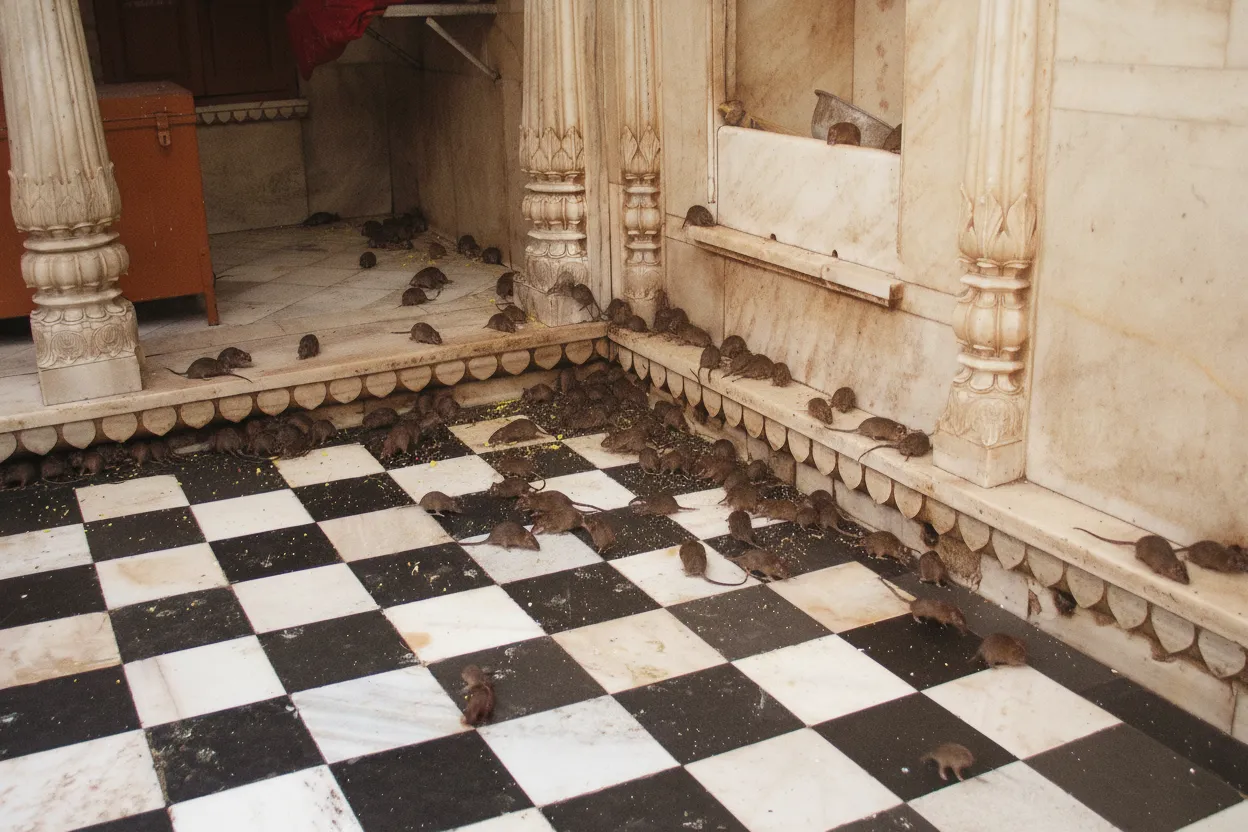
The story of Karni Mata Temple is steeped in local folklore and ancient legends, forming the very foundation of this extraordinary tradition. Karni Mata herself was a 14th-century female Hindu sage, revered as an incarnation of the warrior goddess Durga. She was a powerful mystic, known for her miracles and her devotion to her community, eventually becoming the patron deity of the royal families of Bikaner and Jodhpur. The most famous legend connected to the temple’s sacred rats tells of a time when Karni Mata’s stepson, Laxman, drowned in a pond while attempting to drink from it. Distraught, Karni Mata, with her immense spiritual power, implored Yama, the god of death, to restore his life. Yama, initially reluctant to break the natural cycle of life and death, eventually relented, but with a unique twist: Laxman and all of Karni Mata’s male descendants would be reincarnated as rats, the 'kabbas,' in her temple. When they died as rats, they would then be reborn as humans in her lineage, completing a cyclical journey of devotion and rebirth. This extraordinary pact explains why the rats are not only protected but cherished. They are not just animals; they are believed to represent the living souls of devotees and Karni Mata’s own kin, awaiting their next human incarnation. To harm a 'kabba' is considered a grave sin, equivalent to harming a human devotee. Over centuries, this devotion grew, leading to the construction of the magnificent temple we see today. The current structure, with its intricate marble work and grand facade, was largely built in the early 20th century by Maharaja Ganga Singh of Bikaner, adding to the grandeur and making it a significant pilgrimage site for followers of Karni Mata and curious travelers alike.A Bizarre and Beautiful Spectacle: What You'll See and Experience
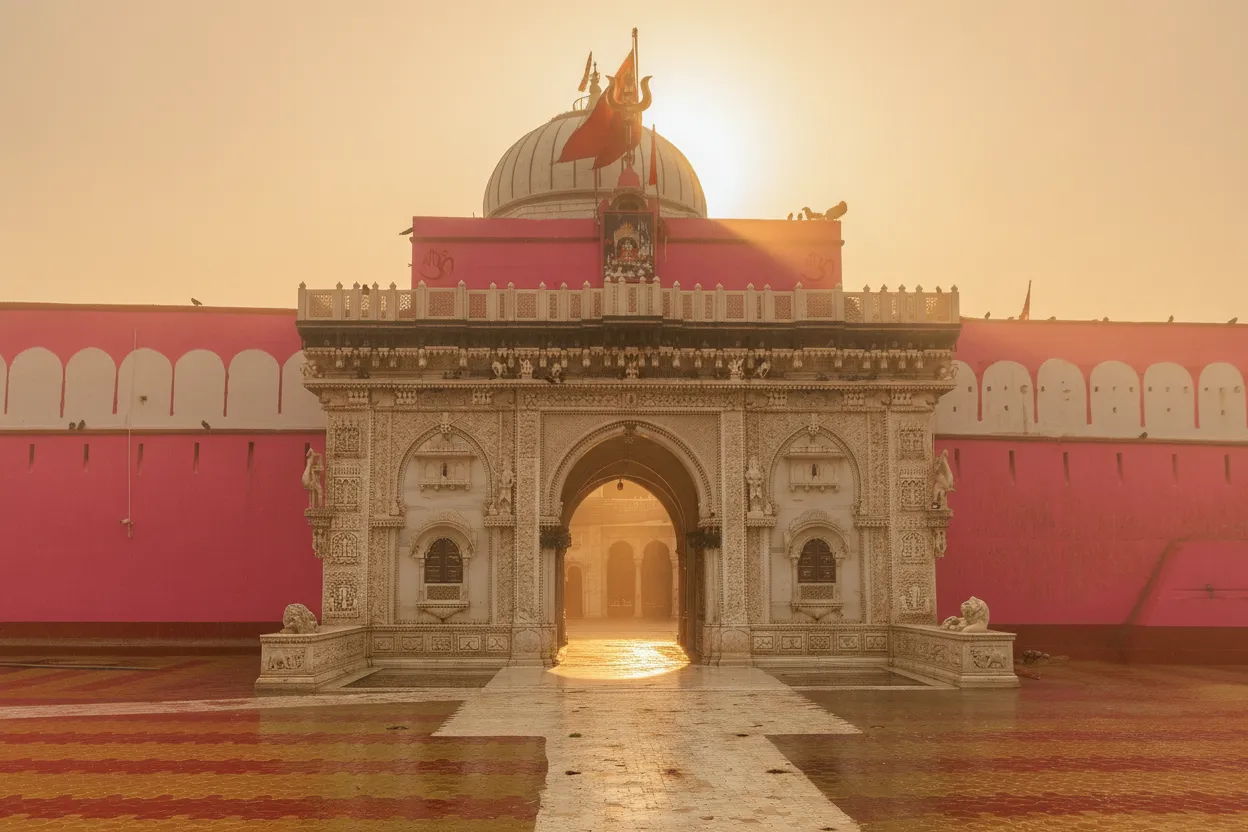
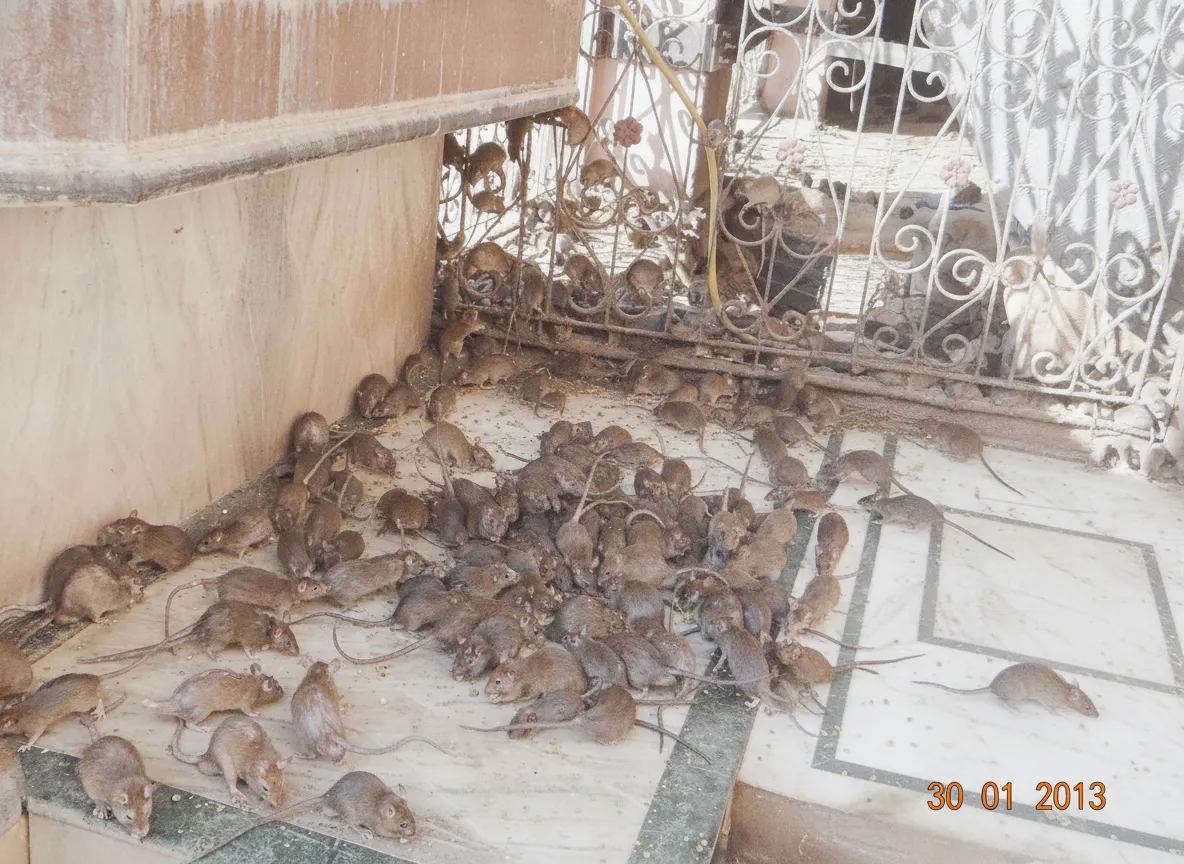
As you approach the Karni Mata Temple, the first thing you notice is the intricate marble facade, a beautiful example of Rajasthani architecture, often bustling with pilgrims and local vendors. But it’s inside the temple walls that the real wonder begins. Stepping barefoot onto the cool marble floor – a customary sign of respect in Indian temples – you are immediately immersed in a world teeming with life. Thousands of 'kabbas' scurry across the floor, climb the walls, and even perch on ledges, completely unafraid of human presence. Devotees move calmly among them, offering milk, grains, and sweets in large metal bowls, which the rats eagerly consume. It’s a surreal ballet of human and rodent, performed daily with unwavering reverence. The air hums with a unique energy – a blend of devotion, curiosity, and perhaps a touch of awe at the sheer spectacle. Children laugh, pilgrims pray, and the 'kabbas' go about their sacred business, creating a truly unforgettable cultural immersion.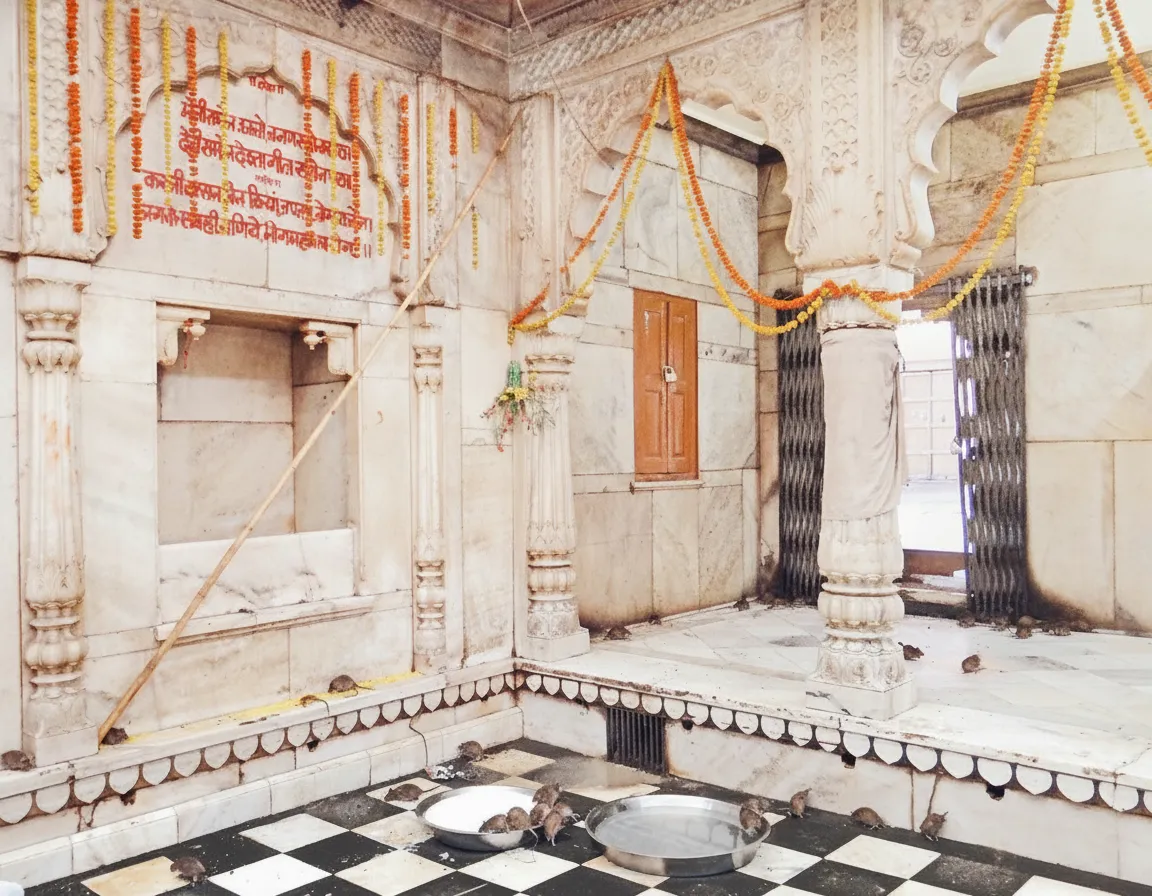 The temple itself is a feast for the eyes, with beautifully carved silver doors, an ornate inner sanctum dedicated to Karni Mata, and the constant, gentle patter of tiny feet. You’ll see families sharing their prasad (sacred food offerings) with the rats, believing that eating food touched by a 'kabba' brings immense blessings. The atmosphere is surprisingly clean, thanks to the continuous efforts of temple staff and devotees.
One of the most sought-after sights is finding a white rat among the thousands of black ones. These rare white 'kabbas' are considered especially auspicious – a sighting believed to bring immense good fortune, as they are thought to be Karni Mata herself or her closest descendants in rat form. Spotting one is a moment of quiet excitement and reverence for pilgrims.
 The sheer audacity of the devotion here is what truly captivates. In a world that often shies away from rodents, this temple embraces them as sacred manifestations of divinity. It challenges your preconceived notions of what is holy, what is beautiful, and what is worthy of reverence. It’s a profound reminder of the boundless diversity of human faith and the unique ways in which cultures connect with the spiritual realm.
Practical Tips for Your Karni Mata Temple Visit
Ready to embrace this extraordinary adventure? Here are a few tips to make your visit to Karni Mata Temple as smooth and memorable as possible:Best Time to Visit
The best time to visit Rajasthan, and consequently Karni Mata Temple, is during the cooler months, from **October to March**. The weather is pleasantly warm during the day and cool in the evenings, making it comfortable to explore. Summers (April to June) can be scorching, with temperatures often exceeding 40°C (104°F), and the monsoon season (July to September) brings humidity, though the rain can also add a unique freshness to the landscape. Early mornings or late afternoons are ideal for visiting the temple itself, as the light is softer, and the temple atmosphere is often more serene with fewer crowds.
How to Get There
Karni Mata Temple is located in Deshnoke, approximately 30 kilometers south of Bikaner, a major city in Rajasthan. Bikaner is well-connected by road and rail to other major Rajasthani cities like Jodhpur, Jaipur, and Udaipur. From Bikaner, you can easily hire a taxi, auto-rickshaw (tuk-tuk), or take a local bus to Deshnoke. The journey is straightforward and takes about 45 minutes to an hour, offering glimpses of rural Rajasthani life along the way.
Temple Etiquette and What to Expect
- **Barefoot Entry:** Like most Indian temples, you'll need to remove your shoes before entering the main temple complex. There are shoe-keeping facilities available, often for a small fee or donation. Consider bringing a pair of thick socks if you're sensitive to walking barefoot, especially on potentially dusty or uneven surfaces, though the marble inside is generally clean.
- **Respect the Kabbas:** Remember, these are revered creatures. Do not intentionally harm, step on, or disturb the rats. Watch where you step, but don't be overly fearful; they are accustomed to human presence and generally ignore visitors, going about their sacred business.
- **Offerings:** If you wish to make an offering, you can buy sweets, milk, or grains from vendors outside the temple. It’s a beautiful way to participate in the local custom and show respect.
- **Photography:** Photography is generally permitted, but always be respectful and discreet, especially in the inner sanctum. Flash photography might be discouraged or prohibited in certain areas.
- **Hygiene:** While the temple is surprisingly clean given its inhabitants, it's wise to carry hand sanitizer for use after your visit, especially before eating.
- **Dress Code:** Dress modestly, covering shoulders and knees, as is customary for religious sites in India. Light, breathable clothing is recommended due to the climate.
Beyond the Temple
While Karni Mata Temple is undoubtedly the main draw in Deshnoke, Bikaner itself offers a wealth of attractions that make it a worthwhile stop on any Rajasthan itinerary. Explore the magnificent Junagarh Fort, a colossal structure that houses palaces, temples, and pavilions. Visit the National Research Centre on Camels to learn about these "ships of the desert," or wander through the bustling old city markets, known for their colorful textiles, handicrafts, and delicious street food. Bikaner is also famous for its sweets and savories, especially its Bikaneri Bhujia, so be sure to indulge your taste buds!
Why Karni Mata Temple is a Must-Visit
In a world increasingly homogenized by global travel trends, Karni Mata Temple stands out as a beacon of unique cultural identity. It challenges perceptions, invites introspection, and offers a glimpse into a belief system that is both ancient and vibrantly alive. It's not just a place to see; it's a place to *experience* – to feel the pulse of devotion, to witness the extraordinary in the mundane, and to leave with a story so incredible, your friends back home might just think you made it up. So, if you're seeking a travel experience that pushes boundaries and expands your understanding of spirituality, pack your bags and prepare to be utterly enchanted by the sacred rats of Deshnoke. You won't regret diving into this truly hidden gem of Rajasthan, a journey that promises to be as bizarre as it is beautiful.
Essential Travel Information
- Location Karni Mata Temple, India
- Best Time October to March
- Getting There Located in Deshnoke, 30 km south of Bikaner. Accessible by taxi, auto-rickshaw, or local bus from Bikaner, which is well-connected by road and rail to major Rajasthani cities.
- Airport Bikaner Airport (BKB) for domestic flights; Jodhpur Airport (JDH) or Jaipur International Airport (JAI) for international connections, followed by road/rail to Bikaner.
- Budget Budget to Mid-range (approx. $30-70 USD/day for accommodation, food, local transport, and temple entry/donations)
- Language Hindi, Marwari
Find Places to Stay Near Karni Mata Temple
Compare hotels, hostels, and unique stays in India.
Search AccommodationTours & Experiences Near Karni Mata Temple
Book guided tours, day trips, and unique experiences.
Browse Tours