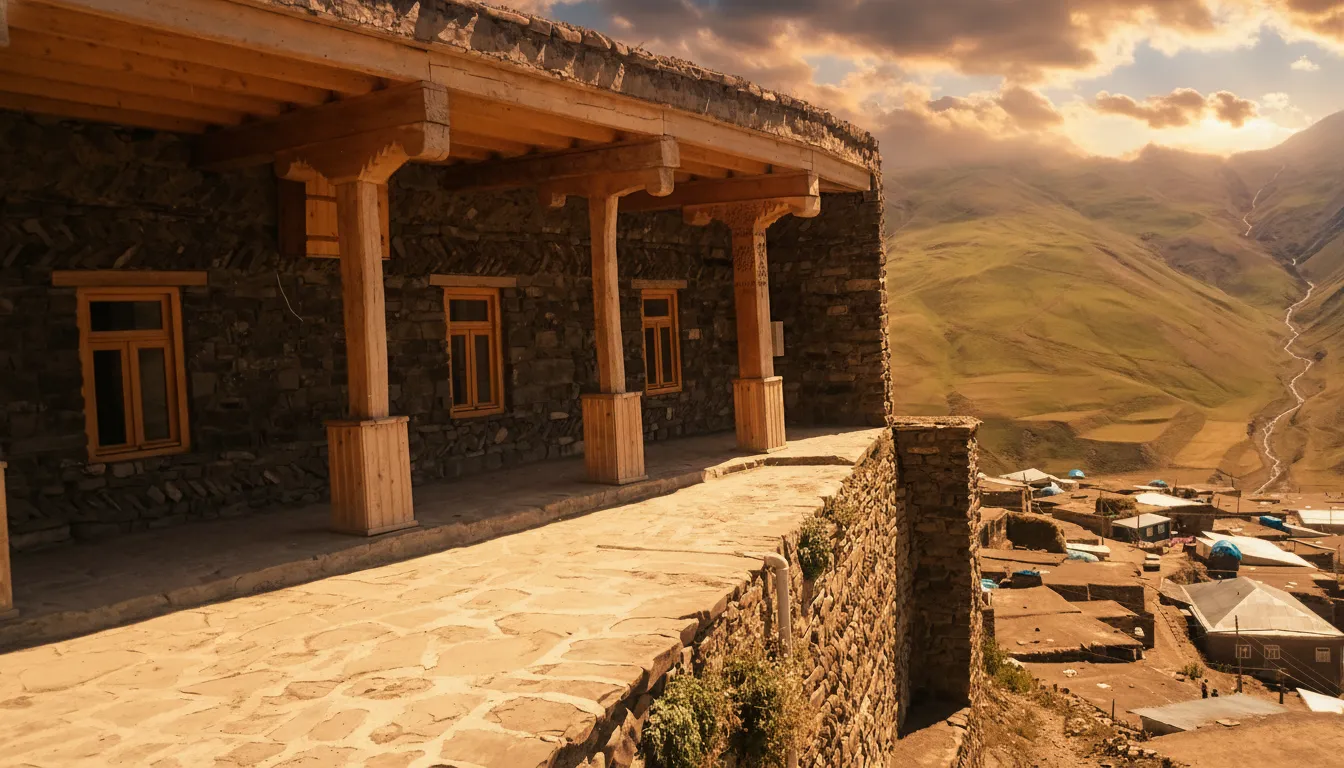
What Makes Khinalug So Special?
Khinalug isn't just a village; it's a testament to human resilience and cultural preservation. What truly sets it apart is its status as Europe's highest, most remote, and profoundly isolated settlement. Located at an astounding altitude of over 2,300 meters (7,500 feet), clinging precariously to the steep slopes of the Greater Caucasus, it feels like a fortress against the modern world. But its isolation is more than geographical; it's cultural.
Khinalug is home to the Khinalug people, a distinct ethnic group with a heritage stretching back millennia. Their most astonishing feature? The Khinalug language. This isn't just a dialect; it's an unwritten, unclassified language, unrelated to any other known tongue on Earth. Imagine a linguistic island, completely cut off from the currents of surrounding languages, preserving sounds and structures that offer a priceless glimpse into ancient Caucasian linguistics. To hear it spoken is to witness a living fossil, a direct echo from an unimaginably distant past. This linguistic uniqueness, coupled with their ancient traditions, crafts, and way of life, makes Khinalug an unparalleled destination for cultural anthropologists and curious travelers alike.
Beyond its people and language, the village itself is a sight to behold. Its stone houses, built from local river stones and mud, appear to be stacked one on top of the other, forming a dramatic, organic cascade down the mountainside. Each flat roof often serves as a courtyard or terrace for the house above, creating a multi-tiered architectural marvel that blends seamlessly with the rugged landscape. This ingenious construction isn't just aesthetically striking; it's a practical response to the harsh mountain environment, offering warmth and protection for generations. The air here is crisp, the silence profound, broken only by the bleating of sheep or the distant call of a shepherd, while breathtaking panoramic views of the surrounding snow-capped peaks and verdant valleys stretch as far as the eye can see.

A Glimpse into Millennia: History and Background
The history of Khinalug is as old and rugged as the mountains it inhabits. Archaeological evidence suggests continuous habitation in this area for over 5,000 years, making it one of the oldest continuously inhabited places in Azerbaijan, and possibly Europe. The Khinalug people are believed to be direct descendants of the ancient Caucasian Albanians, a confederation of tribes that inhabited the region in antiquity. Their persistent isolation, largely due to the formidable natural barriers of the Caucasus, has been the key to their incredible cultural and linguistic preservation.
For centuries, Khinalug remained largely untouched by the ebb and flow of empires and civilizations that swept through the lower lands. While trade routes like the Silk Road crisscrossed Azerbaijan, Khinalug remained a world apart, its inhabitants living a self-sufficient, pastoral existence. They developed their own unique customs, beliefs, and a deep connection to the land and their ancestors. Their unwritten language meant that traditions were passed down orally, reinforcing community bonds and a collective memory that spans generations. This isolation, while challenging, became their greatest protector, shielding them from external influences and allowing their ancient way of life to flourish.
Even today, despite modern advancements slowly making their way into the region, Khinalug retains a profound sense of its past. The Khinalug people are proud custodians of their heritage, eager to share their story with respectful visitors. Their ancient belief systems, which blend elements of pre-Islamic animism with a unique form of Islam, are still evident in their daily lives and rituals. Visiting Khinalug is not just seeing history; it's experiencing it, walking through the very footsteps of those who have sustained this remarkable culture for millennia.
What You'll See and Experience There
A journey to Khinalug is an immersion into a different reality. Upon arrival, the first thing that strikes you is the village's extraordinary architecture. The houses, crafted from flat stones without mortar, are a marvel of traditional engineering. Wander through the narrow, winding alleys, which often pass under or over houses, creating a labyrinthine charm. You'll notice ancient petroglyphs carved into some of the older stones, silent witnesses to countless generations.
Life here moves at a different pace. You'll observe shepherds tending their flocks, women weaving intricate carpets with traditional patterns, and men engaged in age-old crafts. The villagers, often dressed in traditional attire, are incredibly hospitable, their faces etched with the wisdom of the mountains. Don't be surprised if you're invited for a cup of tea, a chance to connect with people who embody centuries of tradition. The small, unassuming local museum offers a deeper dive into their history, displaying ancient tools, clothing, and artifacts.

Beyond the village, the natural landscape is breathtaking. Khinalug serves as an excellent base for hiking and trekking enthusiasts. Numerous trails lead into the surrounding valleys and up to higher peaks, offering unparalleled views of the Caucasus range. In spring and summer, the mountains burst with wildflowers, creating a vibrant tapestry against the rugged terrain. Keep an eye out for local wildlife, including various bird species and perhaps even mountain goats. The air is pure, the vistas endless, and the sense of being truly "away from it all" is profound.
One of the most profound experiences is simply observing the daily rhythm of life. The villagers' connection to nature and their community is palpable. You'll see children playing in the same ancient alleys their ancestors did, hear the unique cadence of the Khinalug language, and feel the quiet strength of a community that has thrived against all odds. It’s a place that invites contemplation, challenging you to rethink what it means to live in harmony with both nature and history.

Practical Tips for Your Khinalug Adventure
Embarking on a journey to Khinalug requires a bit of planning, but the rewards are immeasurable.
Best Time to Visit: The ideal time is from late May to early October. During these months, the mountain roads are generally clear of snow, making access easier, and the weather is pleasant for exploring and hiking. Winters are extremely harsh, with heavy snow often cutting off the village for extended periods.
How to Get There: Khinalug is accessed via a challenging, unpaved mountain road from the city of Quba. This journey requires a sturdy 4x4 vehicle and an experienced driver. Many travelers arrange a private driver or join a tour from Baku or Quba. The drive itself is an adventure, offering stunning scenery but requiring patience.
Accommodation: There are no hotels in Khinalug. Accommodation is exclusively in local guesthouses or homestays. These offer a unique opportunity to experience Khinalug hospitality firsthand. Expect basic but comfortable facilities, often including traditional meals cooked by your hosts. Booking in advance, especially through your driver or a local tour operator, is highly recommended.
Food: Meals in Khinalug are simple, hearty, and delicious, often featuring local produce, freshly baked bread, dairy products, and lamb. Don't expect a wide variety, but what you get will be authentic and nourishing.
What to Bring:
- Warm Layers: Even in summer, mountain weather can change rapidly.
- Sturdy Hiking Boots: Essential for navigating the village's uneven terrain and for any hikes.
- Cash: There are no ATMs in Khinalug. Bring enough Azerbaijani Manat for your stay.
- Basic First Aid Kit: For minor scrapes or ailments.
- Water Bottle: Stay hydrated, though fresh spring water is usually available.
- Respectful Clothing: Modest attire is appreciated in this traditional community.
Respecting Local Culture: The Khinalug people are welcoming, but it's important to be respectful. Always ask permission before taking photos of people. Learn a few basic Azerbaijani phrases (like "salam" for hello and "sağ ol" for thank you) – it goes a long way. Remember, you are a guest in their ancient home.
A journey to Khinalug is more than just a trip; it's an expedition into the heart of a living legend. It's a chance to disconnect from the digital world and reconnect with something profoundly ancient and authentic. If you're seeking an adventure that will broaden your horizons and leave an indelible mark on your soul, Khinalug awaits, ready to reveal its timeless secrets.
Essential Travel Information
- Location Khinalug (Xınalıq), Azerbaijan
- Best Time Late May to early October
- Getting There From Quba by 4x4 vehicle (private driver or tour recommended). Road is challenging.
- Airport Heydar Aliyev International Airport (GYD), Baku
- Budget Budget/Mid-range (accommodation is cheap, but specialized transport can add to cost)
- Language Khinalug, Azerbaijani
Find Places to Stay Near Khinalug (Xınalıq)
Compare hotels, hostels, and unique stays in Azerbaijan.
Search AccommodationTours & Experiences Near Khinalug (Xınalıq)
Book guided tours, day trips, and unique experiences.
Browse Tours