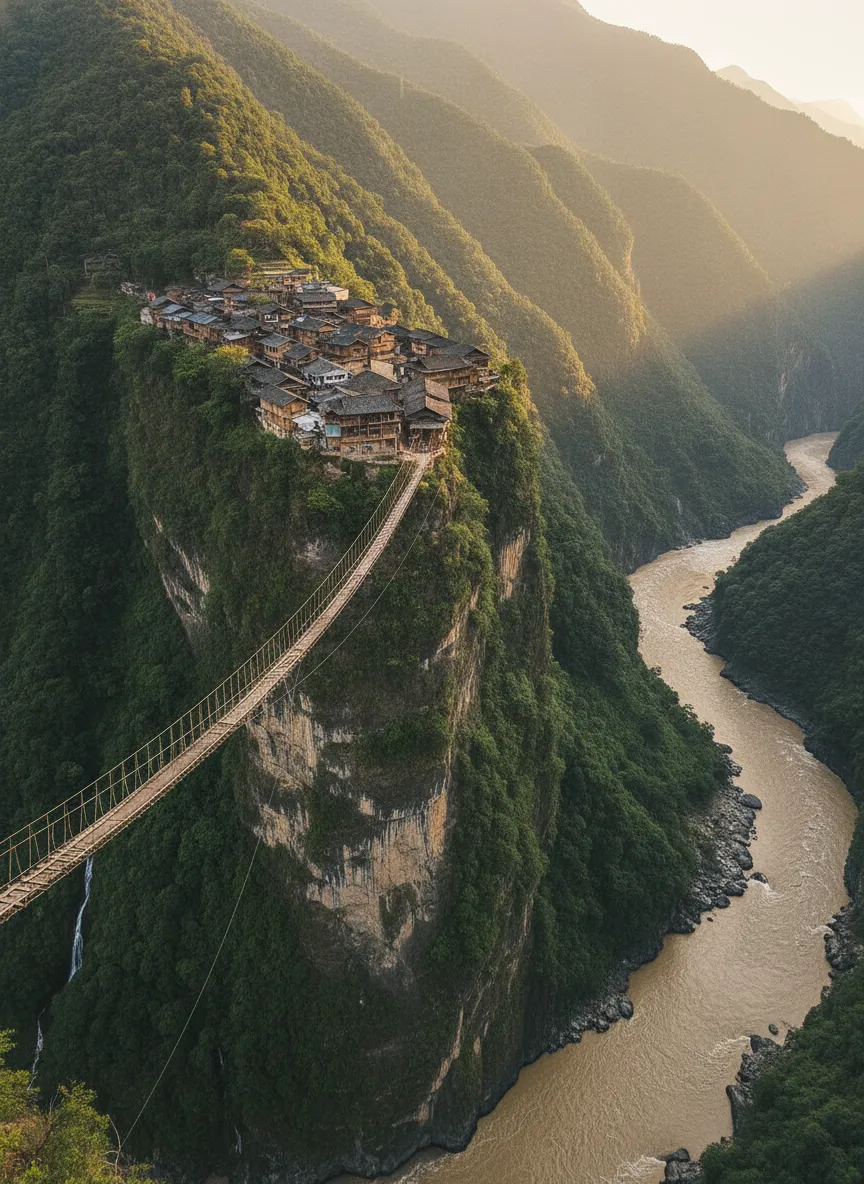
Koke Lisu Village: Where the Nu River Forges Legends
Koke Lisu isn't just a dot on a map; it's an experience carved by millennia of geological drama and human ingenuity. Nestled deep within Yunnan Province's Gongshan Derung and Nu Autonomous County, this village is the heartland of the Lisu people, a vibrant ethnic minority with a rich heritage. What makes Koke Lisu truly special is its profound isolation, historically dictated by the tumultuous Nu River (Salween River) and the sheer, unforgiving cliffs of the Grand Canyon. Imagine living in a place so cut off that your only connection to neighboring communities, markets, or medical aid involved traversing a swaying bridge made of little more than ropes and planks, hundreds of meters above a raging torrent. It's a place where every journey was an act of courage, and every arrival a small victory.
While modern infrastructure has slowly begun to bridge these ancient divides – concrete roads now wind their way through parts of the canyon, and more stable bridges span the river – the spirit of Koke Lisu remains deeply rooted in its past. The dramatic scenery, with its towering peaks, lush valleys, and the powerful jade-green ribbon of the Nu River, is a constant reminder of the forces that shaped this community. This is a destination for those who seek not just beauty, but a profound connection to a way of life that has defied the odds, a place where the grandeur of nature meets the indomitable human spirit.

A Legacy Forged by Rope and River: The History of Koke Lisu
The history of Koke Lisu is inextricably linked to the Nu River and the ingenious, terrifying methods the Lisu people devised to cross it. Before the advent of modern bridges, their primary means of transport across the deep, fast-flowing river were two types of "flying bridges": the 'slide bridge' (溜索, liūsuǒ) and the 'rope-and-plank bridge' (溜筒桥, liūtǒngqiáo). The slide bridge involved a person, often with goods strapped to their back, hooking themselves to a pulley on a thick rope stretched high across the canyon, then sliding across by gravity. The rope-and-plank bridges, the stuff of legend, were even more astonishing: two thick ropes stretched taut across the chasm, with loose wooden planks laid across them, creating a narrow, swaying walkway hundreds of feet above the water.
This extreme isolation, enforced by the formidable geography, allowed the Lisu culture in Koke Lisu to develop with remarkable distinctiveness. For centuries, their traditions, language, and way of life were preserved in a crucible of self-reliance. They cultivated the steep mountain slopes, hunted in the forests, and built their homes from local materials, living in harmony with a landscape that was both provider and formidable guardian. The stories of these perilous crossings are not just historical anecdotes; they are woven into the very fabric of the community's identity, symbolizing their bravery, resourcefulness, and deep connection to their ancestral lands. Even today, while safer crossings exist, the memory of these daring feats lingers, a powerful testament to the Lisu people's enduring spirit.
What to Experience in Koke Lisu: Beyond the Breathtaking Views
Visiting Koke Lisu is less about ticking off famous landmarks and more about immersing yourself in a living, breathing cultural landscape. The first thing that will strike you, of course, is the scenery. The Nu River Grand Canyon truly lives up to its name, with dramatic cliffs plunging down to the powerful river below, and the village itself clinging to the mountainside amidst terraced fields. Take your time to simply soak in these views, feeling the immense scale of nature around you.
Within the village, you'll discover traditional Lisu homes, often built from wood and stone, blending seamlessly into the environment. Observe the rhythm of daily life: farmers tending their fields, children playing, and elders sharing stories. You might be lucky enough to witness local crafts being made, or hear the distinctive melodies of Lisu folk music. While remnants of the ancient rope bridges are rare due to decay and replacement, locals can often point out where these legendary crossings once stood, allowing your imagination to truly grasp the audacity of their ancestors.
Hiking opportunities abound in the surrounding area, offering closer encounters with the region's biodiversity and even more stunning vistas. Imagine trekking along ancient paths that once served as crucial links for these isolated communities, perhaps encountering a hidden waterfall or a particularly serene viewpoint overlooking the winding river. Engage with the friendly villagers; a simple smile and a respectful greeting can open doors to fascinating cultural exchanges. Remember, this is their home, and experiencing it authentically means approaching with an open heart and a willingness to learn.

Planning Your Journey to Koke Lisu: Tips for the Adventurous Traveler
Venturing to Koke Lisu is an adventure in itself, requiring careful planning and a flexible mindset. While the terrifying rope bridges are largely a thing of the past, the region remains remote and access can be challenging. The journey typically involves traveling to Gongshan County, then arranging local transport to the village. Roads, though improved, can be winding, narrow, and subject to weather conditions, especially during the rainy season.
Accommodation in Koke Lisu itself will be basic, likely guesthouses or homestays, offering a genuine glimpse into local life rather than luxury. Embrace this simplicity; it's part of the authentic experience. Food will be local Lisu cuisine, often fresh, hearty, and delicious, reflecting the produce of the mountains. Bring cash, as ATMs are non-existent in the village, and mobile reception can be spotty. A basic grasp of Mandarin Chinese will be incredibly helpful, though a good translation app can also bridge communication gaps.
Respect for local customs and traditions is paramount. Always ask for permission before taking photos of people, and dress modestly, especially when visiting homes or participating in cultural activities. Pack for varying weather conditions – mountain climates can be unpredictable – and bring sturdy hiking shoes. Most importantly, travel with an open mind and a spirit of curiosity. Koke Lisu isn't just a destination; it's an invitation to step back in time, connect with a resilient culture, and witness one of China's most breathtaking natural wonders.

Koke Lisu Village is more than just a remote outpost; it's a living museum of human courage and cultural endurance, set against a backdrop of unparalleled natural beauty. It's a place that will challenge your perceptions of what's possible, inspire awe with its dramatic landscapes, and leave you with a profound appreciation for a people who have not just survived, but thrived, in one of the world's most formidable environments. If you're seeking an off-the-beaten-path adventure that promises rich cultural immersion and unforgettable vistas, Koke Lisu beckons. Prepare to be moved.
Essential Travel Information
- Location Koke Lisu Village (科克利苏村), China
- Best Time Spring (March-May) and Autumn (September-November) offer the most stable weather and comfortable temperatures for trekking, avoiding the summer rainy season and winter cold.
- Getting There Fly to Lijiang (LJG) or Kunming (KMG), then take a bus or hire a private vehicle to Gongshan County. From Gongshan, arrange local transport (e.g., minivan, taxi) to Koke Lisu Village. The journey is long and roads can be challenging.
- Airport Lijiang Sanyi International Airport (LJG)
- Budget Budget/Mid-range (approx. $50-$80 USD per day, excluding major travel to/from Yunnan, focusing on local transport, basic accommodation, and food).
- Language Lisu, Mandarin Chinese
Find Places to Stay Near Koke Lisu Village (科克利苏村)
Compare hotels, hostels, and unique stays in China.
Search AccommodationTours & Experiences Near Koke Lisu Village (科克利苏村)
Book guided tours, day trips, and unique experiences.
Browse Tours