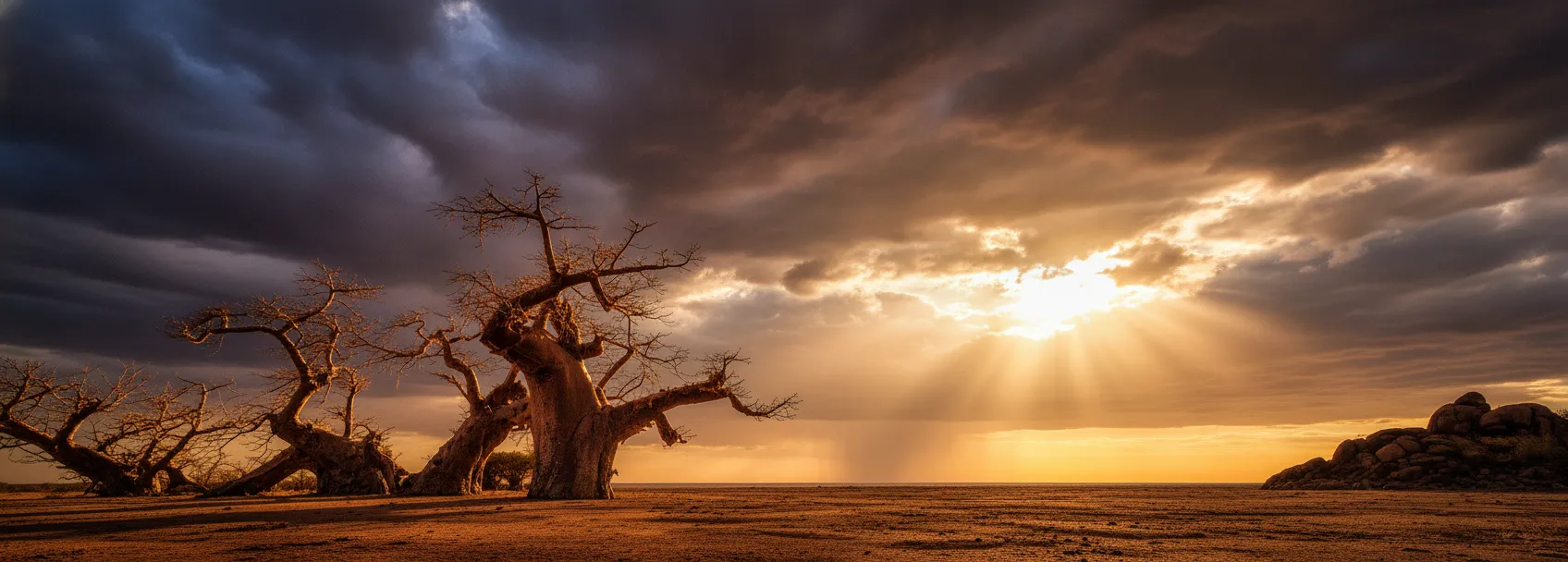
Imagine an ancient, granite island, crowned with colossal baobab trees and dotted with forgotten stone ruins, rising like a mirage from the shimmering, endless white expanse of the world's largest salt pans. This isn't a scene from a fantasy novel; it's Kubu Island, or Ga'nnyo Island as it's known locally, a place so profoundly unique it feels less like a destination and more like a journey back in time. Tucked away in the vast, almost otherworldly landscape of Botswana's Makgadikgadi Pans, Kubu Island is a whispered secret, a geological anomaly, and a sacred site that beckons the intrepid traveler to uncover its haunting beauty and ancient mysteries.
Forget everything you thought you knew about African safaris. While Botswana is famed for its Okavango Delta and Chobe elephants, Kubu Island offers an entirely different kind of wilderness experience – one of profound silence, cosmic wonder, and a deep connection to Earth's primordial past. It's a place where the horizon stretches into infinity, where colossal baobabs stand guard over petrified shorelines, and where the echoes of an ancient, colossal lake still seem to ripple through the air. If you're seeking an adventure that transcends the ordinary, a destination that will leave an indelible mark on your soul, then prepare to be captivated by the enigmatic allure of Kubu Island.
Kubu Island: Where Earth's Ancient Secrets Whisper
What makes Kubu Island so utterly special? It’s more than just an island; it’s a solitary granite outcrop, a geological marvel that defies its surroundings. Picture this: a vast, flat, blindingly white expanse of salt, stretching further than the eye can see in every direction. And then, suddenly, rising from this shimmering desolation, is Kubu Island – a rocky oasis, a relic from a time when the Makgadikgadi Pans were not pans at all, but one of the largest inland lakes in Africa, a body of water roughly the size of Switzerland. This ancient lake, long since evaporated, left behind its ghostly shores, now fossilized and scattered with smooth, water-worn pebbles that tell a silent story of a watery past.
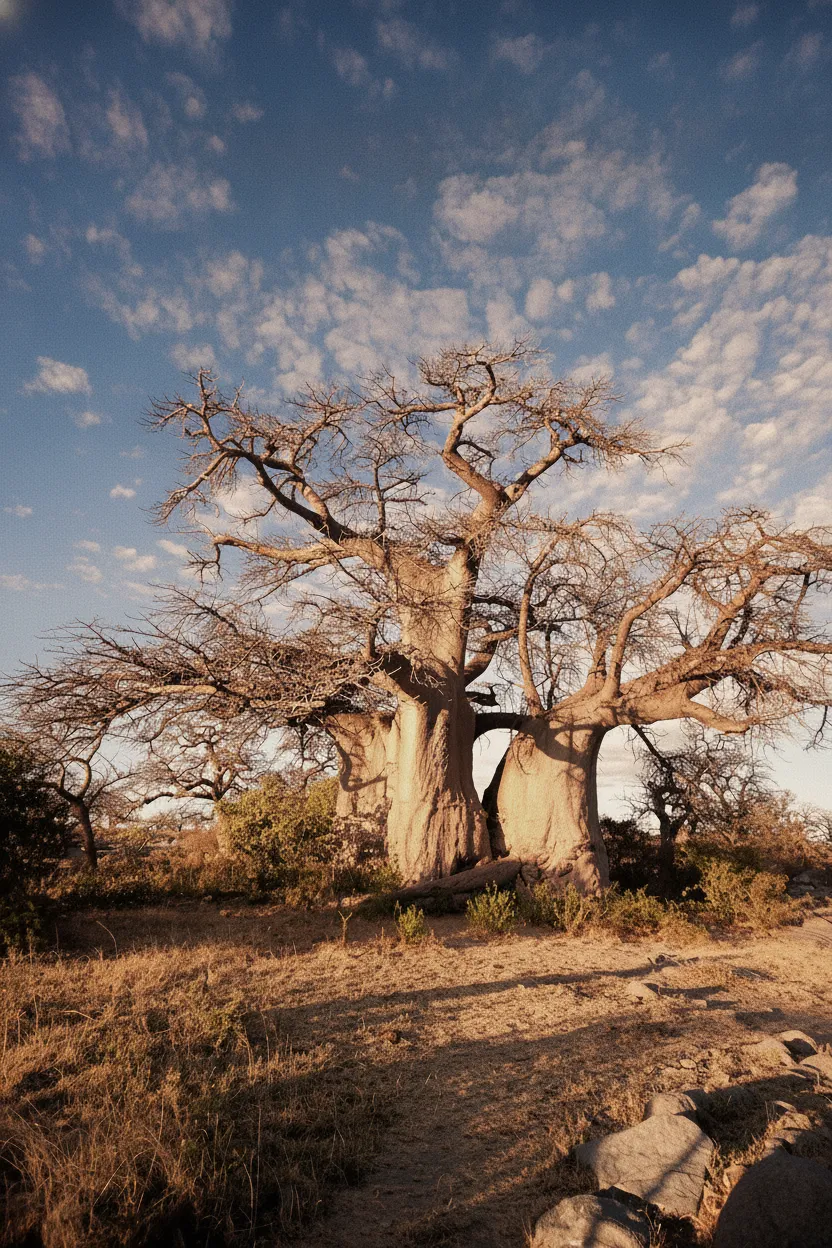
The island's surface is a testament to this incredible transformation. You’ll walk upon what were once ancient beaches, now hardened into stone, feeling the immense geological forces that shaped this land. But it's not just geology that makes Kubu special; it's the living monuments that grace its rocky slopes. Colossal baobab trees, some believed to be thousands of years old, stand like ancient sentinels, their gnarled branches reaching towards the sky like roots, earning them the nickname "upside-down trees." These magnificent giants are not just beautiful; they are vital ecosystems, providing shelter and sustenance in this harsh environment, and adding an almost mythical quality to the landscape.
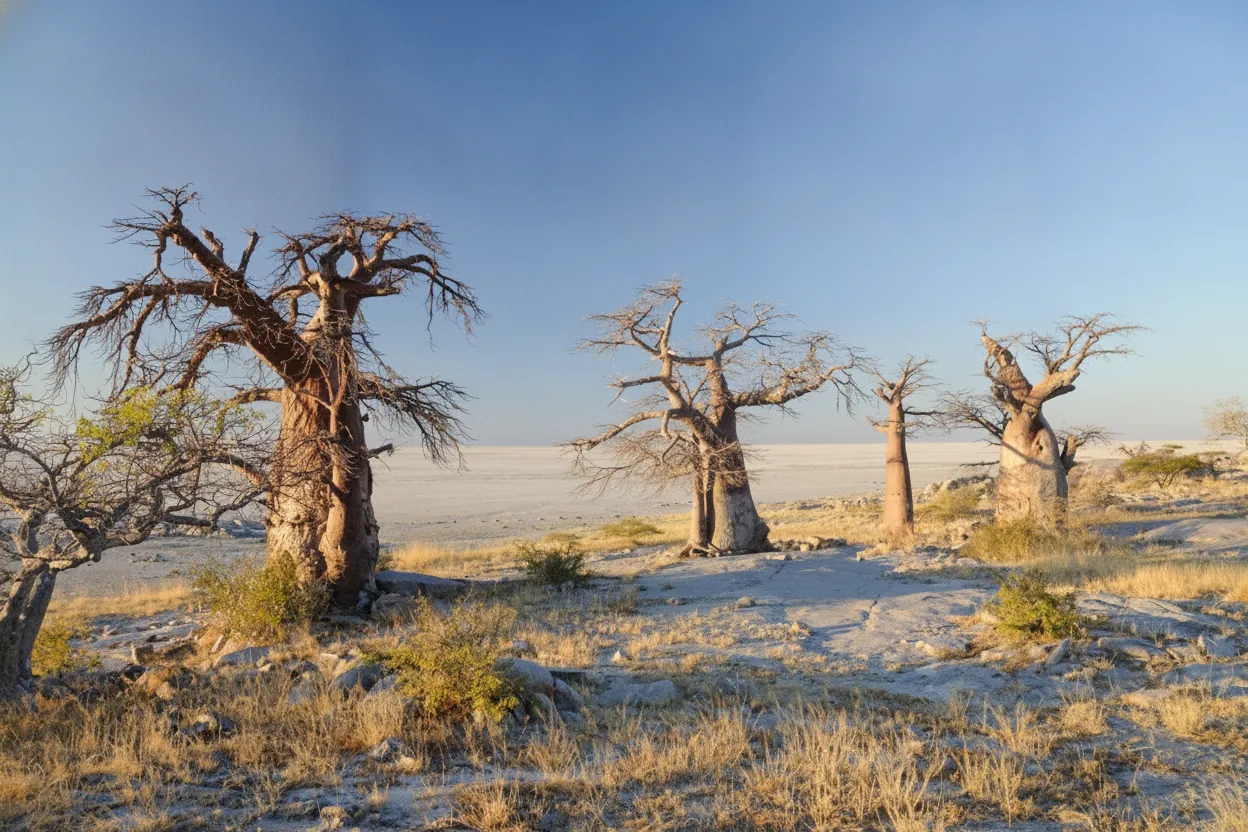
Beyond its natural wonders, Kubu Island holds deep cultural significance. It is a sacred site for the local San and Kalanga people, a place of spiritual importance where ancestral spirits are believed to reside. This reverence adds another layer to its mystique, urging visitors to tread lightly and with respect. The profound silence that envelops Kubu is perhaps its most striking feature. Far from any major towns, roads, or even permanent settlements, the only sounds you'll hear are the whisper of the wind, the rustle of leaves, and perhaps the distant call of a bird. This silence isn't empty; it's pregnant with history, inviting introspection and a sense of profound connection to the raw, untamed heart of Africa.
A Journey Through Time: The History and Mystery of Ga'nnyo Island
The history of Kubu Island is written in its rocks and whispered by its ancient trees. Geologists estimate that the Makgadikgadi Lake began to dry up around 10,000 years ago, leaving behind the vast salt pans we see today. Kubu Island, along with its smaller neighbor Lekhubu, was once a prominent island in this colossal freshwater sea, a refuge for early humans and wildlife alike. Evidence of this ancient past is everywhere: the petrified shorelines at varying elevations around the island clearly mark the receding levels of the lake over millennia.
But the island’s human history is perhaps even more intriguing. Scattered across Kubu are mysterious dry-stone walls, neatly stacked and forming enclosures of unknown purpose. Who built them? When? And why? These ruins are thought to date back to between 800 and 1500 AD, possibly constructed by ancestors of the modern Kalanga people or other early Iron Age inhabitants. Some theories suggest they were used as kraals for livestock, defensive fortifications, or even ceremonial sites. The exact origin and function remain a subject of archaeological debate, adding an irresistible layer of mystery to your visit. Standing among these forgotten stones, under the watchful gaze of ancient baobabs, it's impossible not to ponder the lives of those who once called this isolated outpost home.
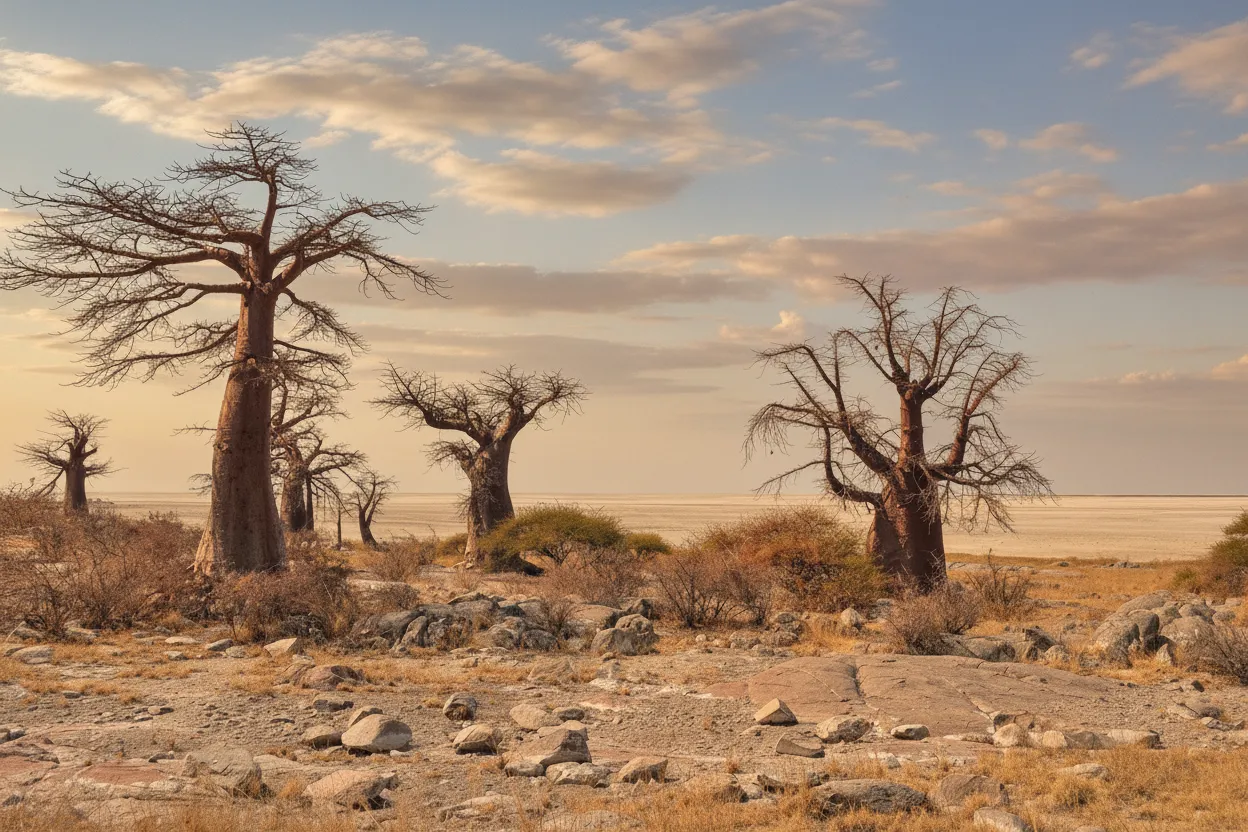
The island's local name, Ga'nnyo, means "a big rock." Its sacred status endures to this day, with local communities sometimes performing rituals on the island. This deep spiritual connection is palpable, making a visit to Kubu not just a scenic trip, but a journey into the heart of Botswana's cultural heritage. It's a place where the past isn't just remembered; it feels alive, a haunting monument to forgotten histories and the enduring power of nature.
What Awaits You: Exploring Kubu's Ethereal Landscape
A visit to Kubu Island is an immersion into an otherworldly landscape. Your first glimpse of the island, rising from the shimmering mirage of the pans, is an unforgettable moment. Once you arrive, the true exploration begins:
- The Baobab Giants: Spend time wandering among the magnificent baobab trees. These 'trees of life' are not just beautiful; they are ecosystems unto themselves, providing shelter and often hosting various bird species. Their sheer size and ancient presence evoke a sense of awe.
- Petrified Shorelines: Walk along the ancient, fossilized shorelines that encircle the island. You'll find smooth, water-worn pebbles and rocks, remnants of the colossal lake that once covered this entire region. It's a tangible connection to a bygone era.
- Mysterious Stone Walls: Explore the enigmatic dry-stone ruins. Imagine the people who built them, their lives intertwined with this isolated island. The sheer effort involved in constructing these walls in such a remote location is astounding.
- Pan Exploration: If conditions allow (and with an experienced guide), venture out onto the salt pans themselves. The vastness is incomprehensible, and the silence is profound. During the dry season, the pans crack into intricate patterns, creating a mesmerizing mosaic.
- Sunrises and Sunsets: The sunrises and sunsets over the Makgadikgadi Pans are legendary. The sky explodes in a riot of color, painting the vast landscape in hues of orange, pink, and purple, reflecting off the white expanse. It’s an unforgettable spectacle.
- Stargazing: With virtually no light pollution, Kubu Island offers some of the most spectacular stargazing opportunities on Earth. The Milky Way stretches across the inky black sky in breathtaking clarity, making you feel incredibly small yet profoundly connected to the universe.
While wildlife isn't the primary draw, you might spot meerkats, brown hyenas (especially at night), or various bird species adapted to this unique environment. The true magic, however, lies in the landscape itself, the silence, and the profound sense of history that permeates every rock and tree.
Planning Your Expedition: Essential Tips for Visiting Kubu Island
Kubu Island is not a destination for the faint of heart or the unprepared. Its remoteness is part of its charm, but it demands careful planning. Think of it as an expedition, not just a trip.
- Getting There: A robust 4x4 vehicle is absolutely essential. The tracks across the Makgadikgadi Pans are rough, sandy, and can be challenging, especially after rain (when they become impassable mud flats). GPS and good navigation skills are a must. Access is typically from Gweta or Nata. Consider hiring an experienced local guide if you're not comfortable with self-driving in extreme conditions.
- Best Time to Visit: The dry season (May to October) is ideal. The pans are firm and traversable, and the temperatures are more pleasant. Avoid the rainy season (November to April) as the pans can become waterlogged and impassable.
- Accommodation: There are no lodges or hotels on Kubu Island. The only option is basic wilderness camping. There are designated campsites with very rudimentary long-drop toilets and sometimes a shaded area, but absolutely no running water, electricity, or other facilities. You must be entirely self-sufficient.
- Self-Sufficiency is Key: Bring ALL your supplies: plenty of water (for drinking, cooking, and washing), all your food, cooking equipment, firewood, fuel, spare tires, recovery gear (shovel, sand ladders, air compressor), first-aid kit, and enough power for charging devices. Leave no trace – carry out everything you carry in.
- Permits and Fees: Kubu Island is a national monument, and permits are required for entry and camping. These should be arranged in advance through the Department of National Museum and Monuments or via a local tour operator.
- Respect the Sacred Site: Remember that Kubu Island is a sacred place for local communities. Be respectful of the environment, the ruins, and the cultural significance of the island.
- Embrace the Silence: Prepare for a profound sense of isolation and tranquility. It's an opportunity to disconnect from the modern world and reconnect with nature and history.
Kubu Island is more than a destination; it's an experience that challenges, inspires, and ultimately enriches. It's a journey to the edge of time, a place where the Earth whispers its ancient secrets, and where you'll find a piece of yourself in the vast, silent beauty of Botswana's forgotten heartland. Go, and let the magic of Ga'nnyo Island transform you.
Essential Travel Information
- Location Kubu Island (Ga'nnyo Island), Botswana
- Best Time Dry season (May-October)
- Getting There Requires a 4x4 vehicle. Remote tracks across Makgadikgadi Pans, typically accessed from Gweta or Nata. GPS and self-sufficiency are essential.
- Airport Maun International Airport (MUB)
- Budget Mid-range to High-end (due to 4x4 rental/ownership, remote logistics, and potential guided tours). Self-drive basic trip: $100-$300+ per person per day; guided tours significantly higher.
- Language Setswana, English
Find Places to Stay Near Kubu Island (Ga'nnyo Island)
Compare hotels, hostels, and unique stays in Botswana.
Search AccommodationTours & Experiences Near Kubu Island (Ga'nnyo Island)
Book guided tours, day trips, and unique experiences.
Browse Tours