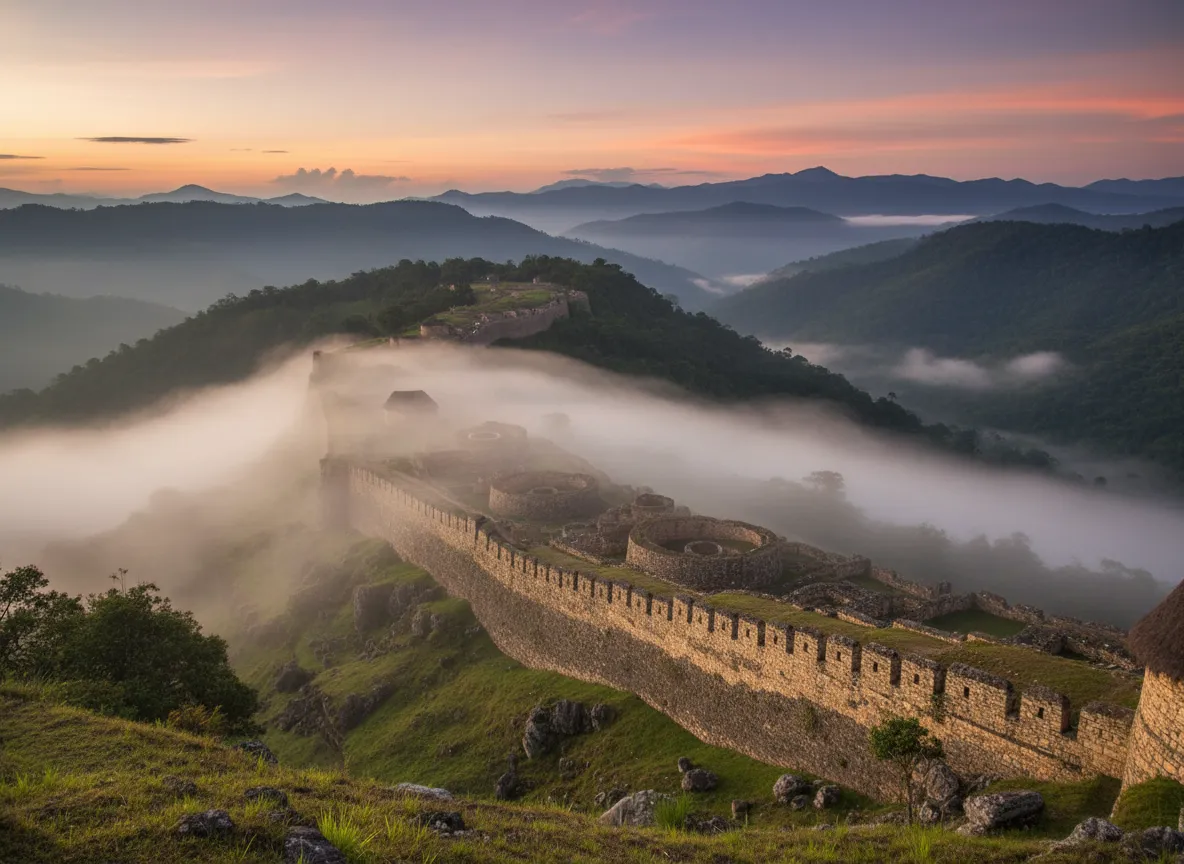
Imagine a journey not just through space, but through time, to a place where the clouds themselves seem to guard ancient secrets. Forget the well-trodden paths to Machu Picchu for a moment, and let me tell you about a hidden marvel that will stir your soul. Perched atop an isolated mountain peak, a colossal pre-Incan fortress emerges from the clouds, its circular stone city defying the dense Amazonian jungle. This isn't a dream; this is Kuélap, Peru's magnificent 'Fortress in the Clouds,' a destination so breathtaking and historically rich, it feels like stepping into a forgotten legend.
For centuries, Kuélap lay shrouded in mist and mystery, a testament to a civilization that thrived long before the Inca Empire rose to prominence. Built by the enigmatic 'Cloud People' – the Chachapoya – this fortified citadel is an architectural masterpiece, a sprawling complex of massive stone walls, intricate dwellings, and a history whispered only by the wind through its ancient stones. If you crave discovery, adventure, and a genuine connection to a past largely untouched by mass tourism, then pack your bags, my friend. Kuélap is calling, promising an experience unlike any other in Peru.
What Makes Kuélap So Uniquely Special?
What sets Kuélap apart isn't just its age or its sheer scale, but its profound sense of untouched wonder. While Machu Picchu rightly claims its fame, Kuélap offers a different kind of magic – one that feels more intimate, more raw, and utterly awe-inspiring. This isn't a bustling ruin; it's a quiet conversation with history, where the echoes of a forgotten people still resonate.
The first thing that strikes you about Kuélap is its location. Nestled high in the Amazonas Region of northern Peru, it’s literally above the clouds, often kissed by swirling mist that lends it an ethereal, almost mythical quality. But it's the architecture that truly astounds. Unlike the rectangular structures of the Inca, Kuélap is a city of circles. Hundreds of circular stone houses, many still remarkably preserved, are packed within colossal defensive walls that soar up to 60 feet high in places. These aren't just walls; they are a mountain reshaped, a testament to an incredible feat of engineering achieved without the wheel or modern tools.
The intricate details on the circular houses – rhomboid and zigzag patterns – speak volumes about the artistic prowess and symbolic language of the Chachapoya. Each stone tells a story of a sophisticated culture that mastered its challenging environment, building a city that was both an impenetrable fortress and a thriving community. To walk through its narrow, winding paths is to feel the weight of centuries, to ponder the lives lived within these walls, and to witness a civilization's ingenuity defying the relentless embrace of the Amazonian jungle. It’s a place that genuinely makes you pause and marvel at human endeavor.

Unearthing the Secrets: History and the 'Cloud People'
To truly appreciate Kuélap, one must understand its creators: the Chachapoya, often referred to as the 'Cloud People' due to their settlements in the cloud forests of the Andes. This enigmatic civilization flourished from around 800 AD to 1400 AD, centuries before the Inca Empire reached its zenith. They were known for their distinct culture, characterized by their impressive stone architecture, unique funerary practices (including sarcophagi and cliff tombs), and their fierce independence.
Kuélap itself began construction around the 6th century AD, making it much older than Machu Picchu. It served as a major political, administrative, and religious center, strategically positioned to offer both defense and breathtaking views across their territory. The immense walls and narrow, easily defensible entrances suggest a people often at odds with neighboring groups, though the exact reasons for its colossal fortifications remain a subject of ongoing archaeological study.
The Chachapoya maintained their independence for centuries, fiercely resisting the expansionist ambitions of the Inca. However, by the late 15th century, they were eventually conquered and incorporated into the vast Inca Empire under Emperor Túpac Inca Yupanqui. Their resistance, though ultimately unsuccessful, is a testament to their strength and determination. The arrival of the Spanish conquistadors in the 16th century further complicated the region's history, leading to the eventual decline and abandonment of Kuélap as its people succumbed to disease and conflict.
For hundreds of years, Kuélap lay lost to the outside world, gradually reclaimed by the jungle. It was only rediscovered in 1843 by a local judge, Juan Crisóstomo Nieto, who stumbled upon its formidable walls. Since then, archaeological efforts have slowly peeled back the layers of time, revealing the incredible story of the Cloud People and their magnificent city, bringing it back into the light for us to explore and admire.
Exploring Kuélap: What You'll See Inside the Clouds
Your adventure to Kuélap typically begins in the charming town of Chachapoyas, the capital of the Amazonas Region. From there, a scenic drive takes you to the starting point of the modern cable car system – a game-changer that has made Kuélap far more accessible while preserving the site itself. The ride up, soaring over lush green valleys and past traditional villages, is an experience in itself, offering panoramic views that build anticipation for what awaits.
Stepping off the cable car, a short, pleasant walk through a cloud forest trail leads you to the main entrance of the fortress. And then, it hits you. The sheer scale of the outer walls is breathtaking. These aren't mere walls; they are monumental constructions, some reaching heights of 60 feet, built with massive limestone blocks, meticulously fitted without mortar. You'll enter through one of the three narrow, funnel-shaped entrances, designed to bottleneck attackers, a clever defensive strategy that speaks volumes about the Chachapoya's military acumen.
Inside, Kuélap unfolds across three distinct platforms or levels. The Lower City is where most of the circular dwellings are found, each one a testament to the Chachapoya's architectural style. Take your time to wander through these ancient streets, imagining life as it once was. You'll notice the distinctive rhomboid and zigzag friezes decorating some of the houses, believed to represent important symbols like serpents or fertility.

Further up, you’ll discover the Upper City, home to more significant structures, including the Templo Mayor (Main Temple), a large circular building that likely served a ceremonial purpose. Don't miss El Tintero, a fascinating inverted cone-shaped structure, often referred to as 'the Inkwell.' Its exact function remains a mystery, but theories range from an astronomical observatory to a ritual burial site. The views from the highest points of Kuélap are simply spectacular, stretching out over the endless green tapestry of the Amazonian basin, often with clouds drifting below you – a truly 'above the clouds' experience.
Throughout your exploration, you'll encounter various other structures, platforms, and perhaps even some of the resident orchids and bromeliads that thrive in this unique ecosystem. The atmosphere is one of profound peace and ancient power, a place where history feels tangible and the spirit of the Cloud People still lingers.
Your Journey to the Clouds: Practical Tips for Visiting Kuélap
Visiting Kuélap is an adventure, but a well-planned one ensures a smooth and unforgettable experience. Here’s what you need to know:
Getting There:
- Base Town: Your primary base will be Chachapoyas, a charming colonial town with good accommodation and restaurant options.
- Access to Chachapoyas: The most common way to reach Chachapoyas is by flying to Jaén (JAE) or Tarapoto (TPP) and then taking a bus or colectivo (shared taxi) for several hours. Jaén is generally closer and offers more direct connections to Chachapoyas. Overnight buses from Lima or Trujillo are also an option for the truly intrepid.
- To Kuélap Site: From Chachapoyas, you can hire a taxi, join a tour, or take a colectivo to the Kuélap cable car station (Telecabinas Kuélap) in Nuevo Tingo. The cable car ride itself is about 20 minutes, followed by a 20-30 minute walk to the archaeological site entrance.
Best Time to Visit:
The dry season, from May to October, is generally considered the best time to visit. You'll experience less rain and clearer skies, though mornings can still be misty, adding to Kuélap's mystique. The wet season (November to April) brings more rain, which can make trails muddy, but also fewer tourists and incredibly lush landscapes.
What to Pack:
- Layers: The weather in the cloud forest can change rapidly. Pack layers, including a warm fleece or jacket.
- Rain Gear: A waterproof jacket and perhaps trousers are essential, regardless of the season.
- Comfortable Hiking Shoes: You'll be doing a fair amount of walking on uneven surfaces.
- Sun Protection: Hat, sunglasses, and high-SPF sunscreen. The sun can be intense even on cloudy days.
- Water and Snacks: While there are some small shops at the cable car station, it's best to bring your own.
- Camera: You'll want to capture the incredible views and ancient architecture.
- Insect Repellent: Always a good idea in jungle-adjacent areas.
Physical Demands and Altitude:
Kuélap sits at an elevation of approximately 3,000 meters (9,840 feet). While lower than Cusco, it's still high enough for some visitors to experience mild altitude sickness. Take it easy, hydrate, and move at a comfortable pace. The walk from the cable car station to the site is uphill but well-maintained, and exploring the site involves walking up and down ancient paths.
Tours vs. DIY:
Many tour operators in Chachapoyas offer guided day trips to Kuélap, which can be convenient for transport and gaining insights from a knowledgeable guide. However, it's entirely possible to visit independently by arranging transport to the cable car station and then exploring the site on your own. There are local guides available for hire at the entrance if you wish.
Kuélap is more than just an archaeological site; it's an immersive journey into a forgotten world. It offers a unique blend of natural beauty, ancient mystery, and the thrill of discovery. If you're seeking an authentic, off-the-beaten-path Peruvian adventure that will leave an indelible mark on your memory, then the Fortress in the Clouds awaits. Come, and let the Cloud People whisper their stories to you.

Essential Travel Information
- Location Kuélap, Peru
- Best Time May to October (dry season)
- Getting There Fly to Jaén (JAE) or Tarapoto (TPP), then bus/colectivo to Chachapoyas. From Chachapoyas, take transport to Telecabinas Kuélap cable car station.
- Airport Jaén (JAE)
- Budget Mid-range (approx. $50-100 USD per day excluding major flights)
- Language Spanish
Find Places to Stay Near Kuélap
Compare hotels, hostels, and unique stays in Peru.
Search Accommodation