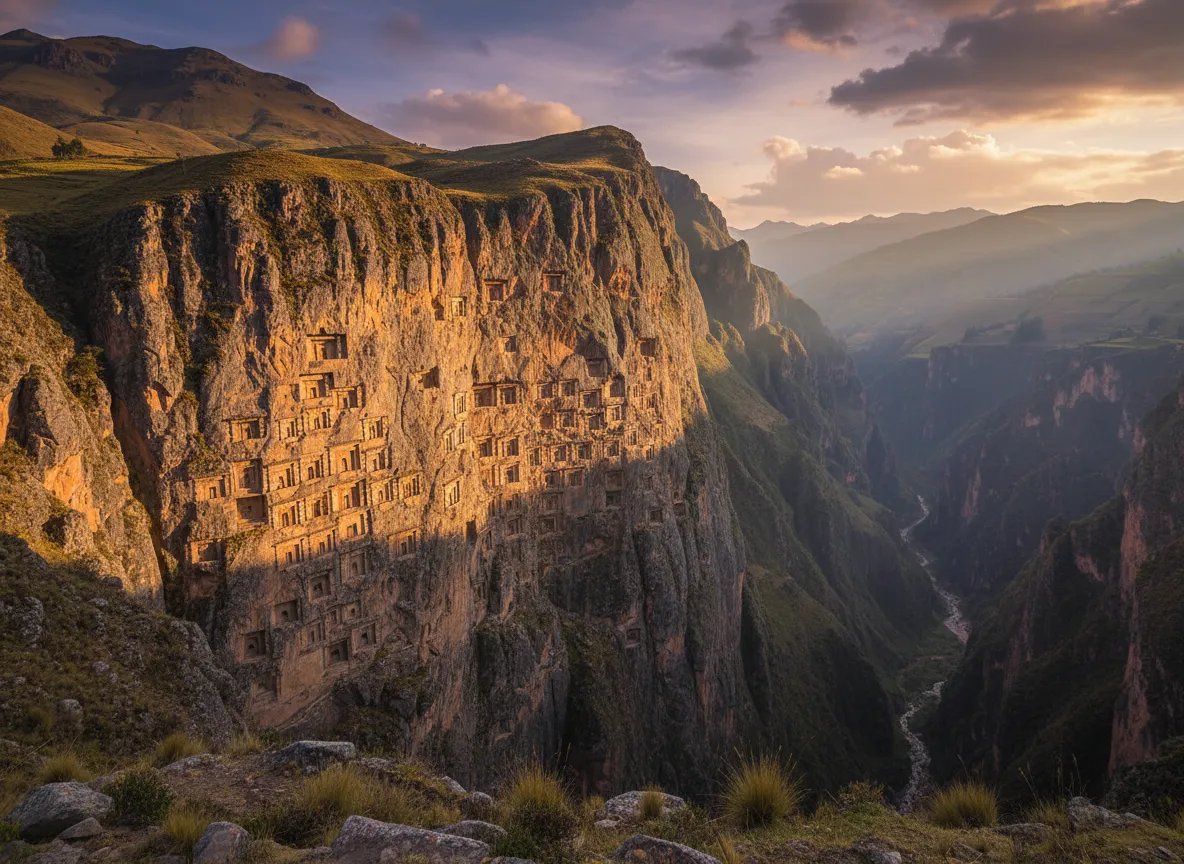
Imagine standing at the edge of the world, gazing up at a sheer, towering cliff face that pierces the emerald canopy of the Peruvian Amazonas. But this isn't just any rock wall; it's a canvas etched with the secrets of a lost civilization, a vertical necropolis where hundreds of tiny, ancient doors are carved into the stone, each one a portal to the afterlife. This is La Puerta de los Muertos, "The Door of the Dead," a haunting, breathtaking testament to the ingenuity and spiritual depth of the mysterious Chachapoya people, who literally buried their dead in the sky, defying gravity and time itself. If you thought you knew Peruvian history, prepare to have your understanding of ancient wonders redefined. This isn't Machu Picchu; this is a secret whispered on the wind, a place few have seen, and one that will forever change how you view the past.
The Sky-High Necropolis: A Marvel of Ancient Engineering
La Puerta de los Muertos isn't just an archaeological site; it's a masterpiece of human endeavor and a profound statement of belief. High in the remote cloud forest of the Peruvian Andes, a colossal cliff face becomes home to hundreds of pre-Incan burial niches, carved with astonishing precision into the seemingly impenetrable rock. These aren't simple caves; they are meticulously crafted openings, often resembling miniature doorways or windows, arranged in dizzying rows that climb the sheer stone face like an ethereal, silent city. Each one was once the final resting place for a revered ancestor of the Chachapoya, the "Warriors of the Clouds," their mummified remains carefully placed within, facing eternity from a perch between earth and sky.
What truly makes this site special is its audacious placement. To carve these niches, the ancient Chachapoya people must have employed sophisticated climbing techniques, perhaps using ropes and scaffolding, to navigate the dizzying heights. The sheer scale of the undertaking speaks volumes about their engineering prowess and, more importantly, their spiritual convictions. This wasn't merely a practical solution for interment; it was a sacred act, a deliberate choice to elevate their dead, perhaps to bring them closer to the heavens, to protect them from earthly threats, or to mark their enduring presence within the landscape. Standing before this vertical cemetery, you can't help but feel a profound sense of awe, tinged with a chilling understanding of a civilization that literally buried its dead among the clouds.
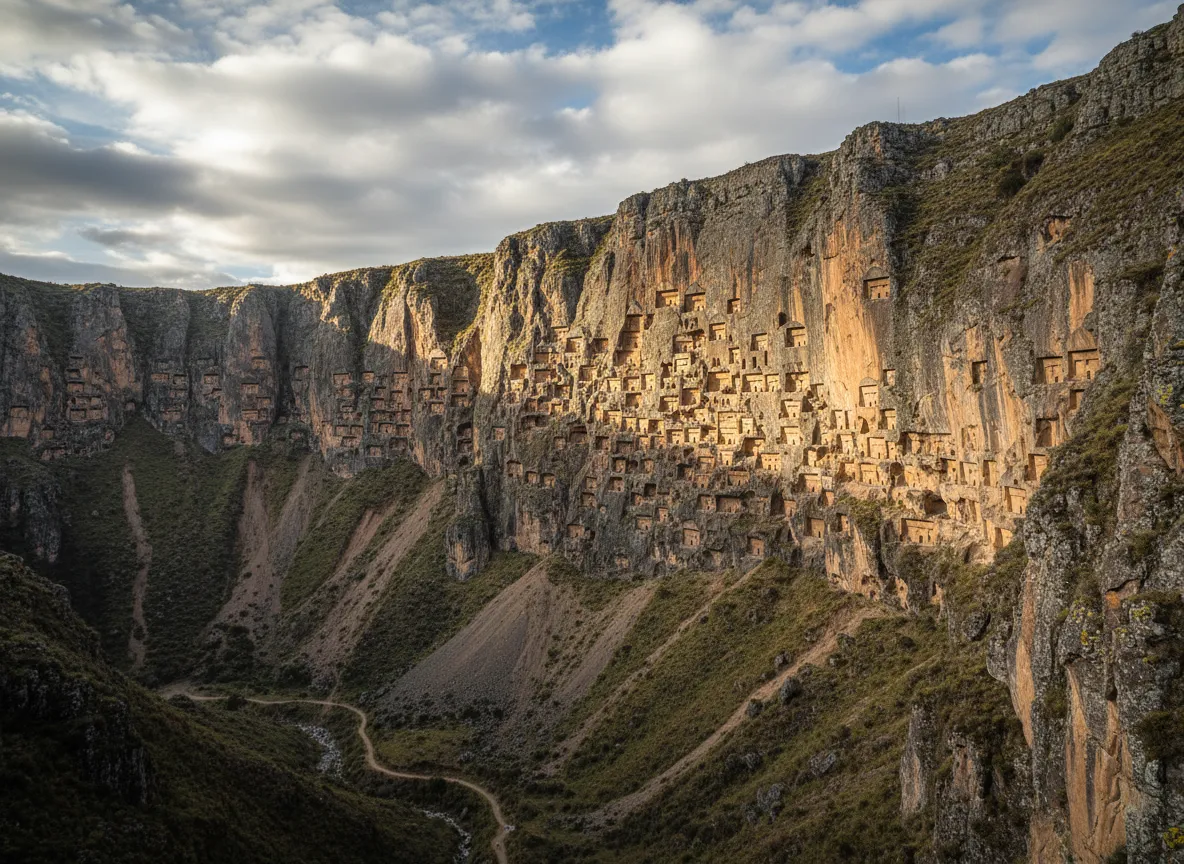
Unlike the monumental stone cities of the Inca, La Puerta de los Muertos offers a more intimate, yet equally powerful, connection to a lost past. It’s a testament to a culture that saw death not as an end, but as a transition, a journey that deserved a grand, almost otherworldly setting. The intricate carvings, the sheer number of niches, and their precarious location combine to create a spectacle that is both humbling and deeply mysterious. It forces you to ponder the lives, beliefs, and incredible determination of a people who chose such an extraordinary way to honor their ancestors.
Whispers from the Cloud Forest: The Chachapoya Legacy
To understand La Puerta de los Muertos, we must first delve into the story of its creators: the Chachapoya people. Flourishing in the high cloud forests of what is now Peru's Amazonas region from roughly 800 AD until their eventual conquest by the Inca in the late 15th century, the Chachapoya were a distinct and powerful culture. Known for their unique circular stone houses, elaborate friezes, and formidable resistance, they earned the moniker "Warriors of the Clouds." Their legacy, however, is perhaps most dramatically preserved in their funerary practices.
Unlike many Andean cultures that buried their dead in the ground or in mausoleums accessible from the valley floor, the Chachapoya developed a unique tradition of cliff burials. Sites like La Puerta de los Muertos, Revash, and Karajía showcase their preference for placing their honored dead in highly inaccessible locations. This practice served multiple purposes: protection from grave robbers and environmental decay, but also a spiritual connection to the dramatic landscape they inhabited. The cliffs, often shrouded in mist and cloud, were seen as sacred boundaries between the living and the dead, a place where ancestors could watch over their descendants from an elevated, almost divine, vantage point.
The mummification process of the Chachapoya was also sophisticated, involving careful drying and preservation, often with the mummies placed in a fetal position, wrapped in textiles, and sometimes adorned with feather headdresses or other offerings. While the mummies themselves are no longer present at La Puerta de los Muertos (many were sadly looted or removed for study over the centuries), the empty "doors" still resonate with their original purpose. They are hollow echoes of a vibrant civilization that held a deep reverence for its forebears, believing that the dead continued to play an active role in the spiritual well-being of the community.
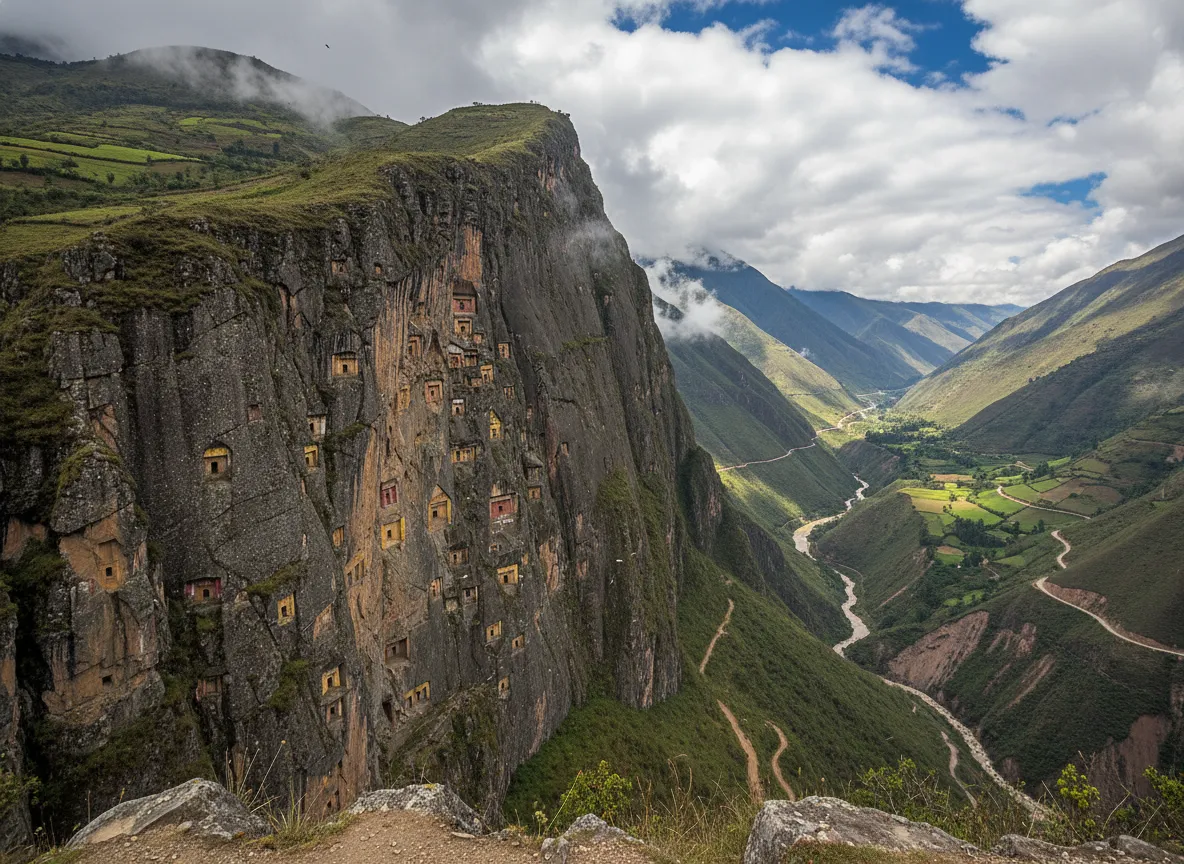
Their eventual downfall at the hands of the expanding Inca Empire marked the end of an independent Chachapoya era, but their cultural footprint remains indelibly stamped on the landscape. Sites like La Puerta de los Muertos are not just ruins; they are powerful reminders of a civilization that adapted ingeniously to its challenging environment and developed a rich, complex spiritual world that continues to intrigue and inspire wonder today.
Journey to the Door of the Dead: What Awaits You
Visiting La Puerta de los Muertos is not your typical tourist excursion; it's an expedition into the heart of the Peruvian wilderness and a journey back in time. The path to this hidden gem is as rewarding as the destination itself, winding through lush cloud forests, past cascading waterfalls, and across verdant valleys that seem untouched by modernity. The air is thick with the scent of damp earth and exotic flora, and the sounds of unseen birds and insects create a symphony of nature that accompanies your every step.
After a challenging but breathtaking trek, often involving multi-day journeys with local guides and sometimes even horses or mules for parts of the ascent, the cliff face eventually reveals itself. The first glimpse of La Puerta de los Muertos is nothing short of electrifying. From a distance, the hundreds of dark openings appear almost like a natural pattern in the rock, but as you draw closer, their deliberate, man-made nature becomes undeniably clear. The sheer scale is difficult to comprehend – a vertical tapestry of ancient burial chambers stretching hundreds of feet up the cliff, each one a testament to an unimaginable effort.
While the niches themselves are inaccessible without specialized climbing equipment (and out of respect for the site), you can stand at a vantage point that offers spectacular views. You'll marvel at the precision of the carvings, the uniform size of many of the "doors," and the sheer audacity of their placement. Imagine the silence broken only by the wind whistling through the empty chambers, carrying whispers of eternity. It’s a place that evokes profound contemplation on life, death, and the enduring human spirit. The surrounding landscape, with its dramatic peaks and misty valleys, only adds to the ethereal atmosphere, making the entire experience feel like a pilgrimage to another world.
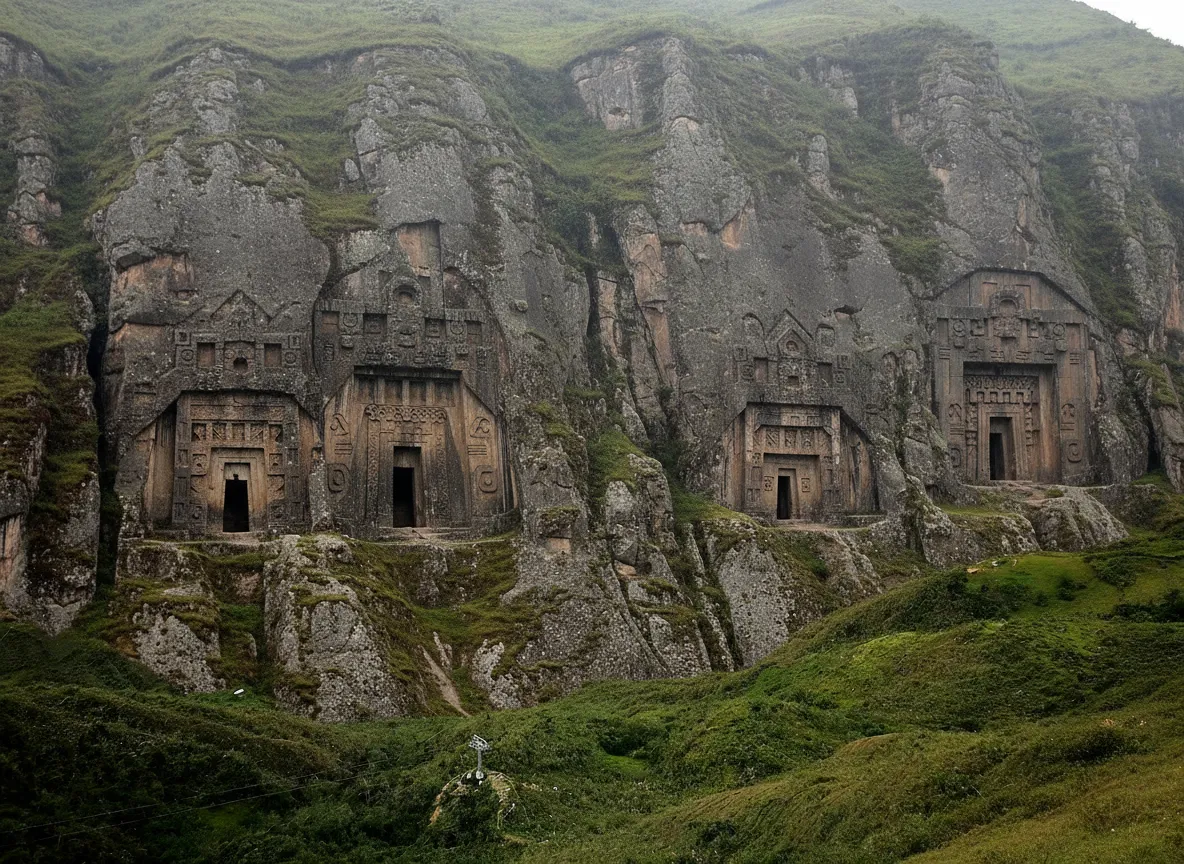
Beyond the archaeological marvel, you'll also be immersed in the natural beauty of the Amazonas region. This area is a biodiversity hotspot, teeming with unique plant and animal life. The journey offers opportunities for birdwatching, exploring pristine forests, and connecting with local communities who still live off the land, often acting as invaluable guides and hosts. It's an adventure for the body, mind, and soul, promising memories that will last a lifetime.
Navigating the Path to the Past: Your Essential Guide
Visiting La Puerta de los Muertos is an unforgettable adventure, but it requires careful planning and a spirit of true exploration. This is not a site for casual day-trippers; it demands respect for its remoteness and the challenging terrain.
Getting There:
Your journey will typically begin in the charming colonial city of Chachapoyas, the capital of the Amazonas region. To reach Chachapoyas, the most common route is to fly into Jaén (JAE) - Shumba Airport, and then take a scenic 4-5 hour bus or shared taxi ride. Alternatively, you can fly into Tarapoto (TPP) and endure a longer, but equally beautiful, 8-10 hour bus journey. Once in Chachapoyas, you'll need to arrange a multi-day guided trek to La Puerta de los Muertos. This is crucial, as the site is deep within the wilderness and requires expert navigation.
Best Time to Visit:
The dry season, from May to September, is by far the best time to visit. During these months, rainfall is minimal, making trekking conditions more favorable and reducing the risk of muddy trails and swollen rivers. The cloud forest can still live up to its name with occasional mist, but you'll have better chances of clear skies and stunning views.
What to Bring:
- **Sturdy Hiking Boots:** Absolutely essential for the rugged, often muddy, and uneven terrain.
- **Layers of Clothing:** The weather in the cloud forest can change rapidly, from warm sun to cool mist. Pack breathable, quick-drying layers.
- **Rain Gear:** A waterproof jacket and pants are non-negotiable, even during the dry season.
- **Sun Protection:** Hat, sunglasses, and high-SPF sunscreen.
- **Insect Repellent:** The Amazonas region is known for its insects.
- **Water Bottle & Purification Tablets:** You'll need to stay hydrated, and water sources might need purification.
- **Snacks:** Energy bars, nuts, and other high-energy snacks.
- **First-Aid Kit:** Basic medications, blister treatment, pain relievers.
- **Camera:** With extra batteries – you'll want to capture the incredible scenery.
- **Backpack:** A comfortable, waterproof backpack to carry your essentials.
- **Headlamp/Flashlight:** For early morning starts or unexpected delays.
- **Cash (Peruvian Soles):** For local purchases, tips, and emergencies, as ATMs will be non-existent once you leave Chachapoyas.
Local Guides:
Hiring a reputable local guide or joining an organized tour from Chachapoyas is paramount. Not only do they provide essential navigation and safety, but they also offer invaluable insights into the Chachapoya culture, the local flora and fauna, and the spiritual significance of the site. Many tours will include mules for carrying heavy gear, cooks, and camping equipment, making the trek much more manageable.
Respecting the Site:
La Puerta de los Muertos is a sacred archaeological site. Always stick to marked trails, do not touch or disturb any archaeological remains, and pack out everything you pack in. Leave no trace, ensuring that this incredible testament to the Chachapoya people remains preserved for future generations.
Embarking on a journey to La Puerta de los Muertos is more than just a trip; it's an immersive cultural and natural adventure that will challenge you, inspire you, and leave you with a profound appreciation for the ancient wonders of Peru. It's a true hidden gem, waiting for those intrepid enough to seek its secrets.
Essential Travel Information
- Location La Puerta de los Muertos (The Door of the Dead), Peru
- Best Time May to September (dry season)
- Getting There Fly to Jaén (JAE), then bus to Chachapoyas. From Chachapoyas, arrange a multi-day guided trek.
- Airport Jaén (JAE) - Shumba Airport
- Budget Mid-range (approx. $100-$200 USD per person per day, including guided trek, accommodation, and food)
- Language Spanish, some Quechua
Find Places to Stay Near La Puerta de los Muertos (The Door of the Dead)
Compare hotels, hostels, and unique stays in Peru.
Search AccommodationTours & Experiences Near La Puerta de los Muertos (The Door of the Dead)
Book guided tours, day trips, and unique experiences.
Browse Tours