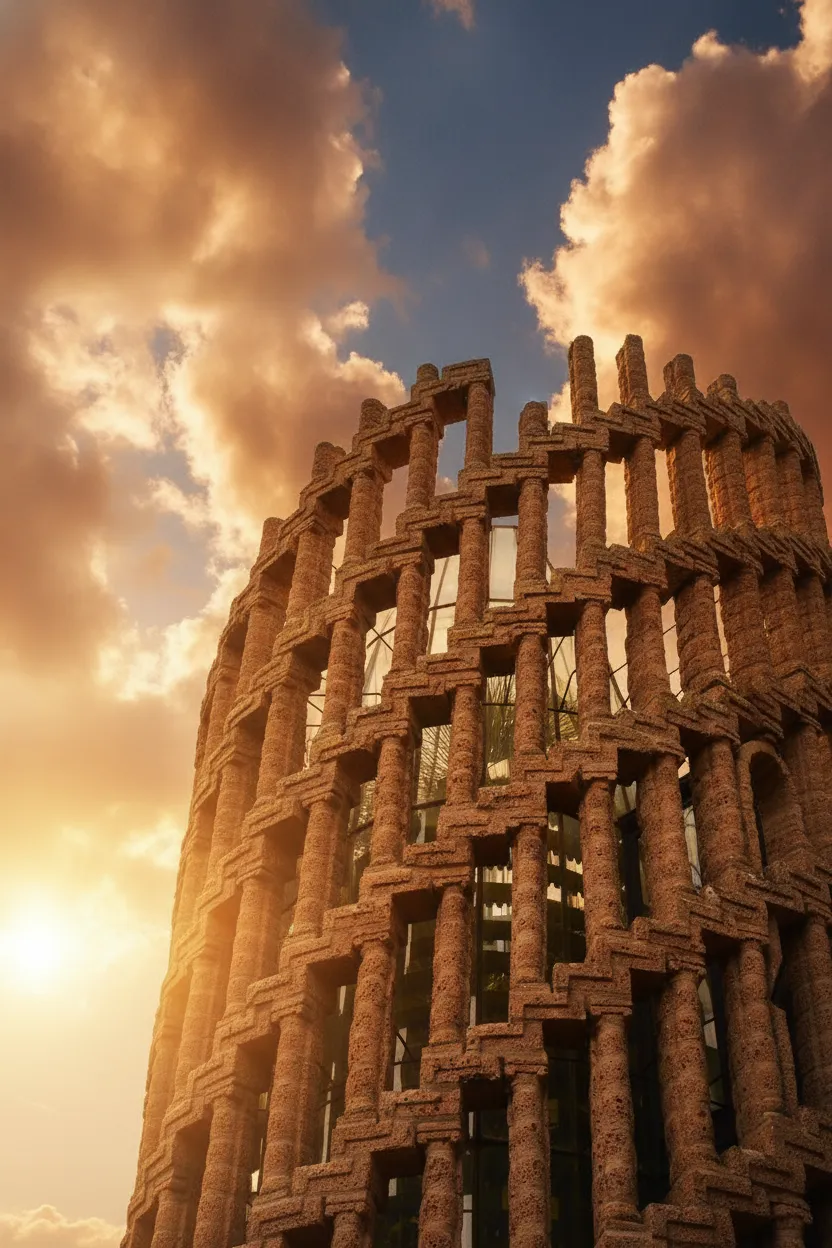
Unveiling La Scarzuola: A Vision in Stone
What makes La Scarzuola so profoundly special? It's the audacity of its creator, Tomaso Buzzi, who, after acquiring a 13th-century Franciscan convent, dedicated decades of his life to constructing his own 'Ideal City' around it. This isn't a mere garden or a collection of follies; it’s a sprawling, allegorical landscape, a "Theatro Mundi" – Theatre of the World – crafted entirely from local tuff rock, reflecting Buzzi’s personal philosophies, desires, and spiritual journey. Here, you'll find architectural echoes of classical antiquity, medieval mysticism, and surrealist whimsy, all intertwined. From the moment you arrive, La Scarzuola beckons you into a world where familiar forms are reinterpreted, scaled down, or playfully distorted. Imagine encountering a tiny Pantheon, its perfect dome a testament to classical ideals, only to turn and see a miniature Colosseum, its ancient grandeur compressed into a charming folly. Further still, a pyramid rises, an homage to ancient mysteries, all part of Buzzi's personal cosmology. This is a place where every arch, every temple, every bizarre structure serves a symbolic purpose, inviting visitors to decode its layers of meaning.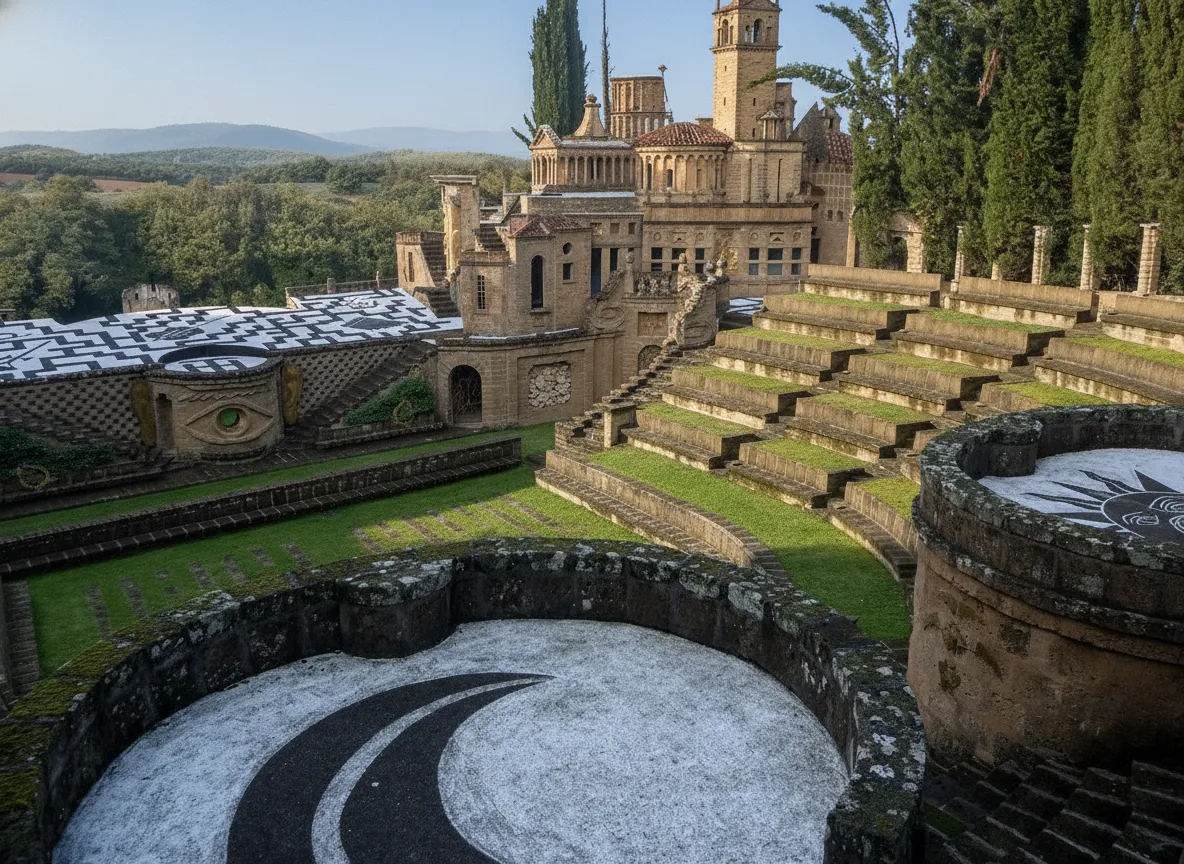 Buzzi’s genius lies in his ability to blur the lines between reality and dream, sacred and profane. The convent, once home to St. Francis of Assisi, forms the spiritual heart, while the surrounding 'Ideal City' represents the secular, human quest for knowledge, pleasure, and truth. It's a dialogue between the divine and the human, expressed through stone and space.
The Architect's Dream: Tomaso Buzzi's Legacy
The story of La Scarzuola begins in 1957 when Tomaso Buzzi, a renowned Italian architect and urban planner of the 20th century, purchased the abandoned Franciscan convent near Montegabbione. This ancient site, steeped in history and legend – it's believed St. Francis himself founded the convent in 1218 – became the canvas for Buzzi's ultimate artistic expression. Buzzi was not just an architect; he was a scholar, an aesthete, and a philosopher deeply steeped in classical traditions, Renaissance humanism, and esoteric thought. Rather than restoring the convent to its original state, he embarked on a far more ambitious project: to build a fantastical garden city next to it, an architectural autobiography reflecting his life, his studies, and his vision of an ideal society. For over two decades, until his death in 1981, Buzzi meticulously designed and oversaw the construction of his 'Ideal City.' His inspiration drew from diverse sources: the gardens of Bomarzo, the allegorical landscapes of the Renaissance, the surrealist art movement, and ancient texts. He envisioned a place that would challenge visitors to look beyond the obvious, to engage with architecture not just as structures but as symbols, as a narrative. After Buzzi's passing, his nephew, Marco Buzzi, took on the mantle, continuing to care for and guide visitors through this extraordinary legacy, preserving his uncle's vision with profound dedication. It is Marco, often, who personally guides visitors, imbuing the experience with intimate stories and interpretations that bring the stones to life.Wandering Through the Theatro Mundi
Stepping into Buzzi's 'Ideal City' is like entering a waking dream. The landscape unfolds in a series of seven theatrical stages, each designed to evoke different aspects of human experience and the spiritual journey. You'll find yourself navigating a dizzying array of hidden passages, staircases that lead to nowhere, and arches framing unexpected vistas. It’s a deliberate disorientation, a playful challenge to linear thought.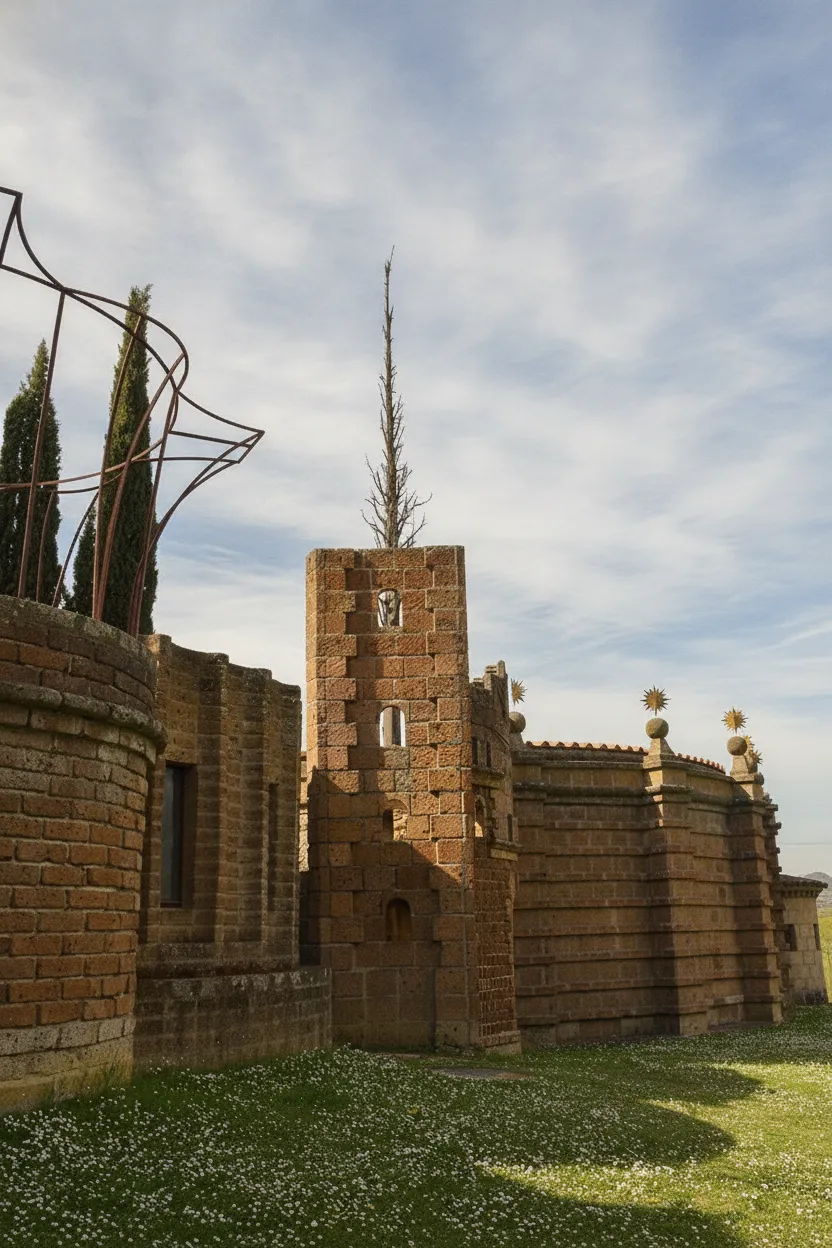 As you explore, you'll encounter a captivating sequence of structures:
* **The Acropolis:** A classical complex featuring miniature versions of iconic Roman buildings like the Colosseum, Pantheon, and the Arch of Constantine. These aren't mere replicas but symbolic representations, scaled and placed to create new meanings.
* **The Tower of Babel:** A spiral structure that evokes ambition and the quest for knowledge, perhaps also hinting at its futility.
* **The Tempietto of the Sacred Wood:** A small, circular temple dedicated to the natural world and ancient deities, blending pagan and Christian symbolism.
* **The Eye of God:** A fascinating architectural feature that plays with light and perspective, inviting introspection.
* **The Seven Theatres:** Each theatre represents a different aspect of life or a stage of spiritual growth, from the theatre of humanity to the theatre of enlightenment.
The gardens themselves are part of the allegory, with symbolic plantings and pathways that guide – or sometimes deliberately mislead – the visitor. You might stumble upon a pool of water that reflects the sky in a particular way, or a hidden grotto that feels like a secret chamber of contemplation. Everywhere you look, there's a detail, a perspective, or a juxtaposition that sparks curiosity and invites interpretation. It’s a place that demands you slow down, observe, and allow your imagination to roam free. The interplay of light and shadow, the natural textures of the tuff rock, and the unexpected twists and turns create an atmosphere that is at once ancient and utterly modern, deeply personal yet universally resonant.
As you explore, you'll encounter a captivating sequence of structures:
* **The Acropolis:** A classical complex featuring miniature versions of iconic Roman buildings like the Colosseum, Pantheon, and the Arch of Constantine. These aren't mere replicas but symbolic representations, scaled and placed to create new meanings.
* **The Tower of Babel:** A spiral structure that evokes ambition and the quest for knowledge, perhaps also hinting at its futility.
* **The Tempietto of the Sacred Wood:** A small, circular temple dedicated to the natural world and ancient deities, blending pagan and Christian symbolism.
* **The Eye of God:** A fascinating architectural feature that plays with light and perspective, inviting introspection.
* **The Seven Theatres:** Each theatre represents a different aspect of life or a stage of spiritual growth, from the theatre of humanity to the theatre of enlightenment.
The gardens themselves are part of the allegory, with symbolic plantings and pathways that guide – or sometimes deliberately mislead – the visitor. You might stumble upon a pool of water that reflects the sky in a particular way, or a hidden grotto that feels like a secret chamber of contemplation. Everywhere you look, there's a detail, a perspective, or a juxtaposition that sparks curiosity and invites interpretation. It’s a place that demands you slow down, observe, and allow your imagination to roam free. The interplay of light and shadow, the natural textures of the tuff rock, and the unexpected twists and turns create an atmosphere that is at once ancient and utterly modern, deeply personal yet universally resonant.
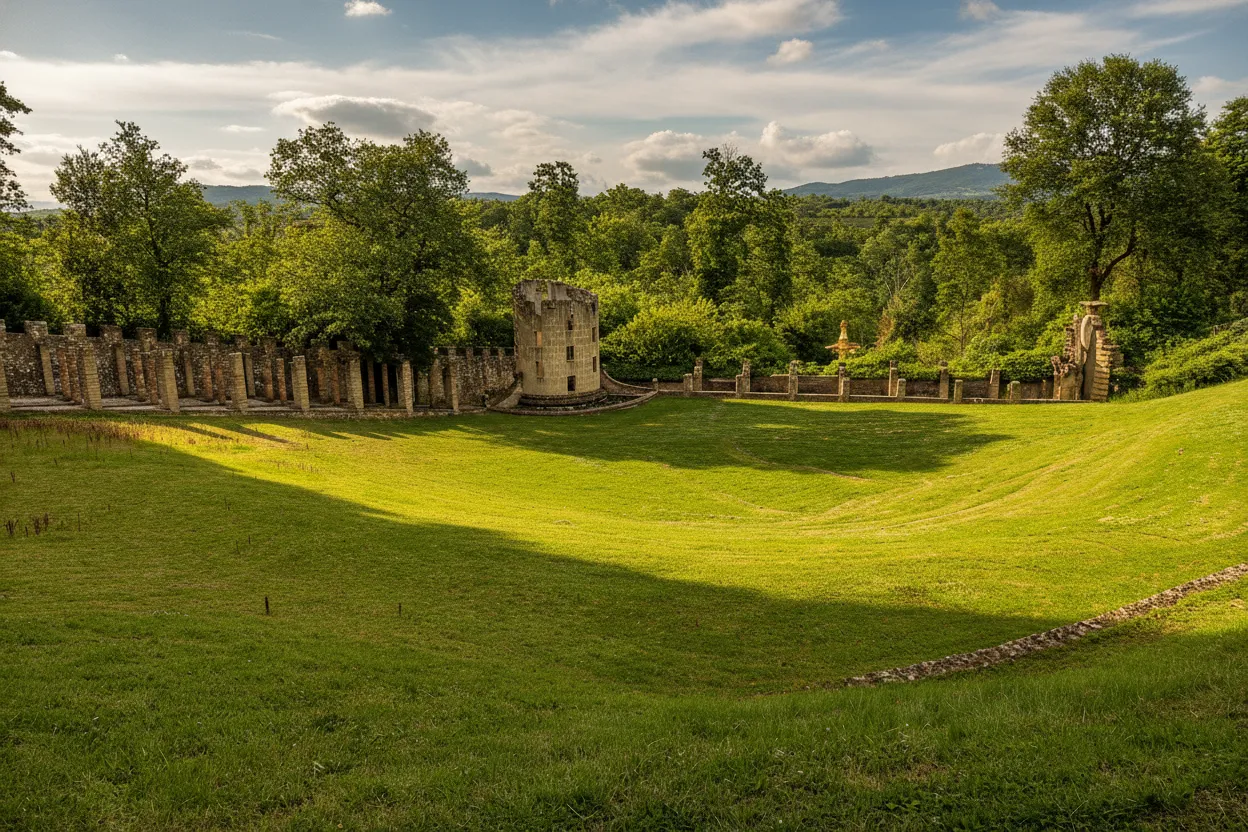 It’s a truly mind-bending experience, where the boundaries between art and life, the sacred and the profane, are not just blurred but joyfully celebrated. La Scarzuola is more than just a site to visit; it's an invitation to engage with a profound artistic statement, a journey into the human condition itself.
Planning Your Esoteric Journey
La Scarzuola is a testament to the power of individual vision, and experiencing it requires a little planning, as it’s not your typical walk-in attraction.Location: La Scarzuola is situated near Montegabbione, a small town in the province of Terni, Umbria. Its somewhat remote location adds to its mystique as a truly hidden gem.
Getting There: The easiest way to reach La Scarzuola is by car. Public transport options are limited, and a car offers the flexibility to explore the beautiful Umbrian countryside around it. The drive itself, through rolling hills and picturesque villages, is part of the charm.
Visits by Appointment Only: This is crucial! La Scarzuola is a private property and can only be visited by appointment, as part of a guided tour. These tours are usually led by Marco Buzzi himself or a knowledgeable family member, offering invaluable insights into Tomaso Buzzi's vision and the intricate symbolism of the 'Ideal City.' Booking well in advance is highly recommended, especially during peak travel seasons, as groups are kept small to preserve the intimate experience.
What to Expect on the Tour: The guided tour typically lasts around 2-2.5 hours. Wear comfortable shoes, as you’ll be doing a fair amount of walking, climbing stairs, and navigating uneven paths. Be prepared to be amazed, to ask questions, and to embrace the surreal. The tour is conducted primarily in Italian, but often Marco can provide explanations in English if requested in advance, or you might be part of a group with a translator.
Best Time to Visit: Spring (April-May) and Autumn (September-October) offer the most pleasant weather for exploring the outdoor spaces, with comfortable temperatures and lush landscapes. These seasons also tend to be less crowded than the height of summer.
Nearby Attractions: While in the area, consider visiting other beautiful Umbrian towns like Orvieto, Città della Pieve, or even Lake Trasimene. This region is rich in history, art, and incredible food, making it perfect for a longer stay.
In a world increasingly homogenised, La Scarzuola stands as a defiant, beautiful testament to individuality and artistic freedom. It’s an unforgettable pilgrimage for anyone seeking inspiration, contemplation, or simply a truly unique travel story to share. Don't just visit Italy; step into a dream. Step into La Scarzuola.Essential Travel Information
- Location La Scarzuola, Italy
- Best Time Spring (April-May) and Autumn (September-October)
- Getting There Best reached by car; located near Montegabbione, Umbria. Visits are by appointment only.
- Airport Perugia San Francesco d'Assisi Airport (PEG), Rome Fiumicino Airport (FCO)
- Budget Mid-range (Entry fee for guided tour, car rental costs; approx. €25-€35 for entry, daily costs vary)
- Language Italian
Find Places to Stay Near La Scarzuola
Compare hotels, hostels, and unique stays in Italy.
Search AccommodationTours & Experiences Near La Scarzuola
Book guided tours, day trips, and unique experiences.
Browse Tours