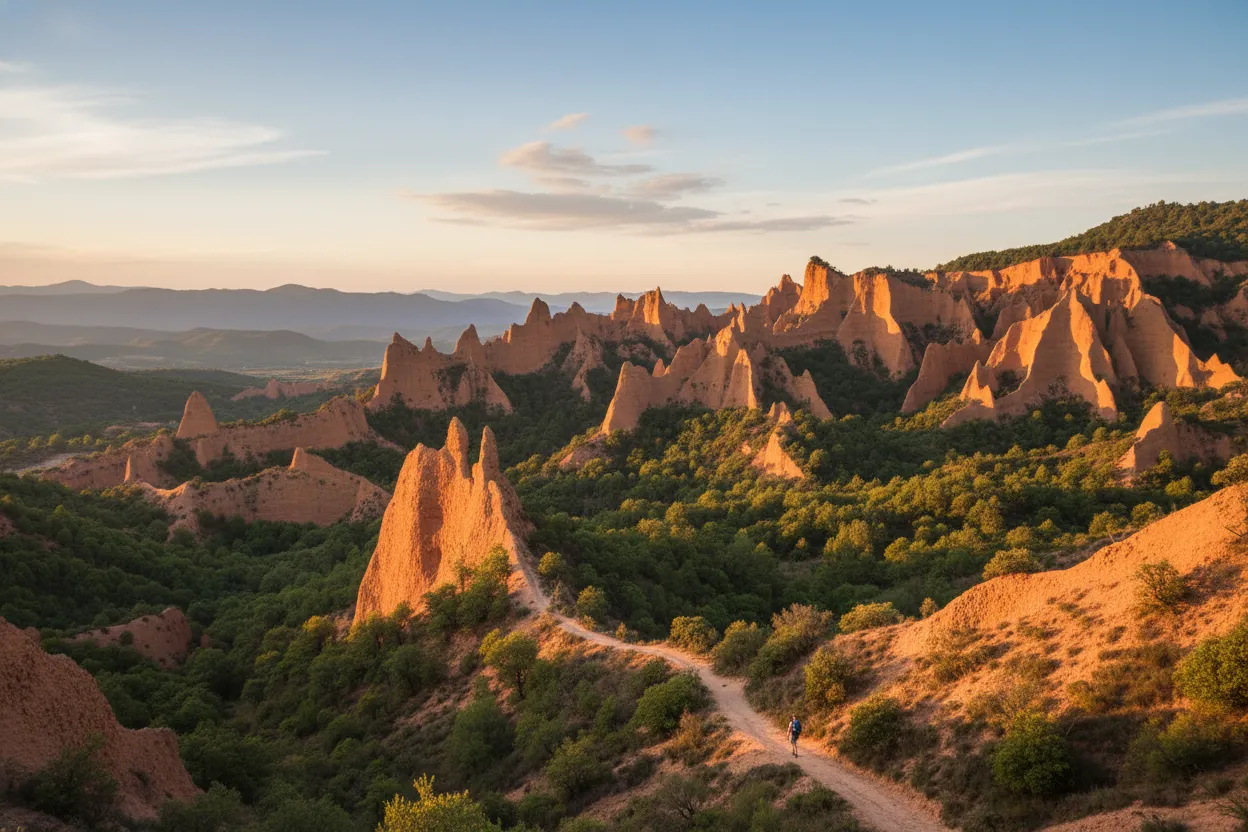
Imagine a landscape ripped apart by ancient engineering, leaving behind an alien world of blood-red peaks and labyrinthine tunnels, not by nature, but by Roman hands searching for gold. This isn't a scene from a sci-fi epic or a forgotten planet, but a very real, utterly breathtaking place nestled in the heart of Spain's Castile and León region: Las Médulas. If you've ever yearned for a destination that merges colossal human ambition with an otherworldly natural beauty, a place that whispers tales of empires and gold, then prepare to be captivated. Las Médulas is more than just a historical site; it's an open-air museum sculpted by ingenuity, perseverance, and an insatiable desire for wealth, leaving an indelible mark on the earth that you can still explore today.
What Makes Las Médulas So Special?
At first glance, Las Médulas is simply stunning. Its bizarre, ochre-colored badlands rise dramatically, peppered with deep caves and tunnels that carve through the surreal formations. But what truly sets it apart is the story behind this dramatic scenery. This isn't the work of millennia of wind and rain; it's the haunting, otherworldly relic of the largest Roman open-cast gold mine. Here, the Romans employed a mind-boggling technique called 'ruina montium'—literally 'ruin of the mountains'—using massive hydraulic power to erode entire mountainsides. Think about that for a moment: an ancient civilization, without modern machinery, harnessing the power of water to dismantle mountains in their quest for gold. The sheer scale of this endeavor, and the bizarre beauty it left behind, is almost unfathomable.
It's a UNESCO World Heritage site for good reason, a testament to both human ingenuity and its lasting impact on the natural world. Walking through Las Médulas, you're not just observing; you're stepping into a living, breathing history book, where the very earth tells a story of ambition, labor, and transformation. The contrast between the stark red earth and the vibrant green of ancient chestnut groves that now cling to the surreal formations creates a visual feast, especially in the golden light of dawn or dusk. It’s a place that truly makes you pause and reflect on the incredible feats of our ancestors.

A Glimpse into Roman Ambition: The History of Las Médulas
The story of Las Médulas begins with the Roman conquest of the Iberian Peninsula. Gold was the lifeblood of the Roman Empire, fueling its economy, minting its coins, and funding its vast armies. When the Romans discovered significant gold deposits in the Cantabrian Mountains, they knew they had hit a jackpot. But extracting it was no easy feat. The gold was embedded in alluvial deposits within the mountains, requiring an innovative and colossal approach.
Enter 'ruina montium'. This wasn't a simple pick-and-shovel operation. The Romans engineered a sophisticated system of canals and reservoirs, sometimes stretching for over a hundred kilometers, to channel water from surrounding mountains. This water was stored in massive tanks high above the gold-bearing hills. When the time was right, sluice gates were opened, releasing torrents of water that would literally blast away the mountainsides. The force of the water would erode the soft, sedimentary rock, washing away tons of earth and revealing the gold-rich gravel beneath. Tunnels were also dug into the mountains to weaken them from within, creating hollow chambers that would collapse under the immense water pressure, further aiding the "ruin of the mountains."
The scale of this operation is staggering. It's estimated that millions of cubic meters of earth were moved, and vast amounts of gold—some historians suggest up to 800 tons—were extracted over two centuries. This wasn't just an engineering marvel; it was an organizational triumph, requiring thousands of laborers, both slaves and free men, to dig canals, maintain reservoirs, and process the gold-bearing sediment. The Roman Empire's insatiable demand for gold literally reshaped the landscape, leaving behind the spectacular, scarred terrain we see today. When the Roman Empire eventually declined, so too did the mining operations, leaving nature to slowly reclaim parts of the land, planting the seeds for the ancient chestnut groves that now thrive here.
Exploring the Alien Landscape: What You'll See and Do
Visiting Las Médulas is an adventure for the senses, a journey back in time that offers breathtaking views and unique experiences. Trust me, you'll want to dedicate at least half a day, if not a full day, to truly soak it all in.
The Mirador de Orellán: A View from the Top
Your first stop should absolutely be the Mirador de Orellán. Perched high above the red peaks, this viewpoint offers the most iconic panoramic vistas of Las Médulas. From here, you can truly grasp the sheer scale of the Roman endeavor. The landscape sprawls beneath you like an enormous, ancient wound, a testament to human ambition. If you can, try to visit at sunrise or sunset when the low light bathes the red earth in a fiery glow – it’s an unforgettable spectacle. From the Mirador, you can also enter one of the ancient mining tunnels, offering a unique, subterranean perspective on the Roman workings. It's a short, easy walk into the mountain, but bring a flashlight – it gets dark!

Delving into the Tunnels and Caves
One of the most thrilling aspects of Las Médulas is the opportunity to explore some of the ancient tunnels and caves carved by the Romans. These aren't just small openings; some are extensive networks. Walking through these cool, damp passages, you'll feel a shiver of connection to the thousands of laborers who toiled here centuries ago. The most famous is the Cueva Encantada (Enchanted Cave) and La Cuevona (The Big Cave), easily accessible from the main trails. Remember to wear sturdy shoes and bring a headlamp or flashlight – while some areas have natural light, others are quite dark. It’s an incredible feeling to be inside the very heart of these man-made mountains.
Wandering Through Ancient Chestnut Groves
As you explore the trails, you'll find yourself amidst magnificent, ancient chestnut groves. These trees, some hundreds of years old, were planted after the mining ceased, their roots finding purchase in the red, mineral-rich earth. They provide a striking contrast to the bare, eroded peaks and offer welcome shade. Many of the trees are gnarled and massive, looking like characters from a fairy tale. It’s a beautiful example of nature reclaiming and repurposing a landscape utterly transformed by human hands. Take a moment to appreciate their majesty, perhaps even enjoying a picnic under their expansive canopies.

Hiking the Trails
Las Médulas offers a network of well-marked hiking trails suitable for various fitness levels. The main circular route is relatively easy and takes you past the key highlights. There are also more challenging paths for seasoned hikers. Pick up a map from the visitor center, or simply follow the signs. Each path offers different perspectives of the unique geology and the rich history embedded in the landscape. Don't rush; allow yourself time to stop, observe, and truly absorb the atmosphere.
The Las Médulas Visitor Center and Archaeological Park
To truly understand the genius and scale of the Roman operations, make sure to visit the Las Médulas Visitor Center and the nearby Aula Arqueológica (Archaeological Classroom). Here, you'll find models, explanations, and artifacts that bring the history to life, providing crucial context to what you see outdoors. It helps connect the dots and appreciate the incredible engineering feats even more.
Practical Tips for Your Las Médulas Adventure
To make the most of your visit to this extraordinary site, here are a few practical pointers from a seasoned traveler:
- Getting There: Las Médulas is best accessed by car, giving you the flexibility to explore at your own pace. It's located near Ponferrada in the province of León. While there are some bus services from Ponferrada, having your own vehicle is highly recommended.
- When to Visit: Spring (April-June) and Autumn (September-October) are ideal. The weather is pleasant for hiking, and the colors are spectacular – spring brings lush greenery, while autumn sees the chestnut leaves turn golden. Summer can be very hot, and winter might be chilly and damp, though it offers a unique, stark beauty.
- What to Bring: Comfortable, sturdy walking shoes are a must for the uneven terrain. Bring plenty of water, especially on warmer days. A flashlight or headlamp is essential for exploring the tunnels. Don't forget your camera for those incredible photo opportunities!
- Accommodation: While there are a few small guesthouses in the tiny village of Las Médulas itself, most visitors stay in nearby Ponferrada (about 25 minutes drive), which offers a wider range of hotels, restaurants, and amenities.
- Respect the Site: As a UNESCO World Heritage site, it's crucial to respect the delicate environment. Stay on marked trails, do not disturb any archaeological features, and take all your rubbish with you.
- Guided Tours: Consider booking a guided tour, especially if you want a deeper understanding of the 'ruina montium' technique and the history. Local guides often offer fascinating insights that you might miss on your own.
Las Médulas is more than just a destination; it's an experience that will stay with you long after you've left its blood-red peaks. It’s a powerful reminder of nature's resilience, human ambition, and the enduring stories etched into the very fabric of our planet. So, pack your bags, lace up your hiking boots, and prepare to step into an alien world created by Roman hands – a truly hidden gem waiting to be discovered in Spain.
Essential Travel Information
- Location Las Médulas, Spain
- Best Time Spring (April-June) and Autumn (September-October)
- Getting There Best accessed by car from nearby cities like Ponferrada. Limited bus services are available from Ponferrada.
- Airport León Airport (LEN)
- Budget Mid-range (approx. €50-€100 per day excluding accommodation)
- Language Spanish
Find Places to Stay Near Las Médulas
Compare hotels, hostels, and unique stays in Spain.
Search AccommodationTours & Experiences Near Las Médulas
Book guided tours, day trips, and unique experiences.
Browse Tours