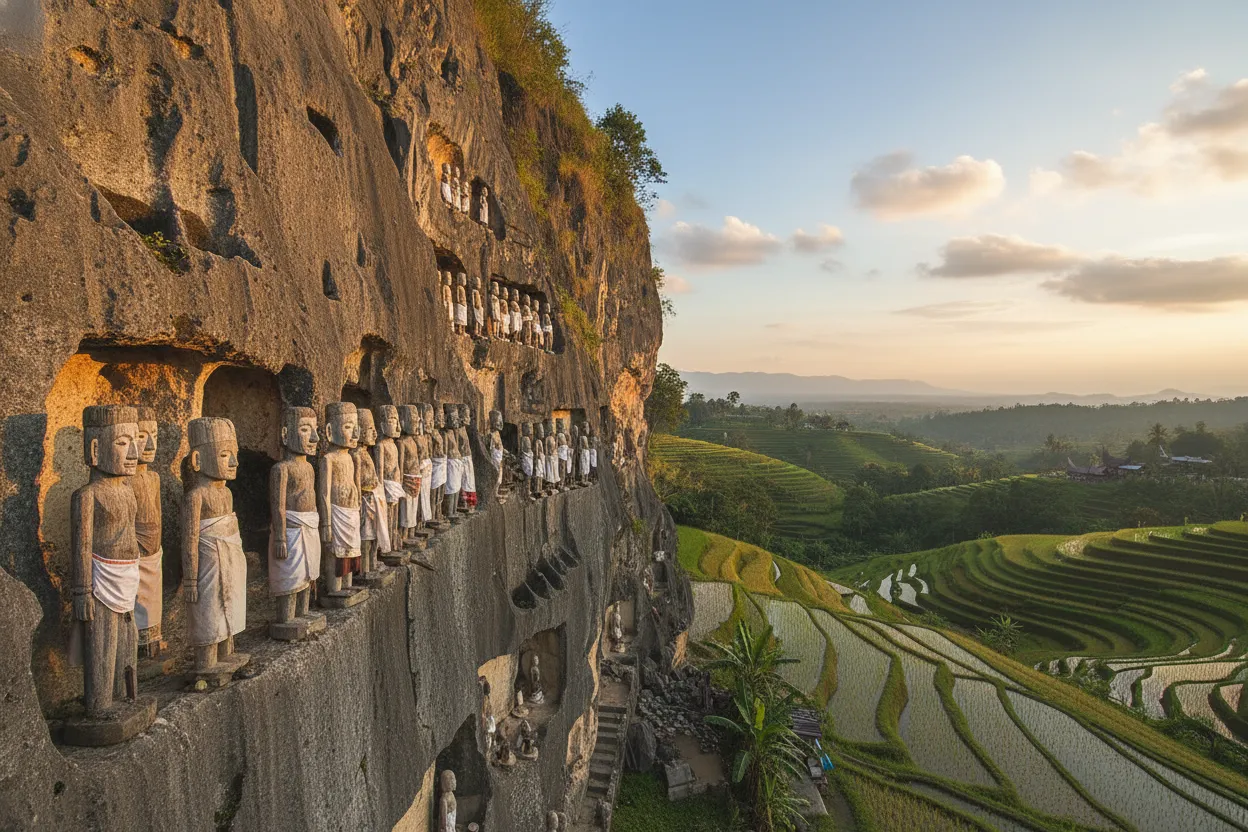
Imagine a place where the line between life and death blurs, where ancestors gaze down from carved cliffside balconies, their wooden eyes silently overseeing generations of their descendants. This isn't a scene from a fantasy novel; it's the profound reality of Tana Toraja, a remote highland region in South Sulawesi, Indonesia. And at the heart of this extraordinary cultural landscape lies Lemo Burial Site, a destination that defies conventional understanding of mortality and family. Prepare to have your perceptions of life, death, and remembrance utterly transformed.
Tana Toraja is globally renowned for its elaborate and truly unique funeral rites, where the deceased are not immediately 'dead' but rather 'sick,' often kept within the family home for years. This period allows families to save for the incredibly complex and costly funeral ceremonies (Rambu Solo'), which can involve hundreds of buffalo and pigs. But it's the final resting places, particularly at sites like Lemo, that truly captivate. Here, the sheer cliff faces are not just geological features; they are honeycombed with ancient burial chambers, and high above, 'tau-tau' effigies of the deceased stand sentinel, creating a haunting, ancestral art gallery unlike any other on Earth.
The Eternal Watchers of Lemo: Tau-Tau Effigies
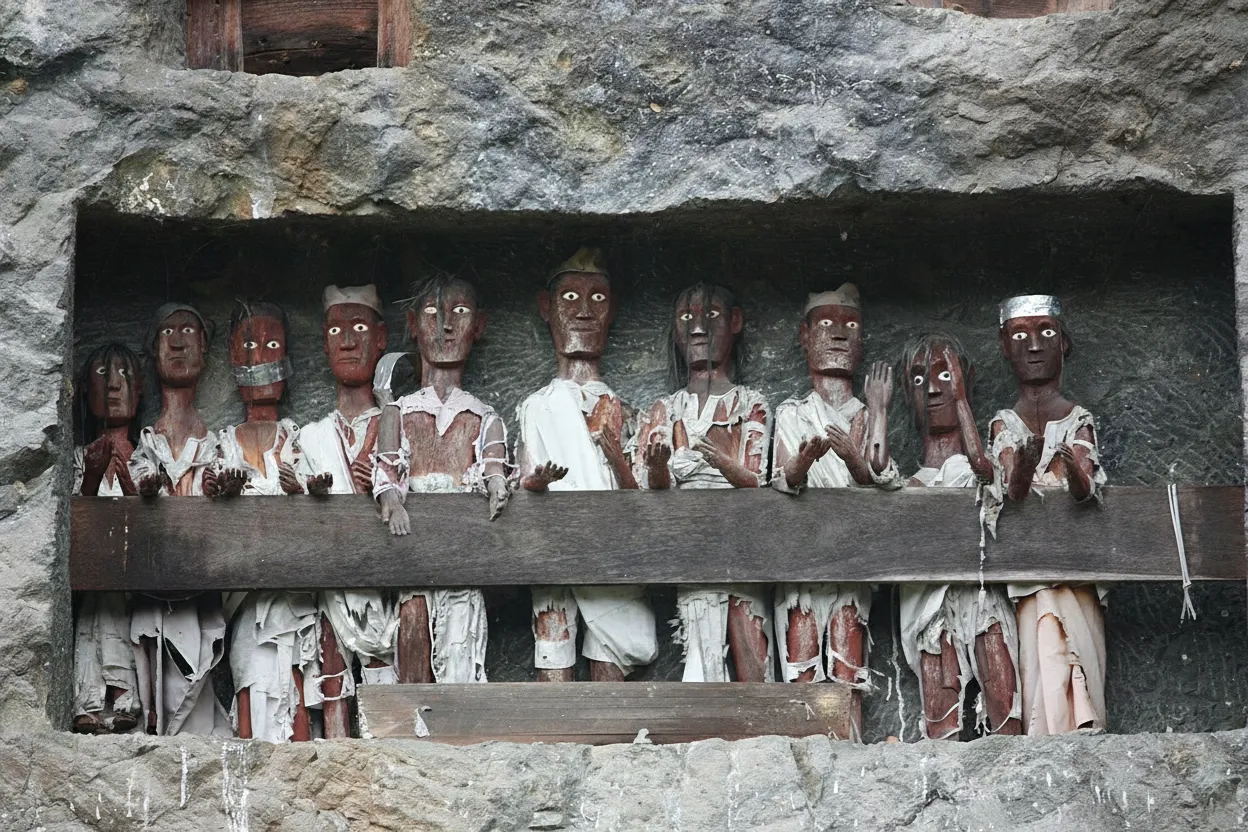
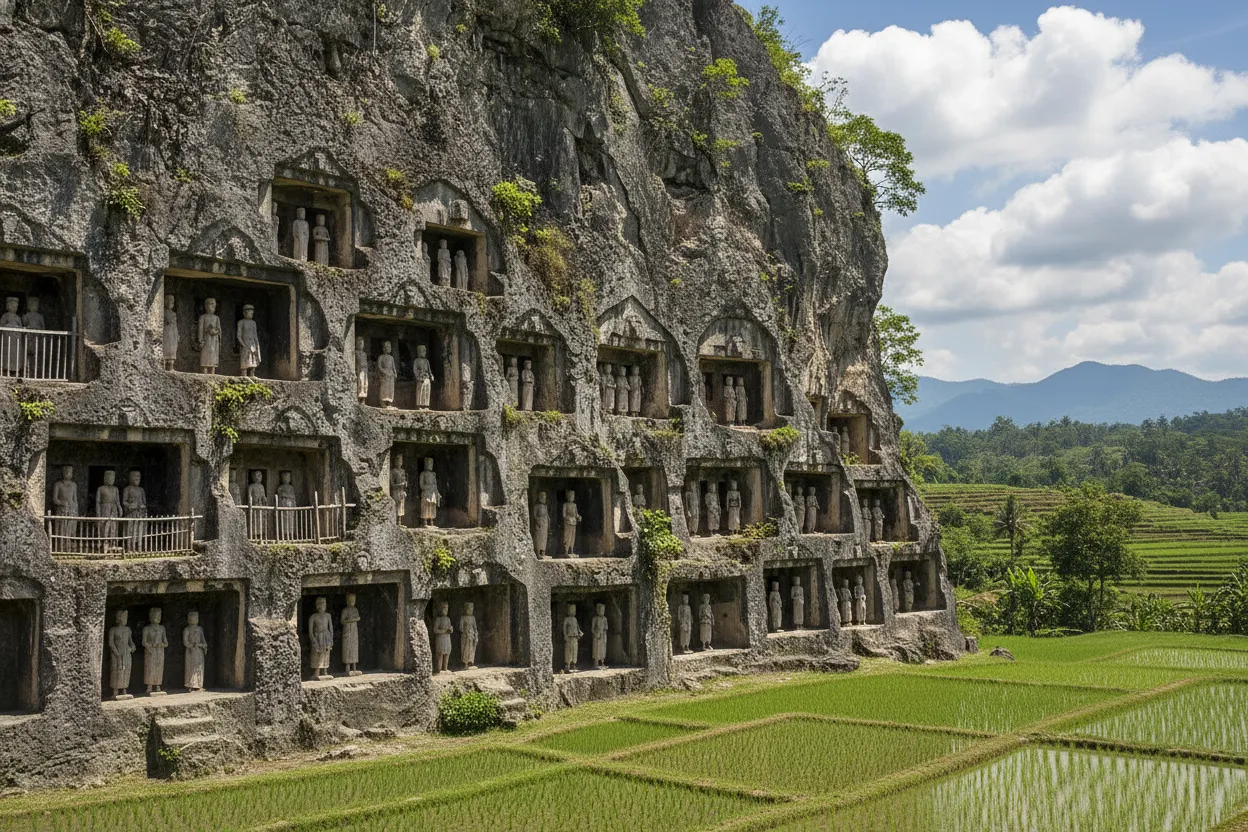
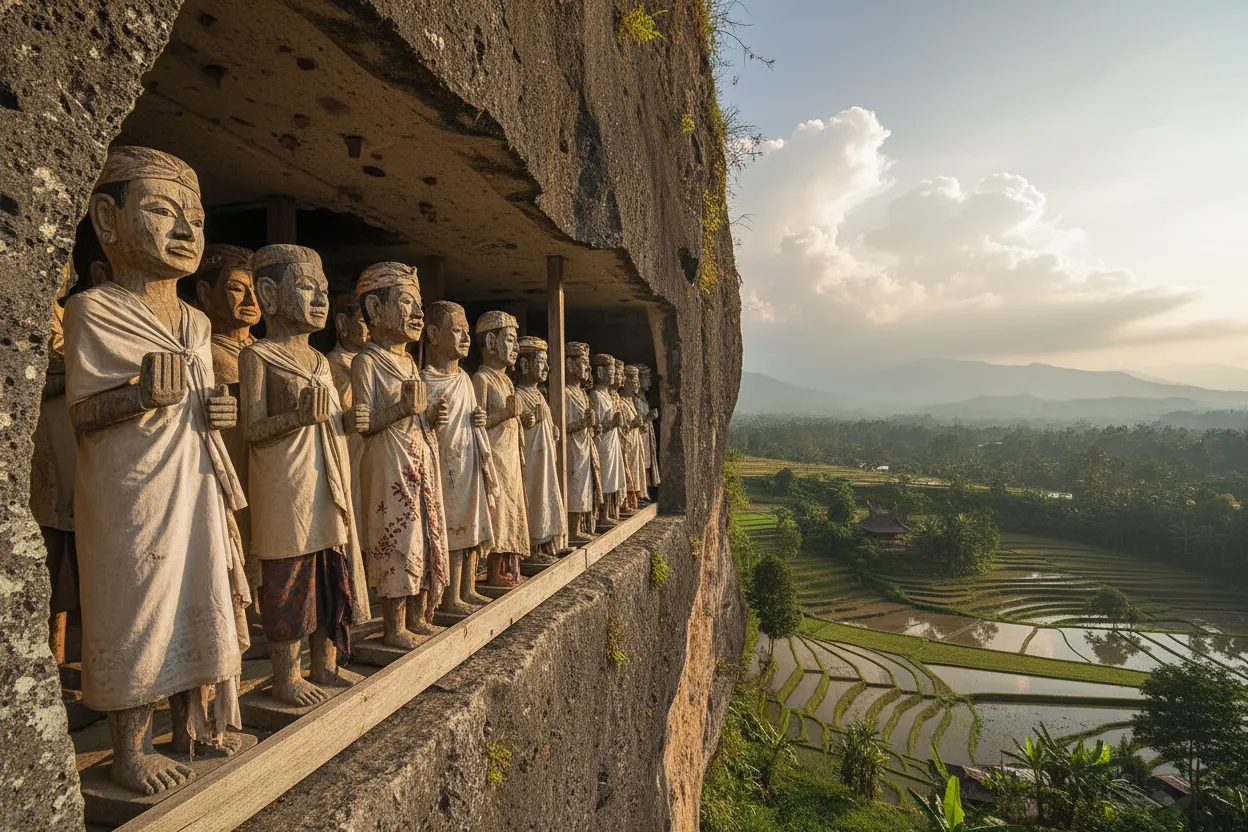
As you approach Lemo, a sense of quiet reverence descends. The first thing that strikes you is the towering limestone cliff, pockmarked with dozens of rectangular openings. But it’s the figures emerging from these recesses that truly steal your breath. These are the tau-tau – life-sized, hand-carved wooden effigies, each meticulously crafted to resemble the person it represents. Dressed in traditional Torajan clothing, often adorned with jewelry, they stand or sit on narrow balconies, their faces weathered by time and elements, yet retaining an undeniable presence.
Each tau-tau is more than just a statue; it’s believed to embody the spirit of the deceased, acting as an eternal guardian watching over the living. They are positioned high up, often out of easy reach, symbolizing the elevated status of the ancestors. Over time, some have lost limbs or been damaged, but their collective gaze from the cliffside creates an incredibly powerful and slightly eerie spectacle. It’s a testament to a culture that views death not as an end, but as a transition, a continuous dialogue between the living and the dead.
A Journey into Torajan Funeral Rites
To understand Lemo, you must first grasp the heart of Torajan belief: Aluk Todolo, the 'Way of the Ancestors.' This ancient animistic faith dictates that life and death are intertwined, a cyclical journey. When a person dies, they are not immediately buried. Instead, their body is embalmed (traditionally with natural herbs, now often with formaldehyde) and kept in the family home, treated as a 'sick' person. Family members continue to interact with them, bringing food and drink, until the elaborate Rambu Solo' funeral ceremony can be arranged, sometimes years later.
The funeral itself is a spectacular, multi-day event involving animal sacrifices, traditional dances, and feasting, all aimed at ensuring the deceased's smooth journey to the afterlife (Puyu). Once the ceremony is complete, the body, often placed in a coffin carved to resemble an animal, is interred in one of several types of graves. For the nobility and wealthy, cliff graves like those at Lemo are the ultimate honor. The tau-tau, commissioned after the funeral, completes this journey, ensuring the ancestor's enduring presence among their kin.
What You'll Experience at Lemo
Visiting Lemo is an experience that engages all your senses. The air is often still, carrying the scent of damp earth and ancient wood. The visual impact is immediate: the imposing cliff, the rows of tau-tau, some faded and ancient, others relatively new and vibrant. You can walk along the base of the cliff, craning your neck to study the effigies above. Many of the burial chambers are carved directly into the rock face, some accessible only by ropes, others with small wooden ladders. These chambers house generations of families, their coffins often stacked high within the cool, dark recesses.
Local guides, often descendants of those buried there, are usually available and highly recommended. They can provide invaluable insights into the specific families, the meaning behind certain tau-tau expressions, and the intricate details of Torajan customs. They might point out specific effigies, explaining that one was a revered village elder, another a skilled warrior. The whole site feels like an open-air museum, a living testament to a culture that reveres its ancestors above all else. It's a place of quiet contemplation, a poignant reminder of our shared human desire to remember and be remembered.
Lemo's Roots: History and Beliefs
The practice of carving cliff graves and creating tau-tau at Lemo dates back centuries, evolving from the deep-seated animistic beliefs of the Torajan people. The Aluk Todolo faith, though now often blended with Christianity, continues to shape their worldview, emphasizing harmony between the living, the dead, and the spiritual realm. The higher the burial chamber, the more prestigious the family, reflecting their status in life and their proximity to the heavens in death.
Historically, the carving of these graves and effigies was a highly specialized craft, passed down through generations. The tau-tau themselves were originally much simpler, often just rudimentary figures. Over time, as tools and techniques advanced, and as wealth allowed for more elaborate rituals, the tau-tau evolved into the detailed, lifelike representations we see today. Each effigy is a unique piece of ancestral portraiture, a blend of art, spirituality, and a profound respect for lineage.
Planning Your Pilgrimage to Lemo: Practical Tips
Embarking on a journey to Tana Toraja and Lemo is an adventure into a truly distinct culture. Here’s how to make your visit smooth and respectful:
- Best Time to Visit: The dry season, from May to October, offers the most pleasant weather for exploring. However, if you wish to witness a funeral ceremony, these are more common during the peak harvest season (June-August) and after harvest (December-January), when families have resources.
- Getting There: The main gateway to South Sulawesi is Makassar (UPG). From Makassar, you can take an overnight bus (approx. 8-10 hours) or hire a private car to Rantepao, the main town in Tana Toraja. Lemo is located just a short drive (about 10km) south of Rantepao.
- Accommodation: Rantepao offers a range of guesthouses and hotels suitable for various budgets. It serves as an excellent base for exploring Lemo and other nearby sites.
- Guides: Hiring a local, licensed guide is highly recommended. Their knowledge of Aluk Todolo, the intricate family histories, and etiquette will enrich your experience immensely. They can also help navigate local transport and funeral schedules.
- Respectful Visiting: Tana Toraja is a living cultural site, not just a tourist attraction. Dress modestly, especially when visiting burial sites or attending ceremonies. Always ask permission before taking photos of people, especially during funerals. Be mindful of noise levels and avoid touching the tau-tau or grave sites.
- Beyond Lemo: While Lemo is iconic, Tana Toraja offers other fascinating sites like Londa (cave graves), Suaya (royal cliff graves), and Kambira (baby tree graves), each with its own unique story. Allow several days to truly immerse yourself.
Lemo is more than just a burial site; it’s a profound testament to a culture that embraces its ancestors with unparalleled reverence. It challenges our Western notions of death, inviting us to consider a continuous, intergenerational connection that transcends the grave. To stand before these silent, wooden watchers is to feel a deep sense of wonder, a quiet awe at the enduring power of human tradition and the beautiful, complex ways we choose to remember those who came before us. It’s an experience that will stay with you, long after you’ve left the highlands of Tana Toraja.
Essential Travel Information
- Location Lemo Burial Site (Tana Toraja), Indonesia
- Best Time May to October (dry season); June-August or Dec-Jan for funeral ceremonies
- Getting There Fly to Makassar (UPG), then 8-10 hour bus/private car to Rantepao. Lemo is a short drive from Rantepao.
- Airport Sultan Hasanuddin International Airport (UPG)
- Budget Mid-range (approx. $50-100 USD/day including accommodation, food, local transport, and guide)
- Language Torajan, Indonesian
Find Places to Stay Near Lemo Burial Site (Tana Toraja)
Compare hotels, hostels, and unique stays in Indonesia.
Search AccommodationTours & Experiences Near Lemo Burial Site (Tana Toraja)
Book guided tours, day trips, and unique experiences.
Browse Tours