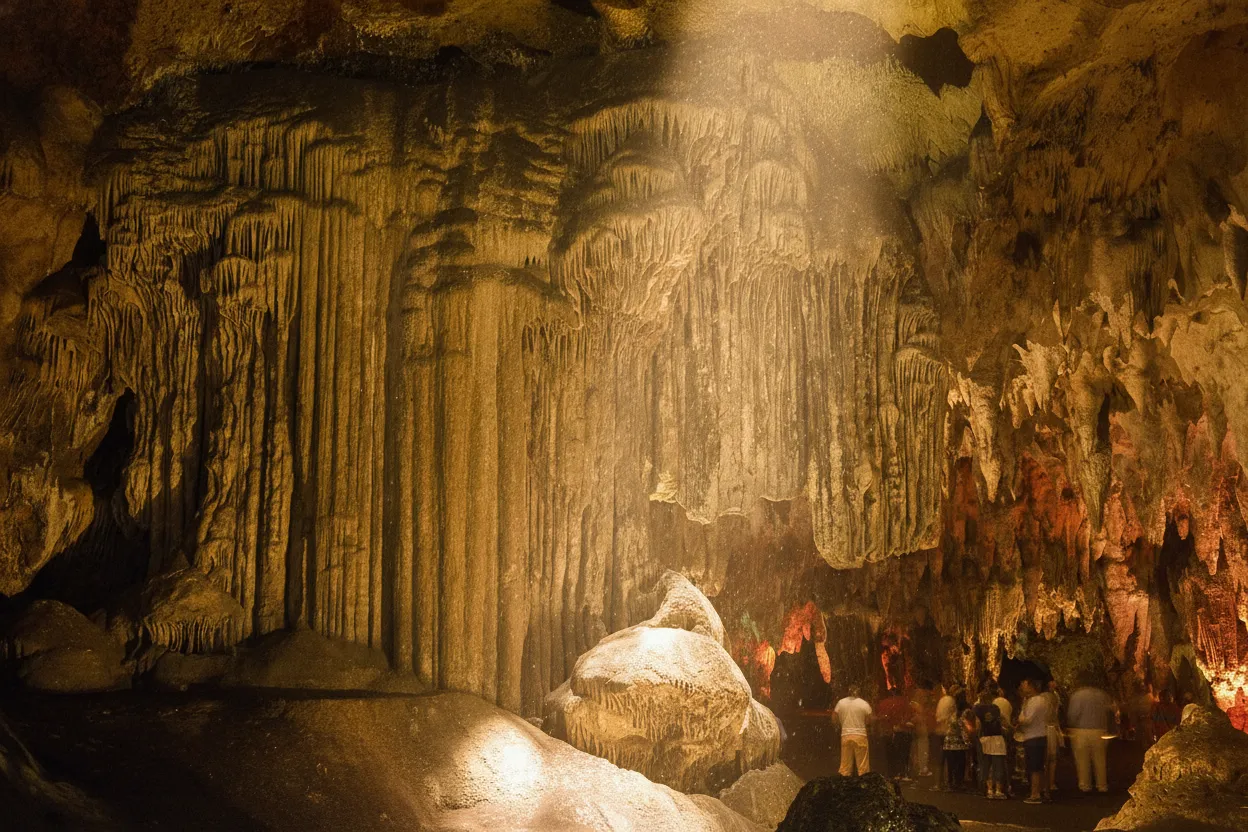
Imagine stepping through a veil, not just into a cave, but into a place where the ancient world still whispers its secrets. A sprawling underground labyrinth that Maya priests once believed was a portal to Xibalba, the underworld itself. Here, amongst colossal stalactites and stalagmites, you’ll find ancient murals, haunting petroglyphs, and even 'singing' stone columns that once echoed with ceremonial music. Welcome, my friend, to Loltún Cave (Grutas de Loltún) in Mexico's enigmatic Yucatán Peninsula – a true hidden gem that promises an adventure unlike any other.
I’ve explored my fair share of incredible places, but Loltún is something else entirely. It’s not just a beautiful natural wonder; it’s a living museum, a sacred space, and a journey back in time, all rolled into one breathtaking experience. If you’re yearning for a travel story that will make your friends green with envy, then pack your bags and prepare to descend into the heart of the Maya world.
Descend into Xibalba: What Makes Loltún So Special?
Loltún, meaning 'Flower Stone' in Yucatec Maya, is far more than just a cavern. It’s a colossal cave system, one of the largest and most historically significant in the Yucatán. What truly sets it apart is its profound connection to human history, spanning millennia. From early hunter-gatherers seeking shelter over 10,000 years ago to the advanced Mayan civilization who revered it as a sacred conduit to their gods and the underworld, Xibalba, Loltún has been a constant presence in the human story of this region.
As you navigate its vast chambers, you’ll be walking in the footsteps of countless generations. The air itself seems to hum with ancient energy. But perhaps the most enchanting feature is the famous 'singing' stone column. When gently struck, this particular stalactite produces a hollow, resonant sound – a truly magical experience. Imagine Maya priests using this natural instrument for ceremonial music, for communication with deities, or perhaps even to signal across the vast subterranean expanses. It’s a direct, tangible link to a world long past, and it’s utterly captivating.
Beyond the geological wonders and the 'singing' stone, Loltún is a treasure trove of ancient art. You'll encounter Maya petroglyphs and handprints adorning the cave walls, silent witnesses to rituals and daily life from centuries ago. These aren't just pretty pictures; they are messages from the past, etched into stone, waiting for you to decipher their secrets. This blend of natural grandeur and profound human history is what makes Loltún an absolutely essential stop for any intrepid traveler to the Yucatán.

A Journey Through Time: The Rich History of Loltún Cave
The history of Loltún Cave is as deep and layered as its geological formations. Archeological evidence suggests that humans first sought refuge in its cool, dry chambers during the Paleolithic and Archaic periods, making it one of the oldest continually occupied sites in the Americas. Tools, pottery shards, and even fossilized animal remains found within the cave paint a vivid picture of early life here, long before the rise of the great Maya cities.
However, it was the Maya civilization that truly elevated Loltún to a place of immense spiritual significance. For them, caves were not merely geological formations; they were sacred spaces, the literal entrances to Xibalba, the realm of the dead and the gods. Loltún served multiple crucial roles: it was a vital source of fresh water during the region's dry seasons, a secure shelter, and, most importantly, a ceremonial center.
Maya priests conducted elaborate rituals within its depths, seeking guidance from the gods, performing sacrifices, and connecting with the ancestors. The numerous altars, pottery fragments, and intricate carvings found throughout the cave are testament to its importance. From intricate petroglyphs depicting human figures and animals like jaguars and birds, to handprints left by those who came before, every turn reveals a new piece of this ancient puzzle. Walking through Loltún, you can almost hear the echoes of ancient chants and feel the presence of those who once sought solace and wisdom within its stone embrace.
Unveiling the Wonders: What You'll See Inside
Visiting Loltún Cave is an adventure that begins the moment you step through its impressive entrance, known as Jaltún, or "Stone Flower." Due to the cave's immense size and historical significance, guided tours are mandatory, and frankly, essential. Your local guide, often a descendant of the Maya, will bring the cave to life with stories, legends, and expert knowledge of its formations and ancient art.
As you delve deeper, you'll pass through a series of colossal chambers, each with its own character and name. "The Cathedral" lives up to its moniker, with towering ceilings and formations that evoke grand architectural designs. "The Gallery of the Paintings" is where you'll spend time marveling at the ancient petroglyphs and faded murals, trying to decipher the messages etched into the stone thousands of years ago. Look closely for the famous "Warrior of Loltún" carving, a striking image of a Maya warrior.
You'll encounter an incredible array of geological formations: immense stalactites hanging like icicles from the ceiling, stalagmites rising from the floor like petrified guardians, and delicate flowstones and curtains that shimmer under the guide's flashlight. The sheer scale is often overwhelming, reminding you of the incredible power of nature and time. And, of course, a highlight of the tour is a demonstration of the 'singing' column, sometimes affectionately called 'The Molar' due to its shape, where your guide will strike it to produce its unique, resonant tone.

Throughout your journey, your guide will point out evidence of Maya habitation – remnants of ancient altars, pottery shards scattered on the floor (please, do not touch or remove anything!), and even areas where it's believed ancient rivers once flowed, connecting the cave to the region's vast underground water system. It’s a truly immersive experience that peels back the layers of history and geology, revealing a world hidden beneath the surface of the Yucatán jungle.
Your Loltún Adventure: Practical Visit Tips
Ready to embark on your own Loltún adventure? Here are a few practical tips to ensure your visit is as smooth and enjoyable as possible:
Getting There
Loltún Cave is located in the southern part of the Yucatán state, near the town of Oxkutzcab. The most common way to visit is by rental car, which gives you the flexibility to explore other nearby Ruta Puuc sites like Uxmal, Labná, and Sayil. Alternatively, you can hire a taxi from Mérida or take an organized tour from Mérida or Campeche. The drive from Mérida is approximately 1.5 to 2 hours.
What to Wear & Bring
Comfort is key! Wear comfortable walking shoes with good grip, as the cave floor can be uneven and occasionally damp. Light, breathable clothing is best, as it can be warm and humid inside. While guides typically carry flashlights, bringing a small headlamp or extra flashlight can enhance your experience and allow you to see more details. Don't forget a water bottle – hydration is important! Photography is generally allowed, but check with your guide about flash usage, as it can be disruptive to other visitors and potentially harmful to ancient art.
The Guided Tour
As mentioned, guided tours are mandatory. They usually run on a semi-fixed schedule or whenever enough people gather. Tours are primarily in Spanish, but many guides have a basic understanding of English and can provide key information. Don't be shy about asking questions! The tour typically lasts about 1.5 to 2 hours, covering a significant portion of the accessible cave system.
Accessibility & Physical Demands
Loltún involves a fair amount of walking, some climbing over uneven terrain, and navigating occasional steps. It is not wheelchair accessible and may be challenging for individuals with significant mobility issues. If you have concerns, it's best to inquire directly with the cave management beforehand.
Best Time to Visit
The dry season (November to April) is generally the most comfortable time to visit the Yucatán. To avoid crowds and the hottest part of the day, aim to arrive early in the morning. Loltún is a popular attraction, especially during peak tourist season.
Respect the Site
Remember that Loltún is not just a tourist attraction; it's a sacred historical site. Please refrain from touching the cave formations, especially the stalactites and stalagmites, as the oils from your skin can damage them. Absolutely do not touch any of the ancient petroglyphs or murals. Leave no trace of your visit, and help preserve this incredible place for future generations.

Loltún Cave is more than just a destination; it's an experience that will stay with you long after you've emerged back into the Yucatán sunlight. It's a testament to the enduring spirit of human exploration, the profound connection between ancient civilizations and the natural world, and the sheer wonder that lies hidden beneath our feet. So, if you're ready for an adventure that blends history, mystery, and breathtaking natural beauty, make Loltún Cave your next unforgettable journey.
Essential Travel Information
- Location Loltún Cave (Grutas de Loltún), Mexico
- Best Time November to April (dry season), early morning to avoid crowds and heat.
- Getting There Best by rental car from Mérida (approx. 1.5-2 hours) or as part of an organized tour. Taxis also available from nearby towns.
- Airport Mérida International Airport (MID)
- Budget Mid-range (expect costs for entrance fee, mandatory guide, transportation, and potentially lunch/snacks)
- Language Spanish (local guides often have basic English, Yucatec Maya also spoken in the region)
Find Places to Stay Near Loltún Cave (Grutas de Loltún)
Compare hotels, hostels, and unique stays in Mexico.
Search AccommodationTours & Experiences Near Loltún Cave (Grutas de Loltún)
Book guided tours, day trips, and unique experiences.
Browse Tours