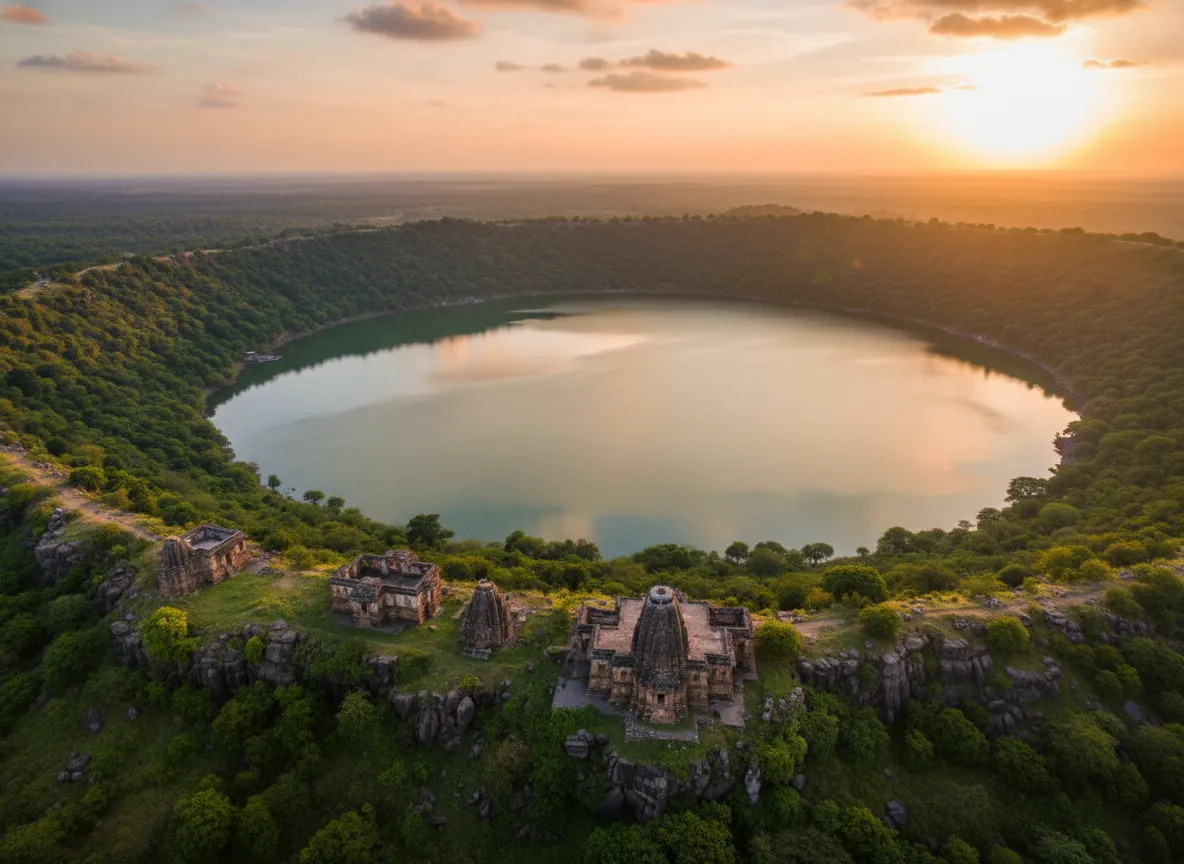
Imagine a place where the sky once touched the Earth in a fiery embrace, leaving behind a perfectly circular scar that now shimmers with an otherworldly allure. Nestled in the heart of India's Deccan Plateau, in the vibrant state of Maharashtra, lies Lonar Lake – a geological marvel born from a meteor's ancient, fiery kiss. This isn't just any lake; it's a saline soda lake, a cosmic masterpiece, and one of Earth's most unique natural wonders, waiting to enchant the curious traveler. Forget everything you thought you knew about lakes, because Lonar is about to redefine 'extraordinary' for you.
A Crater of Cosmic Proportions: What Makes Lonar Lake So Special?
What makes Lonar Lake a truly unparalleled destination? For starters, it's one of only four known hypervelocity impact craters on basaltic rock anywhere on Earth. Think about that for a moment: out of all the craters scarring our planet, only a handful exist where a celestial body slammed into the dense, volcanic rock of a flood basalt province. This geological rarity alone makes Lonar a site of immense scientific interest and an awe-inspiring spectacle for anyone who stands on its rim.
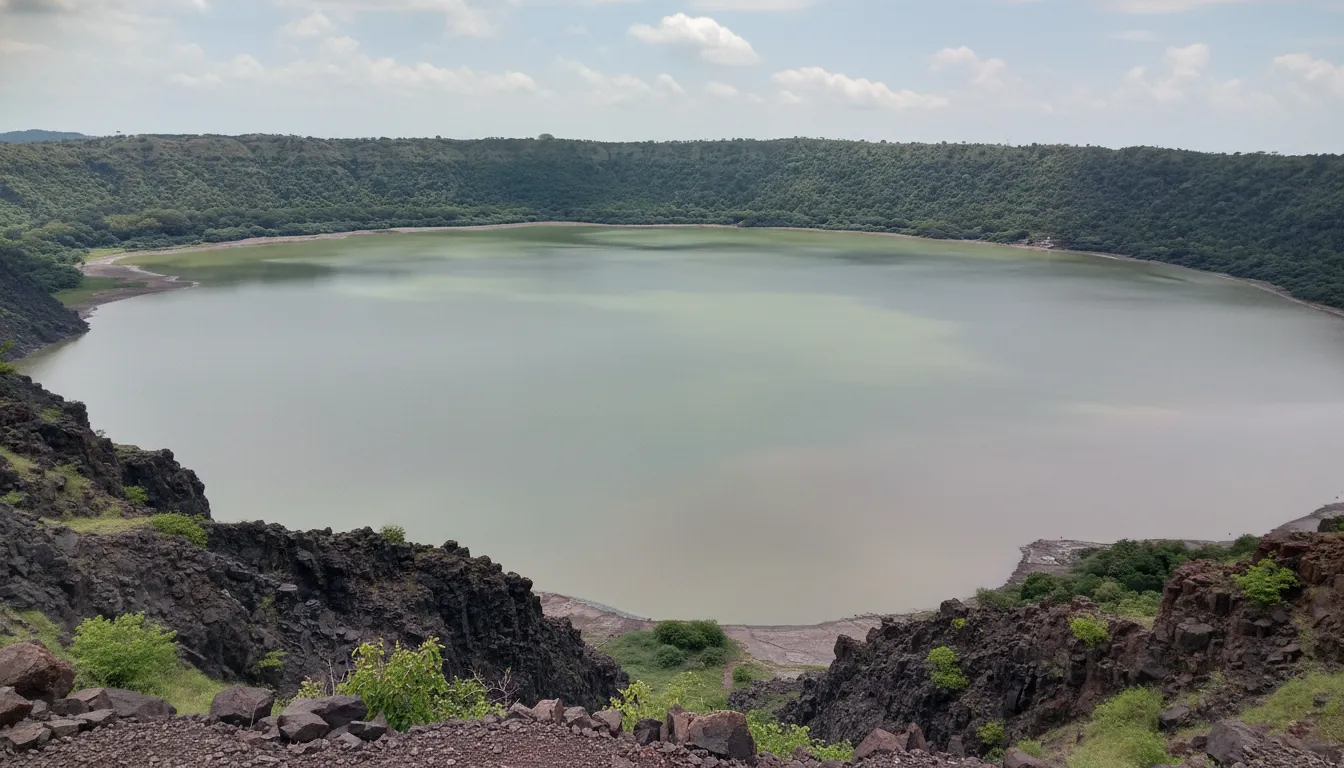
But its uniqueness doesn't stop at its formation. The lake's waters are a distinctive cocktail of alkaline and saline, creating an environment that supports an unusual microbial ecosystem. Depending on the season and the specific microorganisms thriving, the lake's waters can shift in color, from a deep emerald green to a striking pink, offering a visual feast that changes with nature's whim. This vibrant aquatic life, adapted to extreme conditions, adds another layer to Lonar's mystique, making it a living laboratory and a photographer's dream.
Beyond its scientific allure, Lonar exudes an ancient, almost mystical energy. The sheer scale of the crater, with its perfectly circular depression spanning over a kilometer in diameter, surrounded by a lush forest, creates a sense of profound isolation and connection to something much larger than ourselves. It’s a place where cosmic forces and earthly evolution have converged, forging a landscape that feels both alien and deeply rooted in our planet's history.
Whispers of the Past: History and Background
The story of Lonar Lake begins approximately 52,000 years ago (though some estimates push it closer to 570,000 years), when a meteor, estimated to be around 1.8 kilometers in diameter, hurtled through Earth's atmosphere and slammed into the Deccan Plateau. The impact was catastrophic, generating immense heat and pressure, melting and transforming the basalt rock, and carving out the massive depression we see today. The sheer force of this event is almost unfathomable, a cosmic ballet that left an indelible mark on our planet.
For centuries, the true origin of Lonar Lake remained a mystery. Local legends spoke of demons and gods, attributing the crater to mythological battles. It wasn't until the early 19th century that its meteoritic origin began to be seriously considered, and subsequent scientific research, including studies by the Geological Survey of India and NASA, confirmed its status as an impact crater. Scientists continue to study Lonar, unraveling secrets about planetary impacts, extremophile life, and even clues about early Earth environments. It's a living, evolving historical document written in rock and water.
Beyond the scientific narrative, Lonar's history is also interwoven with human stories. Ancient texts like the Skanda Purana and Padma Purana mention the lake, often associating it with mythical tales. The area around the lake has been a site of human habitation and worship for millennia, with temples dating back to the Chalukya and Yadava dynasties (6th to 13th centuries CE) dotting its rim and shores. These architectural remnants stand as silent witnesses to countless generations who have been drawn to the lake's enigmatic presence, adding a rich cultural layer to its cosmic origins.
Exploring the Otherworldly: What You'll See and Experience
Your journey to Lonar begins as you approach its rim, and the first glimpse of the perfectly circular lake, framed by dense foliage, is nothing short of breathtaking. The sheer scale of the crater is impressive, and as you descend the winding paths towards the water's edge, the air grows cooler, and a profound sense of tranquility washes over you.
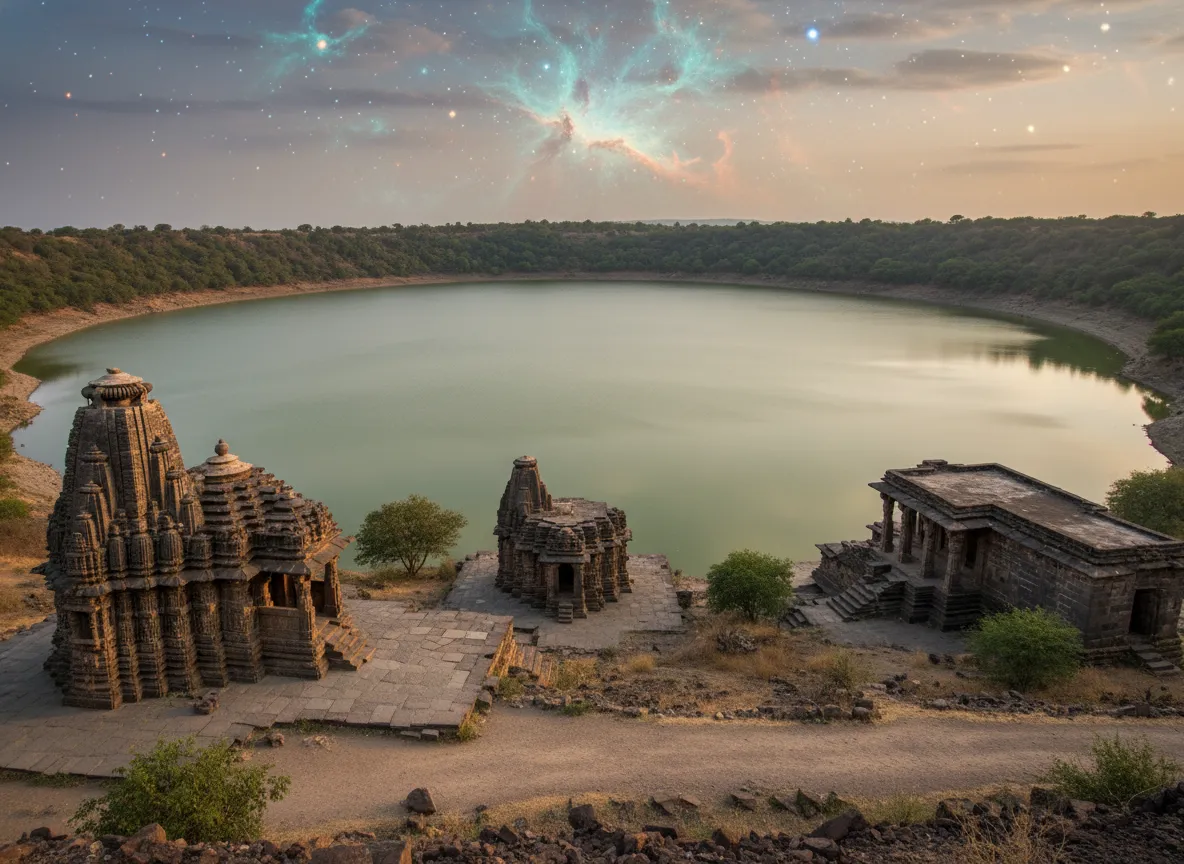
One of the most captivating aspects of visiting Lonar is the opportunity to explore the ancient temples that encircle the lake. The most prominent is the Daitya Sudan Temple, dedicated to Vishnu, situated on the crater's rim. This architectural marvel, built in the Hemadpanthi style, boasts intricate carvings and sculptural details that hint at its glorious past. As you walk around its perimeter, you can almost hear the echoes of ancient prayers.
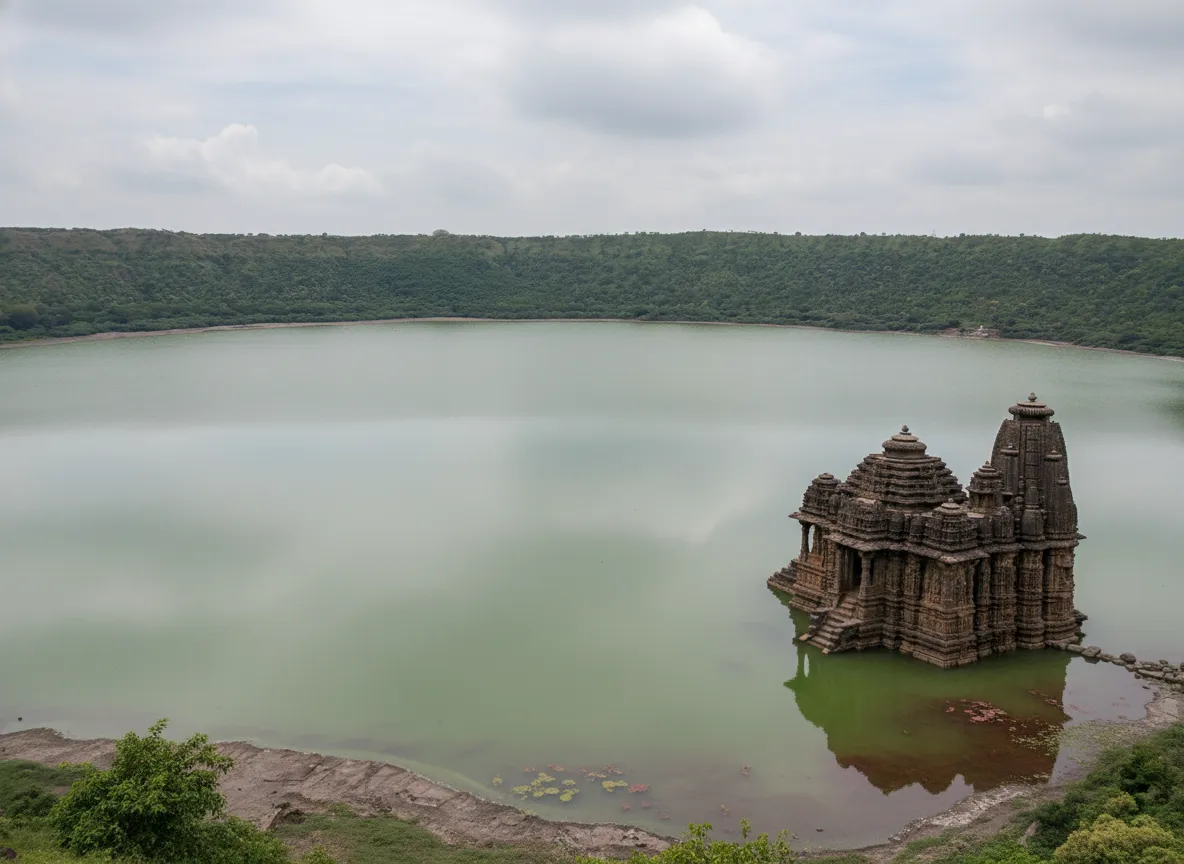
Down by the lake's edge, you'll find other smaller, equally intriguing temples, many partially submerged or in ruins, adding to the site's mysterious aura. The Gomukh Temple, for instance, has a perennial spring emerging from a cow-shaped spout (gomukh), whose waters are believed to have medicinal properties. Bathing in these waters, especially after a long trek, feels like a cleansing ritual connecting you to the ancient traditions of the land.
As you wander along the lake's perimeter, keep an eye out for the unique flora and fauna. The dense forest surrounding the lake is home to a variety of birds, including peacocks, owls, and migratory species, making it a delight for birdwatchers. You might also spot langurs and various reptiles. The changing colors of the lake itself, influenced by algae and salinity levels, offer a dynamic visual experience, especially at sunrise or sunset when the light paints the water in hues of pink, green, and gold.
A walk around the entire lake (a challenging but rewarding trek of about 6-7 kilometers) allows you to fully appreciate its immense scale and the diverse ecosystems it supports. Along the way, you'll encounter serene spots perfect for meditation, photography, or simply soaking in the profound silence and energy of this extraordinary place. It’s a journey not just for the feet, but for the soul, connecting you to the very origins of our planet and the cosmos beyond.
Your Cosmic Journey: Practical Visit Tips
Embarking on an adventure to Lonar Lake requires a bit of planning, but the rewards are immeasurable. Here are some tips to make your visit as smooth and enriching as possible:
- Best Time to Visit: The cooler, drier months from October to March are ideal. The weather is pleasant for exploring, and the chances of seeing the lake's vibrant colors are higher. Summers can be intensely hot, and the monsoon season (June to September) can make the trails slippery.
- Getting There: Lonar is a bit off the beaten path, which contributes to its untouched charm. The nearest major towns are Buldhana, Mehkar, and Jalna. Aurangabad, with its airport and railway station, is a common starting point for travelers, about a 3-4 hour drive away. You can hire a taxi or take a local bus from these towns.
- Accommodation: Don't expect luxury resorts. Accommodation options are mostly basic guesthouses and a few government-run lodges in Lonar town. It’s advisable to book in advance, especially during peak season. For more comfortable stays, consider basing yourself in Aurangabad and making a day trip.
- What to Bring: Comfortable walking shoes are a must, especially if you plan to trek around the crater. Carry plenty of water, snacks, sunscreen, a hat, and insect repellent. A good camera is essential to capture the lake's unique beauty.
- Explore with a Guide: While you can explore independently, hiring a local guide can significantly enhance your experience. They can share fascinating stories, historical insights about the temples, and point out unique geological features and wildlife that you might otherwise miss.
- Respect the Environment: Lonar Lake is a fragile ecosystem and a site of immense scientific importance. Please carry out all your trash, avoid disturbing the wildlife, and respect the ancient temple structures.
- Time Your Visit: Plan for at least one full day to explore the lake and its surrounding temples. If you're keen on trekking around the rim or spending more time observing the unique microbial life, consider an overnight stay.
Lonar Lake is more than just a destination; it's an experience that connects you to the vastness of space and the deep history of our planet. It’s a reminder of the incredible forces that shaped Earth, and a testament to nature's enduring power to create beauty out of chaos. So, pack your bags, prepare to be amazed, and let Lonar Lake etch its cosmic magic onto your soul.
Essential Travel Information
- Location Lonar Lake, India
- Best Time October to March
- Getting There Nearest major city and airport is Aurangabad (IXU), approximately 3-4 hours by car. Local buses and taxis available from Aurangabad, Jalna, or Mehkar.
- Airport Aurangabad Airport (IXU)
- Budget Budget/Mid-range (approx. ₹1,500 - ₹3,000 / $20 - $40 USD per day for basic accommodation, food, and local transport)
- Language Marathi, Hindi, English
Find Places to Stay Near Lonar Lake
Compare hotels, hostels, and unique stays in India.
Search AccommodationTours & Experiences Near Lonar Lake
Book guided tours, day trips, and unique experiences.
Browse Tours