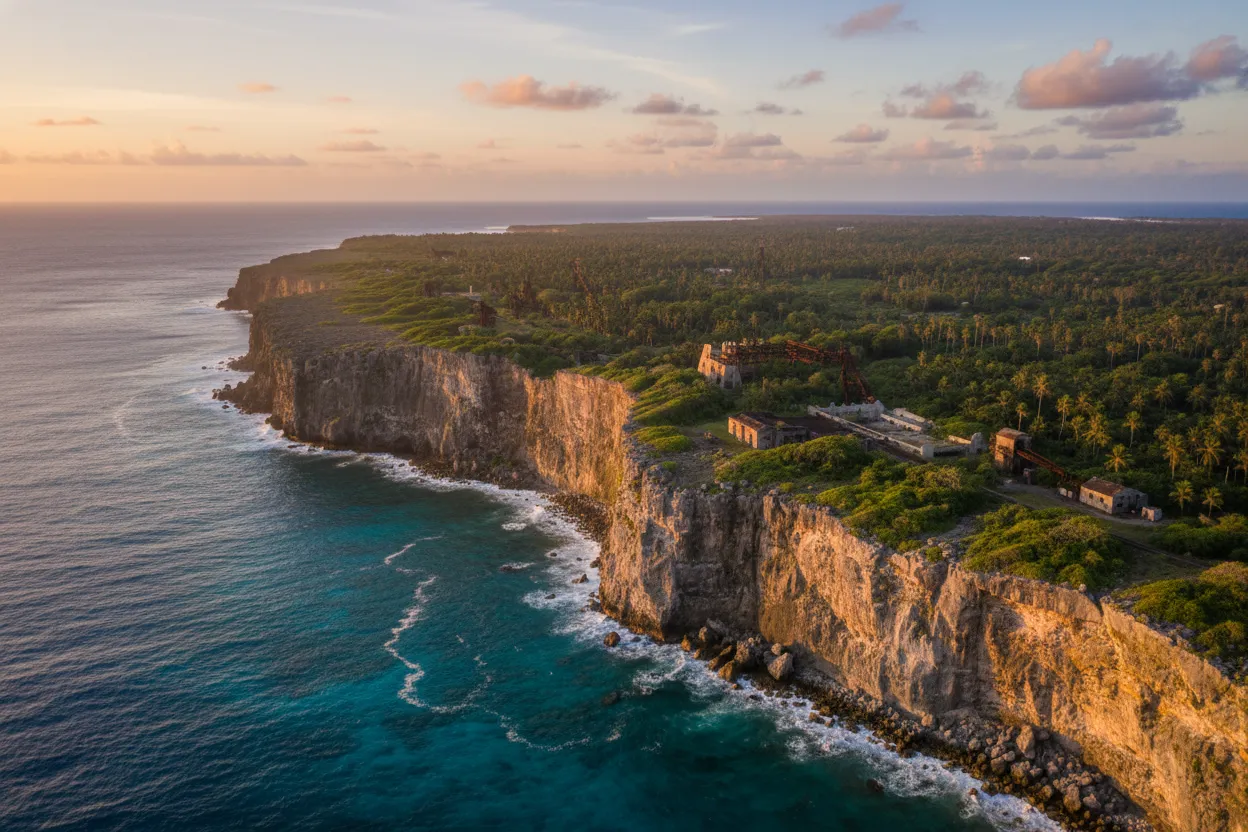
Far from the postcard-perfect, overwater bungalows of Bora Bora, Makatea offers an experience that is raw, real, and utterly unique. This is not just another picturesque island; it's a living, breathing testament to nature's power and humanity's fleeting ambition, a place that whispers tales of a bygone era with every rustling palm leaf and echoing cavern.
Makatea: A Geological Marvel and a Human Story
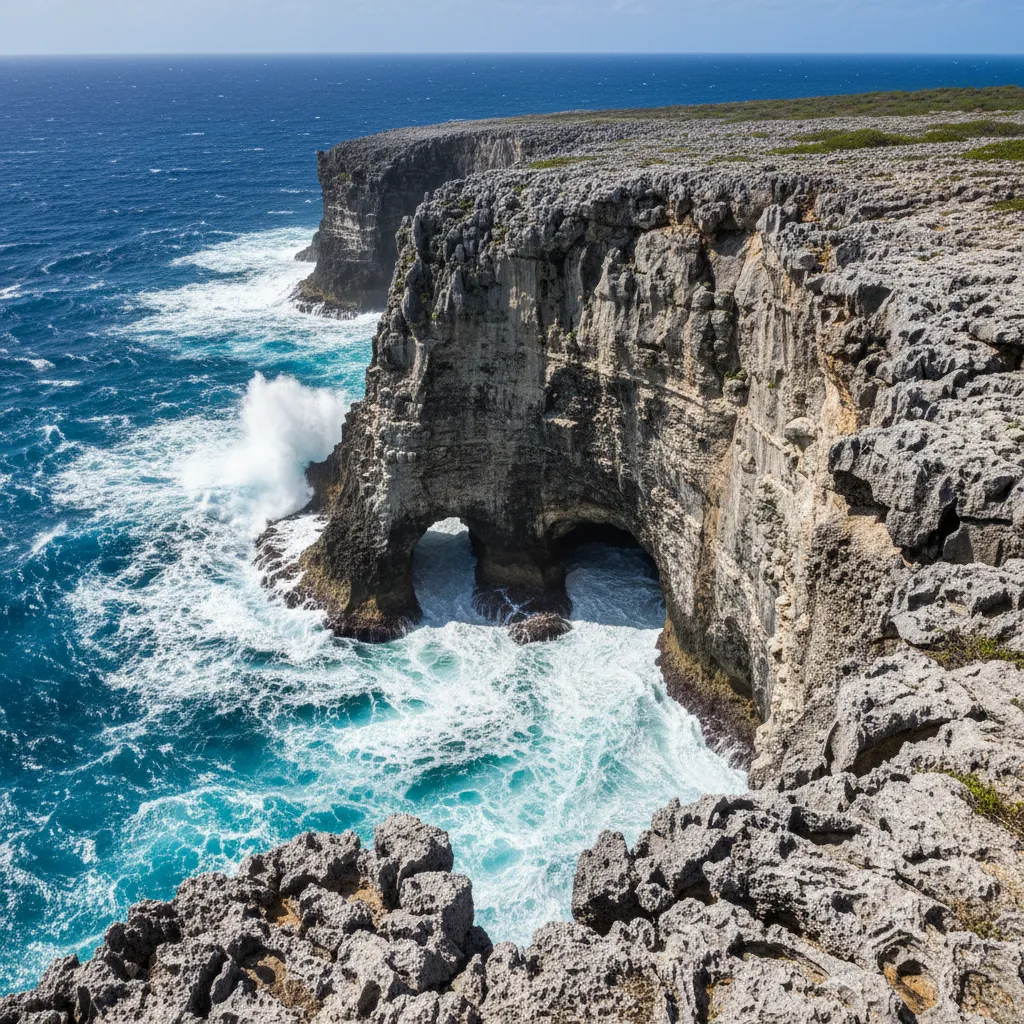
What makes Makatea so profoundly special? It's a rare 'uplifted atoll,' a geological phenomenon that sets it apart from its flat, ring-shaped neighbors in the Tuamotu Archipelago. Instead of a low-lying coral ring barely cresting the waves, Makatea is a massive coral plateau, rising dramatically with 80-meter cliffs that plunge straight into the ocean. This ancient coral reef was pushed skyward by tectonic forces over millions of years, creating a landmass rich in phosphate – a discovery that would forever alter its destiny.
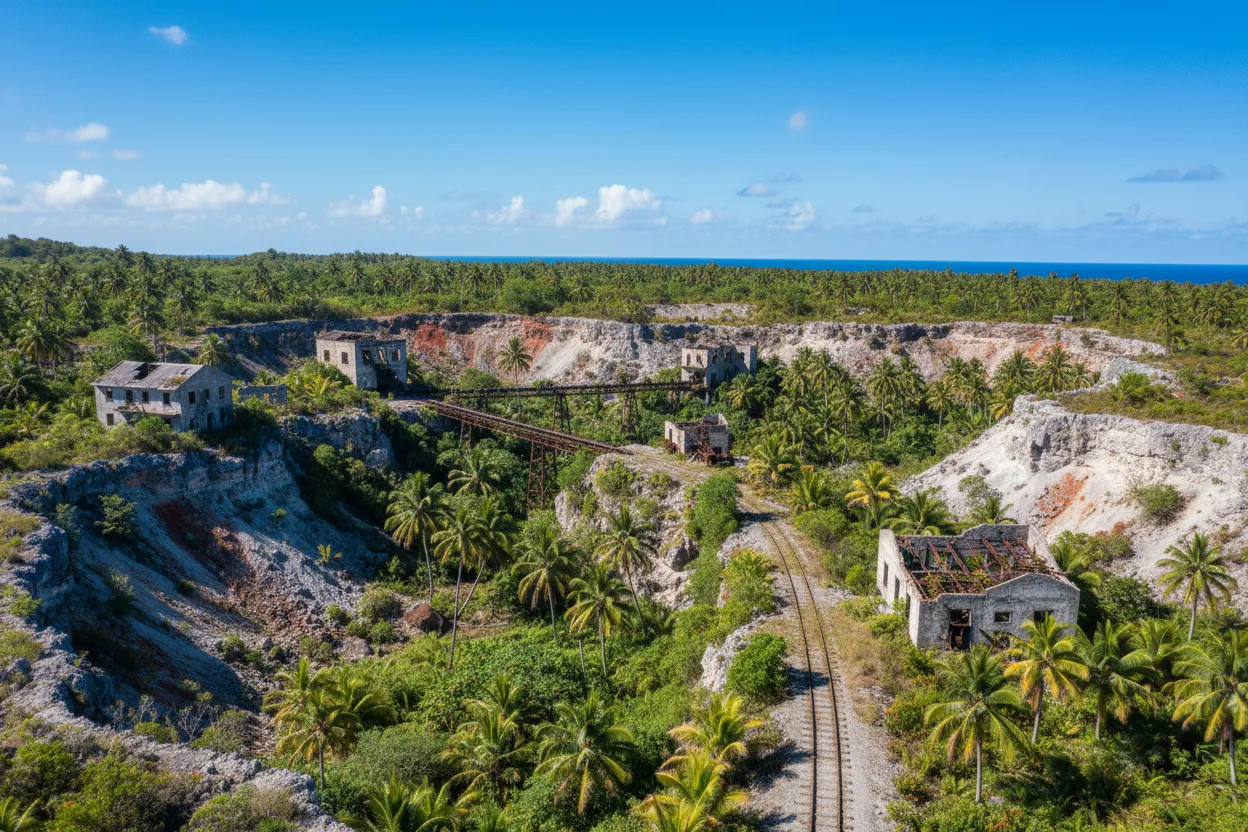
But Makatea's uniqueness doesn't stop at its geology. It's the eerie remnants of a once-thriving phosphate mining industry that truly define its character today. Picture a landscape riddled with deep mining craters, abandoned machinery, and labyrinthine grottoes – some natural, others carved by human hands. It’s a place where the vibrant greens of the tropical jungle clash with the rusted reds of industrial decay, creating a visual symphony unlike anywhere else on Earth. Today, just a few dozen residents remain amidst this ghost-like infrastructure, living a quiet life that feels suspended in time, guardians of a truly singular blend of natural wonder and post-industrial decay.
A Glimpse into Makatea's Past: The Phosphate Empire
To truly appreciate Makatea today, one must understand its tumultuous past. For nearly six decades, from the early 1900s to the mid-1960s, Makatea was a bustling industrial hub, a far cry from the serene image of French Polynesia most envision. The island's rich phosphate deposits, critical for agricultural fertilizers, attracted French and British companies, transforming this remote speck of land into a global economic player.
At its peak, Makatea was home to thousands of workers, a diverse melting pot of Polynesians, Chinese, Japanese, and Europeans, all drawn by the promise of work. A small town sprang up, complete with a hospital, schools, shops, and even a railway system to transport the extracted phosphate to the port. The island was a hive of activity, its interior systematically stripped bare, leaving behind the moon-like craters and a network of tunnels that earned it the nickname "Swiss cheese."
However, like all booms, Makatea's was finite. As the most accessible phosphate reserves dwindled and cheaper sources were found elsewhere, the mining operations became unprofitable. In 1966, the last ship departed, taking with it the machinery, the majority of the population, and the island's industrial heartbeat. What remained was a ghost town, a landscape irrevocably altered, and a handful of resilient families who chose to stay. The jungle, with its relentless embrace, slowly began to reclaim what humanity had left behind, softening the harsh edges of industry with a blanket of green.
Exploring Makatea: A Landscape of Wonders and Whispers
Venturing onto Makatea today is like stepping into another dimension. The moment you arrive, the air hums with a profound silence, broken only by the chirping of birds and the distant roar of the ocean. Your journey will likely begin at the old port, where the skeletal remains of a loading dock stand as a stark monument to its industrial past.
The interior of the island is where Makatea truly reveals its wild and mysterious character. Guided explorations will lead you through dense jungle paths that open unexpectedly onto vast, deep mining craters, their sheer walls now softened by clinging vines and ferns. You'll encounter rusted train tracks disappearing into the undergrowth, abandoned vehicles slowly dissolving back into the earth, and the foundations of buildings that once housed thousands. It’s an archaeological site of a very modern kind, telling a story not of ancient civilizations, but of the industrial age and its impact.
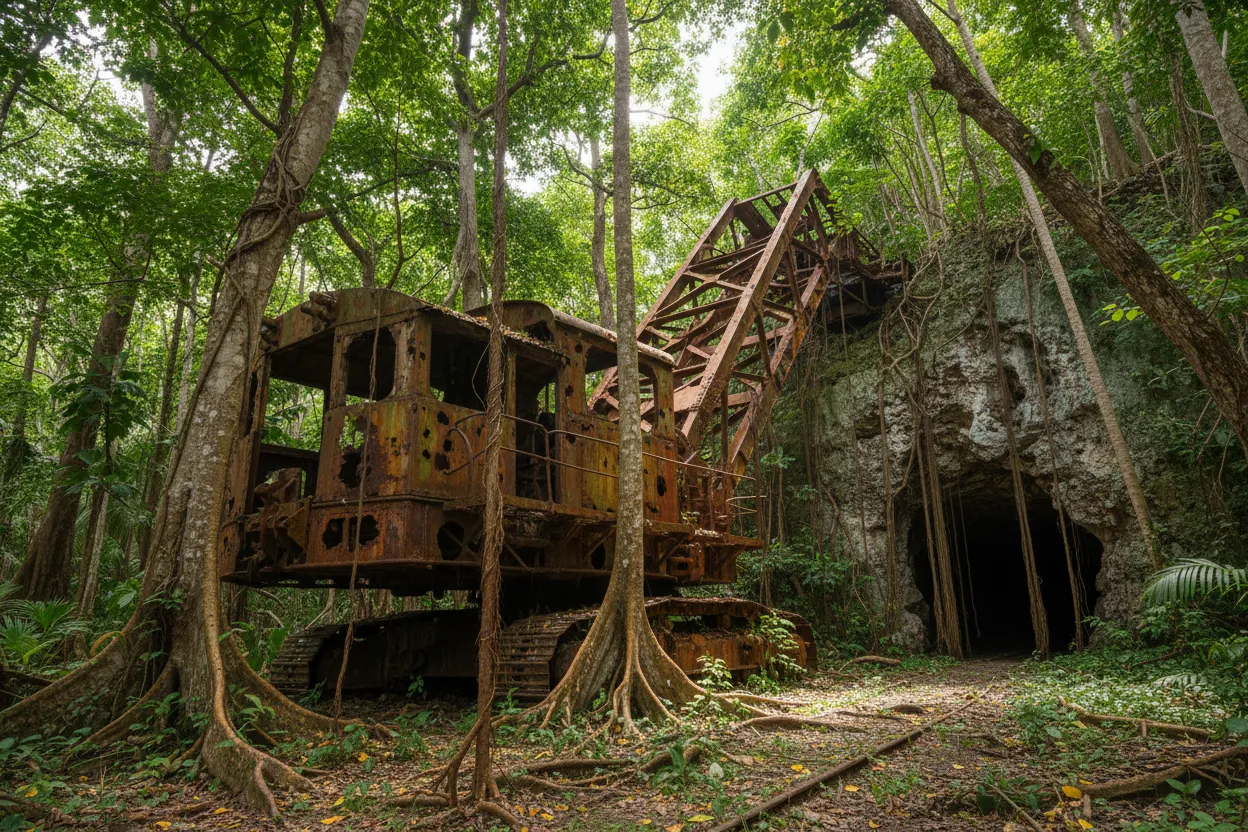
Perhaps the most captivating features are the island’s grottoes and caves. Some are natural wonders, formed by millennia of water erosion within the limestone. Others are extensions of the old mining tunnels. Armed with a headlamp and a local guide, you can delve into these subterranean labyrinths, discovering hidden pools of crystal-clear water, intricate stalactite formations, and perhaps even ancient petroglyphs, hinting at human presence long before the miners arrived. The sheer scale and complexity of these underground worlds are breathtaking, offering a truly unique caving experience.
Beyond the industrial relics, Makatea is also a haven for nature lovers. The dramatic cliffs offer unparalleled panoramic views of the Pacific, where you might spot seabirds nesting or even whales migrating during certain seasons. The island is home to unique flora and fauna, including the Makatea fruit dove, a rare endemic species. Hiking to the clifftops, you’ll feel on top of the world, gazing out at an ocean that stretches endlessly, a stark contrast to the enclosed, mysterious interior.
Planning Your Expedition to Makatea: Tips for the Adventurous Traveler
Makatea is not a destination for the faint of heart or those seeking luxury resorts. It is an adventure, a pilgrimage for the truly curious and resilient. Its remoteness is both its charm and its challenge.
Getting There: Access to Makatea is notoriously difficult and requires significant planning. You'll first fly into Faa'a International Airport (PPT) in Tahiti. From there, you'll need to catch a domestic flight to one of the larger Tuamotu atolls, such as Rangiroa (RGI) or Fakarava (FAV). From these hubs, onward travel to Makatea is typically by cargo ship (infrequent and unpredictable schedules) or by chartering a private boat – an expensive but reliable option. There are no regular passenger ferries. Embrace the journey; it's part of the Makatea experience.
Accommodation: Don't expect hotels. Accommodation is limited to basic guesthouses or homestays with local families. These offer a wonderful opportunity to immerse yourself in the local culture and hear stories from the island's guardians. Be prepared for simple amenities and the true meaning of "island time."
Local Guides Are Essential: Exploring Makatea's craters, tunnels, and dense jungle without a local guide is not only dangerous but also means missing out on the rich stories and hidden gems. The few dozen residents are incredibly welcoming, and their knowledge of the island's history, geology, and safe passages is invaluable. Arrange a guide well in advance of your visit.
What to Bring: Sturdy hiking shoes are a must, along with a headlamp or powerful flashlight for cave exploration. Insect repellent, plenty of water, sun protection, and basic first-aid supplies are also crucial. Respect for the environment and the local community goes without saying. Pack light but smart, and be prepared for humidity and potential rain.
Makatea is more than just a place; it's an experience that will challenge your perceptions of paradise. It's a journey into a landscape where nature and history have intertwined to create something profoundly moving and utterly unforgettable. For those seeking a truly off-the-beaten-path adventure, a destination that promises discovery at every turn, Makatea awaits – a forgotten fortress rising from the Pacific, ready to reveal its secrets to the intrepid few.
Essential Travel Information
- Location Makatea Island, French Polynesia
- Best Time May to October (dry season)
- Getting There Fly to Tahiti (PPT), then domestic flight to Rangiroa (RGI) or Fakarava (FAV), followed by infrequent cargo ship or private boat charter to Makatea. Requires significant planning.
- Airport Faa'a International Airport (PPT) for international, Rangiroa Airport (RGI) or Fakarava Airport (FAV) for domestic connections.
- Budget Mid-range (due to transport costs, local daily costs are budget-friendly). Approximate daily cost (excluding international flights): $100-200 USD.
- Language French, Tahitian
Find Places to Stay Near Makatea Island
Compare hotels, hostels, and unique stays in French Polynesia.
Search AccommodationTours & Experiences Near Makatea Island
Book guided tours, day trips, and unique experiences.
Browse Tours