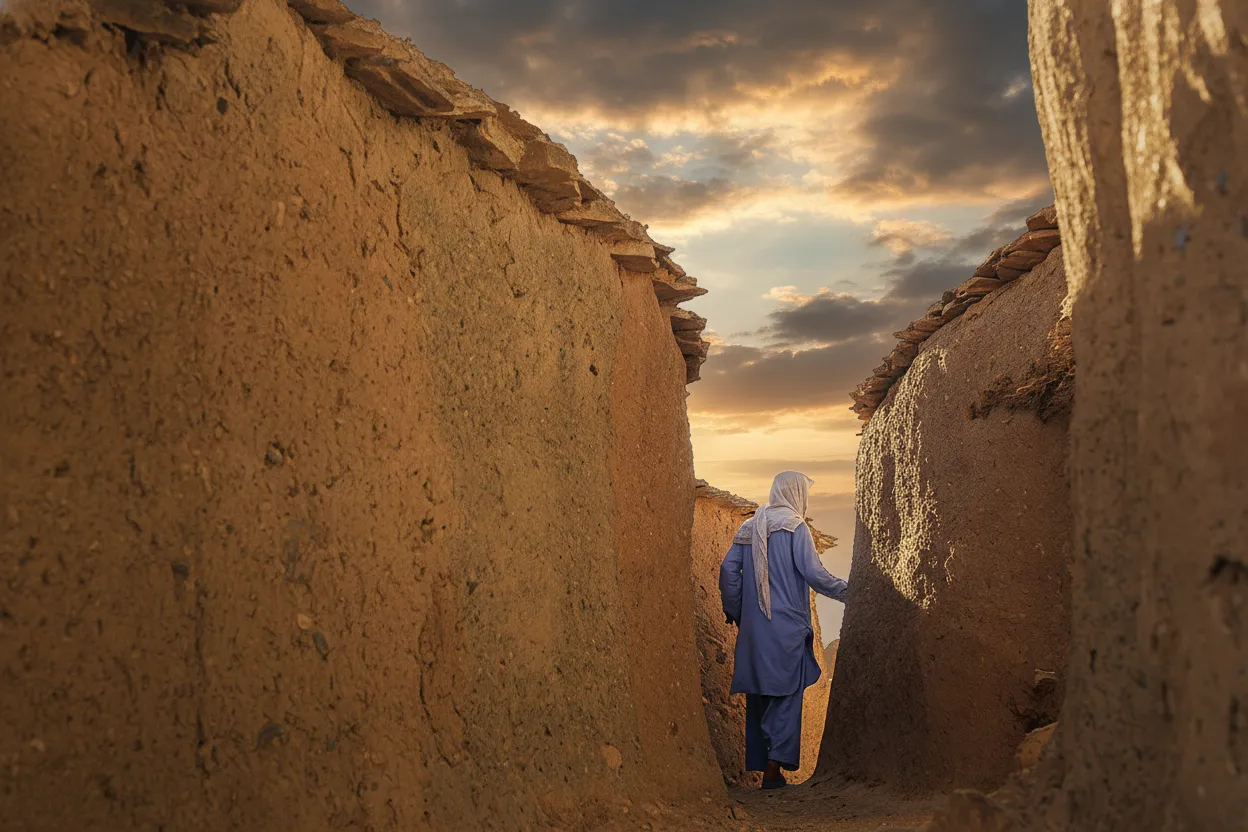
Imagine stumbling upon a village where the doorways barely reach your waist, where entire homes feel like dollhouses, and where the very scale of life seems to have shrunk. This isn't a scene from a fantasy novel; it's a real place, tucked away in the remote reaches of Iran, known by an eerie, captivating moniker: 'The City of Dwarfs.' Welcome to Makhunik, an ancient, isolated hamlet that defies conventional understanding and invites you to step into a world seemingly built for miniature inhabitants.
Far from the bustling cities and well-trodden paths, in the rugged landscape of Iran's South Khorasan Province, lies Makhunik (ماخونیک). This isn't just another historical site; it's a living, breathing enigma, a testament to human adaptation and resilience in the face of extreme conditions. Near the border with Afghanistan, this village holds secrets etched into its mud and stone walls, whispers of a past where life was lived on a profoundly different scale. Prepare to have your perceptions challenged as we journey to this extraordinary hidden gem, where history isn't just read, but felt, house by tiny house.
The Enigma of Makhunik: A City Built for Miniatures
What truly sets Makhunik apart is its astonishing architecture. As you wander through its narrow, winding alleys, you'll be struck by the diminutive scale of everything. The houses, crafted from humble mud and stone, feature ceilings so low you'll constantly stoop, and most strikingly, doorways that are often less than a meter high. Rooms are compact, designed for minimal heating and maximum efficiency in a harsh environment, but their size goes beyond mere practicality. It's this unique characteristic that has earned Makhunik its evocative nickname and fuels the fascinating theory that its historical residents were notably smaller in stature.
The prevailing hypothesis for this miniaturization points to generations of malnutrition. Living in such a remote and arid region, resources would have been scarce. A diet lacking essential nutrients, combined with the harsh environmental pressures, could have led to a population with a significantly smaller average height. This isn't just a quaint architectural style; it's a tangible glimpse into an extreme adaptation, a community that, through sheer necessity, evolved to thrive in defiance of conventional scale. Imagine the daily lives of these people, perfectly suited to their small dwellings, creating a unique culture that blossomed in isolation, seemingly plucked from a fairy tale.
Today, while many of the original inhabitants have either moved to larger, more modern homes or left the village, the structures remain, frozen in time. They stand as silent witnesses to a bygone era, prompting visitors to ponder the incredible resilience and ingenuity of humanity. This isn't just history; it's a puzzle waiting to be explored, a physical manifestation of human tenacity against formidable odds.
Whispers of the Past: Makhunik's Ancient Roots and Resilience
Makhunik's history is as intriguing as its architecture, though much of it remains shrouded in the mists of time, passed down through oral tradition and archaeological inference. The village's exact origins are debated, but it’s believed to be centuries old, possibly dating back to the Sassanian era or even earlier. What is clear is that Makhunik has always been a place defined by its remoteness and its demanding environment. Nestled in a rugged, mountainous terrain, far from major trade routes or fertile lands, its inhabitants were forced to become masters of self-sufficiency.
Life in Makhunik was a constant struggle for survival. The arid climate meant precious little water, and arable land was scarce. The villagers developed ingenious methods for water harvesting and cultivation, relying on hardy crops that could withstand the harsh conditions. Their isolation fostered a unique cultural identity, largely untouched by external influences. This self-contained world led to the development of distinct customs, traditions, and an architectural style perfectly suited to their unique physical attributes and environmental constraints.
The theory of smaller stature due to malnutrition isn't just academic; it paints a vivid picture of the daily hardships faced by these communities. Generations of limited diet, perhaps heavy on grains and light on protein, could have led to a population that was perfectly suited to their tiny homes, where less material was needed for construction and less fuel for heating. It's a powerful narrative of how environment can shape not just culture, but biology itself, demonstrating an extreme form of human adaptation that allowed a community to persist and thrive where others might have faltered. Makhunik stands as a living museum to this incredible resilience, a testament to the human spirit's ability to find a way, no matter how challenging the circumstances.
Stepping Through Time: What Awaits You in Makhunik
Visiting Makhunik is less like sightseeing and more like stepping into a time capsule. The experience begins long before you arrive, with a journey through vast, desolate landscapes that underscore the village's isolation. Once there, the silence is profound, broken only by the wind or the occasional bleating of a goat. Walking through the village, you'll find yourself constantly bending and stooping, a physical reminder of the scale of life here. The houses, clustered together, appear almost organic, blending seamlessly with the rocky terrain from which they were built.
Each tiny mud and stone dwelling tells a story. Peer through the low doorways into the dark, compact interiors, and you can almost envision the lives lived within: families huddled around a small fire, children playing in spaces that feel impossibly small to modern eyes. The narrow alleyways, designed to offer shade and protection from the elements, wind like ancient labyrinths, inviting exploration around every corner. You'll discover small, open communal areas, perhaps where villagers once gathered, sharing stories and scarce resources.

While many of the original inhabitants have moved to more accessible areas or built larger, modern extensions to their homes on the village outskirts, a few elders still reside in the traditional dwellings, maintaining a connection to their heritage. Their presence adds a layer of authenticity, offering a rare opportunity to glimpse a way of life that has largely vanished elsewhere. The photographic opportunities are immense, capturing the unique architecture against the stark beauty of the Iranian plateau, creating images that are both haunting and inspiring.

The atmosphere is one of profound peace and wonder. It's a place that encourages contemplation, making you reflect on the ingenuity of our ancestors and the diverse ways humanity has adapted to survive and flourish. Makhunik isn't just a collection of small houses; it's a powerful narrative woven into the very fabric of its mud and stone, waiting for you to uncover its secrets.
Beyond the Myth: Practical Tips for Your Journey to Makhunik
A journey to Makhunik is an adventure, requiring a bit more planning than your average tourist destination, but the rewards are immeasurable. Its extreme remoteness is part of its charm, but also a practical consideration.
Getting There: Makhunik is located deep in South Khorasan Province, close to the Afghan border. The most practical way to reach it is to fly into Birjand (BIR), the provincial capital, and from there, hire a private driver and guide. Public transport options are virtually non-existent for the final leg of the journey. A knowledgeable local guide is highly recommended, not just for navigation but also for cultural insights and facilitating interactions with any remaining villagers.
Accommodation: Don't expect hotels or guesthouses in Makhunik itself. The nearest accommodations will be in larger towns like Birjand or possibly smaller guesthouses in nearby villages that cater to domestic tourists. Consider a day trip from Birjand, or if you're truly adventurous, inquire about homestay options in a nearby, slightly less remote village (arranged through your guide).
What to Bring: Pack essentials. Water, snacks, and any personal medications are crucial, as amenities are non-existent in Makhunik. Dress modestly and comfortably, suitable for walking on uneven terrain. Sturdy, comfortable shoes are a must. Don't forget your camera, and perhaps a wide-angle lens to capture the unique architecture. Sun protection (hat, sunscreen) is also vital, especially during warmer months.
Respectful Travel: This is a traditional, rural community. Always ask for permission before taking photos of people, especially the elderly. Be mindful of local customs and dress codes. A respectful demeanor goes a long way in fostering positive interactions and truly appreciating the local culture.
Best Time to Visit: The region experiences hot summers and cold winters. The ideal times to visit are during the spring (April to May) and autumn (September to October), when temperatures are more moderate and comfortable for exploration.

Makhunik is more than just a destination; it's an experience that challenges your perspective on history, human adaptation, and the definition of a "home." It's a place where myths intertwine with reality, where every low doorway whispers tales of a unique past. If you're a traveler seeking genuine wonder, a glimpse into a truly extraordinary human story, then add Makhunik, the 'City of Dwarfs,' to your must-visit list. It's a journey not just across landscapes, but across time, promising memories that will last a lifetime.
Essential Travel Information
- Location Makhunik (ماخونیک), Iran
- Best Time Spring (April-May) and Autumn (September-October)
- Getting There Fly to Birjand (BIR), then hire a private driver/guide for the remote journey to Makhunik.
- Airport Birjand International Airport (BIR)
- Budget Mid-range (expect higher costs for private transport/guide, but local expenses are low). Approximate daily cost: $50-100 (excluding international flights).
- Language Persian (Farsi)
Find Places to Stay Near Makhunik (ماخونیک)
Compare hotels, hostels, and unique stays in Iran.
Search AccommodationTours & Experiences Near Makhunik (ماخونیک)
Book guided tours, day trips, and unique experiences.
Browse Tours