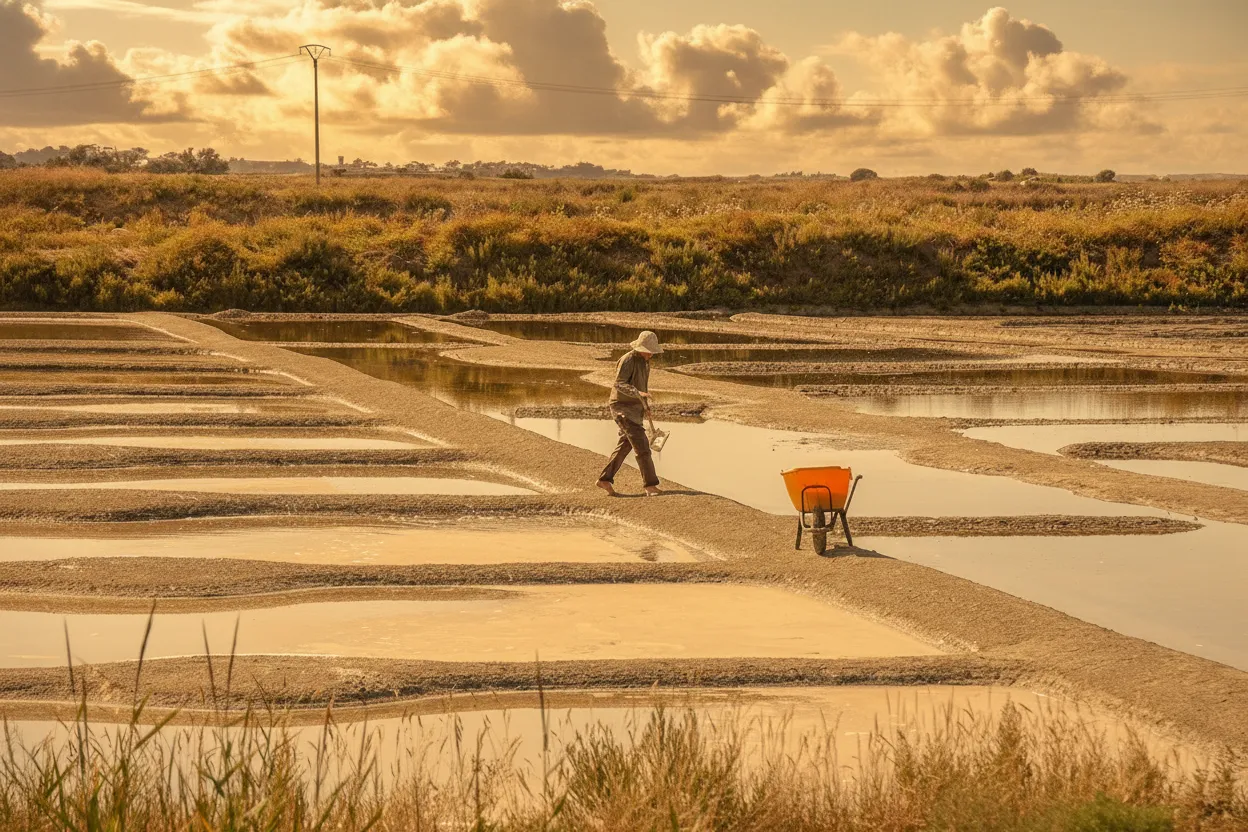
Imagine a landscape meticulously sculpted by a thousand years of human ingenuity, where the ocean's bounty is transformed into glittering white gold by the hands of traditional salt workers. This isn't a scene from a fantasy novel, but a vibrant, living reality nestled on the Atlantic coast of France. Welcome to the Marais Salants de Guérande, or the Guérande Salt Marshes – a place where time seems to slow, ancient traditions thrive, and every crystal of salt tells a story of sun, wind, and human dedication. If you've ever savored a dish seasoned with the delicate crunch of Fleur de Sel, you've tasted the magic of this extraordinary destination. Get ready to embark on a journey that will awaken your senses and deepen your appreciation for one of nature's simplest, yet most precious, gifts.
What Makes Guérande So Uniquely Special?
What sets the Guérande Salt Marshes apart isn't just the salt itself, but the entire ecosystem and the enduring human spirit that shapes it. For over a millennium, the 'paludiers' (salt workers) of Guérande have been the guardians of this remarkable landscape. They operate an intricate network of clay ponds, known as 'oeillets' and 'tables salantes', designed to harness the natural elements. Seawater flows through a series of progressively shallower basins, concentrating the salt content under the watchful eyes of the paludiers. It's a delicate dance with nature, relying on the perfect balance of sunshine, wind, and minimal rainfall to evaporate the water and crystallize the salt.
This living, working landscape isn't just productive; it's breathtakingly beautiful. From an aerial view, it's a mesmerizing geometric mosaic of shimmering water, dark clay, and dazzling white salt mounds, reflecting the ever-changing Breton sky. But the true magic lies in the artisanal methods. Unlike industrial salt production, the Guérande paludiers use techniques passed down through generations, ensuring that the salt retains its natural trace minerals and unique flavor profiles. This commitment to tradition is why Guérande produces world-renowned Fleur de Sel – the delicate, flaky "flower of salt" skimmed from the surface – and the coarser, mineral-rich Sel Gris (grey salt), both indispensable in gourmet kitchens worldwide. It's a captivating glimpse into enduring human tradition and a truly unique ecosystem where man and nature collaborate in perfect harmony.

A Thousand Years of Salty History and Human Ingenuity
The story of the Guérande Salt Marshes is a saga stretching back over a thousand years, deeply interwoven with the history of the Pays de la Loire region. The first traces of salt production here date back to the 9th century, with significant development occurring during the Middle Ages. Monks, particularly from the Abbey of Landévennec, played a crucial role in designing and refining the complex network of canals, ponds, and dikes that still largely defines the landscape today. Their ingenuity laid the groundwork for a sustainable, natural method of salt harvesting that has remarkably survived the test of time.
Salt, throughout history, was far more than just a condiment. It was a vital commodity, essential for food preservation, especially for fish and meat, and thus crucial for trade, survival, and even the economy of entire nations. The salt of Guérande powered local economies, facilitated trade routes, and even sparked conflicts. The paludiers, with their intimate knowledge of the tides, the weather, and the intricate workings of their salt pans, became custodians of a precious heritage. They developed specialized tools and techniques – the 'las' (a long wooden rake) and the 'simoussi' (a wooden paddle) – which are still in use today, connecting modern salt workers directly to their medieval predecessors.
Even with the advent of industrialization and the rise of mechanized salt production, the paludiers of Guérande resisted, fiercely protecting their artisanal methods and the unique quality of their salt. This unwavering dedication ensured that the traditional methods endured, preserving not just a way of producing salt, but an entire cultural landscape and a community's identity. Visiting Guérande is like stepping back in time, witnessing a living history where the past continues to shape the present, day after day, harvest after harvest.
What You'll See and Experience on a Visit
A trip to the Marais Salants de Guérande is a multi-sensory experience that goes far beyond just seeing salt. As you approach, the landscape itself begins to transform. The vibrant green of the surrounding countryside gives way to a shimmering, flat expanse, an intricate patchwork of blues, greys, and whites that stretches to the horizon. The air takes on a distinct, briny scent, carried on the Atlantic breeze.
One of the most captivating sights, especially during the warmer months (typically June to September), is watching the paludiers at work. Dressed in their traditional wide-brimmed hats and work clothes, they move with a quiet grace, using their long wooden tools to carefully gather the salt crystals. Observing their methodical movements, understanding the precision required to skim the delicate Fleur de Sel, or to rake the heavier Sel Gris from the bottom of the 'oeillets', is a truly humbling experience. It’s a testament to skill, patience, and a deep respect for the rhythm of nature.

Many of the salt producers offer guided tours, which are highly recommended. These tours provide invaluable insights into the entire salt-making process, from the initial intake of seawater to the final drying and packaging. You'll learn about the different types of salt, the microclimate's role, and the unique biodiversity of the marshes – a haven for various bird species and specialized flora. Beyond the working pans, you can visit 'salorges' – traditional salt houses – which often feature small museums detailing the history and tools of the trade. And, of course, no visit is complete without sampling and purchasing the exquisite local products directly from the source. From the fine, delicate crunch of Fleur de Sel to the robust flavor of Sel Gris, you'll find a range of salts, often infused with herbs or spices, along with other local delicacies.

Practical Tips for Your Guérande Adventure
To make the most of your visit to the Marais Salants de Guérande, a little planning goes a long way. Here are some friendly tips from a well-traveled friend:
- Best Time to Visit: The salt harvesting season runs from late spring through early autumn (typically June to September). This is when you'll most likely see the paludiers actively working. However, the marshes are beautiful year-round, offering different atmospheric views in each season. Spring and autumn provide milder weather and fewer crowds.
- Getting There: The Guérande Peninsula is best explored by car, offering the flexibility to drive along the scenic routes that wind through the marshes. If you're relying on public transport, you can take a train to nearby La Baule-Escoublac or Saint-Nazaire, and then use local buses or taxis to reach Guérande and the salt marshes.
- What to Wear: The marshes are an open, exposed landscape. Even on a sunny day, a light jacket can be useful due to the coastal breeze. Comfortable walking shoes are a must, as you'll likely be doing a fair bit of strolling. Don't forget a hat, sunglasses, and sunscreen, especially during summer.
- Guided Tours: Absolutely essential! While you can drive through some areas independently, a guided tour (many are offered by the salt producers themselves or local tourism offices) will provide context, history, and a deeper understanding of this complex ecosystem and tradition. Some tours even offer hands-on experiences.
- Where to Stay: The medieval walled town of Guérande itself is a charming base, with hotels and guesthouses. Alternatively, the elegant seaside resort of La Baule, with its beautiful beach, is just a short drive away and offers more upscale accommodation options.
- What to Buy: Beyond the obvious (and highly recommended!) Fleur de Sel and Sel Gris, look out for other local products. Many producers sell salt-based cosmetics, caramel au beurre salé (salted butter caramel), and other regional specialties.
- Respect the Environment: Remember, this is a working landscape and a fragile ecosystem. Stick to designated paths, do not disturb the salt pans or the wildlife, and always respect the paludiers and their work.
The Marais Salants de Guérande is more than just a destination; it's an experience that connects you to the earth, the ocean, and centuries of human endeavor. It’s a testament to the beauty of simplicity and the power of tradition. So, pack your bags, open your mind, and prepare to be enchanted by the glittering white gold of Guérande. You won't just leave with exquisite salt; you'll leave with a story.
Essential Travel Information
- Location Marais Salants de Guérande (Guérande Salt Marshes), France
- Best Time Late spring to early autumn (June to September) for active harvesting; year-round for scenic beauty.
- Getting There Best by car. Nearest train stations are La Baule-Escoublac or Saint-Nazaire, then local bus/taxi to Guérande.
- Airport Nantes Atlantique Airport (NTE)
- Budget Mid-range (approx. €80-€150 per day for accommodation, food, and activities)
- Language French
Find Places to Stay Near Marais Salants de Guérande (Guérande Salt Marshes)
Compare hotels, hostels, and unique stays in France.
Search AccommodationTours & Experiences Near Marais Salants de Guérande (Guérande Salt Marshes)
Book guided tours, day trips, and unique experiences.
Browse Tours