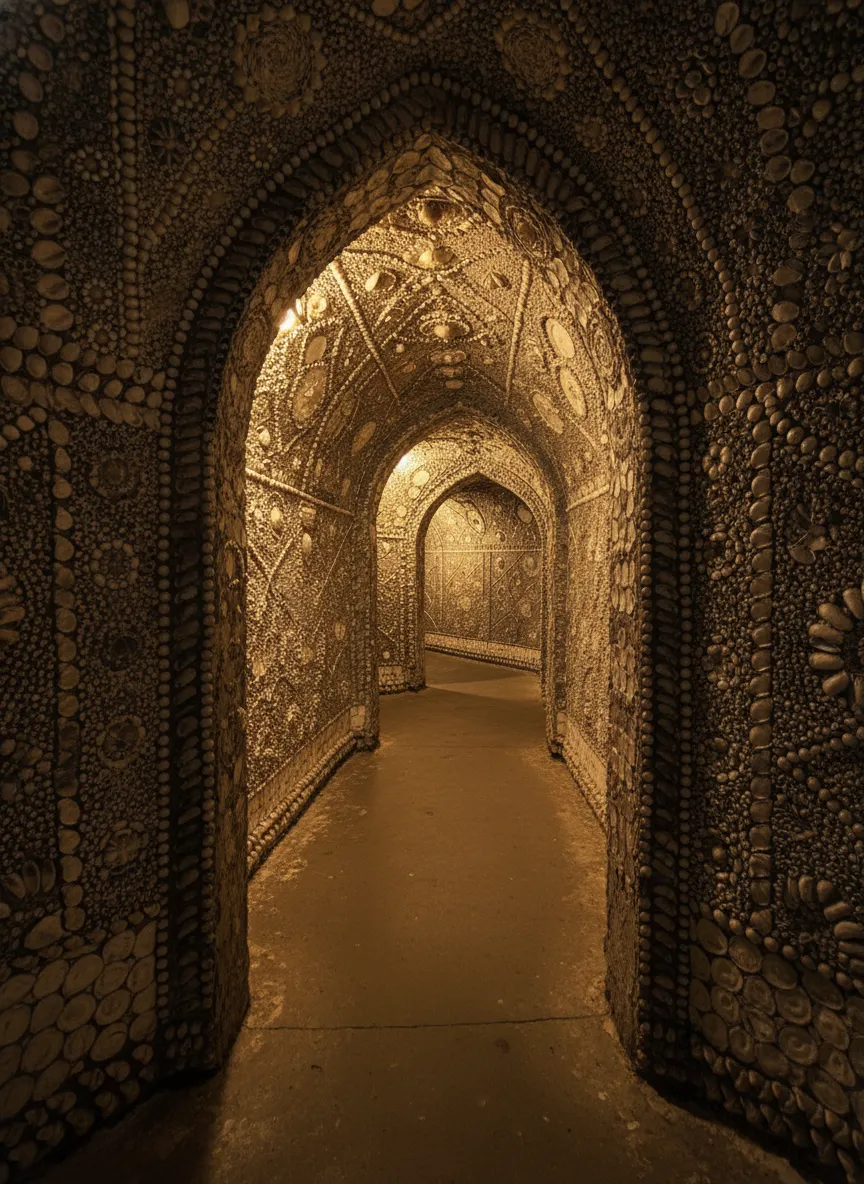
Imagine this: you're strolling through a charming, albeit unassuming, English seaside town. The scent of salt and chips fills the air, gulls cry overhead, and the promise of a classic British beach day beckons. But beneath your feet, hidden from plain sight, lies a secret so profound, so breathtakingly beautiful, and so utterly mysterious, that it feels plucked from the pages of an ancient myth. This isn't just any underground chamber; it's the Margate Shell Grotto, an ethereal, subterranean labyrinth meticulously adorned with an estimated 4.6 million seashells, whose purpose remains an enduring enigma that has baffled historians, archaeologists, and curious visitors for nearly two centuries. To step inside is to descend into a world where history whispers, artistry astounds, and the greatest questions go unanswered, leaving you with a sense of wonder that few places on Earth can evoke.
What Makes Margate Shell Grotto So Special: An Unparalleled Mystery and Beauty
The sheer scale and intricate artistry of the Margate Shell Grotto are what immediately set it apart. This isn't just a few shells glued to a wall; it's an entire network of winding passages, domes, and altars, every single surface – walls, ceilings, pillars – blanketed in a dazzling mosaic of shells. We're talking about millions upon millions of mussel, cockle, whelk, and limpet shells, carefully arranged to create patterns that range from geometric precision to swirling organic forms, sunbursts, trees of life, and even more abstract designs that seem to defy categorization.
What truly elevates the Grotto from a mere curiosity to a profound historical puzzle is the complete absence of any definitive record regarding its creation. Who built it? When was it built? And, most intriguingly, why? These questions have haunted researchers since its accidental discovery in 1835, and despite extensive investigations, carbon dating, and historical analysis, no conclusive answers have emerged. This enduring enigma is the beating heart of the Shell Grotto's allure. It transforms a visit from a simple sightseeing trip into an active participation in an ongoing historical detective story. You don't just observe the Grotto; you contemplate it, you question it, and you become part of its ongoing mystery.
Walking through its cool, damp passages, the outside world fades away. The soft, diffused light, whether natural or artificial, makes the shells shimmer with an otherworldly glow. Each step takes you deeper into an experience that feels both ancient and timeless, a testament to human creativity and an enduring challenge to our understanding of the past. It’s a place where imagination runs wild, where theories of ancient cults, secret societies, and eccentric artistic endeavors all seem equally plausible, and equally captivating.
A Glimpse into the Past: The Grotto's Discovery and Enduring Theories
The story of the Margate Shell Grotto's discovery is almost as enchanting as the Grotto itself. It was in 1835 when a local schoolmaster, James Newlove, was digging a duck pond in his garden. His son, Joshua, reportedly squeezed through a narrow opening in the ground, only to reappear moments later, awestruck, describing "a long passage covered with shells." What followed was the excavation of what we now know as the Shell Grotto, and the immediate beginning of its long, unanswered riddle.
Since its discovery, the Grotto has been a source of endless speculation. The theories are as varied and colourful as the shells themselves:
-
An Ancient Pagan Temple: Many believe the Grotto's layout, featuring a winding path leading to an 'altar chamber' and various symbolic patterns (including potential phallic symbols and sun motifs), points to a pre-Christian, possibly Roman or even earlier, place of worship. The sheer effort involved suggests a purpose beyond mere decoration.
-
A Wealthy Eccentric's Folly: In the 18th and early 19th centuries, grottoes and follies were popular architectural additions to grand estates, built for aesthetic pleasure or as conversation pieces. Could a rich individual have commissioned this elaborate underground wonder as a private retreat or a grand display of wealth and artistic taste?
-
A Secret Meeting Place: The Grotto's hidden nature and intricate design have led some to suggest it was a clandestine meeting place for a secret society, perhaps Freemasons, who often incorporated symbolism and ritual into their gathering spaces.
-
A Roman-Era Construction: Margate itself has Roman connections, and the style of some shell mosaics has been compared to Roman artistry. Could it be a remarkably preserved Roman villa's underground feature, or even a temple built by Roman settlers?
Despite carbon dating attempts, which have yielded inconclusive results due to contamination and the nature of the materials, the exact age remains elusive. The current consensus often leans towards a 18th or early 19th-century construction, possibly by a wealthy individual with a penchant for the unusual. However, the definitive proof simply isn't there, leaving the door open for every theory to hold a sliver of possibility. This lack of certainty isn't frustrating; it's exhilarating, inviting every visitor to become a temporary detective, piecing together clues from the shells themselves.
Exploring the Labyrinth: What Awaits You Inside
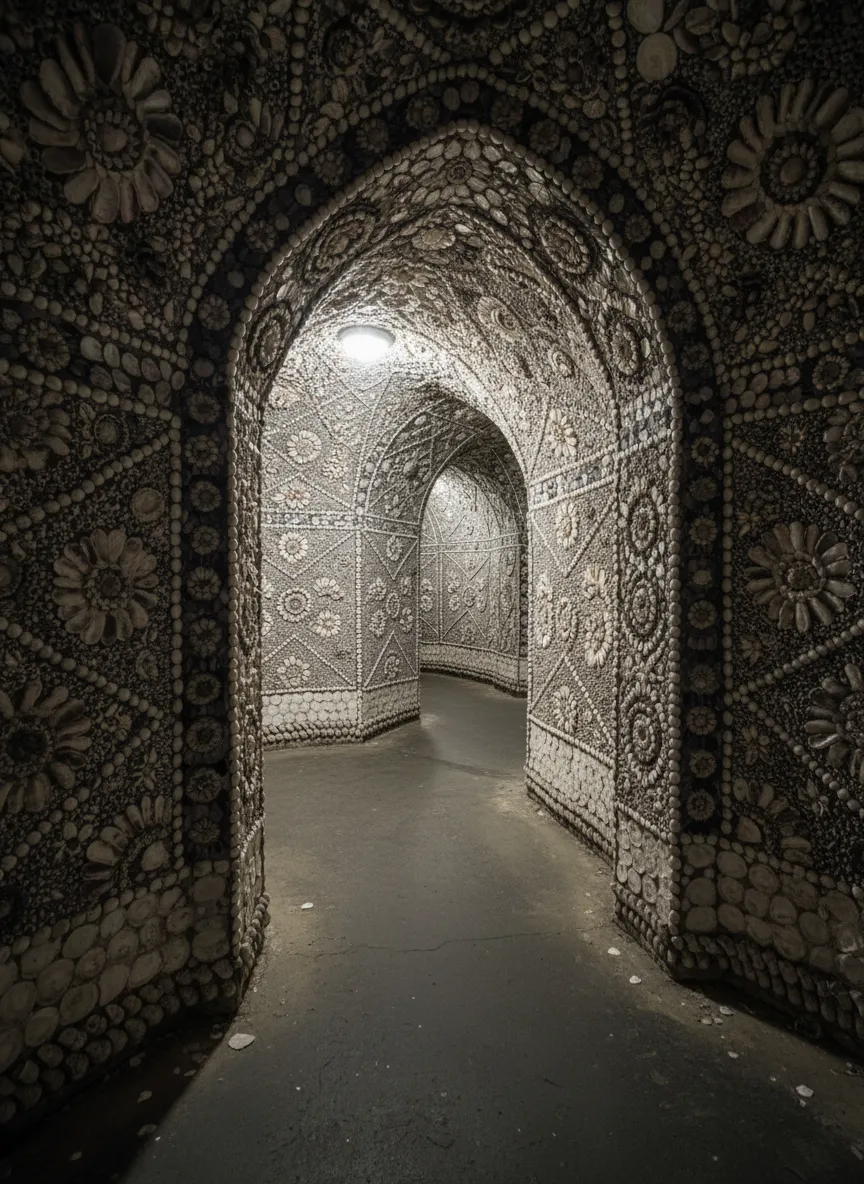
Stepping into the Shell Grotto is like entering another dimension. The air immediately cools, and the soft echo of your footsteps replaces the sounds of the bustling town above. The initial passage, relatively modest, soon opens into a series of chambers and winding corridors, each more breathtaking than the last. You'll find yourself in awe of the sheer dedication and skill involved in creating such an elaborate display.
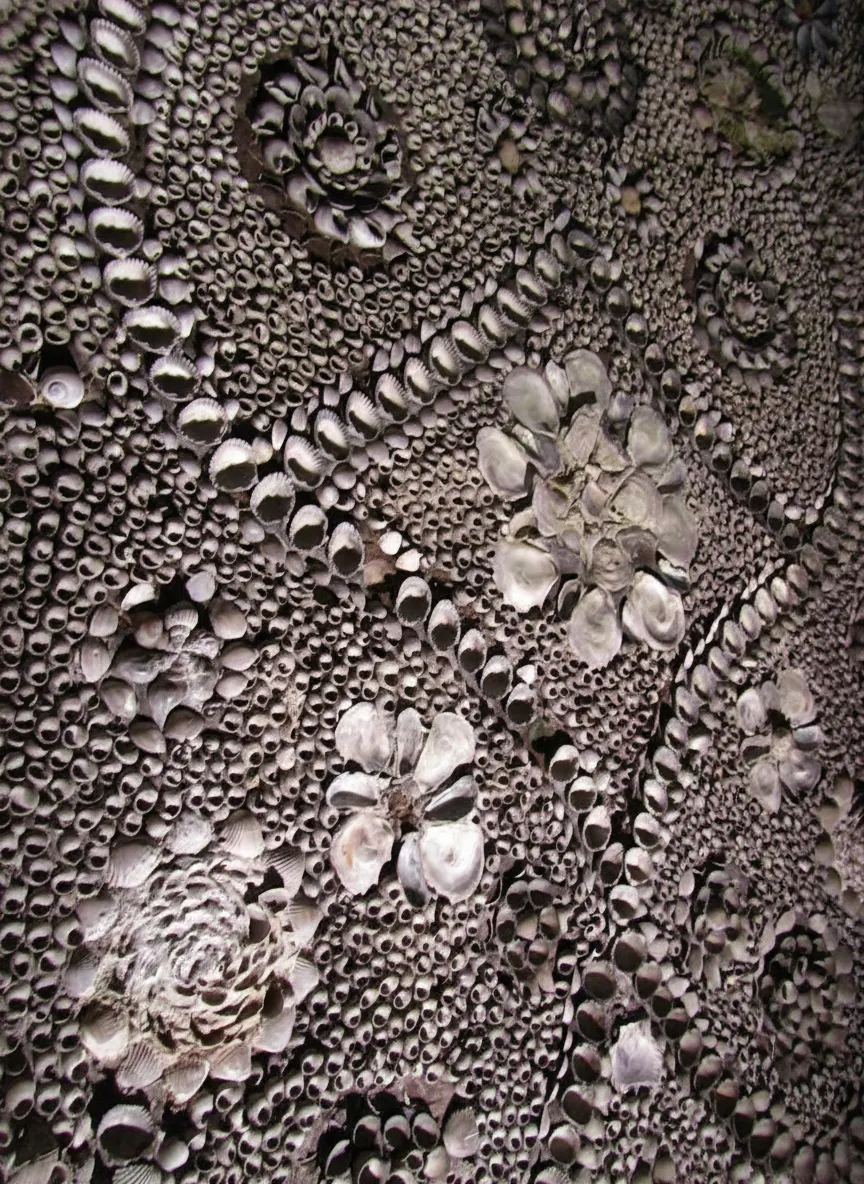
The first thing that strikes you is the texture. Millions of shells, each with its unique shape and subtle hue, create a mesmerising, almost organic tapestry across every surface. Your eyes will be drawn to the intricate patterns: spirals that seem to unfurl into infinity, geometric diamonds and squares, and evocative natural forms like trees, flowers, and sunbursts. The way different types of shells – the dark, glossy mussels, the creamy cockles, the pointed whelks, and the delicate limpets – have been used to create contrast, depth, and specific designs is truly masterful.
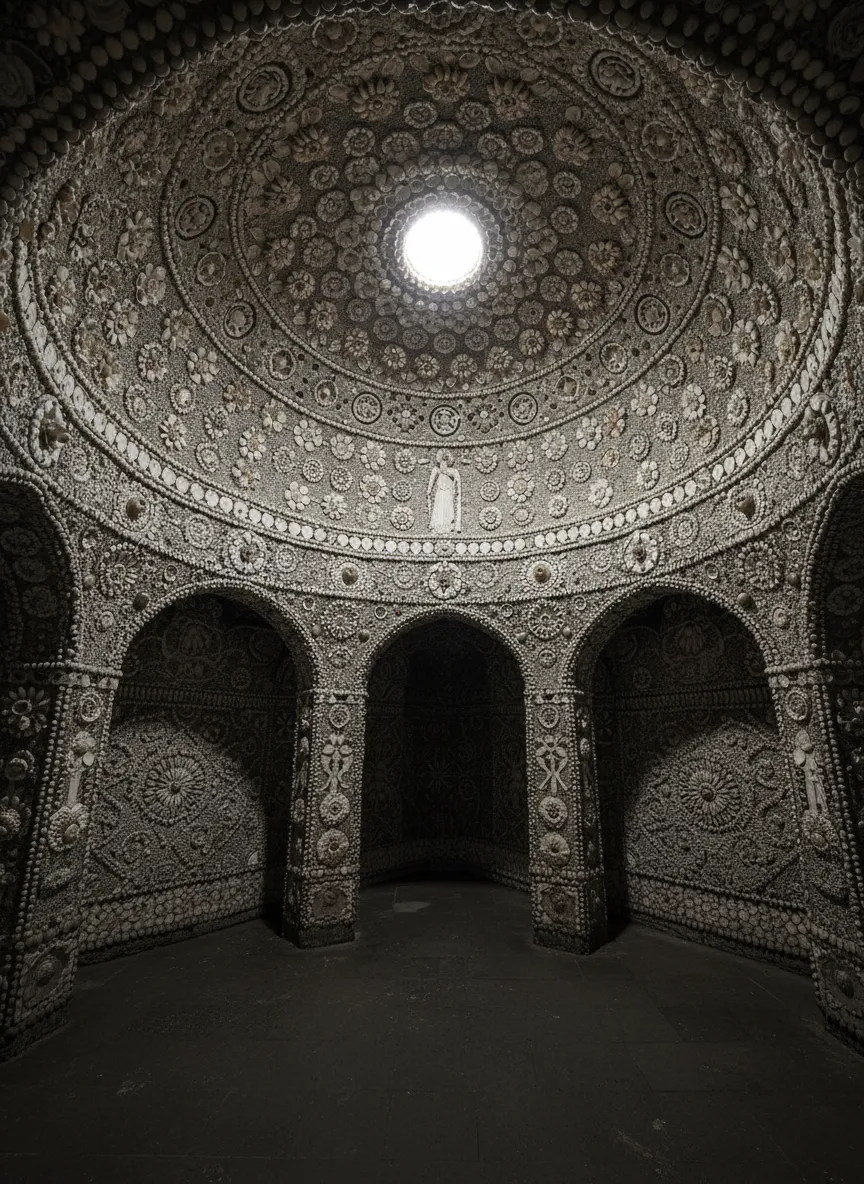
As you navigate the passages, you'll encounter the 'Dome Chamber,' a spectacular, circular space where the shells ascend dramatically to a central point, creating a dizzying effect. Further on, the 'Altar Chamber' captivates with its more formal layout, hinting at a ceremonial purpose. Take your time. Don't rush. Lean in close to appreciate the tiny details, the individual shells painstakingly placed. Then step back to admire the grand patterns, the overall flow of the design, and the incredible scale of the undertaking. The Grotto encourages a slow, reflective pace, allowing its profound beauty and lingering mystery to truly sink in.
Planning Your Descent: Practical Tips for Visiting Margate Shell Grotto
Ready to embark on your own journey into Margate's hidden marvel? Here are some practical tips to make your visit as smooth and enjoyable as possible:
-
Location: The Shell Grotto is located in Margate, Kent, England. It’s easily accessible and well-signposted within the town.
-
Getting There: Margate is well-connected by train from London St Pancras (via High-Speed 1, approx. 1.5 hours) or London Victoria. The Grotto is a pleasant walk from Margate train station, or a short taxi ride. If driving, there are public car parks available in Margate.
-
Best Time to Visit: As an indoor attraction, the Grotto is wonderful year-round. However, visiting during the shoulder seasons (spring: April-May, or autumn: September-October) means fewer crowds in Margate itself, making for a more relaxed trip. Weekdays are generally quieter than weekends.
-
Accessibility: Be aware that the Grotto involves descending a flight of steps to enter, and the passages are narrow and uneven in places. It is unfortunately not wheelchair accessible, and those with mobility issues should check the official website for the latest information on accessibility. The cool, damp environment can also be a factor for some.
-
What to Wear: Even on a warm day, the Grotto maintains a cool, consistent temperature. A light jacket or cardigan is advisable. Comfortable shoes are a must for navigating the uneven surfaces.
-
Tickets and Opening Hours: Always check the official Margate Shell Grotto website for the most up-to-date information on opening times, ticket prices, and any special events or closures. Booking online in advance is often recommended, especially during peak times.
-
Combine Your Visit: Margate itself is a vibrant town with plenty to offer. After exploring the Grotto, enjoy the sandy beach, wander through the charming Old Town with its independent shops and cafes, or visit the Turner Contemporary art gallery. It makes for a fantastic day trip or a relaxing weekend getaway.
-
Photography: Photography is generally permitted, but flash is usually discouraged to protect the delicate shells and enhance the atmosphere for other visitors. Be respectful and mindful of others.
The Margate Shell Grotto is more than just a tourist attraction; it's a profound experience. It challenges your perceptions, sparks your imagination, and leaves an indelible mark on your memory. Whether you leave believing it was an ancient temple, a whimsical folly, or something else entirely, one thing is certain: you'll carry the wonder and the enduring mystery of those millions of shells with you long after you re-emerge into the light of the English seaside.
Essential Travel Information
- Location Margate Shell Grotto, United Kingdom
- Best Time Spring (April-May) or Autumn (September-October) for pleasant weather and fewer crowds in Margate. As an indoor attraction, it's open and enjoyable year-round.
- Getting There Located in Margate, Kent. Easily accessible by train from London St Pancras (approx. 1.5 hrs) to Margate station, then a short walk or taxi. By car via A2/M2 motorways.
- Airport London Gatwick Airport (LGW), London Heathrow Airport (LHR)
- Budget Budget/Mid-range with approximate daily cost £50-£100 (excluding accommodation, including Grotto entry, food, and local transport).
- Language English
Find Places to Stay Near Margate Shell Grotto
Compare hotels, hostels, and unique stays in United Kingdom.
Search AccommodationTours & Experiences Near Margate Shell Grotto
Book guided tours, day trips, and unique experiences.
Browse Tours