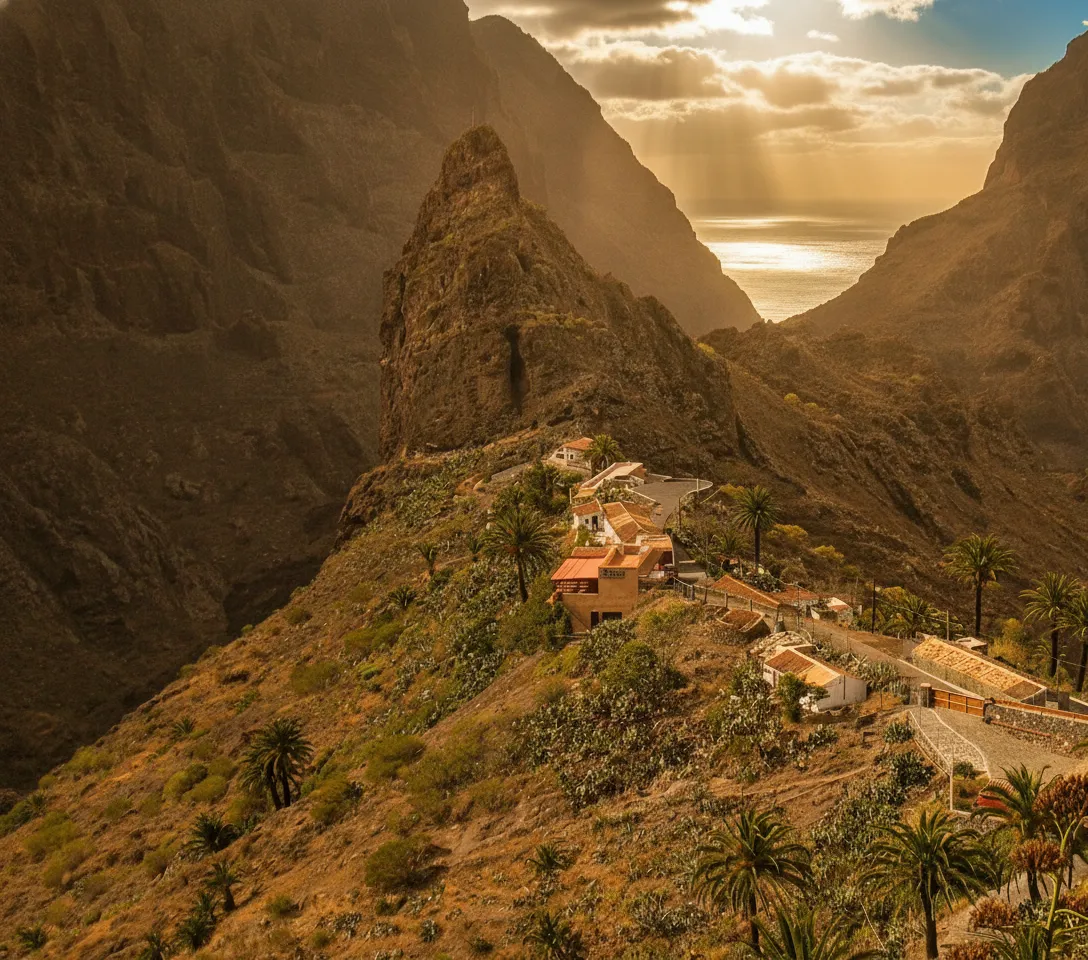
Masca: The "Machu Picchu of the Canary Islands"
Often dubbed the 'Machu Picchu of the Canary Islands,' Masca earns this lofty comparison not just for its stunning, almost unbelievable location, but for the profound sense of discovery it evokes. Perched at an altitude of over 600 meters, this secluded hamlet appears almost organically grown from the volcanic rock face, its traditional stone houses blending seamlessly into the dramatic contours of the Barranco de Masca. It’s a place that feels utterly detached from the modern world, an emerald oasis carved into a rugged, ochre-hued landscape, offering panoramic vistas that stretch from the deep canyon floor to the shimmering Atlantic Ocean and the distant island of La Gomera.
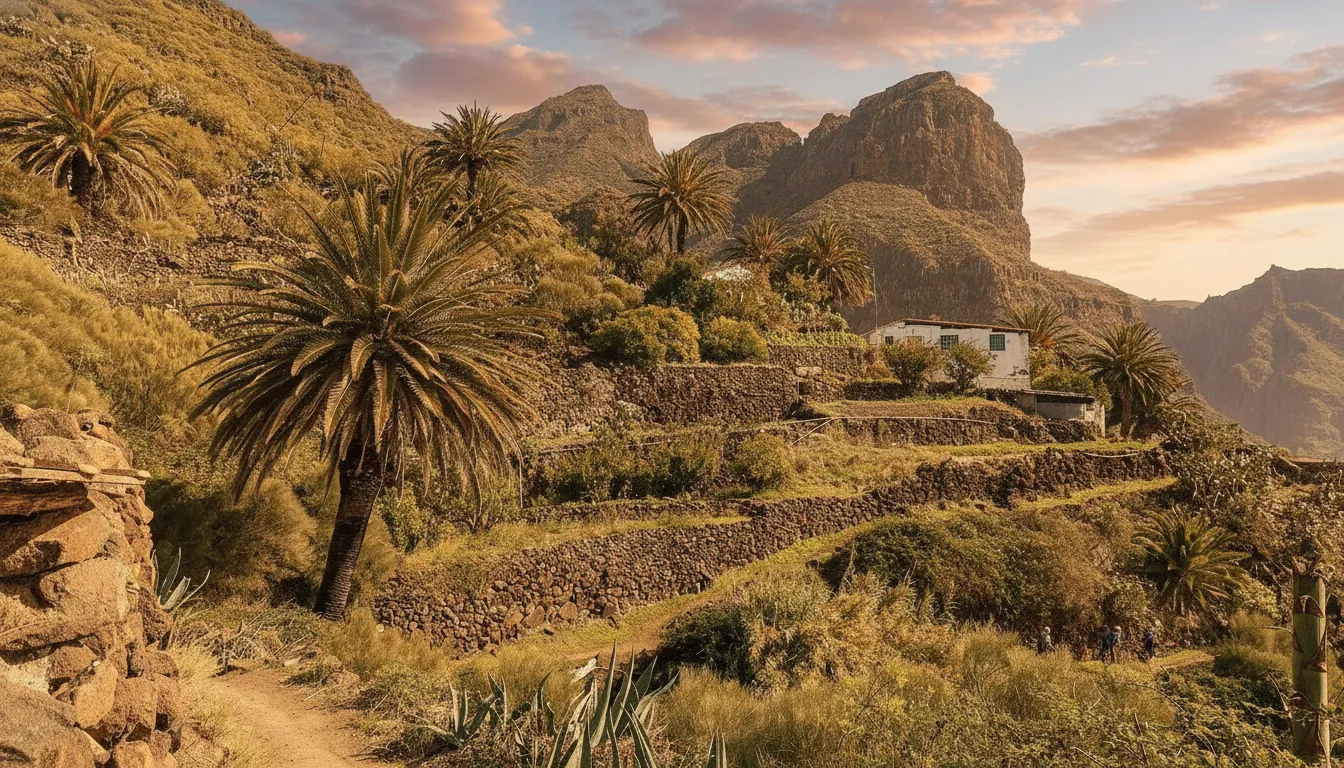
What makes Masca truly special is this extraordinary blend of natural grandeur and human perseverance. The village itself is a testament to the ingenuity of its former inhabitants, who carved out a living in this seemingly inhospitable terrain, cultivating terraced fields with palm trees, almond trees, and prickly pears. Today, visitors are enchanted by its labyrinthine paths, lush vegetation, and the sheer audacity of its existence, feeling as though they've stumbled upon a secret world preserved by its very inaccessibility.
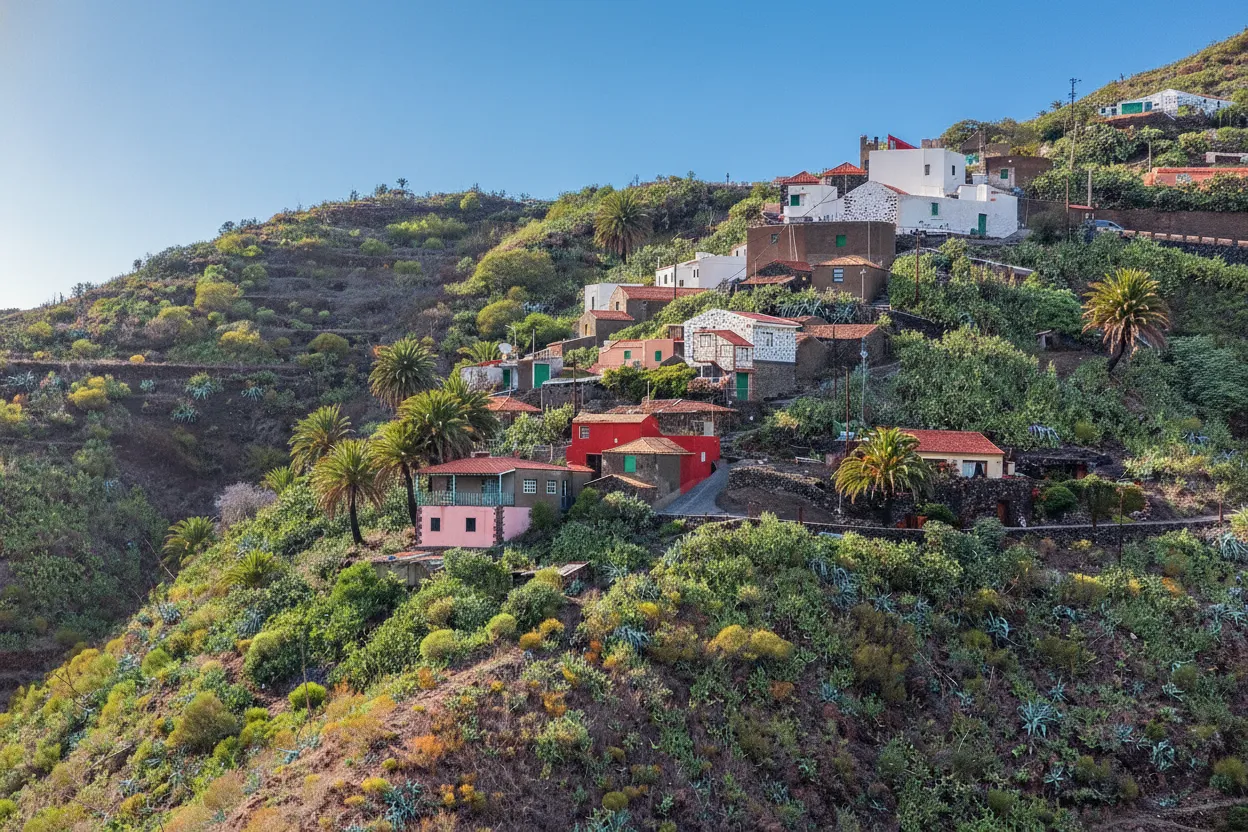
Whispers of the Past: Masca's Pirate Legacy and Enduring Spirit
Masca's isolation wasn't just a geographical quirk; it was a strategic advantage. For centuries, this hidden gem was notoriously difficult to reach, accessible only by treacherous footpaths. This near-inaccessibility made it the perfect clandestine hideout for pirates in the 17th and 18th centuries, who would lie in wait within the deep ravines, ready to ambush passing ships laden with treasures. The legend of pirate activity adds a thrilling layer to Masca's mystique, allowing your imagination to conjure images of swashbuckling adventures and buried treasures as you wander its ancient paths.
Until the construction of a proper road in the 1960s, Masca remained largely cut off from the rest of Tenerife. This prolonged isolation, while challenging for its residents, became its greatest preserver. It meant that Masca's unique architectural style, its traditional customs, and its slow pace of life remained largely untouched by external influences. Walking through the village today, you can almost hear the echoes of its past – the laughter of children, the rustling of palm leaves in the wind, and the quiet determination of generations who chose to call this extraordinary place home. It’s a powerful reminder of human resilience and the deep connection between people and their land.
The Journey to Masca: An Adventure in Itself
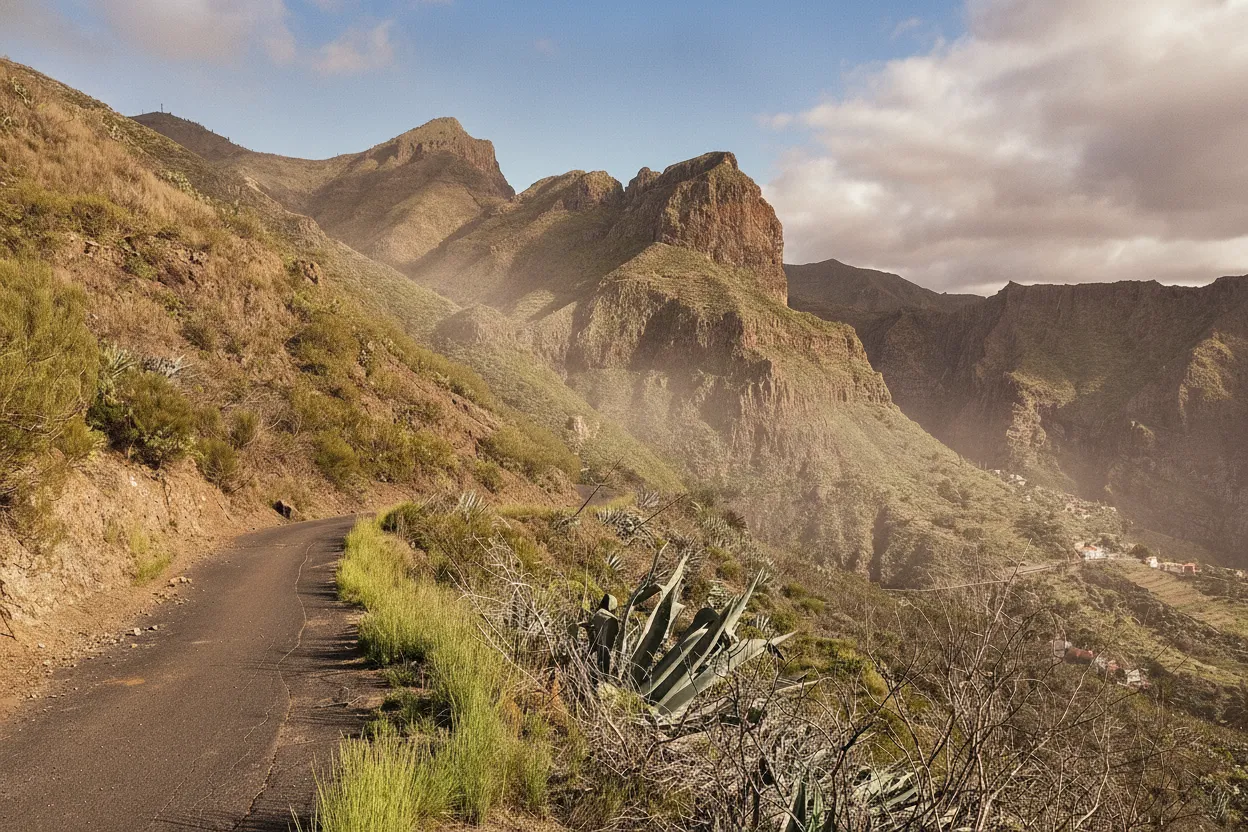
Let me tell you, getting to Masca is half the adventure – and a truly unforgettable one at that! The road, TF-436, that winds its way down into the Masca ravine is an engineering marvel and a thrilling experience in itself. Picture this: narrow, twisting asphalt clinging to the mountainside, punctuated by countless hairpin bends, dramatic drops, and breathtaking vistas around every corner. It's a drive that demands your full attention, but rewards you with views so spectacular they feel almost unreal.
As you descend, the landscape transforms from the pine forests of the higher altitudes to the stark, volcanic beauty of the Teno Massif, eventually giving way to the lush, green pockets of the ravine where Masca resides. You'll pass through tunnels carved directly into the rock, encounter goats grazing nonchalantly by the roadside, and feel a growing sense of anticipation as the village slowly reveals itself, nestled impossibly deep within the canyon. Trust me, have your camera ready, but keep your eyes on the road!
Exploring the Village: A Glimpse into a Timeless World
Once you arrive in Masca, the true magic begins. Parking can be a challenge (more on that in the tips!), but once you've secured a spot, you're free to immerse yourself in this living postcard. The village itself is small, but every corner holds a charm. Wander along its narrow, cobbled paths, past traditional stone houses with wooden balconies adorned with vibrant bougainvillea. You'll find a tiny, picturesque church, the Iglesia de la Inmaculada Concepción, its simplicity adding to the village's rustic allure.
Explore the small artisan shops where local crafts are sold – perhaps a hand-carved wooden item or a local delicacy. Stop at one of the charming little restaurants or 'guachinches' (traditional Canarian eateries) to savor authentic local cuisine, like papas arrugadas with mojo sauce, while enjoying unparalleled views from a terrace. The air is crisp, often carrying the scent of wild herbs and damp earth. From various viewpoints, you can gaze down into the formidable Barranco de Masca, a deep gorge that slices through the landscape, leading all the way to the ocean. While the famous Masca Gorge hike to the coast is often subject to closures and strict regulations, the views *into* the barranco from the village itself are nothing short of spectacular, offering a sense of the sheer scale of this natural wonder.
Practical Tips for Your Masca Adventure: Navigating Paradise
To make your visit to Masca as smooth and enjoyable as possible, here are a few friendly tips from a well-traveled friend:
- Getting There & Parking: The road to Masca is challenging. If you’re not comfortable driving narrow, winding mountain roads with steep drops, consider booking a guided tour or taking a taxi. If driving, go early in the morning to avoid heavy traffic and to find parking, which is extremely limited. There's usually a small paid parking area, but it fills up quickly.
- Best Time to Visit: Aim for early mornings (before 10 AM) or late afternoons to avoid the midday crowds, especially during peak season. The light is also beautiful for photography at these times. Spring and autumn offer pleasant temperatures for exploring.
- What to Bring: Wear comfortable, sturdy walking shoes as the village paths are uneven and steep. Bring water, sunscreen, a hat, and layers of clothing, as the weather can change quickly in the mountains. And, of course, your camera!
- Respect Local Life: Masca is a living village, not just a tourist attraction. Be mindful of residents' privacy, don't block roads or driveways, and support local businesses.
- Food & Drink: Enjoy a meal at one of the local eateries. Sampling traditional Canarian dishes amidst such stunning scenery is an experience in itself.
- Accessibility: Due to its steep, uneven terrain and narrow paths, Masca is not easily accessible for those with mobility issues or strollers.
- Sustainable Tourism: Help preserve this beautiful place. Take all your rubbish with you, stick to marked paths, and minimize your environmental impact.
Masca Village isn't just a destination; it's an experience that awakens the senses and nourishes the soul. It's a place that reminds us of the raw power of nature and the enduring spirit of humanity. So, if you're seeking an adventure that takes you off the beaten path and into the heart of an extraordinary landscape, make your way to Masca. You won't just visit a village; you'll uncover a hidden world, create memories that will last a lifetime, and leave with a profound appreciation for one of Europe's most captivating secrets.
Essential Travel Information
- Location Masca Village, Spain
- Best Time Spring (April-May) and Autumn (September-October) for pleasant weather; early mornings to avoid crowds.
- Getting There Drive via the winding TF-436 road (challenging), or book a guided tour/taxi from major Tenerife resorts.
- Airport Tenerife South Airport (TFS)
- Budget Mid-range (approx. €50-€80 per person per day, excluding accommodation)
- Language Spanish
Find Places to Stay Near Masca Village
Compare hotels, hostels, and unique stays in Spain.
Search AccommodationTours & Experiences Near Masca Village
Book guided tours, day trips, and unique experiences.
Browse Tours