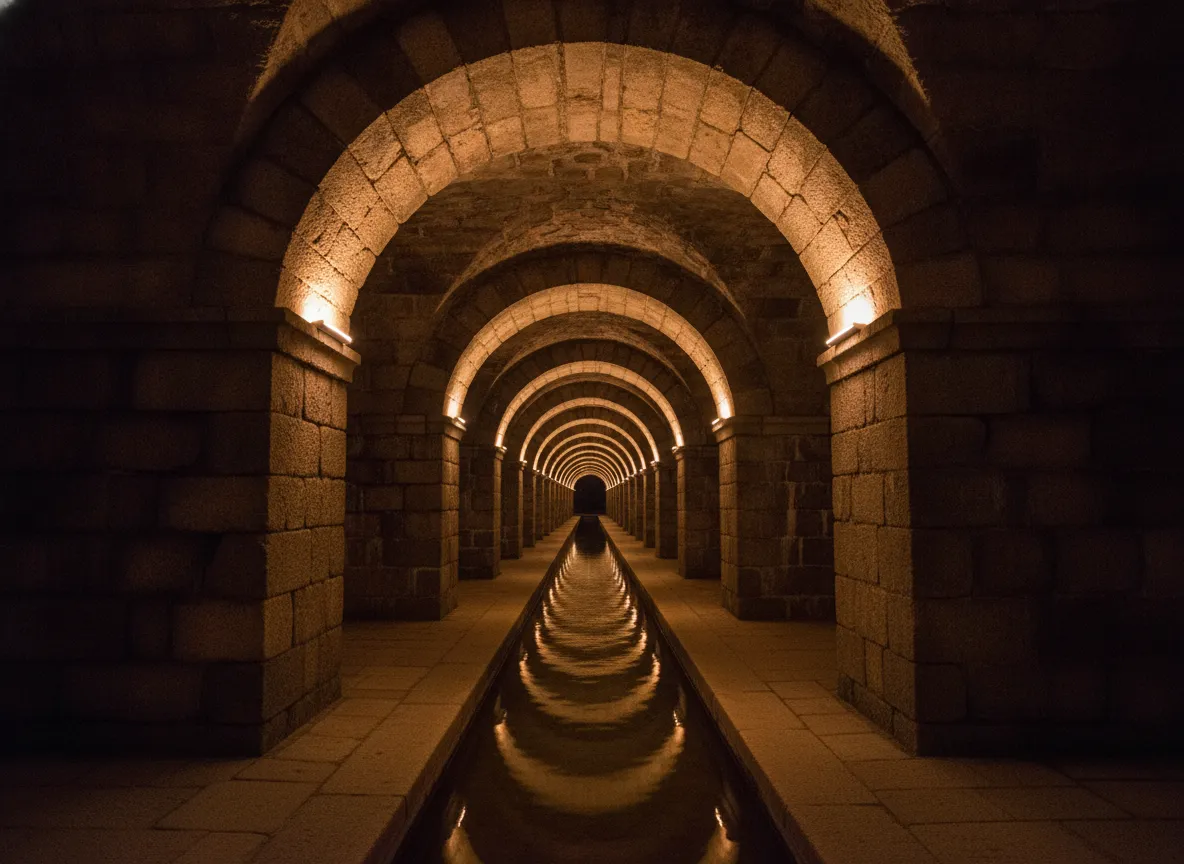
Beneath the sun-drenched, cobbled streets of Lisbon, where the vibrant sounds of Fado music drift from ancient taverns and the aroma of freshly baked pastéis de nata fills the air, lies a world few ever imagine. A forgotten, intricate subterranean labyrinth, built centuries ago, silently channels the lifeblood of the city: water. What if I told you that beneath the historic Mouraria district, a secret network of underground tunnels, an astonishing feat of 18th-century hydrological engineering, awaits discovery? This isn't just a hidden gem; it's a journey into the very veins of old Lisbon, a testament to forgotten ingenuity that supplied monasteries, fountains, and homes for centuries.
Unearthing Lisbon's Liquid Legacy: What Makes It So Special?
The Minas e Aqueduto de Santo António da Mouraria, or the Secret Aqueduct of Saint Anthony, isn't your typical tourist attraction. It's a whisper from the past, a marvel of engineering designed not just to transport water, but to *collect* it from natural springs deep within the earth. Imagine a vast, underground spiderweb of galleries and tunnels, meticulously carved through rock and earth, some stretching for kilometers, all converging to funnel precious fresh water across the city. This isn't just an aqueduct; it's a sophisticated "water mine" system, a testament to a time when access to clean water was paramount, and human ingenuity knew no bounds.
What makes this place truly special is its sheer hidden nature and the profound sense of discovery it offers. While the grand Aqueduto das Águas Livres stands proudly above ground, a monumental symbol of Lisbon's water supply, the Mouraria Aqueduct operates in secret, a silent, subterranean counterpart. It’s a stark reminder that beneath the bustling modern city, layers of history, technology, and human effort lie preserved, waiting to be rediscovered. Exploring its dark, winding passages is like stepping into a time capsule, revealing the raw, unadorned brilliance of a bygone era.

A Glimpse into the Past: History and Background
The story of the Minas e Aqueduto de Santo António da Mouraria begins in the 18th century, a period of significant growth and reconstruction for Lisbon, particularly after the devastating earthquake of 1755. While the city was rebuilding, the demand for fresh, clean water soared. The existing supply systems were often insufficient or vulnerable. This led to ambitious projects like the much larger Aqueduto das Águas Livres, but also to more localized, equally vital initiatives like the Mouraria system.
The "mines" were essentially horizontal wells and galleries, meticulously excavated to intercept underground water veins and natural springs. These springs, located primarily in the hills surrounding what is now the Mouraria district, provided a consistent and pure source. The water was then guided through a network of tunnels, often just wide enough for a single person to navigate, before eventually emerging into above-ground reservoirs or directly supplying important institutions like monasteries, convents, and public fountains. The name "Santo António da Mouraria" likely refers to its proximity to the parish of Santo António and its role in supplying the historic Mouraria district, known for its diverse population and rich cultural heritage.
This engineering marvel wasn't just about utility; it was about survival and public health. For centuries, this hidden network played a crucial, albeit unseen, role in the daily lives of Lisbon's inhabitants. It represents a forgotten chapter in the city's urban development, a testament to the continuous struggle and innovation required to sustain a growing metropolis.
Journey Through the Depths: What You'll See and Experience
Stepping into the Secret Aqueduct is an experience unlike any other in Lisbon. As you descend into its cool, quiet depths, the sounds of the city quickly fade, replaced by the gentle drip of water and the echo of your own footsteps. The air itself feels different – cool, damp, and ancient. You'll find yourself walking through narrow, hand-carved tunnels, some with vaulted ceilings, others with rough-hewn rock walls, illuminated only by the beam of a flashlight.
Along the winding passages, you'll encounter original stonework, perfectly preserved for centuries, showcasing the incredible craftsmanship of the 18th-century builders. Keep an eye out for small niches, ancient sluice gates, and the subtle variations in the tunnel's construction, each telling a silent story of its creation and purpose. In some sections, you might even see the natural springs themselves, bubbling up from the earth, the very source of the water that once flowed through these channels. It's a profound connection to the past, a visceral understanding of how vital this resource was, and how much effort went into harnessing it.

The beauty lies in its rawness and authenticity. There are no fancy displays or modern interventions here. It's just you, the tunnels, and the history. It's a place that sparks the imagination, making you ponder the countless individuals who toiled in these dark passages, the engineers who designed this intricate system, and the millions of liters of water that have flowed through it over the centuries. It’s an adventure that reveals a truly unique facet of Lisbon, far removed from its more famous landmarks.
Practical Tips for Your Subterranean Adventure
Visiting the Minas e Aqueduto de Santo António da Mouraria requires a bit of planning, as it's not an openly accessible tourist site. This adds to its mystique and helps preserve its delicate environment. Access is typically granted through specialized guided tours, often organized by historical societies, local heritage groups, or cultural institutions. These tours are usually infrequent and need to be booked well in advance, so keep an eye on local cultural event listings or inquire with specialized tour operators in Lisbon.
What to Bring:
- Sturdy, closed-toe shoes: The ground can be uneven, wet, and slippery.
- Comfortable clothing: The tunnels are cool and damp, so a light jacket is advisable even on a warm day.
- Headlamp or flashlight: While guides usually provide lighting, having your own will enhance your exploration and allow you to see details.
- Camera: Capture the unique atmosphere, but be prepared for low-light conditions.
- Sense of adventure: This is not for the claustrophobic, but it's an incredibly rewarding experience for the curious!
Safety Considerations:
Always follow your guide's instructions. The tunnels are ancient, and while generally safe, they require respect. Be mindful of your footing, watch your head in lower sections, and avoid touching fragile structures. The experience is typically managed in small groups to ensure safety and preserve the tranquility of the site.

While it may require a little more effort to visit than other attractions, the reward is immeasurable. The Secret Aqueduct of Saint Anthony offers a profound connection to Lisbon's past, a tangible link to its hidden history, and an unforgettable adventure into the depths of human ingenuity. It's a truly off-the-beaten-path experience that will leave you with a deeper appreciation for this incredible city and the secrets it still holds beneath its vibrant surface. So, when you next find yourself in Lisbon, dare to look beyond the obvious and discover the hidden wonders that lie beneath your feet.
Essential Travel Information
- Location Minas e Aqueduto de Santo António da Mouraria (Secret Aqueduct of Saint Anthony), Portugal
- Best Time Spring (April-May) or Autumn (September-October) for pleasant weather above ground, as the underground temperature is consistent.
- Getting There Access is primarily via specialized guided tours, which must be booked in advance through cultural organizations or tour operators in Lisbon. Specific meeting points are provided upon booking.
- Airport Lisbon Portela Airport (LIS)
- Budget Budget/Mid-range (Tour costs vary, but generally affordable for a unique experience)
- Language Portuguese (English widely spoken in tourist areas and by guides)
Find Places to Stay Near Minas e Aqueduto de Santo António da Mouraria (Secret Aqueduct of Saint Anthony)
Compare hotels, hostels, and unique stays in Portugal.
Search AccommodationTours & Experiences Near Minas e Aqueduto de Santo António da Mouraria (Secret Aqueduct of Saint Anthony)
Book guided tours, day trips, and unique experiences.
Browse Tours