Imagine an ancient monastery clinging impossibly to a sheer cliff face, its rugged walls gazing out over one of the world's deepest canyons. This isn't a scene from a fantasy novel, but a breathtaking reality hidden deep within the dramatic landscapes of Greece. Tucked away in the wild heart of Epirus, the Monastery of Saint Paraskevi (Μονή Αγίας Παρασκευής) in Zagori is more than just a historical site; it’s an experience that will challenge your perception of what’s possible, ignite your sense of wonder, and leave you breathless – both from the views and the sheer audacity of its existence.
For those who crave authentic, off-the-beaten-path adventures, who seek places where history whispers from every stone and nature reigns supreme, this hidden gem is calling. Join me as we journey to a place where gravity seems an optional suggestion, and time itself feels like a forgotten concept.
A Sentinel Carved in Stone: What Makes it So Special
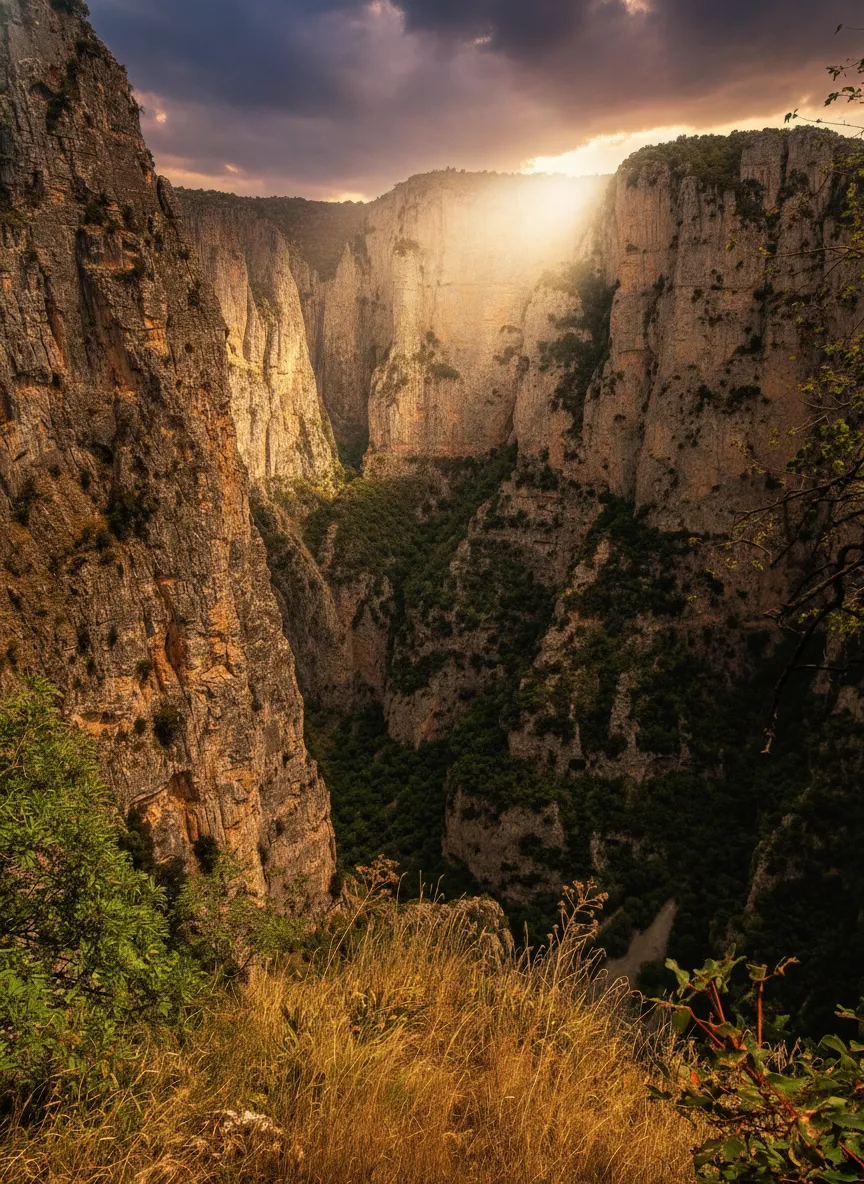
The Monastery of Saint Paraskevi isn't merely built *near* a cliff; it's an organic extension of the rock itself. Dating back to the 15th century, this small, hardy monastic complex is meticulously carved directly into the vertical precipice of the Vikos Gorge. Often hailed as one of the world's deepest canyons relative to its width, the Vikos Gorge plunges thousands of feet into the earth, creating a landscape of unparalleled grandeur. The monastery, perched precariously on its edge, offers a vertigo-inducing, panoramic spectacle into this geological marvel.
What truly sets it apart is the journey to reach it. Accessible only via a narrow, cliff-edge path that hugs the rock face, the approach to Saint Paraskevi is an adventure in itself. This path, often referred to as a "balcony" or "kalderimi" (cobblestone path), winds its way into the rock, sometimes tunneling through it, providing a thrilling sense of discovery. As you walk, the sheer drop to your left serves as a constant, humbling reminder of the immense power of nature and the incredible ingenuity of human devotion.
It feels like stumbling upon a forgotten sentinel from another era, a place where monks once sought solace and connection in the face of raw, untamed wilderness. It defies gravity, it defies time, and it undeniably captures the imagination, making it a truly unique and profoundly moving destination in the heart of the Zagori region.

Whispers of the Past: History and Heritage
The story of the Monastery of Saint Paraskevi begins in 1413, a period when the Ottoman Empire held sway over much of the Balkans, including Epirus. It was founded by Michael I Comnenus, the ruler of the Despotate of Epirus, as a testament to faith and perhaps as a strategic vantage point in a volatile era. Building a monastery in such an inaccessible location was not just an act of piety; it was also a way to create a secure, secluded haven, protected by the formidable natural defenses of the gorge itself.
Imagine the dedication and sheer physical labor involved in carving out these chambers and creating a habitable space in the 15th century. Without modern tools or machinery, every stone, every beam, every fresco would have been brought in and painstakingly placed by hand. This speaks volumes about the unwavering faith and resilience of the people who built and inhabited it.
For centuries, the monastery served as a spiritual refuge and a center of learning, its hardy walls witnessing the ebb and flow of history below. It provided comfort and continuity through periods of hardship, its presence a beacon of hope and tradition. While it may no longer be an active monastic community, its walls still echo with the prayers and lives of those who sought sanctuary here, offering a tangible link to a rich and enduring past.
Journey to the Edge: What You'll See and Experience
Your adventure to the Monastery of Saint Paraskevi typically begins in the picturesque village of Monodendri, one of the famous Zagorochoria villages known for their distinctive stone architecture and stunning surroundings. From the village square, a well-marked path leads you towards the edge of the Vikos Gorge, signaling the start of your extraordinary trek.
The path itself is an experience. Initially, it’s a relatively easy walk, winding through sparse vegetation. Soon, however, it narrows and begins to hug the cliff face, becoming a true "balcony path" carved directly into the rock. Handrails, though simple, offer reassurance as you navigate the sometimes dizzying drops. Take your time here; the views are simply unparalleled. To your left, the sheer, dramatic walls of the Vikos Gorge plunge thousands of feet, revealing layers of geological history. To your right, the rock face rises, sometimes overhanging, creating natural shelters and tunnels.

As you approach the monastery, the path becomes even more integrated into the rock. You'll pass through several small, open-air caves and recesses, some of which may have once housed hermits or provided shelter for travelers. The monastery itself is deceptively small, a series of humble chambers carved into the rock. Inside, you'll find a small church, often adorned with faded frescoes that hint at its former glory. The air is cool and quiet, imbued with a profound sense of peace and reverence.
But it's the view from the monastery's "balcony" that truly steals the show. Standing at the edge, gazing into the unfathomable depths of the Vikos Gorge, you'll feel an exhilarating mix of awe and humility. The winding Voidomatis River, a thin, shimmering ribbon far below, carves its way through the canyon floor. The surrounding mountains of Timfi and Gamila rise majestically, their peaks often capped with snow even into late spring. It’s a vista that imprints itself on your memory, a powerful reminder of nature’s grandeur and the enduring spirit of human devotion.

Planning Your Pilgrimage: Practical Visit Tips
Ready to embark on this unforgettable journey? Here’s what you need to know to make your visit to the Monastery of Saint Paraskevi a smooth and enriching experience:
Location and Accessibility:
- Region: Epirus, Greece.
- Village: Monodendri, one of the 46 villages of Zagori (Zagorochoria).
- Getting There: The easiest way to reach Monodendri is by car. It’s about a 45-minute to an hour's drive from Ioannina, the capital of Epirus, which has an airport. Public transport to Monodendri is limited, so a rental car offers the most flexibility for exploring Zagori.
- The Walk: From Monodendri village square, follow the signs (it’s well-marked) for a pleasant 15-20 minute walk to the monastery. The path is relatively easy, but it is uneven and rocky in places. While the cliff-edge path to the monastery is well-maintained with handrails, those with severe vertigo might find it challenging. However, many who are normally wary of heights manage it without issue due to the secure path.
Best Time to Visit:
- Spring (April-May): The landscape is lush and green, wildflowers bloom, and the weather is pleasantly mild. Fewer crowds than summer.
- Autumn (September-October): The changing leaves paint the gorge in spectacular hues of red and gold. The weather is crisp and ideal for hiking.
- Summer (June-August): While popular, it can get very hot, especially mid-day. Start your visit early to beat the heat and the crowds.
- Winter (November-March): Beautiful, but access can be challenging due to snow and ice. Some roads and paths may be impassable.
What to Wear and Bring:
- Footwear: Sturdy, comfortable walking shoes or hiking boots are essential.
- Clothing: Layers are always a good idea, as the weather can change. Even in summer, a light jacket might be welcome in the shade of the gorge. While not strictly enforced for men, out of respect for the religious site, women might consider covering shoulders and knees.
- Essentials: Water (especially in summer), a hat, sunscreen, and a camera with plenty of battery and memory space!
Respectful Visiting:
- Remember it is a religious site. Be respectful, keep noise to a minimum, and refrain from loud conversations inside the monastery.
- Take only photos, leave only footprints. Help preserve this incredible place for future generations.
Beyond the Monastery:
- Explore Monodendri: Wander through its charming stone streets, enjoy a traditional meal at a local tavern, and visit the Ecclesiastical Museum.
- Vikos Gorge Hiking: For the adventurous, Monodendri is a popular starting point for longer hikes into the Vikos Gorge, leading to villages like Vikos or Mikro Papigo.
- Other Zagorochoria: Spend time exploring other nearby villages like Vitsa, Dilofo, or the stunning twin villages of Papigo (Mega Papigo and Mikro Papigo).
- Voidomatis River: Often described as one of Europe's cleanest rivers, its turquoise waters are perfect for a refreshing dip or rafting in warmer months.
The Monastery of Saint Paraskevi is more than just a destination; it’s a journey into the heart of Greece's wild beauty and enduring spirit. It’s a place that reminds us of the incredible feats of human devotion and the awe-inspiring power of nature. So, pack your bags, lace up your boots, and prepare to be utterly captivated by this extraordinary hidden gem.
Essential Travel Information
- Location Monastery of Saint Paraskevi (Μονή Αγίας Παρασκευής), Greece
- Best Time Spring (April-May) and Autumn (September-October)
- Getting There Drive to Monodendri village in Zagori. From the village square, it's a 15-20 minute walk along a cliff-edge path to the monastery.
- Airport Ioannina National Airport (IOA)
- Budget Mid-range with approximate daily cost €70-€120 (excluding car rental)
- Language Greek
Find Places to Stay Near Monastery of Saint Paraskevi (Μονή Αγίας Παρασκευής)
Compare hotels, hostels, and unique stays in Greece.
Search AccommodationTours & Experiences Near Monastery of Saint Paraskevi (Μονή Αγίας Παρασκευής)
Book guided tours, day trips, and unique experiences.
Browse Tours