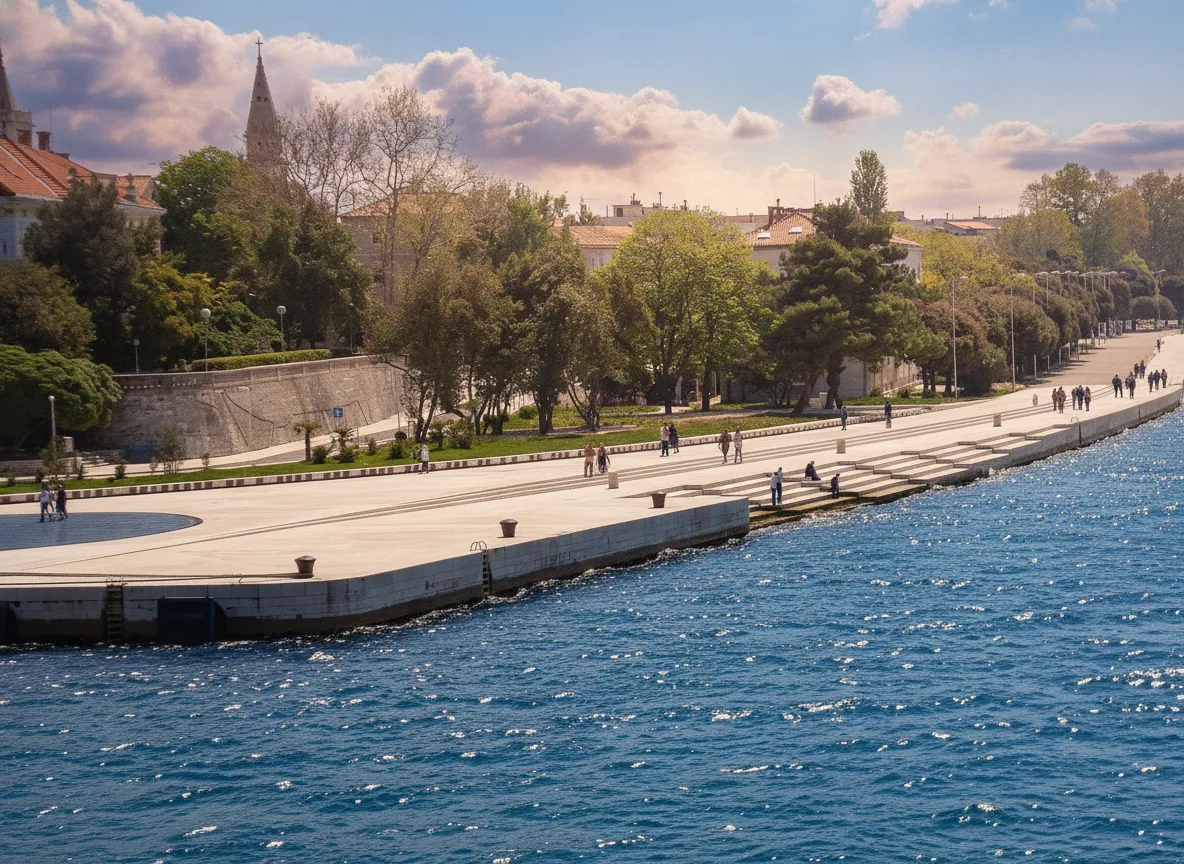
Imagine a massive, invisible musical instrument built directly into a city's waterfront, playing haunting, spontaneous melodies entirely composed by the Adriatic Sea. This isn't a scene from a fantasy novel or a futuristic art installation from a distant land. This is Morske Orgulje, the Sea Organ, nestled on the sun-drenched Riva of Zadar, Croatia. It's a place where the very breath of the ocean transforms into a mesmerizing symphony, inviting you to sit, listen, and lose yourself in a concert unlike any other on Earth. If you've ever yearned for a travel experience that transcends the ordinary, that touches your soul with the raw beauty of nature and the ingenious spirit of human creativity, then prepare to be captivated by Zadar's most enchanting secret.
Trust me, as someone who’s constantly seeking out the world’s most unique corners, Morske Orgulje stands in a league of its own. It’s more than just an attraction; it’s an experience, a profound dialogue between man and nature, played out daily on the sun-drenched shores of the Dalmatian coast. Forget crowded museums or predictable landmarks; this is where Zadar truly sings.
The Adriatic's Own Orchestra: What Makes Morske Orgulje So Special?
What makes the Sea Organ so utterly fascinating is its audacious simplicity and complex execution. It’s an architectural sound art object that takes the natural ebb and flow of waves and wind, channeling them through a sophisticated system of pipes and resonant chambers hidden beneath a series of elegant white marble steps. The result? A never-ending, ever-changing symphony composed solely by the Adriatic Sea. Each wave, each gust of wind, pushes air through these subterranean tubes, creating a series of ethereal, sometimes melancholic, sometimes joyful, but always unpredictable musical notes.
You see, this isn’t a pre-recorded track or a programmed sequence. This is a living, breathing instrument whose performance is dictated by the whims of the sea. One moment, you might hear a gentle, almost whisper-like hum; the next, a powerful, resonant chord might swell, filling the air with its deep, sonorous voice. It’s a profound, ever-changing experience that merges nature, art, and engineering in the most beautiful way imaginable, right in the heart of a bustling European city. There's a magic in sitting on those warm marble steps, feeling the gentle sea breeze, and letting the spontaneous melodies wash over you. It's a reminder of the powerful, untamed beauty of our planet, harmonized by human ingenuity.
From War Scars to Waterfront Wonders: The History of Zadar's Sea Organ
The story of Morske Orgulje is deeply intertwined with the history and spirit of Zadar itself. After suffering immense damage during World War II, Zadar underwent a period of rapid and often utilitarian reconstruction, which, while necessary, sometimes lacked aesthetic appeal. Fast forward to the early 2000s, and the city began a concerted effort to revitalize its waterfront, known as the Riva, transforming it back into a vibrant public space worthy of Zadar's rich heritage.
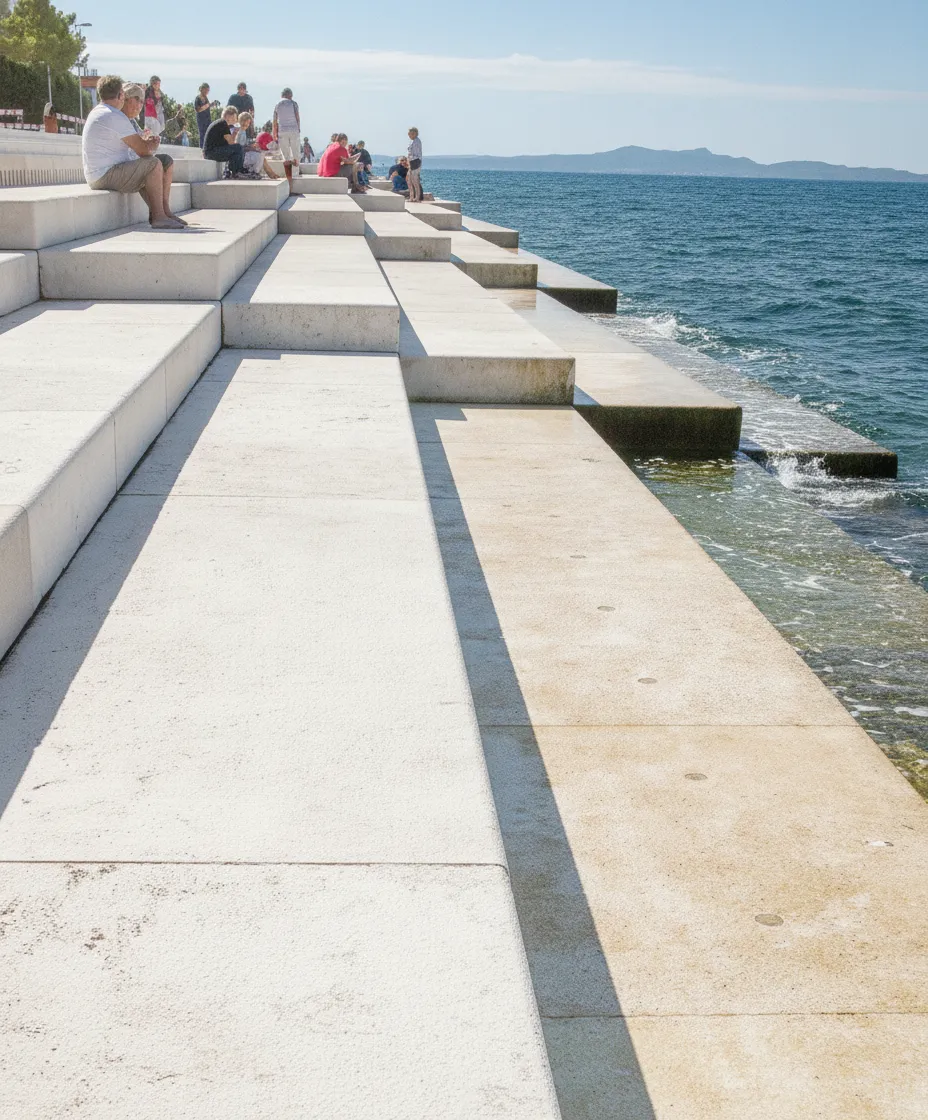
Enter Nikola Bašić, a brilliant Croatian architect. His vision for the Sea Organ, completed in 2005, was not just to create a beautiful structure, but to give Zadar a unique voice, a symbol of its resilience and its deep connection to the sea. Bašić, along with experts in hydrodynamics and organ building, designed a series of 35 polyethylene pipes of different lengths, diameters, and inclinations, which are built into the concrete structure beneath the marble steps. As waves crash against the shore, they push air into these pipes, driving it through various resonating chambers, much like a giant organ. The sound then exits through seven specially designed openings on the upper sidewalk, creating the captivating music you hear.
The Sea Organ quickly garnered international acclaim, winning the European Prize for Urban Public Space in 2006. More importantly, it transformed Zadar's Riva into a beloved gathering spot, breathing new life and a sense of wonder into the city's public realm. It’s a testament to how thoughtful design can heal, inspire, and connect people to their environment in truly profound ways.
An Unforgettable Sensory Journey: What You'll See (and Hear) There
When you visit Morske Orgulje, you’re not just seeing an architectural marvel; you’re stepping into an immersive sensory experience. The physical structure itself is deceptively simple and elegant: a series of wide, pristine white marble steps that descend gently into the azure waters of the Adriatic. From afar, it looks like a beautiful, inviting place to sit and watch the sea. But as you get closer, and especially as the waves begin their rhythmic dance, you'll start to hear it – a symphony rising from beneath your feet.
The sounds are varied and unpredictable. Sometimes they are soft and melodic, like a gentle hum or the distant call of a whale. At other times, especially when larger waves roll in, they can be powerful, almost orchestral, with deep, resonant chords that seem to vibrate through the very air. You'll find yourself closing your eyes, trying to decipher the sea's message, listening for patterns that never quite repeat themselves. It’s a truly meditative experience, a chance to disconnect from the digital noise and reconnect with the natural world.
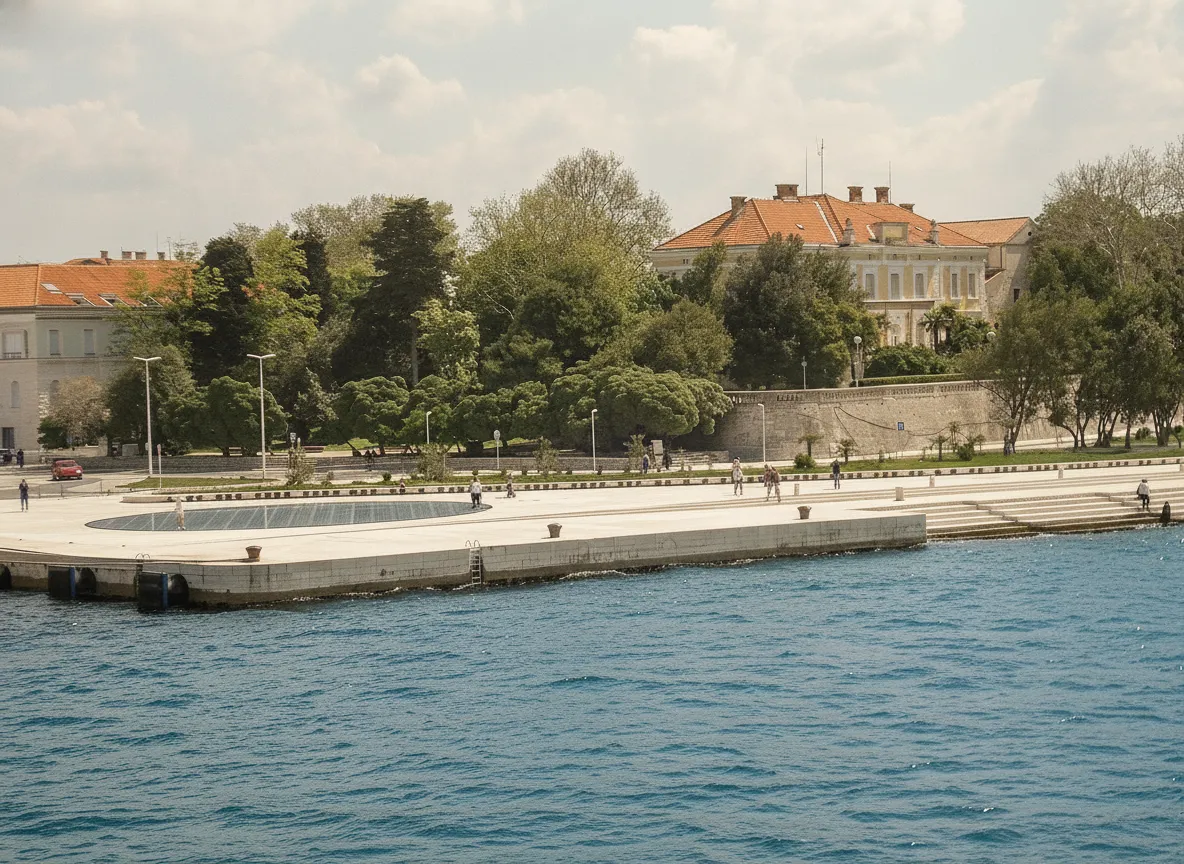
But the experience doesn't end with the sound. The Sea Organ is perfectly positioned on Zadar's western tip, making it one of the absolute best places in the world to watch the sunset. As the sun dips below the horizon, painting the sky in fiery oranges, purples, and deep reds, the Sea Organ plays its most dramatic overture. And just a few steps away, you'll discover another of Nikola Bašić's masterpieces: the "Greeting to the Sun" (Pozdrav Suncu). This massive, circular ground-level installation, composed of multi-layered glass panels, absorbs solar energy throughout the day and then, as night falls, bursts into a spectacular light show, pulsing and dancing in sync with the Sea Organ's melodies. It's an absolutely magical interplay of light, sound, and nature that truly has to be seen to be believed.
The atmosphere here is electric yet serene. Couples hold hands, families sit in quiet awe, and solo travelers gaze out at the horizon, lost in thought. It's a communal experience, shared in quiet reverence for the beauty unfolding around you. You'll witness strangers exchanging smiles, united by the shared wonder of Zadar's unique evening ritual.
Your Guide to Experiencing This Adriatic Wonder: Practical Visit Tips
Ready to plan your trip to Zadar and experience the magic of Morske Orgulje for yourself? Here are a few practical tips to make your visit unforgettable:
When to Go:
While the Sea Organ plays year-round, the absolute best time to visit is during the late spring to early autumn (May to October). The weather is warm, the sea is inviting, and the sunsets are legendary. And speaking of sunsets, this is non-negotiable: you simply MUST experience the Sea Organ at dusk. Aim to arrive at least an hour before sunset to find a good spot on the marble steps, soak in the pre-show atmosphere, and truly appreciate the transition from daylight to the vibrant evening spectacle.
If you prefer solitude, consider an early morning visit. The sounds are just as enchanting, but you'll share the space with far fewer people, offering a more private, contemplative experience.
Getting There:
Morske Orgulje is located on the very tip of the Zadar Riva (waterfront), making it incredibly easy to find. If you're staying in Zadar's historic Old Town, it's a pleasant and scenic walk along the promenade, taking no more than 10-15 minutes from most points. Zadar itself is well-connected by bus to other major Croatian cities, and its airport (ZAD) offers numerous international flights, especially during the tourist season.
Cost:
The best part? Experiencing the Sea Organ and the Greeting to the Sun is completely free! It’s an accessible and inclusive piece of public art for everyone to enjoy.
What to Bring:
- **Camera:** You’ll want to capture those stunning sunset shots and the unique atmosphere.
- **Comfortable Shoes:** For exploring Zadar's Old Town before or after your visit.
- **A Light Jacket or Scarf:** Even on warm days, the sea breeze can be cool once the sun sets.
- **Your Sense of Wonder:** This is a place that truly rewards an open mind and heart.
Nearby Attractions:
Zadar's Old Town is a treasure trove of history and charm. Before heading to the Sea Organ, explore the ancient Roman Forum, climb the Bell Tower of St. Anastasia Cathedral for panoramic views, or marvel at the unique circular architecture of St. Donatus Church. The city also boasts charming cafes, delicious Dalmatian restaurants serving fresh seafood, and vibrant markets. Make a full evening of it: enjoy a leisurely dinner, then head to the Riva for your unforgettable concert with the sea.
Morske Orgulje isn't just a destination; it's a pilgrimage for the senses, a place where the ordinary becomes extraordinary, and the natural world composes its most profound melodies. Add Zadar to your travel bucket list, and prepare to be moved by the sea's enchanting song.
Essential Travel Information
- Location Morske orgulje (Sea Organ), Croatia
- Best Time Late spring to early autumn (May-October), especially at sunset for the most magical experience.
- Getting There Located on the Zadar Riva (waterfront), easily accessible by foot from Zadar's Old Town. Zadar is well-connected by bus to other Croatian cities.
- Airport Zadar Airport (ZAD)
- Budget Mid-range (approx. €60-€120 per day excluding accommodation for food, activities, local transport)
- Language Croatian (English is widely spoken in tourist areas)
Find Places to Stay Near Morske orgulje (Sea Organ)
Compare hotels, hostels, and unique stays in Croatia.
Search AccommodationTours & Experiences Near Morske orgulje (Sea Organ)
Book guided tours, day trips, and unique experiences.
Browse Tours