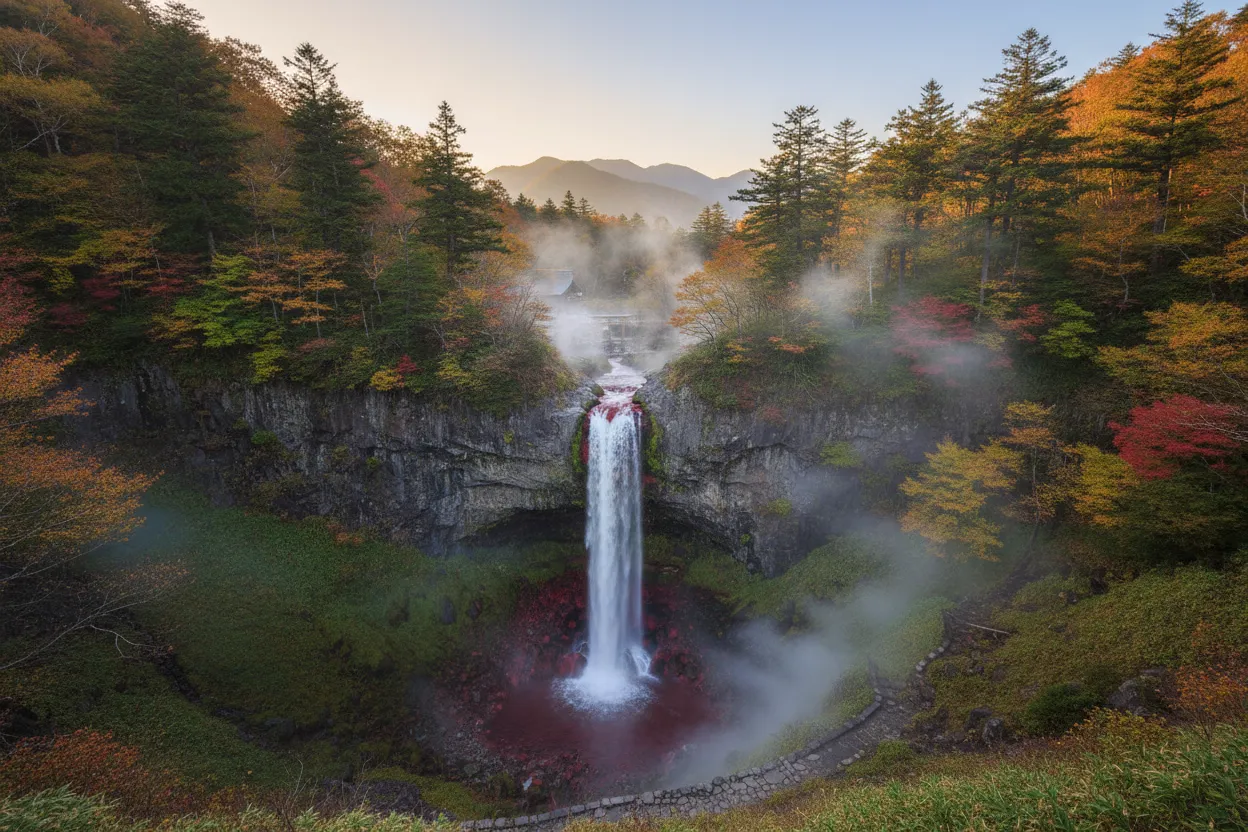
Forget ancient temples adorned with gilded statues and bustling city shrines echoing with prayers. Imagine a place, hidden deep within the remote mountains of Japan, where the very earth is revered as a living deity. Here, in a sacred valley shrouded in mist, pilgrims walk barefoot on a bubbling hot spring waterfall, its waters dyed a mystical red by natural minerals. Photography is strictly forbidden, silence is paramount, and the gods, they say, speak directly through the steaming earth. My friend, prepare to step into a realm untouched by modern sensibilities, a profound spiritual experience that will reawaken your senses and challenge your perceptions of the divine: welcome to Mount Yudono Shrine.
Mount Yudono: Where Earth is the Deity
Mount Yudono Shrine, nestled in the heart of Yamagata Prefecture, isn't just a hidden gem; it's a profound anomaly in the landscape of Japanese spirituality. Unlike virtually every other shrine in the country, you won't find an ornate main hall (honden) or a grand worship building here. Instead, the primary object of veneration is the mountain itself – specifically, a natural, perpetually gushing hot spring waterfall. This isn't merely a backdrop; the waterfall, vibrant with mineral deposits that paint its rocks in hues of crimson and rust, *is* the deity. It's a raw, untamed expression of nature's power, a testament to the belief that the divine isn't confined to man-made structures but resides in the very essence of the earth.
This radical departure from conventional shrine architecture is what makes Yudono so utterly fascinating. Here, the 'gods' aren't represented by statues or symbolic objects, but by the living, breathing, steaming earth. Visitors are invited to participate in a purification ritual that is as unique as it is ancient: after removing their shoes and, often, donning a simple white robe, they walk directly onto the sacred hot spring, feeling the warm, mineral-rich water beneath their bare feet. It’s an immersive, sensory experience – the steam rising, the gurgling water, the distinct earthy scent – that creates an immediate, visceral connection to something profound and primal. This isn't just observing; it's *experiencing* the divine.
The strict prohibition on photography is not a mere rule; it's an integral part of the experience. In a world obsessed with capturing and sharing every moment, Yudono demands presence. It forces you to put down your phone, to silence the urge to document, and instead, to truly see, feel, and absorb. This enforced mindfulness allows for a deeper, more personal engagement with the sacred, ensuring that the memories you take away are etched not on a digital chip, but on your very soul.

Whispers of Ages: The History and Sacred Lineage
Mount Yudono’s spiritual roots stretch back centuries, perhaps even millennia, long before the formalization of Shinto or the arrival of Buddhism in Japan. It stands as one of the three sacred mountains of Dewa (Dewa Sanzan), alongside Mount Haguro and Mount Gassan. Each mountain represents a different stage of the spiritual journey: Haguro-san symbolizes the present world and rebirth, Gassan represents the world of the dead and ancestral spirits, and Yudono-san, with its perpetually flowing hot spring, embodies the future and the ultimate rebirth into a new existence.
For centuries, these mountains have been the training grounds for yamabushi – mountain ascetics who practice Shugendo, a syncretic religion blending Shinto, esoteric Buddhism, and ancient mountain worship. The yamabushi undertake arduous pilgrimages, enduring extreme conditions and performing rituals to achieve enlightenment and supernatural powers. Yudono-san is considered the most sacred and secretive of the three, the final destination where pilgrims are said to achieve spiritual rebirth. Its status as a hidden sanctuary, where the deepest mysteries are revealed, has been carefully preserved throughout history, contributing to its enigmatic allure.
The traditions and rituals practiced at Yudono are steeped in this ancient lineage, passed down through generations of priests and ascetics. The reverence for nature as the ultimate source of spiritual power is not a modern innovation but a timeless core belief, making a visit here feel like stepping back into a forgotten era of Japanese spirituality, where the veil between the mundane and the mystical is remarkably thin.
Stepping into the Sacred: What You'll Experience
The journey to Mount Yudono is itself part of the pilgrimage. As you ascend into the remote Yamagata mountains, the air grows cooler, the forests denser, and a profound sense of tranquility begins to settle. The final approach to the shrine is often by a shuttle bus or a walk through a serene, forested path, enhancing the feeling of leaving the modern world behind. Upon arrival, you’ll be greeted by a hushed atmosphere, a palpable sense of reverence that permeates the air.
Before entering the most sacred area, you’ll be directed to a small changing area. Here, you'll remove your shoes and socks, and often, you'll be offered a simple white robe to wear over your clothes – a symbolic shedding of worldly attachments. This act of purification prepares you for the profound experience ahead. You'll then proceed to the waterfall, guided by a priest who will offer a brief prayer and perhaps a small offering on your behalf.
And then, you'll see it: the sacred hot spring, perpetually gushing from the earth, its waters a mesmerizing blend of red, orange, and brown, stained by the rich mineral content. Steam rises gently, creating an ethereal mist that dances in the sunlight, lending an otherworldly glow to the surroundings. The air is thick with the earthy scent of sulfur and minerals, a natural incense that hints at the raw power emanating from below. You'll step onto the warm, bubbling surface of the earth, feeling the soft, mineral-rich ground beneath your bare feet. It’s a sensation unlike any other – the warmth seeping into your soles, the gentle bubbling of the water, the texture of the living rock.
As you walk across the sacred ground, guided by the priests, you’ll be encouraged to cleanse yourself, both physically and spiritually, in the flowing waters. This isn't just a ritual; it's a deeply personal encounter with the divine. The lack of photography means your focus remains entirely on the present moment, on the sensations, the sounds, the profound sense of connection to the ancient earth. Many describe feeling a deep sense of peace, clarity, or even a profound emotional release during this unique purification. It’s a moment of pure, unadulterated presence, a true spiritual rebirth experienced through the senses.

Your Pilgrimage Awaits: Practical Tips for Visiting Mount Yudono
Embarking on a pilgrimage to Mount Yudono is an unforgettable experience, but it requires a bit of planning due to its remote location and unique customs.
Best Time to Visit: The shrine is typically open from late April/early May until early November, as heavy snow makes access impossible during winter. The late spring offers lush greenery, while autumn brings breathtaking fall foliage. Summer provides pleasant temperatures for hiking.
Getting There: Mount Yudono is truly off the beaten path. The nearest major transport hubs are Tsuruoka City or Sakata City in Yamagata Prefecture. From Tsuruoka Station, you can take a bus towards the Dewa Sanzan, but a rental car offers the most flexibility for exploring the region and reaching the shrine entrance. There's a shuttle bus that takes you from the main parking area to the shrine entrance itself, as private vehicles are not allowed on the final stretch.
What to Bring: Wear comfortable walking shoes, as there will be some walking involved, even with the shuttle bus. Given the barefoot ritual, you might want to bring a small towel to dry your feet afterwards. Dress respectfully – modest clothing is always appropriate at sacred sites in Japan.
Respecting the Sacred: This is paramount. The "no photography" rule within the sacred area is strictly enforced and must be honored. Maintain a quiet and respectful demeanor throughout your visit. Follow the instructions of the shrine priests implicitly. Remember, you are visiting a deeply revered spiritual site, not a tourist attraction.
Accommodation: While there are no accommodations directly at Yudono-san, you can find traditional Japanese inns (ryokan) and guesthouses in nearby towns like Tsuruoka, Haguro, or even smaller villages closer to the mountains. Staying in the region allows you to experience more of the local culture and cuisine.
Combining with Dewa Sanzan: To truly appreciate the spiritual significance of Yudono, consider visiting Mount Haguro (Haguro-san) first. Haguro-san is easily accessible and offers a more conventional shrine experience, including the famous five-story pagoda and a beautiful cedar avenue. Mount Gassan, the highest of the three, is a strenuous hike best undertaken in summer. A pilgrimage across all three mountains offers the complete Shugendo experience, culminating in the rebirth at Yudono.

Mount Yudono Shrine is more than just a destination; it’s an invitation to a profound spiritual journey. It’s a place that challenges your understanding of the divine, where the earth breathes, and ancient rituals connect you directly to the heartbeat of nature. In a world saturated with images and constant noise, Yudono offers a rare sanctuary for the soul – a place where you are truly present, truly connected, and truly reborn. If you seek an experience that transcends the ordinary and leaves an indelible mark on your spirit, then the sacred, bubbling waters of Mount Yudono await your bare feet.
Essential Travel Information
- Location Mount Yudono Shrine (湯殿山神社), Japan
- Best Time Late April/Early May to Early November (Summer/Autumn for best conditions)
- Getting There From Tsuruoka Station (Yamagata), take a local bus to the Yudono-san entrance, then a shuttle bus to the shrine. Rental car recommended for flexibility.
- Airport Shonai Airport (SYO)
- Budget Mid-range with approximate daily cost of $100-$200 (including accommodation, transport, food)
- Language Japanese
Find Places to Stay Near Mount Yudono Shrine (湯殿山神社)
Compare hotels, hostels, and unique stays in Japan.
Search AccommodationTours & Experiences Near Mount Yudono Shrine (湯殿山神社)
Book guided tours, day trips, and unique experiences.
Browse Tours