The Whispering Stones of Upper Austria: A Symphony of Human Ingenuity and Nature
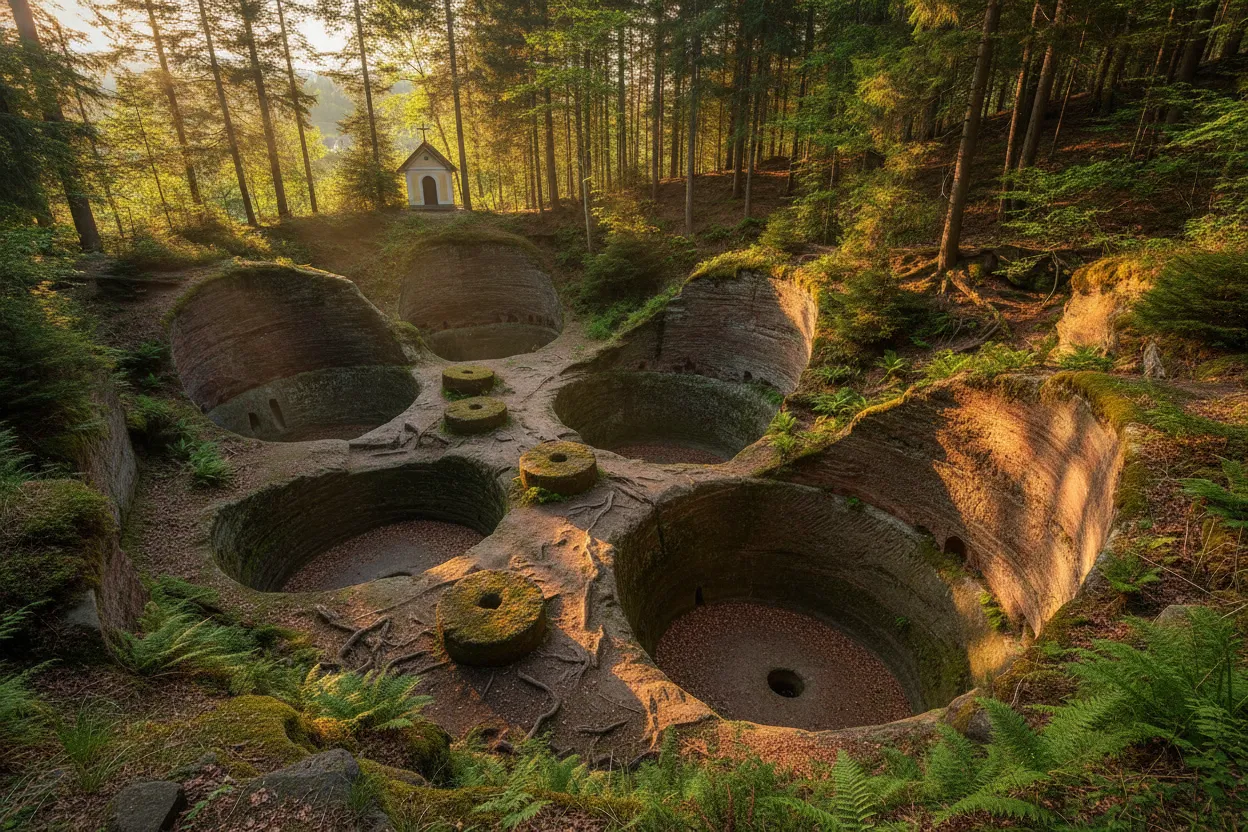
Deep within the gentle undulations of the Hausruck hills, the Mühlsteinbrüche offer a journey unlike any other. This isn't just a historical site; it's a landscape transformed into an art installation by centuries of human endeavor. For generations, skilled quarrymen meticulously carved massive, circular millstones directly from the soft, yet durable, sandstone bedrock. The result? A breathtaking series of monumental, concave imprints – giant, perfectly round hollows that speak volumes about the scale of their work. But it doesn't stop there. As they extracted stone after stone, they also created hollowed-out grottoes and cavernous chambers, leaving behind a silent, moss-covered testament to their craft.
What makes this place so profoundly special is its ability to blur the lines between human creation and natural beauty. The vibrant green of mosses and ferns now cascades over the rough-hewn sandstone, softening the edges of industrial history. Sunlight filters through the forest canopy, casting dramatic shadows that dance across the textured walls, highlighting the incredible precision of these ancient artisans. It feels less like an abandoned quarry and more like an otherworldly sculpture garden, where every curve and every hollow tells a story of ingenuity, perseverance, and the deep connection between humanity and the earth. It's an astonishing industrial heritage site where the very act of extraction transformed the landscape into something truly sublime.

Echoes of Ancient Industry: A History Carved in Stone
To truly appreciate the Mühlsteinbrüche, one must journey back in time to an era when the daily bread of communities depended on the tireless work of these quarrymen. For centuries, from at least the Middle Ages right up until the late 19th century, these quarries were a bustling hub of activity. Imagine the scene: the rhythmic clang of hammers, the scrape of chisels, the shouts of men, all echoing through the forest as they painstakingly liberated these massive grinding stones from their earthy embrace.
The sandstone found in the Hausruck region was perfectly suited for millstones – durable enough to grind grain effectively, yet soft enough to be worked with hand tools. The process was arduous and required immense skill. First, the outline of the millstone would be scribed onto the bedrock. Then, workers would meticulously chisel a circular trench around it, gradually deepening it until the stone was almost entirely separated. Finally, wedges would be driven in, carefully detaching the massive disk. These millstones were crucial for grinding various grains, from wheat and rye for bread to barley for brewing, fueling towns and villages across Upper Austria and beyond.
Once extracted, the challenges weren't over. These colossal stones, often weighing hundreds of kilograms, then had to be transported. Imagine the ingenuity and sheer muscle power required to roll, drag, or hoist these behemoths through the rugged forest terrain and onto carts or barges. The abandonment of the quarries came with the advent of the Industrial Revolution, as newer, more efficient milling technologies and harder, more durable stones from other regions made the traditional sandstone millstones obsolete. The tools fell silent, the workers departed, and nature slowly began its reclamation, transforming a site of industry into a place of serene, historical wonder.
Step Inside the Stone Cathedrals: What Awaits Your Exploration
Visiting the Mühlsteinbrüche is an immersive experience that engages all your senses. As you follow the winding forest paths, the first glimpses of the colossal circular cuts are breathtaking. You’ll find yourself walking among these gargantuan imprints, some reaching several meters in diameter, perfectly formed as if by a giant's cookie cutter. But the true magic unfolds as you venture deeper.
The quarrymen didn't just carve circles; they burrowed into the earth, creating a series of hollowed-out grottoes and cave-like chambers. These are the 'stone cathedrals' – silent, cool spaces where the light filters in dramatically from above, illuminating walls still bearing the marks of chisels and picks. The air inside is different, carrying a faint scent of damp earth and ancient stone. The silence is profound, broken only by the rustling of leaves outside or the distant call of a bird, inviting contemplation about the lives that were once lived here.
You'll see partially extracted stones, still wedged in the bedrock, offering a poignant snapshot of work interrupted. Some chambers are vast and open, while others are more intimate, creating a labyrinthine feel. The interplay of light and shadow, the vibrant green mosses clinging to every surface, and the sheer scale of the human effort on display make this a photographer's dream and a history lover's delight. It’s a place where you can truly feel the weight of history and the raw power of human determination etched into the very landscape.

Planning Your Adventure: Practical Tips for the Mühlsteinbrüche
Ready to uncover this Austrian secret for yourself? Visiting the Mühlsteinbrüche is an accessible, rewarding adventure, perfect for a day trip or as part of a longer exploration of Upper Austria.
Getting There: The quarries are located near the village of Scheiben in the municipality of Prambachkirchen, within the Hausruckviertel region. While somewhat hidden, they are reasonably well-signposted once you're in the vicinity. A car is highly recommended for reaching the starting point, as public transport options are limited. There's usually a small, informal parking area near the trailheads. From there, it's a pleasant walk through the forest to the main quarry sites.
Best Time to Visit: Each season offers a unique charm. Spring (April-May) brings fresh green foliage and blooming wildflowers, while autumn (September-October) transforms the surrounding forest into a riot of golden and crimson hues – truly spectacular for photography. Summer (June-August) is also lovely, offering cool shade within the quarries, but can be busier. Winter visits are possible if there isn't too much snow, offering a stark, almost mystical atmosphere, but paths can be slippery.
What to Bring:
- Sturdy Footwear: The paths are unpaved forest trails, which can be uneven or muddy, especially after rain. Hiking boots or sturdy walking shoes are essential.
- Water & Snacks: There are no facilities on-site, so bring everything you need.
- Camera: This place is incredibly photogenic!
- Appropriate Clothing: Dress in layers, as the forest can be cooler, and the temperature inside the grottoes is consistently lower.
- Headlamp/Flashlight (Optional): While not strictly necessary as most areas are open to light, a small light can help illuminate darker corners or specific chisel marks.
Duration: Allow 1.5 to 3 hours to comfortably explore the main quarry areas, take photos, and soak in the atmosphere. The trails are generally easy to moderate.
Respecting the Site: As a historical and natural monument, please help preserve the Mühlsteinbrüche. Stick to marked paths, do not climb on the delicate rock formations, and take all your litter with you. Leave only footprints, take only photographs.
Nearby Exploration: The Hausruck region is wonderful for hiking and cycling. Consider combining your visit with a longer trek through the rolling hills or exploring charming nearby towns like Grieskirchen or Eferding, which offer traditional Austrian hospitality and cuisine.
The Mühlsteinbrüche are more than just an old quarry; they are a profound testament to human endeavor, a canvas where nature has painted over the brushstrokes of history, and a truly unforgettable hidden gem awaiting your discovery in the heart of Austria.

Essential Travel Information
- Location Mühlsteinbrüche (Millstone Quarries), Austria
- Best Time Spring (April-May) and Autumn (September-October) for foliage and pleasant weather. Summer (June-August) offers shade. Winter possible with less snow.
- Getting There Best reached by car to Prambachkirchen (Scheiben village), Upper Austria. Limited public transport. Follow signs to forest parking then walk.
- Airport Linz Airport (LNZ)
- Budget Budget/Mid-range with approximate daily cost of €50-€100 (excluding accommodation, including transport, food, activities).
- Language German
Find Places to Stay Near Mühlsteinbrüche (Millstone Quarries)
Compare hotels, hostels, and unique stays in Austria.
Search AccommodationTours & Experiences Near Mühlsteinbrüche (Millstone Quarries)
Book guided tours, day trips, and unique experiences.
Browse Tours