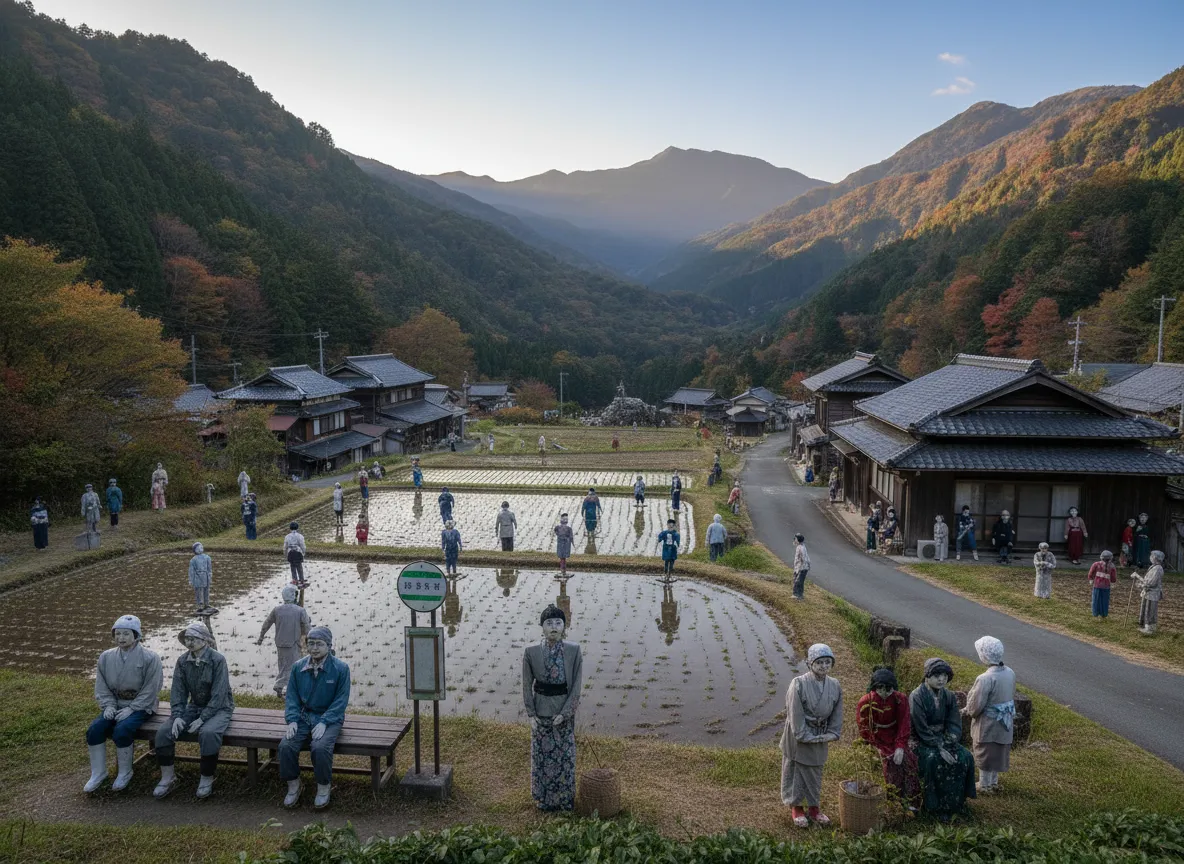
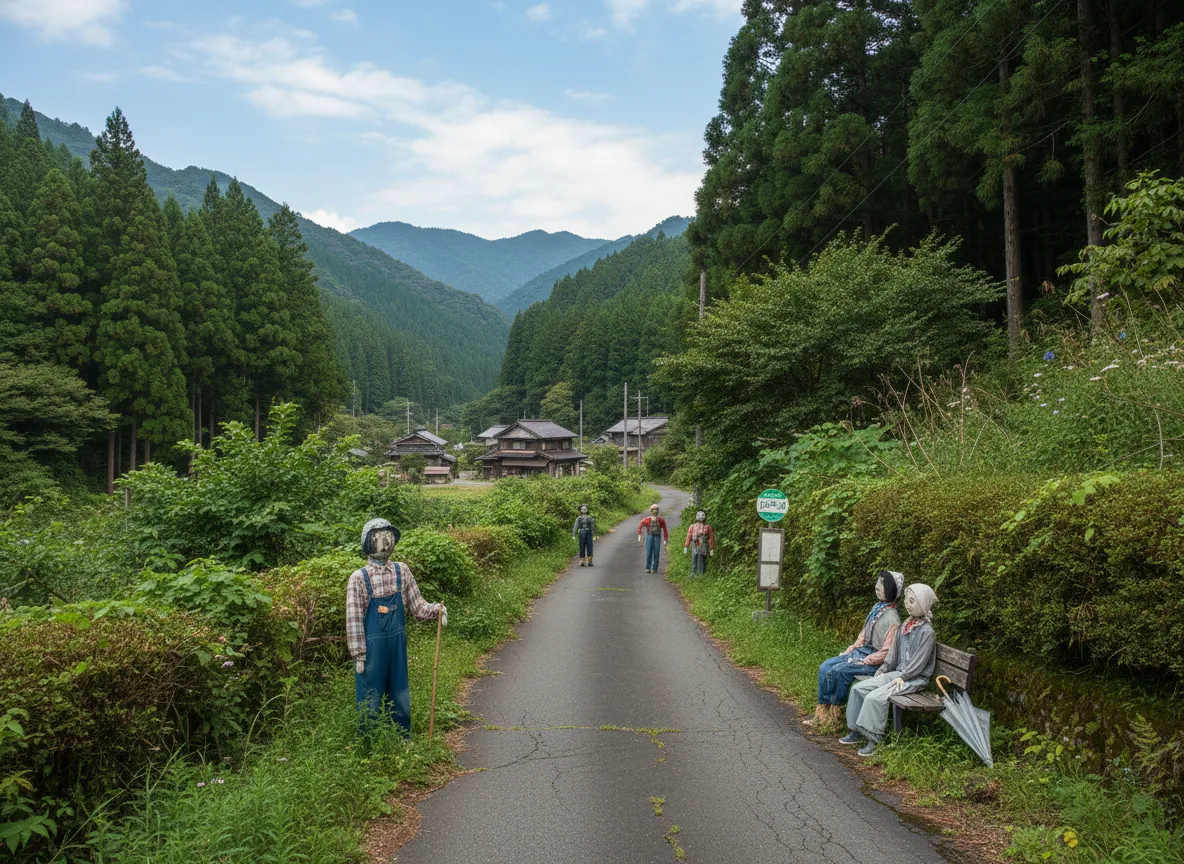
Imagine wandering down a winding mountain road, the air crisp with the scent of cedar, only to be greeted by a bus stop where a grandmotherly figure waits patiently, a child clutching her hand. Further on, a group of students in immaculate uniforms gathers by a schoolhouse, while farmers tend to their fields, their straw hats tilted just so. These aren't people; they are the "kakashi" – the scarecrows of Nagoro – and they are everywhere. They sit, stand, work, and play, eternally re-enacting the vibrant village life that once was, creating a bittersweet, living art installation that will capture your heart and spark profound reflection.
The Silent Sentinels of Shikoku: What Makes Nagoro So Special?
Nagoro isn't just a quirky tourist attraction; it's a profound, open-air museum dedicated to the passage of time and the enduring spirit of community. What makes this village truly special is its raw, unvarnished honesty about the challenges facing rural Japan – specifically, depopulation. But instead of succumbing to emptiness, Nagoro has been revitalized by art, memory, and an extraordinary act of love. Each scarecrow isn't just a random figure; it's a carefully crafted homage to a former resident, imbued with their personality, their role in the village, and the stories they left behind.
The creator, Tsukimi Ayano, has transformed her personal grief and longing into a powerful, collective narrative. Her figures don't just fill empty spaces; they evoke the very essence of human connection. As you walk among them, you can almost hear the echoes of laughter, the murmur of conversations, and the gentle rhythm of daily life. It’s a place that asks you to slow down, to observe, and to contemplate what it means to belong, to remember, and to leave a mark on the world. This isn't just about seeing; it's about feeling – a unique emotional resonance that sets Nagoro apart from any other destination.
The backdrop of the dramatic Iya Valley, with its steep forested slopes and rushing rivers, only amplifies the ethereal quality of Nagoro. It’s a place where nature's grandeur meets human ingenuity and heartfelt emotion, creating a truly unforgettable experience. It reminds us that even in the face of loss, creativity and love can breathe new life into forgotten corners of the world.
A Village Reborn: The Heartbreaking History Behind the Figures
Like many remote hamlets across Japan, Nagoro faced a grim future. Once a bustling community sustained by forestry and agriculture, the early 21st century saw its population dwindle dramatically. Young people moved to cities for work and opportunities, leaving behind an aging population and, eventually, empty homes and silent streets. The village school closed its doors, and the once-vibrant community began to fade into memory.
This demographic shift deeply affected Tsukimi Ayano, a Nagoro native who returned home in the early 2000s. Faced with the increasing emptiness, she felt a profound sense of loss and loneliness. It began innocently enough: in 2002, she crafted a scarecrow to deter birds from her vegetable patch. But this scarecrow wasn't just functional; it bore a striking resemblance to her late father. This simple act sparked an idea, a way to cope with the silence and to remember those who had left.
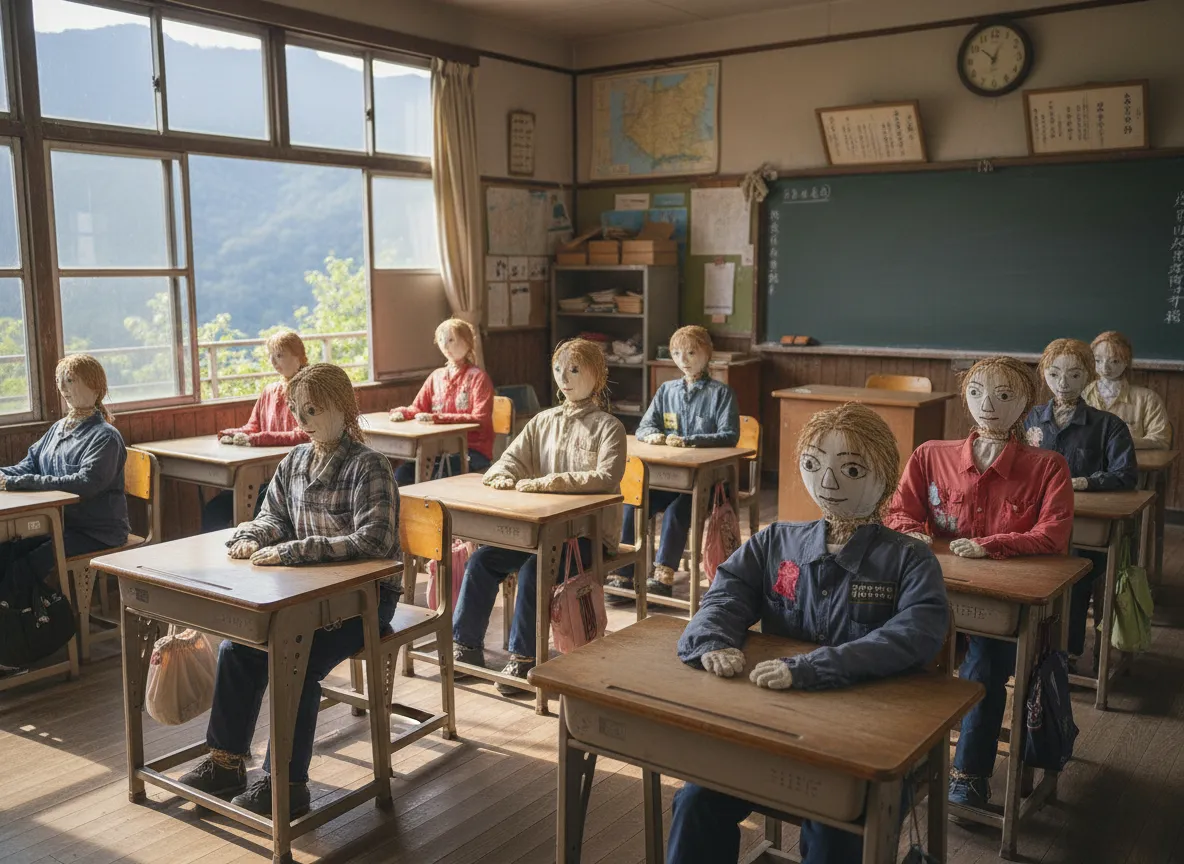
Ayano began to craft more figures, each one representing a former villager. She placed them in the locations they once frequented: a grandmother sitting on a bench, a fisherman by the river, a shopkeeper behind an empty counter. The abandoned school became a vibrant classroom once more, filled with straw students and teachers. Over the years, she has created more than 350 figures, each one a unique character with its own story, its own clothes, and its own place in the silent community. Her work has not only brought international attention to Nagoro but has also given voice to the quiet struggles of rural communities everywhere, transforming a story of decline into one of remarkable resilience and artistry.
Wandering Through a Dream: What You'll See in Nagoro Scarecrow Village
The beauty of Nagoro is in its immersive nature. There's no entrance fee, no guided tour – just an invitation to explore at your own pace and discover the silent inhabitants for yourself. As you drive or walk into the village, the figures gradually appear, blending seamlessly into the landscape, making it feel as though you've stumbled upon a hidden world.
One of the most iconic sights is the old Nagoro Elementary School. Step inside, and you'll find classrooms filled with attentive student scarecrows, their heads bowed over desks, their uniforms perfectly pressed. Teachers stand at the front, chalk in hand, frozen in mid-lesson. It's an incredibly powerful scene, evoking both nostalgia for a bygone era and a poignant sense of what has been lost. The detail is astonishing: some figures wear glasses, others have specific hairstyles, all contributing to their lifelike presence.
Beyond the school, the village unfolds like a living tableau. You'll see scarecrows waiting at the bus stop, their bags beside them, patiently anticipating a bus that rarely comes. Farmers tend to their fields, their straw hands holding tools, eternally working the land. Families gather on porches, children play in yards, and elderly figures sit by windows, gazing out at the world. Each scene tells a story, a fragment of the past brought vividly back to life. The figures are constantly being maintained and occasionally replaced by Ayano-san, ensuring that Nagoro remains a dynamic, evolving art project.
Take your time to truly observe. Notice the expressions, the clothing choices, and the specific poses that give each scarecrow a unique personality. It’s an experience that encourages quiet contemplation, offering a rare glimpse into a heartfelt artistic endeavor that bridges the gap between memory and reality.
Planning Your Pilgrimage: Practical Tips for Visiting Nagoro
Nagoro Scarecrow Village is a truly unique destination, but its remote location requires a bit of planning. Here’s what you need to know to make your visit smooth and memorable:
Best Time to Visit
Nagoro is beautiful year-round, but each season offers a different charm. Spring (April-May) brings lush greenery and comfortable temperatures. Summer (June-August) can be warm and humid, but the vibrant foliage is stunning. Autumn (October-November) is perhaps the most picturesque, with spectacular fall colors blanketing the surrounding mountains. Winter (December-March) can be cold, and snow is possible, adding a stark, serene beauty to the village, but some roads might be challenging.
How to Get There
Nagoro is deep within the Iya Valley, one of Japan’s most secluded regions. For maximum flexibility, renting a car is highly recommended. The drive itself is incredibly scenic, featuring winding mountain roads, deep gorges, and picturesque bridges. If you rely on public transport, it’s a multi-step journey. You'll likely need to take a train to Awa-Ikeda Station (on the JR Dosan Line), then a local bus towards Kubo, and potentially another local bus or taxi from there. Bus services are infrequent, so check schedules meticulously. Consider staying overnight in the Iya Valley to fully explore the area.
Accommodation & Food
There are no hotels or guesthouses directly in Nagoro village itself. Most visitors stay in the wider Iya Valley, which offers a range of traditional ryokan (Japanese inns), guesthouses, and even some unique farm stays. Options range from budget-friendly to luxurious, often featuring natural hot springs (onsen) and delicious local cuisine. Since Nagoro has very limited (if any) dining options, pack snacks and drinks, and plan to eat before or after your visit in one of the larger towns or your accommodation.
What to Bring
Comfortable walking shoes are essential, as you'll be doing a lot of exploring on foot. A good camera is a must to capture the unique scenes. Dress in layers, as mountain weather can be unpredictable. Given the remoteness, it's always wise to have a portable charger for your phone and a physical map or offline GPS, just in case.
Respectful Tourism
Remember that Nagoro is a real village, albeit a quiet one, and not just an open-air exhibition. Be respectful of the local residents and their privacy. Avoid touching the scarecrows unless invited to do so, and certainly don't damage them. Keep noise levels down and take all your trash with you. Supporting any small local businesses you might encounter, even if it's just buying a drink, is a kind gesture.
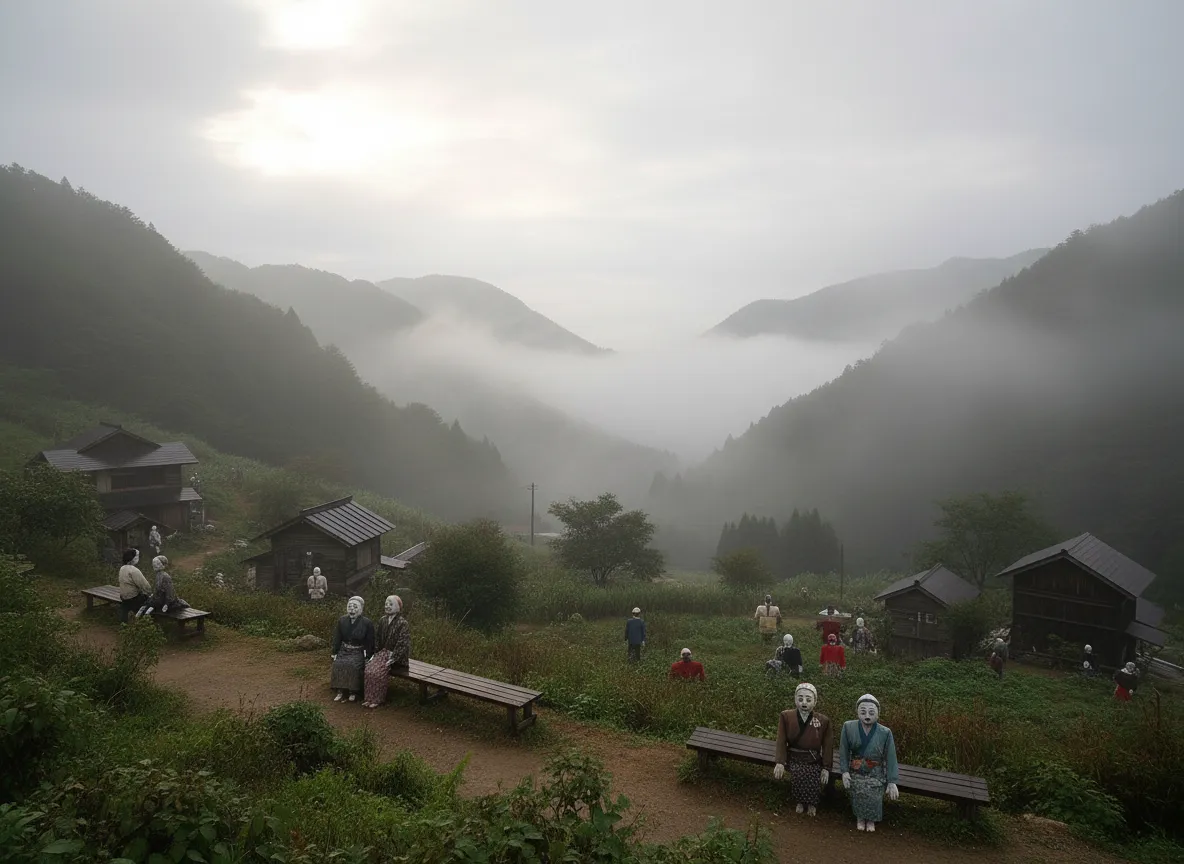
A visit to Nagoro Scarecrow Village is more than just sightseeing; it's an emotional journey. It’s a place that will linger in your memory long after you’ve left, prompting thoughts on art, community, and the bittersweet beauty of remembering. It’s a testament to the power of one woman's vision and a truly hidden gem waiting to be discovered in the heart of Japan.
Essential Travel Information
- Location Nagoro Scarecrow Village (Nagoro Kakashi no Sato), Japan
- Best Time Spring (April-May) for greenery, Autumn (October-November) for fall colors
- Getting There Best by rental car. Public transport via train to Awa-Ikeda Station, then infrequent local buses to Kubo and Nagoro. Check schedules.
- Airport Takamatsu Airport (TAK)
- Budget Mid-range, approx. ¥10,000-¥20,000 per day (excluding car rental, including accommodation in Iya Valley)
- Language Japanese
Find Places to Stay Near Nagoro Scarecrow Village (Nagoro Kakashi no Sato)
Compare hotels, hostels, and unique stays in Japan.
Search AccommodationTours & Experiences Near Nagoro Scarecrow Village (Nagoro Kakashi no Sato)
Book guided tours, day trips, and unique experiences.
Browse Tours